
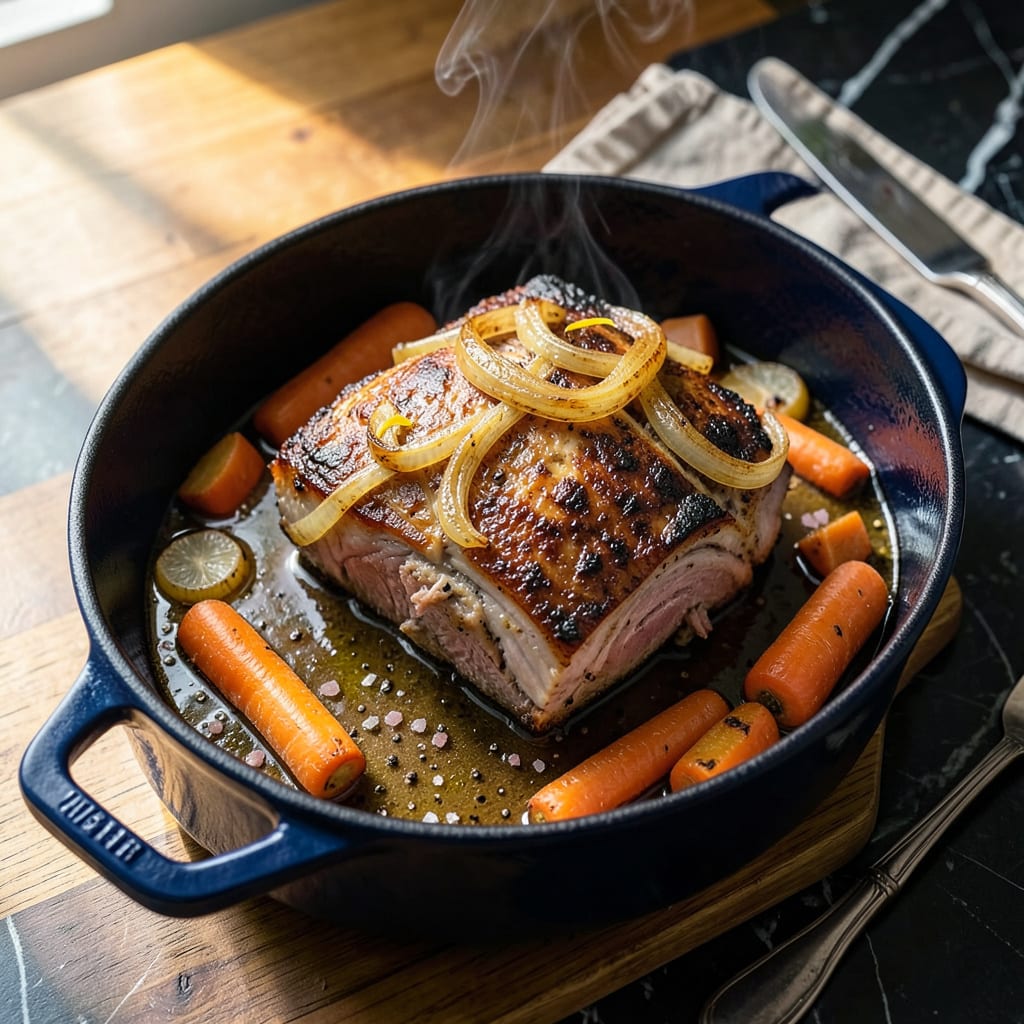
There’s something deeply satisfying about a perfectly cooked pot roast pork—tender enough to fall apart at the touch of a fork, yet rich with layers of flavor developed through slow cooking. This recipe delivers restaurant-quality results using simple ingredients and traditional braising techniques. The secret lies in the balance between searing the meat for depth and allowing it to cook low and slow until it reaches that ideal fall-apart tenderness.
What makes this dish special is the rich, velvety gravy that forms naturally as the pork cooks. Infused with aromatic vegetables, fresh herbs, and a splash of broth, it transforms into a sauce so flavorful you’ll want to spoon it over everything. Whether you’re cooking for a Sunday family dinner or meal prepping for the week, this pot roast pork is a foolproof way to achieve comfort food perfection with minimal effort.
Ingredients for Pot Roast Pork
This recipe transforms simple ingredients into a restaurant-quality pot roast pork with fall-apart tenderness and rich, velvety gravy.
| Ingredient | Amount | Notes |
|---|---|---|
| Pork Shoulder 🐷 | 3 ½ lb | Bone-in for best flavor |
| Olive Oil 🫒 | 2 tbsp | Divided for searing and sautéing |
| Kosher Salt 🧂 | 1 ½ tsp | Plus additional to taste |
| Black Pepper 🌶️ | 1 tsp | Freshly ground preferred |
| Yellow Onions 🧅 | 2 whole | Large, roughly chopped |
| Carrots 🥕 | 4 whole | Peeled, cut into 2-inch pieces |
| Celery Stalks 🌿 | 3 whole | Cut into 1-inch pieces |
| Garlic Cloves 🧄 | 6 cloves | Minced for maximum flavor |
| Fresh Thyme 🌿 | 3 sprigs | Or 1 tsp dried thyme |
| Fresh Rosemary 🌿 | 2 sprigs | Or 1 tsp dried rosemary |
| Bay Leaves 🌿 | 2 whole | For aromatic depth |
| Beef Broth 💧 | 3 cups | Low-sodium preferred |
| Dry White Wine 🍷 | 1 cup | Sauvignon Blanc or Pinot Grigio |
| Tomato Paste 🍅 | 2 tbsp | For umami richness |
| All-Purpose Flour 🌾 | 2 tbsp | For thickening gravy |
The pork shoulder is critical for achieving the signature fall-apart texture. Optimal quality requires bone-in cuts with good marbling, available at most butcher counters or well-stocked supermarkets. For best results, select a piece weighing between 3-4 pounds—this ensures even cooking and sufficient collagen breakdown. Costco and Whole Foods typically carry high-quality pork shoulder, but standard grocery stores work fine for this application.
For the wine component, any dry white wine will suffice—Sauvignon Blanc or Pinot Grigio are ideal choices that balance acidity without overpowering. No alcohol? Substitute with additional beef broth plus 1 tbsp apple cider vinegar. Fresh herbs are preferred, but dried may be used at one-third the quantity. The tomato paste can be found in small cans or convenient squeeze tubes at Trader Joe’s, minimizing waste for occasional use.
This dish improves with time—flavors meld and deepen over 24 hours when refrigerated. Gravy thickens upon cooling; reheat gently with a splash of broth. Portion and freeze leftovers for up to 3 months in airtight containers. The cooked pork shreds beautifully for tacos or sandwiches, extending its versatility beyond the initial meal.
Why You’ll Love This Recipe
- One-Pan Magic: I love recipes where cleanup is basically nonexistent. Here, you sear the pork shoulder in the same pot you’ll roast it in—just add onions, salt, pepper, and let the oven do the rest. One dish, minimal scrubbing, maximum flavor.
- Caramelized Gold: Those yellow onions break down into something sweet and jammy, while the pork shoulder gets this crisp, salty crust. The contrast? Ridiculously good. I’ve caught my husband sneaking bites straight from the pan before it even hits the table.
- Weekend or Wednesday: This is my secret weapon for both lazy Sundays and chaotic weeknights. The pork stays juicy whether it roasts 3 hours or 4, so timing’s flexible. (Yes, even on a Tuesday night.)
- Leftovers That Work: Honestly, the second-day pulled pork might be better than the first. Toss it into tacos, pile it on toast, or mix it with eggs—it’s the gift that keeps giving. And at $2.50 a pound for pork shoulder? My wallet’s happy too.
Step-by-Step Instructions for Pot Roast Pork
This method transforms tough pork shoulder into fork-tender perfection with minimal hands-on time.
Step 1: Sear the Pork Shoulder for Maximum Flavor
Pat the 3.5 lb Pork Shoulder completely dry with paper towels. Season generously with the 1.5 tsp Kosher Salt and 1 tsp Black Pepper, ensuring all sides are evenly coated. Heat 1 tbsp Olive Oil in a large Dutch oven over medium-high heat until shimmering.
Add the pork shoulder and sear for 4-5 minutes per side until a deep golden-brown crust forms. This crust is crucial for developing rich, meaty flavor in the final dish. Don’t rush this step—you want a uniform, caramelized exterior that will later dissolve into the braising liquid.
Step 2: Build the Aromatic Base
Remove the seared pork and set aside. In the same pot, add the remaining 1 tbsp Olive Oil if needed. Add the 2 whole Yellow Onions, 4 whole Carrots, and 3 whole Celery Stalks. Cook over medium heat for 6-8 minutes, stirring occasionally, until the vegetables begin to soften and develop light caramelization.
Stir in the 6 cloves Garlic Cloves and cook for 1 minute until fragrant. Add the 2 tbsp Tomato Paste and cook for 2 minutes, stirring constantly, until it darkens slightly. This step intensifies the umami flavor that will permeate the entire dish.
Step 3: Deglaze and Begin Braising
Pour in the 1 cup Dry White Wine, scraping up all the browned bits from the bottom of the pot. These fond particles contain concentrated meat flavor that will enrich your braising liquid. Bring to a simmer and cook for 3-4 minutes until the liquid reduces by about half.
Return the pork shoulder to the pot along with the 3 sprigs Fresh Thyme, 2 sprigs Fresh Rosemary, and 2 whole Bay Leaves. Pour in the 3 cups Beef Broth, ensuring the liquid comes about halfway up the pork. The meat should not be completely submerged—this allows for proper braising rather than boiling.
Step 4: Slow Cook to Tender Perfection
Bring the liquid to a gentle simmer, then reduce heat to low. Cover the pot and maintain a bare simmer for 2.5-3 hours, turning the pork occasionally. The meat is done when it easily pulls apart with a fork and reaches an internal temperature of 195°F.
Resist the temptation to check frequently—each time you lift the lid, you extend the cooking time by 10-15 minutes. The low, steady heat gradually breaks down the connective tissue, transforming tough muscle fibers into buttery tenderness.
Step 5: Create the Rich Gravy and Serve
Carefully remove the pork shoulder and transfer to a serving platter. Skim excess fat from the braising liquid, then bring to a boil over medium-high heat. In a small bowl, whisk the 2 tbsp All-Purpose Flour with 2 tbsp of the hot liquid to create a slurry.
Whisk the slurry into the pot and simmer for 3-5 minutes until the gravy thickens enough to coat the back of a spoon. Adjust seasoning with additional salt and pepper if needed. Slice or shred the pork and serve with the vegetables and gravy spooned over the top.
Essential Equipment for Great Pot Roast Pork
Dutch Oven Essentials
A heavy 5-7 quart Dutch oven is non-negotiable for this recipe. I recommend Le Creuset or Lodge brands for their even heat distribution and durability. The enameled cast iron retains heat perfectly for that long, slow braise. Look for one with sturdy handles—you’ll be moving it between stovetop and oven. 🔥
Meat Thermometer
Don’t guess when your pork is done—use a reliable instant-read thermometer. I swear by my ThermoWorks Thermapen for its speed and accuracy. You’re aiming for 195°F internal temperature where collagen fully breaks down. This $30 tool prevents overcooking and guarantees perfect results every time.
Sharp Chef’s Knife
Prepping vegetables becomes effortless with a 8-inch chef’s knife. My go-to is the Wüsthof Classic—it maintains its edge through heavy use. A sharp knife makes quick work of chopping onions, carrots, and celery into uniform pieces. This ensures even cooking and better flavor distribution throughout your braise.
Wooden Spoon
When scraping up those flavorful browned bits during deglazing, a wooden spoon is your best friend. It won’t scratch your Dutch oven’s surface like metal utensils can. I keep a 12-inch olive wood spoon dedicated to braising—it’s sturdy enough to stir thick gravy without breaking.
Fat Separator
For silky-smooth gravy, a fat separator is worth its weight in gold. The OXO Good Grips model makes quick work of skimming excess fat from your braising liquid. Simply pour the liquid through after cooking, and you’ll get perfectly balanced gravy without any greasy aftertaste.
Tongs for Turning
Long 12-inch locking tongs help you safely turn the pork shoulder during searing and braising. I prefer the OXO brand for their comfortable grip and secure locking mechanism. They give you better control than a fork when handling large cuts of meat, preventing accidental piercings that release precious juices. 💪
Nutrition Facts
Frequently Asked Questions
What’s the best cut of pork for this recipe?
Pork shoulder (also called Boston butt) is ideal for its marbling and connective tissue. These break down during slow cooking to create that signature fall-apart texture. Avoid leaner cuts like tenderloin—they’ll dry out instead of becoming tender.
Can I make this in a slow cooker instead?
Sear the pork first in a skillet, then transfer everything to your slow cooker. Cook on low for 8-10 hours or high for 5-6 hours. The texture will be slightly different but still delicious. You may need to reduce the gravy on the stovetop afterward.
Why is my pork not falling apart after cooking?
This usually means it didn’t cook long enough. Pork shoulder needs to reach 195°F internally for collagen to fully break down. If it’s still firm, return it to the pot and cook another 30-60 minutes, checking occasionally. Patience is key!
What can I substitute for white wine?
Use additional beef broth plus 1 tbsp apple cider vinegar for acidity. Chicken broth works too, though beef adds richer flavor. For non-alcoholic options, grape juice (reduced by half) creates similar depth without alcohol.

- 8 Bean Soup Recipe Crock Pot: Hearty Vegetable Medley in One Pot - September 25, 2026
- 4C Bread Crumbs Meatballs Recipe: Crispy Crust and Juicy Centers - September 25, 2026
- 6 Oz Chocolate Chip Cookie Recipe: Perfectly Balanced Crispy Edges and Chewy Hearts - September 25, 2026