
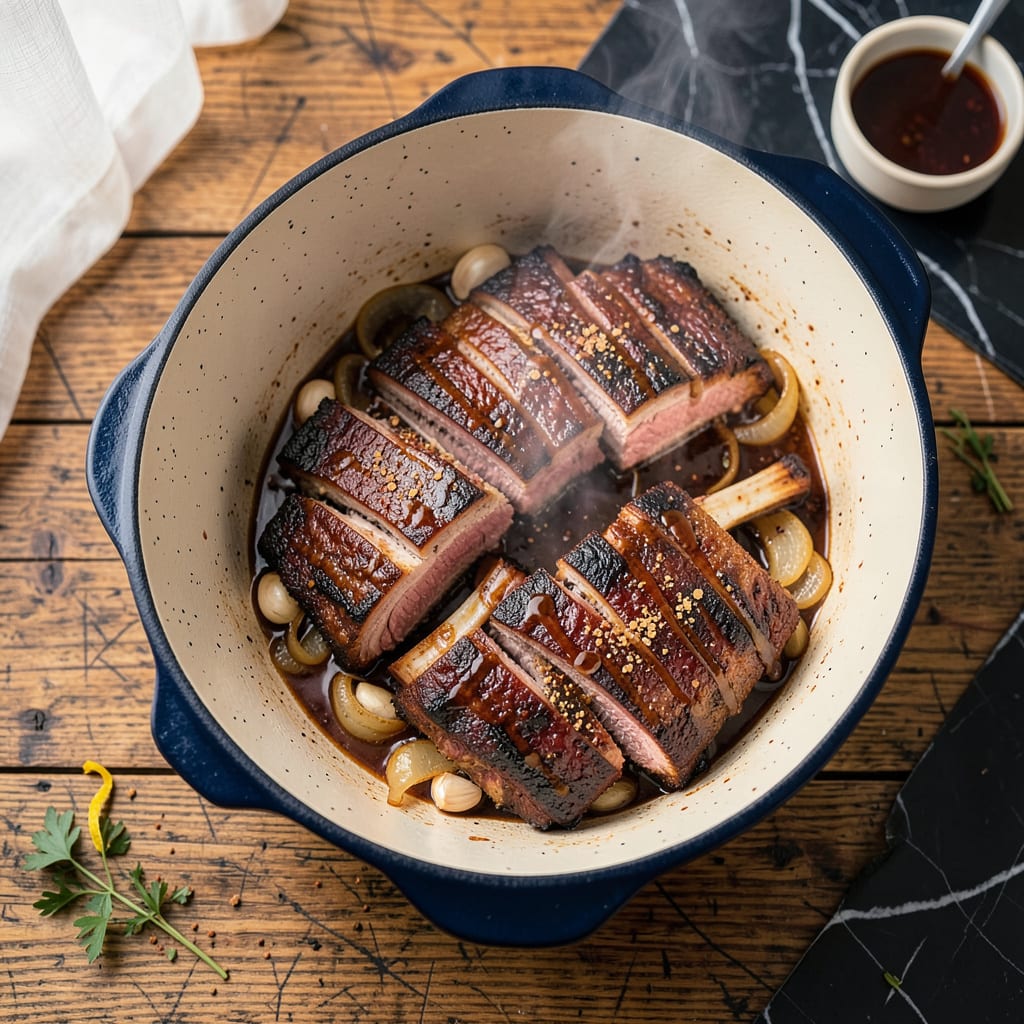
Slow-cooked ribs that practically fall off the bone with zero effort—that’s the magic of this crock pot method. After years of experimenting with different techniques, I’ve perfected a process that delivers tender, flavorful ribs without constant monitoring or complicated steps.
The secret lies in the low-and-slow approach, allowing the meat to become impossibly tender while absorbing layers of smoky, savory flavors. This recipe transforms tough cuts into restaurant-quality ribs with minimal prep and maximum reward. Perfect for busy weeknights or stress-free entertaining.
Ingredients for Rib Crock Pot
These carefully selected ingredients transform tough ribs into restaurant-quality perfection through the slow-cooking process.
| Ingredient | Amount | Notes |
|---|---|---|
| Pork Baby Back Ribs 🥩 | 4 lb | Two full racks, membrane removed |
| Light Brown Sugar 🍚 | ½ cup | Packed for maximum caramelization |
| Smoked Paprika 🌶️ | 2 tbsp | Spanish variety preferred |
| Garlic Powder 🧄 | 1 ½ tbsp | Freshly ground for potency |
| Onion Powder 🧅 | 1 ½ tbsp | Ensures even flavor distribution |
| Kosher Salt 🧂 | 1 tbsp | Diamond Crystal preferred |
| Freshly Ground Black Pepper 🌶️ | 1 tbsp | Coarse grind for texture |
| Apple Cider Vinegar 🍏 | ¼ cup | Balances sweetness with acidity |
| Worcestershire Sauce 💧 | 2 tbsp | Lea & Perrins recommended |
| Honey 🍯 | ¼ cup | Local raw variety preferred |
| Liquid Smoke 💨 | 1 tsp | Hickory flavor recommended |
| Low-Sodium Soy Sauce 🫙 | 2 tbsp | Tamari for gluten-free option |
| Tomato Paste 🍅 | 2 tbsp | Double-concentrated preferred |
| Yellow Mustard 🟡 | 1 tbsp | Classic prepared variety |
| Beer or Apple Juice 🍺 | ½ cup | Dark lager or unfiltered juice |
The ribs are the foundation—pork baby back ribs with proper marbling ensure optimal tenderness. Costco or Sam’s Club offer consistent quality at bulk pricing, though local butchers may provide superior freshness. The membrane removal is non-negotiable; this single step dramatically improves texture absorption. For the dry rub, Penzeys or Spicewagon offer superior smoked paprika with authentic Spanish origins, while standard grocery store brands suffice for garlic and onion powders when freshly ground isn’t feasible.
Apple cider vinegar substitutions include white wine vinegar at equal volume, though the flavor profile will shift slightly. Annie’s Organic Worcestershire provides a quality alternative to Lea & Perrins. Honey may be replaced with maple syrup for vegan adaptation, though the caramelization characteristics differ. Liquid smoke brands vary significantly—Wright’s delivers consistent hickory notes without artificial aftertaste. For the braising liquid, non-alcoholic substitutions include unfiltered apple cider or low-sodium beef broth (though this alters the final flavor profile).
Prepare the dry rub mixture up to 2 weeks ahead in an airtight container, stored in a cool pantry. Unused tomato paste keeps 5 days refrigerated in a sealed container or 3 months frozen in ice cube trays. Cooked ribs maintain quality for 3 days refrigerated or 4 months frozen when vacuum-sealed. Reheat gently in a 250°F oven with foil to preserve moisture and tenderness.
Why You’ll Love This Recipe
- Set-It-and-Forget-It Magic: Honestly, I toss the ribs in with the brown sugar and spices before work, and by dinner? Fall-off-the-bone perfection with zero effort. The crock pot does all the heavy lifting while I’m doing… literally anything else.
- That Smoky-Sweet Crust: Here’s what sold me—the brown sugar caramelizes with the smoked paprika into this sticky, slightly crisp glaze that’s ridiculously good. My kids fight over the end pieces where it clings the most (yes, even the picky one).
- Weekend Vibes, Weeknight Real: I’ve served these at summer BBQs and also on random Tuesdays when I need a win. They’re unfussy enough for a solo dinner but impressive enough that guests ask for the recipe. Between us, I never admit how easy they are.
- Leftovers? More Like Bonus Meals: The ribs reheat like a dream—shredded into tacos, chopped over salad, or just cold from the fridge at midnight. And a full rack costs less than takeout but feeds us for two nights. My grocery budget thanks me every time.
Step-by-Step Instructions for Rib Crock Pot Preparation
This method delivers perfectly tender ribs with minimal active cooking time and maximum flavor development.
Step 1: Prepare and Season the Ribs
Begin by removing the membrane from the back of the 4 lb pork baby back ribs. Slide a butter knife under the thin membrane at one end, then lift and pull it off completely. This ensures the seasoning penetrates directly into the meat and prevents a chewy texture.
Combine the 0.5 cup light brown sugar, 2 tbsp smoked paprika, 1.5 tbsp garlic powder, 1.5 tbsp onion powder, 1 tbsp kosher salt, and 1 tbsp freshly ground black pepper in a bowl. Apply this dry rub generously to all surfaces of the ribs, pressing firmly to adhere. The sugar will caramelize during cooking, creating a flavorful crust.
Step 2: Create the Braising Liquid
In a separate bowl, whisk together the 0.25 cup apple cider vinegar, 2 tbsp Worcestershire sauce, 0.25 cup honey, 1 tsp liquid smoke, 2 tbsp low-sodium soy sauce, 2 tbsp tomato paste, and 1 tbsp yellow mustard until completely smooth. This mixture provides the perfect balance of sweet, tangy, and umami flavors.
Pour the 0.5 cup beer or apple juice into the bottom of your slow cooker. The alcohol or natural sugars will help tenderize the meat while adding depth to the sauce. Place the seasoned ribs in the slow cooker, meat-side up, then pour the braising liquid evenly over the top.
Step 3: Slow Cook to Perfection
Cover and cook on low heat for 6-7 hours or on high heat for 3-4 hours. The low-and-slow method breaks down the connective tissue gradually, resulting in meat that pulls cleanly from the bone. Avoid lifting the lid during cooking to maintain consistent temperature and moisture.
You’ll know the ribs are done when the meat has shrunk back from the bone ends by about ½ inch and a fork inserted between the bones meets no resistance. The internal temperature should reach 195-203°F for optimal tenderness without drying out.
Step 4: Optional Finishing Technique
For enhanced flavor and texture, transfer the cooked ribs to a baking sheet lined with foil. Brush with some of the cooking liquid from the slow cooker. Broil on high for 3-5 minutes, watching closely to prevent burning, until the surface develops a slight caramelization.
Meanwhile, strain the remaining cooking liquid through a fine-mesh sieve into a saucepan. Simmer over medium-high heat for 8-10 minutes until reduced by half and thickened slightly. This creates a rich, concentrated sauce for serving with the ribs.
Regional Styles of This Dish
Memphis Dry Rub
This Tennessee classic skips the sauce entirely, letting the dry rub shine. I use 3 tbsp additional brown sugar and 1 tbsp cayenne pepper in the rub for extra heat. After cooking, sprinkle with 1 tsp reserved dry rub before serving. The result is tender meat with a sweet-spicy crust that’s finger-licking good. 🌶️
Kansas City Sweet
For this Midwestern favorite, I add ½ cup ketchup and 2 tbsp molasses to the braising liquid. The sauce becomes thick and sticky, perfect for slathering. I recommend Jack Stack BBQ sauce for serving if you want authentic KC flavor. Cook 30 minutes longer to develop the sauce consistency.
Texas Bold
Everything’s bigger in Texas, including the flavor. I swap the brown sugar for ¼ cup turbinado sugar and add 1 tbsp chili powder and 1 tsp cumin to the rub. Use beef broth instead of beer for deeper richness. The ribs develop a robust, meaty flavor that stands up to bold sides like jalapeño cornbread.
Carolina Vinegar
Eastern NC style focuses on tang. Replace the honey with ¼ cup additional apple cider vinegar and add 1 tsp red pepper flakes. The cooking liquid becomes a thin, peppery mop sauce. I serve these with coleslaw made with vinegar dressing to complement the bright acidity.
St. Louis Saucy
This Gateway City approach uses a sweeter, thicker sauce. I mix ½ cup BBQ sauce (like Maull’s) into the braising liquid and add 1 tbsp butter at the end. The ribs become glazed and sticky. For authenticity, trim the ribs into uniform St. Louis-style rectangles before cooking.
Asian Fusion
For an unexpected twist, I replace the Worcestershire with 3 tbsp hoisin sauce and add 1 tbsp grated ginger and 2 minced garlic cloves to the braising liquid. Use rice vinegar instead of apple cider vinegar. The ribs take on a sweet-savory profile that pairs beautifully with steamed jasmine rice. 💛
Nutrition Facts
Frequently Asked Questions
Do I need to remove the membrane from the ribs?
Removing the membrane ensures the seasoning penetrates directly into the meat. Use a butter knife to lift it at one end, then pull it off completely. Skipping this step can result in chewy, unevenly seasoned ribs.
Can I use a different type of ribs?
Yes, but cooking times will vary. Baby back ribs (used here) cook in 6-7 hours on low. For spare ribs, increase to 7-8 hours due to their higher fat content. St. Louis-style ribs work well too—just trim them uniformly first.
Why did my ribs turn out tough?
Tough ribs usually mean they didn’t cook long enough. The connective tissue needs time to break down. Always check for doneness by seeing if the meat shrinks back from the bone ends by ½ inch and reaches 195-203°F internally.
Can I make this ahead of time?
Perfect for meal prep! Cooked ribs keep 3 days refrigerated or 4 months frozen. Reheat gently in a 250°F oven wrapped in foil with a splash of the cooking liquid to restore moisture and tenderness.

- 8 Bean Soup Recipe Crock Pot: Hearty Vegetable Medley in One Pot - September 25, 2026
- 4C Bread Crumbs Meatballs Recipe: Crispy Crust and Juicy Centers - September 25, 2026
- 6 Oz Chocolate Chip Cookie Recipe: Perfectly Balanced Crispy Edges and Chewy Hearts - September 25, 2026