
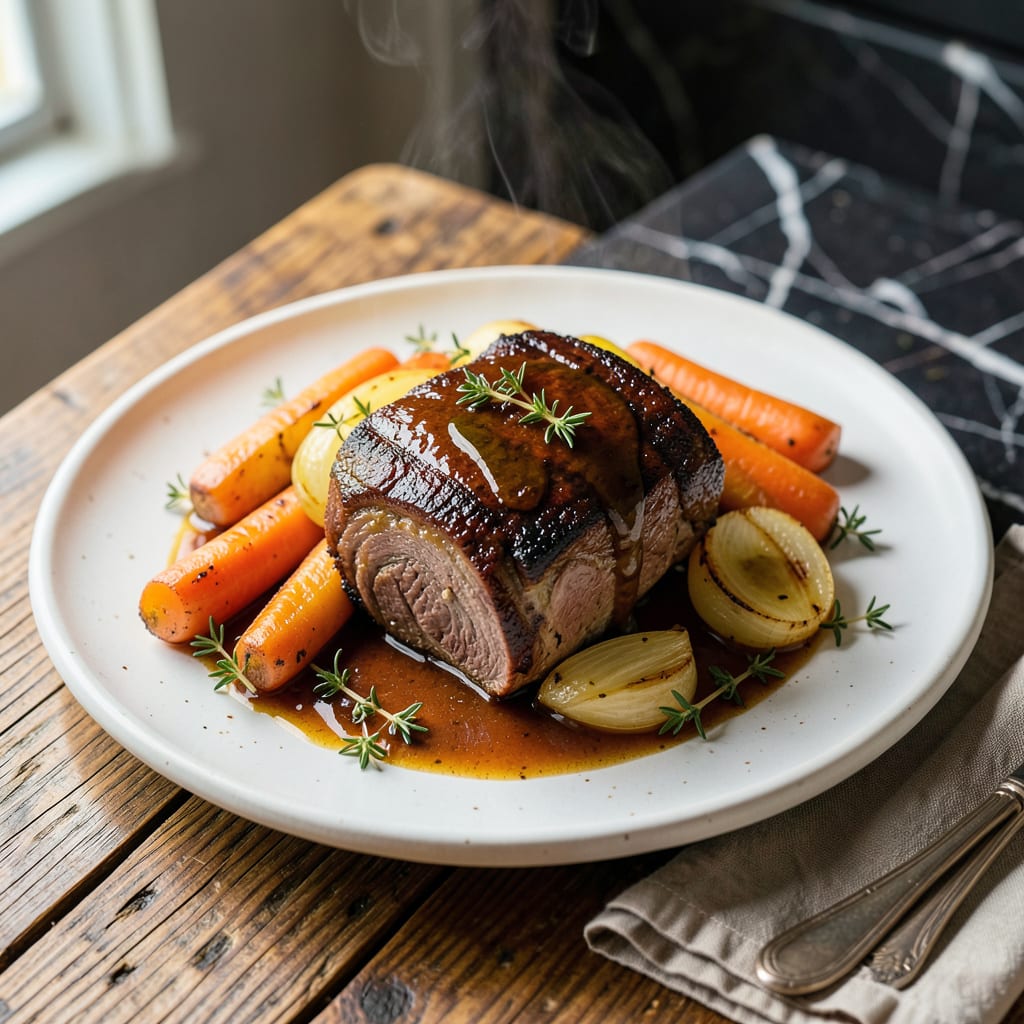
There’s a reason this slow-braised pot roast stands out—vinegar adds a subtle tang that brightens the rich, savory beef. The low-and-slow method transforms tough cuts into fall-apart tender perfection every time.
With just a few hours in the oven, the vinegar mellows into the broth, creating a depth of flavor that’s both comforting and complex. This is no-fuss cooking with impressive results.
Ingredients for Pot Roast with Vinegar
A few quality ingredients transform this pot roast into something extraordinary with vinegar’s bright touch.
| Ingredient | Amount | Notes |
|---|---|---|
| Chuck Roast 🥩 | 3 lb | Well-marbled for tenderness |
| Apple Cider Vinegar 🍏 | ½ cup | Subtle tang for depth |
| Red Wine Vinegar 🍷 | 2 tbsp | Alternative vinegar option |
| Olive Oil 🫒 | 2 tbsp | For searing beef |
| Yellow Onion 🧅 | 1 whole | Large, roughly chopped |
| Carrots 🥕 | 3 whole | Peeled, cut into chunks |
| Celery Stalks 🌿 | 3 pieces | Cut into large pieces |
| Garlic Cloves 🧄 | 6 cloves | Smashed for robust flavor |
| Beef Broth 🥣 | 2 cups | Low-sodium preferred |
| Dry Red Wine 🍷 | 1 cup | Bold variety for depth |
| Tomato Paste 🍅 | 2 tbsp | For umami richness |
| Fresh Thyme Sprigs 🌿 | 4 pieces | Tied with twine |
| Bay Leaves 🍃 | 2 pieces | Whole, for aroma |
| Salt 🧂 | 1 ½ tsp | Kosher or sea salt |
| Black Pepper 🌶️ | 1 tsp | Freshly ground preferred |
The beef is critical here. Chuck roast with good marbling yields the most tender results after braising. Whole Foods or Costco offer reliable options with consistent quality. Look for pieces with visible fat streaks—this ensures moisture during the long cook. Avoid leaner cuts like round, as they dry out. For the vinegar, apple cider vinegar provides a balanced tang without overpowering.
No red wine vinegar? Balsamic vinegar at half the amount works in a pinch. For the wine, any dry Cabernet Sauvignon or Merlot is ideal—Trader Joe’s Charles Shaw is a budget-friendly choice. Fresh thyme can be swapped with 1 tsp dried thyme. The tomato paste is non-negotiable for depth, but squeeze tubes (like those from Amoretto) prevent waste.
Store the roast in its braising liquid—it stays moist for 4 days in the fridge. Freeze portions for up to 3 months. The vinegar flavor mellows further overnight, making leftovers even more delicious. Always reheat gently to preserve tenderness.
Why You’ll Love This Recipe
- Set It and Forget: I brown the chuck roast, toss in the onions and vinegars, then let the oven do the work.
- Tangy Perfection: The apple cider and red wine vinegar cut through the richness, giving every bite a bright, complex flavor.
- Feeds a Crowd: One pot, one meal that satisfies everyone from picky kids to dinner guests.
- Leftovers for Days: Honestly, it tastes even better the next day—shred it for sandwiches or serve over mashed potatoes.
Step-by-Step Instructions for Pot Roast With Vinegar
This method ensures tender beef with a rich, tangy sauce every time.
Step 1: Sear and Season the Chuck Roast
Pat the 3 lb Chuck Roast dry with paper towels, then season generously with 1.5 tsp Salt and 1 tsp Black Pepper on all sides. This step is crucial for developing a deep, caramelized crust that locks in juices.
Heat 2 tbsp Olive Oil in a large Dutch oven over medium-high heat until shimmering. Sear the chuck roast for 4-5 minutes per side until deeply browned. You’ll know it’s ready to flip when it releases easily from the pot—don’t force it. Transfer the seared roast to a plate and set aside.
Step 2: Build the Aromatic Base
In the same pot, add the roughly chopped 1 whole Yellow Onion, 3 whole Carrots, and 3 pieces Celery Stalks. Cook over medium heat for 5 minutes, stirring occasionally, until the vegetables begin to soften and develop some color.
Add the 6 cloves Garlic Cloves and 2 tbsp Tomato Paste, cooking for another 2 minutes until the tomato paste darkens slightly. This step intensifies the tomato flavor and creates a rich foundation for the braising liquid. Stir frequently to prevent burning.
Step 3: Deglaze and Add Braising Liquid
Pour in 1 cup Dry Red Wine, scraping the bottom of the pot to release all the browned bits. This deglazing process incorporates all the flavorful fond into your sauce. Let the wine reduce by half, about 3-4 minutes.
Add the 0.5 cup Apple Cider Vinegar, 2 tbsp Red Wine Vinegar, 2 cups Beef Broth, 4 pieces Fresh Thyme Sprigs, and 2 pieces Bay Leaves. The vinegars will mellow during cooking but provide a subtle tang that balances the richness of the beef.
Step 4: Braise to Tenderness
Return the chuck roast to the pot, along with any accumulated juices. The liquid should come about halfway up the meat—add a splash of water if needed. Bring to a simmer, then cover and transfer to a 325°F oven.
Braise for 2.5-3 hours, turning the roast every 45 minutes, until the beef is fork-tender and shreds easily. You’ll know it’s done when a fork inserted into the thickest part meets no resistance. The vinegar will have transformed into a complex, mellow depth that complements the beef perfectly.
Step 5: Rest and Serve
Carefully transfer the chuck roast to a cutting board and tent with foil. Let it rest for 15 minutes—this allows the juices to redistribute for maximum tenderness. Skim any excess fat from the surface of the braising liquid if desired.
Slice or shred the beef against the grain and serve with the vegetables and sauce. The sauce should coat the back of a spoon with a rich, slightly tangy flavor that cuts through the richness of the beef. This dish tastes even better the next day as the flavors continue to meld.
Pro Tips For Making Pot Roast With Vinegar
- Sear the Chuck: Brown the chuck roast in olive oil on all sides before adding vinegar—this builds deep flavor that the vinegar will amplify.
- Balance the Vinegars: Use 2 parts apple cider vinegar to 1 part red wine vinegar for a mellow tang that doesn’t overpower the beef.
- Don’t Rush the Braise: After adding liquid, cover and keep the heat low—simmer for at least 2.5 hours until the meat shreds easily with a fork.
- Slice Against the Grain: Before serving, cut the roast across the muscle fibers for tender, bite-sized pieces that soak up the vinegary sauce.
Storing and Reheating This Dish
Refrigerator Storage
Let the pot roast cool completely in its braising liquid for 1-2 hours before storing. I transfer everything to airtight glass containers—the liquid helps keep the beef moist. It’ll stay fresh in the fridge for up to 4 days. ❄️
Freezer Storage
For longer storage, portion the cooled meat and sauce into quart-sized freezer bags. Squeeze out excess air to prevent freezer burn. This dish freezes beautifully for up to 3 months without losing texture or flavor.
Stovetop Reheating
My preferred method: gently reheat in a pot over low heat for 15-20 minutes. Add a splash of water or broth if the sauce thickens too much. Stir occasionally to prevent sticking. 🔥
Microwave Reheating
For quick meals, use microwave-safe containers and cover loosely. Heat on 50% power in 2-minute intervals, stirring between each, until reaching 165°F. This prevents drying out.
Oven Reheating
Transfer to an oven-safe dish, cover with foil, and warm at 300°F for 20-25 minutes. This method works best for larger portions and preserves the dish’s original tenderness.
Nutrition Facts
Frequently Asked Questions
Why use vinegar in pot roast?
Vinegar adds a subtle tang that brightens the rich beef flavor. It tenderizes the meat slightly and balances the dish’s richness. The acidity mellows during cooking into a complex depth.
Can I substitute balsamic vinegar?
Yes, use 1/4 cup balsamic vinegar for every 1/2 cup apple cider vinegar. Its sweeter profile works well but may darken the sauce more. Adjust to taste preference.
How do I prevent dry pot roast?
Ensure the braising liquid covers at least halfway up the roast. Cook at 325°F and turn every 45 minutes. Resting 15 minutes before slicing also preserves juices.

- 4C Bread Crumbs Meatballs Recipe: Crispy Crust and Juicy Centers - September 25, 2026
- 6 Oz Chocolate Chip Cookie Recipe: Perfectly Balanced Crispy Edges and Chewy Hearts - September 25, 2026
- 6-Inch Coffee Cake Recipe: Vanilla Bean Swirls and Buttery Streusel Topping - September 25, 2026