
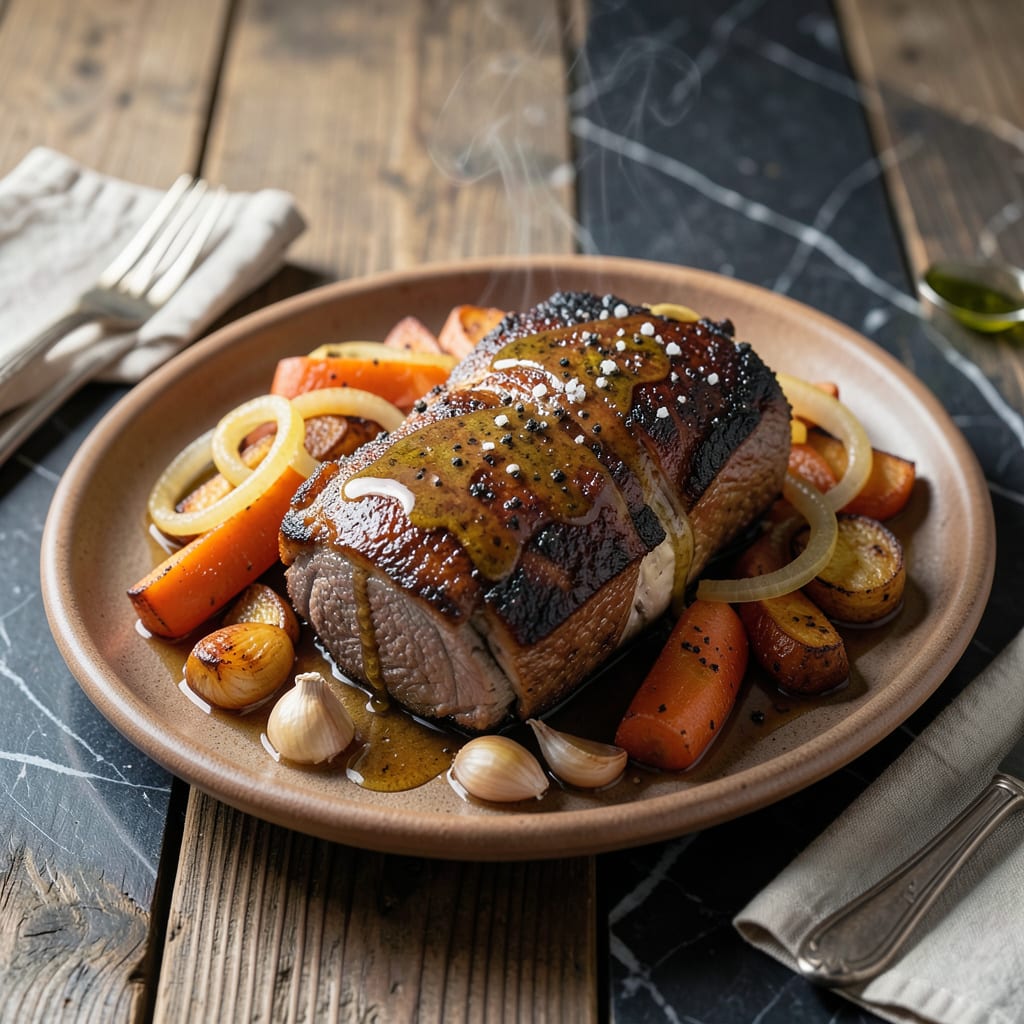
There’s something deeply satisfying about a perfectly braised beef shoulder pot roast, where the meat becomes fork-tender and the vegetables soak up rich, savory flavors.
This recipe delivers a hearty, comforting meal with minimal effort—just let the slow cooking process work its magic. The result is a dish that tastes like it’s been simmering all day, with every bite bursting with depth and warmth.
Ingredients for Shoulder Pot Roast
Hearty beef and garden vegetables transform this slow-braised dish into pure comfort on a plate.
| Ingredient | Amount | Notes |
|---|---|---|
| Beef Shoulder Roast 🥩 | 3 lb | Chuck roast, well-marbled |
| Kosher Salt 🧂 | 2 tsp | Diamond Crystal preferred |
| Freshly Ground Black Pepper 🌶️ | 1 tsp | Coarse grind recommended |
| Garlic Cloves 🧄 | 6 cloves | Peeled, smashed lightly |
| Yellow Onion 🧅 | 2 whole | Large, quartered |
| Carrots 🥕 | 4 whole | Peeled, cut into chunks |
| Yukon Gold Potatoes 🥔 | 1 ½ lb | Cut into large pieces |
| Celery Stalks 🌿 | 3 pieces | Cut into 2-inch lengths |
| Dry Red Wine 🍷 | 1 ½ cups | Bold variety like Cabernet |
| Beef Stock 🥣 | 2 cups | Low-sodium preferred |
| Tomato Paste 🍅 | 3 tbsp | Double-concentrated preferred |
| Fresh Thyme Sprigs 🌿 | 4 pieces | Plus extra for garnish |
| Fresh Rosemary Sprigs 🌿 | 2 pieces | Woody stems removed |
| Bay Leaves 🍃 | 2 pieces | Dried or fresh |
| Olive Oil 🫒 | 2 tbsp | For searing beef |
The beef shoulder is non-negotiable for texture. Chuck roast with visible marbling ensures fork-tender results—avoid lean cuts like round. Whole Foods and Costco have excellent pre-cut options, but ask the butcher to trim excess fat if needed. For the wine, a bold Cabernet Sauvignon or Merlot adds depth. Don’t use cooking wine; its quality directly impacts the final flavor profile.
No red wine? Substitute additional beef stock with 1 tbsp balsamic vinegar. Fresh herbs are ideal, but dried at one-third the amount works in a pinch. For the vegetables, parsnips or turnips can replace potatoes. If tomato paste is unavailable, 1 cup crushed tomatoes (reduced) will do. Always use low-sodium stock to control seasoning—homemade is best.
Leftovers taste even better after 24 hours as flavors meld. Store in an airtight container for up to 4 days in the fridge or freeze for 3 months. Reheat gently on the stovetop to preserve texture. The rendered fat from the beef can be skimmed and saved for future cooking.
Why You’ll Love This Recipe
- Set It and Forget: I toss the beef shoulder with salt, pepper, garlic, and onion in the morning, and by dinnertime the slow cooker does all the work.
- Melt-in-Your-Mouth Tenderness: The shoulder cut turns buttery-soft after hours with just those simple seasonings.
- Feeds My Whole Crew: One roast stretches into tacos, sandwiches, or stew for days—my family of five never complains.
- Budget Hero: Shoulder’s cheaper than chuck, and I stretch it across three meals without anyone noticing.
Step-by-Step Instructions for Slow-Braised Beef with Garden Vegetables
This method transforms tough beef shoulder into fork-tender perfection with rich, deep flavors.
Step 1: Sear and Season the Beef Shoulder Roast
Pat the 3 lb Beef Shoulder Roast dry with paper towels, then season aggressively on all sides with the 2 tsp Kosher Salt and 1 tsp Freshly Ground Black Pepper. I use a coarse grind for the pepper—it adheres better to the meat and provides more pronounced texture.
Heat the 2 tbsp Olive Oil in a large Dutch oven over medium-high heat until shimmering. Sear the beef for 4-5 minutes per side until deeply browned on all surfaces. This creates a flavorful fond that will form the base of your braising liquid. Don’t rush this step; proper browning develops complex, meaty flavors in the final dish.
Step 2: Build the Aromatic Base
Remove the beef and set aside. In the same pot, add the 2 whole Yellow Onion, 4 whole Carrots, and 3 pieces Celery Stalks. Sauté for 5-6 minutes until the vegetables begin to soften and develop some color. The natural sugars in the onions will caramelize slightly, adding depth to your braise.
Add the 6 cloves Garlic Cloves and 3 tbsp Tomato Paste, stirring constantly for 1-2 minutes until the tomato paste darkens slightly and coats the vegetables. This step intensifies the paste’s flavor and prevents a raw taste in the final sauce. Be careful not to let it burn.
Step 3: Deglaze and Add Liquids
Pour in the 1.5 cups Dry Red Wine, scraping the bottom of the pot to release all the browned bits. Let it simmer for 3-4 minutes until reduced by about half. The alcohol will cook off, leaving behind concentrated wine flavor that complements the beef beautifully.
Return the beef to the pot. Add the 2 cups Beef Stock, 4 pieces Fresh Thyme Sprigs, 2 pieces Fresh Rosemary Sprigs, and 2 pieces Bay Leaves. The liquid should come about halfway up the beef. This combination of herbs adds layers of earthy, floral notes without overpowering the natural beef flavor.
Step 4: Braise with Vegetables
Add the 1.5 lb Yukon Gold Potatoes to the pot, nestling them around the beef. Bring the liquid to a gentle simmer, then cover and transfer to a preheated 325°F oven. Braise for 3 to 3.5 hours, turning the beef once halfway through.
The dish is done when the beef pulls apart easily with a fork and the potatoes are tender. The braising liquid should have reduced slightly and taken on a rich, dark color. The vegetables will have absorbed the meaty, herby flavors, making them just as delicious as the beef itself.
Step 5: Rest and Serve
Carefully transfer the beef to a cutting board and let it rest for 15 minutes before slicing or pulling apart. This allows the juices to redistribute throughout the meat, ensuring every bite is moist and flavorful.
Skimming excess fat from the surface of the braising liquid and serving it as a sauce over the beef and vegetables completes the dish. The sauce should be thick enough to coat the back of a spoon, with all the rich, concentrated flavors of the braising process.
Pro Tips For Making Shoulder Pot Roast
- Sear Hard First: I learned this the hard way—get your pan screaming hot before searing the shoulder, and don’t move it for at least 2-3 minutes per side. That deep crust is what builds flavor in the braise.
- Salt Overnight: Sounds weird, but dry-brining the roast with kosher salt 12-24 hours ahead actually changes the outcome. The meat stays juicier, and the seasoning penetrates all the way through.
- Don’t Drown It: Resist the urge to add too much liquid—just enough to come halfway up the meat. I used to flood the pot and ended up with a watery, bland broth instead of a rich sauce.
- Use Stale Bread: After burning a few batches, I finally figured out thicken the braising liquid with a slice of stale bread tossed in at the end. It dissolves into the sauce and gives it a silky, gravy-like finish.
Common Mistakes When Making shoulder pot roast
Skipping the Sear
I know it’s tempting to skip searing to save time, but this step builds the fond that gives your pot roast its deep, meaty flavor. Sear the 3 lb Beef Shoulder Roast for 4-5 minutes per side in 2 tbsp Olive Oil over medium-high heat for the best results. 🔥
Using Lean Cuts
Shoulder roast needs marbling for tenderness. Avoid lean cuts like round roast—they’ll dry out during the long braise. Stick with chuck roast for fork-tender results.
Overcrowding the Pot
If you add all 1.5 lb Yukon Gold Potatoes at once, they’ll steam instead of braise. Nestle them around the beef, but don’t pack them in. This ensures even cooking and proper flavor absorption.
Not Enough Liquid
The liquid should come halfway up the beef. Use 1.5 cups Dry Red Wine and 2 cups Beef Stock for a 3 lb roast. Too little liquid means uneven cooking and risk of burning.
Opening the Lid
Every time you peek, heat escapes and extends cooking time. Keep the lid on during the 3 to 3.5 hour braise at 325°F. Trust the process—resist the urge to check too often.
Skipping the Rest
Let the beef rest for 15 minutes after cooking. This allows juices to redistribute, so they don’t spill out when you slice, leaving you with dry meat. Patience pays off here. 💡
Nutrition Facts
Frequently Asked Questions
What’s the best cut for a pot roast?
Use beef chuck roast with good marbling for the most tender results. It has enough fat to stay moist during the long braise. Avoid lean cuts like round roast.
How long does it take to cook?
Braise at 325°F for 3 to 3.5 hours until the meat pulls apart easily. The exact time depends on your oven and the roast size.
Can I make this in a slow cooker?
Yes! Sear the meat first, then transfer everything to a slow cooker. Cook on low for 8 hours or high for 6 hours.
What if my sauce is too thin?
Simmer uncovered for 10-15 minutes to reduce. Alternatively, mix 1 tbsp cornstarch with water and stir into the sauce.

- 4C Bread Crumbs Meatballs Recipe: Crispy Crust and Juicy Centers - September 25, 2026
- 6 Oz Chocolate Chip Cookie Recipe: Perfectly Balanced Crispy Edges and Chewy Hearts - September 25, 2026
- 6-Inch Coffee Cake Recipe: Vanilla Bean Swirls and Buttery Streusel Topping - September 25, 2026