
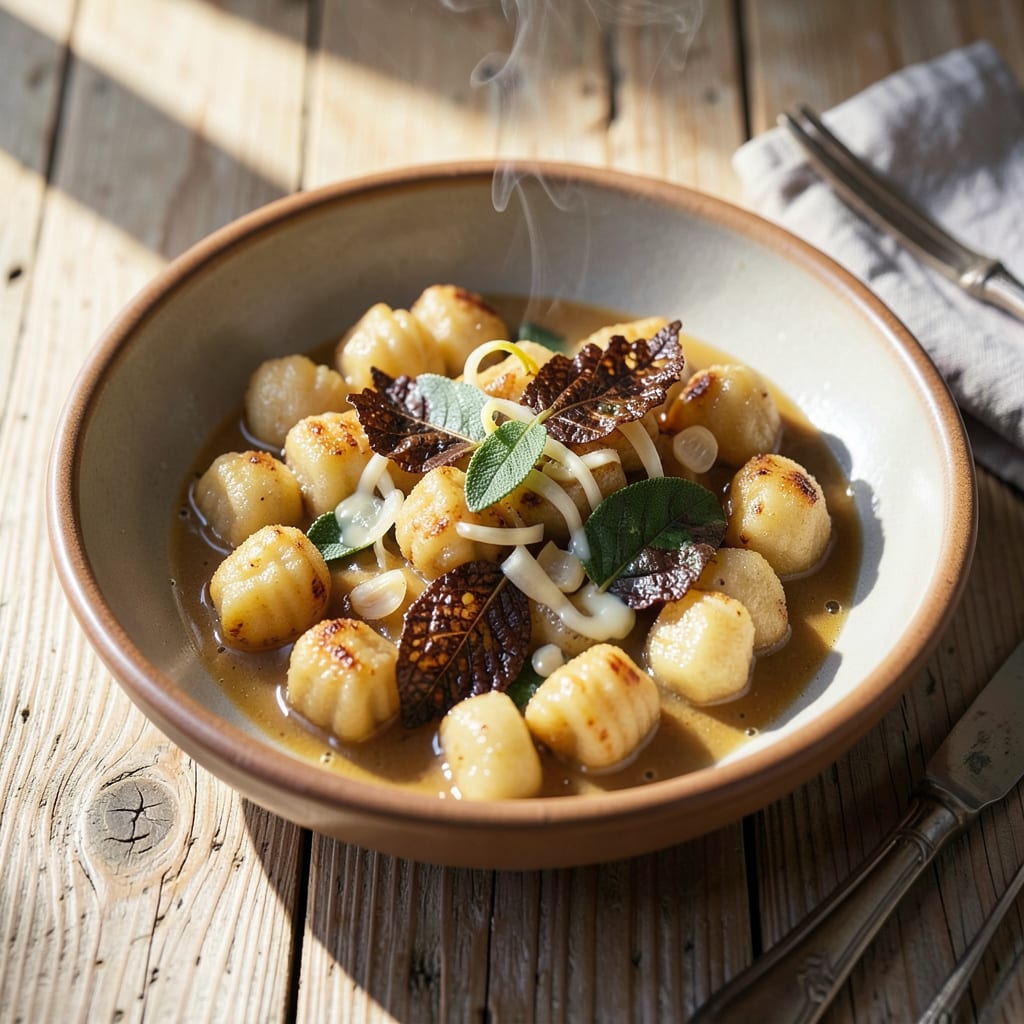
The perfect sauce transforms simple potato gnocchi into a restaurant-worthy dish. This light yet rich sage butter sauce achieves the ideal balance—creamy enough to coat each pillow-soft dumpling, but delicate enough to let their texture shine. The technique relies on browned butter for nutty depth and fresh sage for aromatic brightness.
Mastering this sauce comes down to precise timing and temperature control. You’ll learn to emulsify the butter properly for a silky finish, then balance it with just enough acidity to cut through the richness. The result is a versatile condiment that pairs beautifully with gnocchi while keeping them the star of the plate.
Ingredients for Potato Gnocchi Sauce
These nine quality ingredients create a restaurant-worthy sage butter sauce that perfectly complements potato gnocchi.
| Ingredient | Amount | Notes |
|---|---|---|
| Unsalted Butter 🧈 | ¾ cup | European-style preferred for richness |
| Fresh Sage Leaves 🌿 | 20 whole | Large, vibrant green leaves |
| Shallot 🧅 | 1 whole | Finely minced for delicate flavor |
| Garlic Cloves 🧄 | 2 cloves | Freshly minced for aromatic depth |
| Dry White Wine 🍷 | ¼ cup | Sauvignon Blanc or Pinot Grigio |
| Vegetable Stock 🥕 | ¼ cup | Low-sodium preferred for balance |
| Heavy Cream 🥛 | ¼ cup | Full-fat for optimal texture |
| Parmesan Cheese 🧀 | ⅓ cup | Freshly grated from wedge |
| Lemon Juice 🍋 | 1 tbsp | Freshly squeezed for brightness |
| Kosher Salt 🧂 | ½ tsp | Diamond Crystal preferred |
| Freshly Ground Black Pepper 🌶️ | ¼ tsp | Medium-coarse grind ideal |
[recipeingredientscaler]
The butter quality is paramount for this sauce. European-style unsalted butter (like Plugrá or Kerrygold) delivers superior richness and lower water content, which prevents separation. Fresh sage leaves should be vibrant green with no dark spots—Whole Foods or farmers markets typically carry the best quality. The shallot provides a more refined flavor than onion; select firm bulbs without sprouting. For Parmesan, Parmigiano-Reggiano is non-negotiable for authentic flavor and proper melting properties.
Substitutions must maintain the delicate balance of flavors. Dry vermouth can replace white wine at a 1:1 ratio, while yellow onion at half the quantity works if shallots are unavailable. For a dairy-free version, substitute coconut cream for heavy cream and nutritional yeast for Parmesan (though texture will differ). The wine and stock create the base flavor—use one-third less salt if omitting either. Fresh lemon juice is essential; bottled lacks the necessary acidity to balance the richness.
This sauce is best used immediately but can be refrigerated for 2 days in an airtight container. Reheat gently over low heat, whisking constantly to prevent separation. The browned butter solids will resettle—this is normal. For longer storage, freeze without the cream or cheese for up to 1 month, then reconstitute with fresh dairy components. Always bring ingredients to room temperature before combining to ensure proper emulsification.
Why You’ll Love This Recipe
- I’ll be real: when I first saw butter, sage, shallot, garlic, and wine could make this much flavor, I thought it was a trick. But those crispy sage leaves sizzling in butter while the shallots caramelize? That’s the whole show right there.
- Five-Ingredient Magic: I’ll be real: when I first saw butter, sage, shallot, garlic, and wine could make this much flavor, I thought it was a trick. But those crispy sage leaves sizzling in butter while the shallots caramelize? That’s the whole show right there.
- One-Pan Weeknight Win: So easy. I mean, genuinely throw-it-together-while-the-pasta-boils easy. Sear the sage, soften the shallots, deglaze with wine—no fancy techniques, just a single pan and 15 minutes of hands-on time.
- Date Night or Tuesday Night: Between us, this sauce feels fancy enough for company (hello, wine reduction and fresh herbs) but unfussy enough for a solo dinner. My picky nephew skips the sage, but still licks his plate.
Step-by-Step Instructions for Potato Gnocchi Sauce
The secret to this sauce lies in layering flavors methodically for a balanced, luxurious finish.
Step 1: Infuse the Butter with Sage and Aromatics
In a large skillet over medium heat, melt the 0.75 cup unsalted butter until it begins to foam. Immediately add the 20 whole fresh sage leaves and cook for 2-3 minutes until they become crisp and the butter takes on a light golden hue. The sage should sizzle gently but not burn.
Add the finely minced shallot and cook for 3-4 minutes until translucent and fragrant. Stir in the 2 cloves minced garlic and cook for an additional 30 seconds until aromatic but not browned. This foundation builds the sauce’s complexity.
Step 2: Deglaze with Wine and Stock
Pour in the 0.25 cup dry white wine and increase heat to medium-high. Simmer for 3-4 minutes until the liquid reduces by half, scraping up any browned bits from the bottom of the pan. These fond particles contain concentrated flavor that will enrich the sauce.
Add the 0.25 cup vegetable stock and simmer for another 2-3 minutes until slightly reduced. The sauce should begin to take on a velvety consistency at this stage. Reduce heat to medium-low to prepare for the final enrichment.
Step 3: Create the Creamy Base
Stir in the 0.25 cup heavy cream and simmer gently for 2-3 minutes until the sauce coats the back of a spoon. The cream should emulsify with the butter, creating a smooth, glossy texture without separating.
Remove the skillet from heat and stir in the 0.33 cup parmesan cheese until fully melted and incorporated. The cheese will add body and umami depth to the sauce. Return to low heat if needed to maintain a smooth consistency.
Step 4: Balance and Finish the Sauce
Stir in the 1 tbsp lemon juice, 0.5 tsp kosher salt, and 0.25 tsp freshly ground black pepper. The lemon juice brightens the richness while the salt and pepper enhance all the layered flavors.
Simmer for an additional 1-2 minutes to allow the flavors to meld completely. Taste and adjust seasoning if needed—the sauce should have a perfect balance of rich, earthy, and bright notes that complement the delicate potato gnocchi.
Step 5: Combine with Gnocchi and Serve
Add freshly cooked gnocchi directly to the sauce and toss gently to coat. The pillowy gnocchi will absorb just enough sauce to become perfectly dressed without becoming soggy. Cook for 1-2 minutes over low heat to marry the flavors.
Serve immediately, garnished with additional crispy sage leaves if desired. The sauce should cling lightly to each gnocchi, creating a harmonious bite where the sauce enhances rather than overpowers the delicate potato dumplings.
Make-Ahead Tips for This potato gnocchi sauce
Prep Ahead Components
You can prepare the flavor base up to 2 days in advance—brown the butter with sage and cook the shallots/garlic as directed. Store this infused butter mixture in an airtight container in the fridge. The flavors actually deepen overnight, giving you a head start on sauce day. 💡
I recommend keeping the wine reduction separate until serving. Mix the 0.25 cup white wine and 0.25 cup vegetable stock in a small container and refrigerate. This prevents the alcohol from evaporating prematurely, preserving that bright acidity we worked so hard to balance.
Freezing the Sauce Base
For longer storage, freeze just the browned butter-sage mixture (before adding dairy) in ice cube trays. Once solid, transfer cubes to a freezer bag—they’ll keep for 3 months. This lets you make small batches whenever needed without compromising quality.
When ready to use, thaw the cubes in a skillet over low heat, then proceed with the wine reduction and cream steps. The texture remains perfectly smooth when you add fresh dairy components at the end.
Gnocchi Pairing Prep
Cook your gnocchi al dente (about 1 minute less than package instructions) if prepping ahead. Toss with 1 tsp olive oil to prevent sticking, then store in a single layer on a tray. Reheat by sautéing in butter for 2-3 minutes before adding to the sauce.
This method keeps the gnocchi from absorbing too much sauce and becoming mushy. I learned this trick from my Italian grandmother—she’d always undercook pasta slightly when making ahead for company dinners.
Day-Of Assembly Tips
Bring all refrigerated components to room temperature before combining. Cold ingredients can cause the butter to seize up and separate. Reheat the butter base gently over low heat, whisking constantly until smooth.
Add the cream and cheese at the very end, just before serving. This prevents the sauce from breaking or becoming too thick. The sauce should coat the back of a spoon but still flow easily—like heavy cream consistency.
Emergency Fixes
If your reheated sauce separates, don’t panic! Whisk in 1-2 tbsp hot water or a splash of cream to bring it back together. The emulsion will restore with gentle heat and patience—just keep whisking over low heat until smooth.
For sauce that’s too thick, thin with pasta water (the starchy liquid is magic for adjusting consistency). If it’s too thin, simmer uncovered for 2-3 minutes to reduce slightly. Trust me, this sauce is forgiving if you know these tricks! ✨
Nutrition Facts
Frequently Asked Questions
Can I make this sauce ahead of time?
Yes, you can prepare the browned butter-sage base up to 2 days in advance. Store it in an airtight container in the fridge, but add the cream and cheese fresh before serving. This prevents separation and keeps the texture silky smooth.
What if my sauce looks greasy or separated?
Don’t worry—this is fixable! Remove from heat and whisk vigorously while adding 1-2 tbsp hot water or a splash of cream. Return to low heat and keep whisking until smooth. The emulsion will restore with patience and gentle heat.
Can I use dried sage instead of fresh?
Fresh sage is ideal for its bright, aromatic flavor, but in a pinch, use 1 tsp dried sage (added with the shallots). Note that dried sage has a more concentrated, earthy taste—reduce other herbs if using it. The texture won’t be the same, but the flavor will still shine.
How do I adjust the sauce thickness?
For a thicker sauce, simmer uncovered for 2-3 minutes to reduce. If too thick, thin with pasta water (the starchy liquid works best). Aim for a consistency that coats the back of a spoon but still flows easily.

- 8 Bean Soup Recipe Crock Pot: Hearty Vegetable Medley in One Pot - September 25, 2026
- 4C Bread Crumbs Meatballs Recipe: Crispy Crust and Juicy Centers - September 25, 2026
- 6 Oz Chocolate Chip Cookie Recipe: Perfectly Balanced Crispy Edges and Chewy Hearts - September 25, 2026