
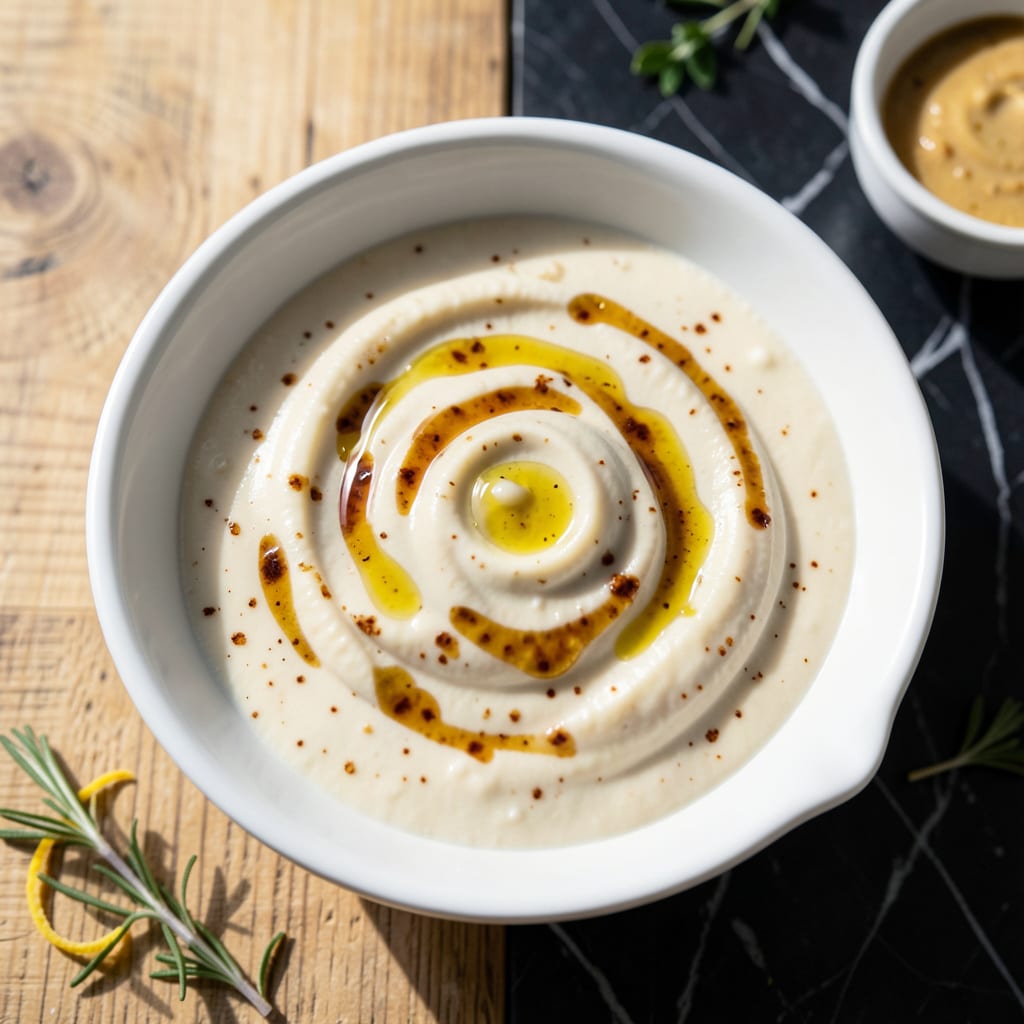
I developed this low-fat mayo to prove that creamy, rich flavor doesn’t need full-fat ingredients. The secret lies in using Greek yogurt for body while keeping the classic tang.
This version delivers silky texture and full flavor with a fraction of the calories. It’s perfect for sandwiches, salads, or as a base for other sauces.
Ingredients for Low Fat Mayo
Ten ingredients create this silky, tangy spread with far fewer calories than traditional versions.
| Ingredient | Amount | Notes |
|---|---|---|
| Non-Fat Greek Yogurt 🥛 | 1 cup | Plain, unsweetened, strained |
| Canola Oil 🫒 | ¼ cup | Neutral flavor preferred |
| Dijon Mustard 🟡 | 2 tsp | Smooth, no seeds |
| White Vinegar 💧 | 1 tbsp | Or apple cider vinegar |
| Lemon Juice 🍋 | 1 tbsp | Freshly squeezed preferred |
| Honey 🍯 | 1 tsp | Or agave for vegan option |
| Garlic Powder 🧄 | ½ tsp | Fine grind preferred |
| Onion Powder 🧅 | ½ tsp | Balances acidity and sweetness |
| Salt 🧂 | ½ tsp | Fine sea salt or kosher |
| White Pepper 🌶️ | ¼ tsp | Milder than black pepper |
The Greek yogurt is non-negotiable—Fage Total 0% or Chobani Non-Fat deliver the right thickness and neutrality. Avoid brands with additives or sweeteners, as they can throw off the balance. For the oil, canola or light olive oil works best; their mild flavors won’t compete with the tang. Look for Dijon mustard with a smooth texture—Grey Poupon is a reliable choice at most supermarkets.
No Greek yogurt? Strained regular yogurt (line a sieve with cheesecloth) works in a pinch, though the texture may be slightly thinner. For a vegan version, unsweetened almond or soy yogurt at one-third less volume can substitute. The vinegar can be swapped for any mild acid—rice vinegar or lemon juice add brightness. Skip the honey entirely if you prefer it less sweet; the tang will still shine.
This keeps in an airtight container in the fridge for up to 10 days. Stir before each use, as separation is natural. For longer storage, freeze in ice cube trays for up to 3 months—thaw overnight in the fridge before using.
Why You’ll Love This Recipe
- 5-Minute Mix: I just dump everything in a bowl, whisk, and it’s done—no fancy tools, no waiting.
- Tangy Kick: The Dijon and lemon juice give it that bright, zesty pop I crave in every bite.
- Meal Prep Hero: I slather it on sandwiches, mix it into dressings, and even use it as a dip all week long.
- Fridge Staple: Honestly, it keeps for days, so I always have a healthier spread ready when I need it.
Step-by-Step Instructions for Low Fat Mayo
This method ensures a smooth, creamy emulsion that rivals traditional mayonnaise in both texture and flavor.
Step 1: Combine the Acidic and Sweet Components
In a medium bowl, whisk together the 1 tbsp White Vinegar, 1 tbsp Lemon Juice, and 1 tsp Honey. I prefer using a bowl with a spout for easier pouring later. The vinegar and lemon juice provide the necessary acidity to balance the richness of the mixture, while the honey adds a subtle sweetness that rounds out the flavor profile.
Whisk vigorously until the honey fully dissolves into the liquids. You should have a smooth, homogenous mixture with no visible separation. This combination creates the tangy backbone that defines a quality mayonnaise.
Step 2: Incorporate the Flavor Enhancers
Add the 2 tsp Dijon Mustard, 0.5 tsp Garlic Powder, 0.5 tsp Onion Powder, 0.5 tsp Salt, and 0.25 tsp White Pepper to the acid mixture. The Dijon mustard acts as an emulsifier, helping to bind the oil and yogurt together for a stable, creamy texture.
Whisk these ingredients thoroughly for about 30 seconds until no dry spots remain. The garlic and onion powders add depth without overpowering, while the white pepper provides a mild heat that complements rather than dominates. This is where the flavor foundation is built.
Step 3: Create the Base with Greek Yogurt
Pour the 1 cup Non-Fat Greek Yogurt into the bowl with the seasoned acid mixture. I recommend using plain, unsweetened, strained Greek yogurt for the smoothest texture and cleanest flavor. The yogurt serves as the primary base, providing creaminess without the fat of traditional mayonnaise.
Whisk until completely smooth and well combined. The mixture will thicken slightly as the yogurt incorporates with the other ingredients. At this stage, you should have a pale, slightly tangy base that’s ready for the final emulsification step.
Step 4: Emulsify with Canola Oil
Begin adding the 0.25 cup Canola Oil in a very slow, thin stream while whisking constantly. This gradual addition is crucial for creating a stable emulsion. I find that drizzling from a measuring cup with a spout gives me the best control over the oil flow.
Continue whisking vigorously as you add the oil. The mixture will begin to thicken and lighten in color as the oil incorporates. After about 2-3 minutes of constant whisking, you should have a smooth, creamy mayonnaise that coats the back of a spoon. If the mixture appears too thick, you can thin it with a teaspoon of water, though this is rarely necessary with these proportions.
Step 5: Adjust and Rest for Optimal Texture
Taste and adjust seasoning if needed, though the initial measurements should provide a well-balanced flavor. Transfer the mayonnaise to a clean jar or airtight container. The flavor will develop and mellow slightly as it rests.
Let the mayonnaise sit at room temperature for 10-15 minutes before refrigerating. This brief rest period allows the emulsion to fully stabilize. Once chilled, it will thicken slightly more and can be stored in the refrigerator for up to 1 week. The texture should remain smooth and spreadable throughout its shelf life.
Pro Tips For Making Low Fat Mayo
- Whisk Slowly: Add the canola oil in a thin, steady stream while whisking—dumping it all at once turns your mayo into a greasy mess. I learned this the hard way after ruining my first two batches.
- Strain the Yogurt: Drain the Greek yogurt in a fine-mesh sieve for 10 minutes to remove excess water. Sounds tedious, but it keeps your mayo thick instead of runny.
- Skip Cold Ingredients: Make sure your yogurt and oil are at room temperature. Cold ingredients resist emulsifying, and you’ll end up with a separated, sad-looking sauce.
- Start with Mustard: Whisk the Dijon mustard into the yogurt first—it acts as a natural emulsifier and helps bind everything together. My grandmother swore by this, and she was right.
Perfect Pairings for This low fat mayo
Sandwich Enhancers
This spread transforms a simple turkey sandwich into something special. I slather 2 tbsp on whole wheat bread with sliced avocado, sprouts, and roasted turkey breast. The creaminess pairs perfectly with the crunch. 🥪
Salad Dressing Base
Whisk 3 tbsp of this mayo with 1 tbsp apple cider vinegar and 1 tsp maple syrup for a tangy coleslaw dressing. It clings beautifully to cabbage without weighing it down. I love it on shredded red cabbage with carrots.
Dip for Veggies
Thin with 1-2 tsp water for a veggie dip that’s lighter than ranch. Add dried dill or smoked paprika for extra flavor. My kids can’t get enough of this with cucumber and bell pepper sticks.
Potato Salad Secret
Use it in place of regular mayo in your favorite potato salad recipe. I mix ½ cup into 2 lbs cooked potatoes with celery and red onion. The tang cuts through the richness of the potatoes. 💛
Burger Upgrade
Swap out full-fat mayo on burgers for a lighter option. I add 1 tsp chipotle powder to ¼ cup for a smoky kick. It’s especially good on turkey or veggie burgers where you want to keep things lean.
Deviled Eggs
Mix 2 tbsp with 4 hard-boiled egg yolks and 1 tsp yellow mustard for a lighter deviled egg filling. The yogurt base gives them a refreshing tang that balances the richness of the eggs.
Nutrition Facts
Frequently Asked Questions
Can I use regular yogurt instead of Greek?
Strain regular yogurt in cheesecloth for 1 hour first to remove excess liquid. The texture won’t be quite as thick, but it will work in a pinch.
Why does my mayo separate after a few days?
Separation is natural with low-fat versions. Just stir vigorously before each use. For longer stability, ensure your container is completely airtight.
What oil works best if I don’t have canola?
Use light olive oil or avocado oil as 1:1 substitutes. Avoid strong-flavored oils like extra virgin olive oil, which can overpower the taste.
How can I make this vegan?
Replace Greek yogurt with unsweetened soy or almond yogurt, using ⅔ cup instead of 1 cup. Skip honey or use agave nectar.

- 8 Bean Soup Recipe Crock Pot: Hearty Vegetable Medley in One Pot - September 25, 2026
- 4C Bread Crumbs Meatballs Recipe: Crispy Crust and Juicy Centers - September 25, 2026
- 6 Oz Chocolate Chip Cookie Recipe: Perfectly Balanced Crispy Edges and Chewy Hearts - September 25, 2026