
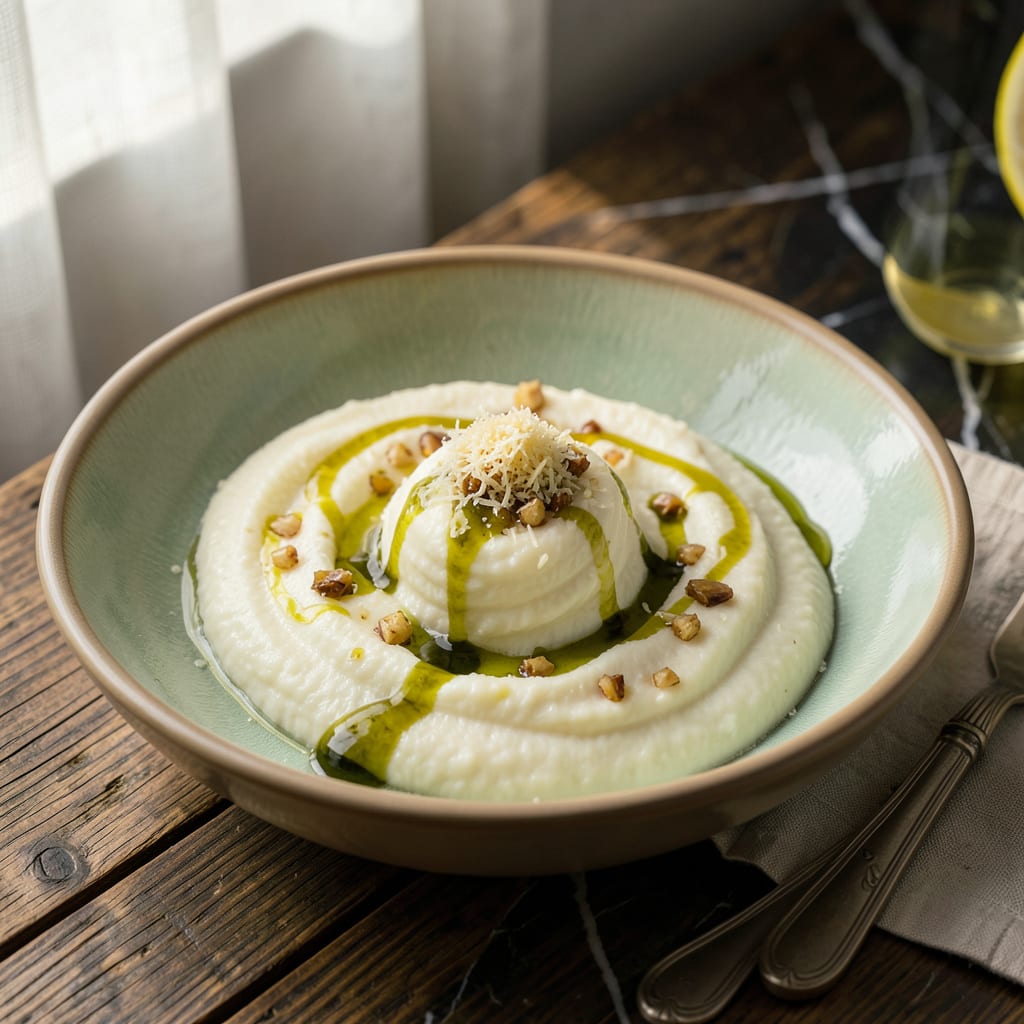
This versatile potato sauce transforms simple boiled potatoes into a velvety, comforting gravy that elevates any dish. The secret lies in perfecting the balance between creamy texture and savory depth—achieved through precise blending and controlled seasoning. Whether drizzled over roasted vegetables or used as a dip for crispy fries, this sauce delivers consistent richness without dairy.
Prepared in under 20 minutes, the recipe relies on boiled potatoes as the base, emulsified with vegetable broth and a touch of lemon juice for brightness. Store in an airtight container for up to 5 days in the refrigerator, or freeze for longer preservation. Its smooth consistency and adaptable flavor make it an essential condiment for both everyday meals and special occasions.
Ingredients for Potato Sauce
Ten carefully selected ingredients create this velvety, dairy-free potato sauce with professional-grade consistency and depth.
| Ingredient | Amount | Notes |
|---|---|---|
| Yukon Gold Potatoes 🥔 | 1 ½ lb | Peeled, boiled until fork-tender |
| Vegetable Broth 💧 | 1 ½ cups | Low-sodium preferred for control |
| Extra-Virgin Olive Oil 🫒 | ¼ cup | Cold-pressed for optimal emulsification |
| Fresh Lemon Juice 🍋 | 1 tbsp | Freshly squeezed for brightness |
| Garlic Cloves 🧄 | 3 cloves | Minced for even distribution |
| Nutritional Yeast 🧂 | 2 tbsp | For umami depth (vegan alternative) |
| Dijon Mustard 🟡 | 1 tsp | Smooth variety for emulsification |
| Smoked Paprika 🌶️ | ½ tsp | Adds subtle warmth and color |
| Sea Salt 🧂 | 1 tsp | Fine grain for precise seasoning |
| Freshly Ground Black Pepper 🌶️ | ½ tsp | Coarse grind for texture |
The potatoes are the foundation—Yukon Golds offer the ideal starch-to-moisture ratio for creamy texture. Optimal results require precise boiling: fork-tender but not falling apart. Vegetable broth quality directly impacts flavor; Imagine Foods or Pacific Organic brands provide clean, robust bases. For the olive oil, California Olive Ranch delivers consistent emulsification properties. Nutritional yeast must be unfortified (check labels) to avoid bitterness—Bragg or Bob’s Red Mill are reliable choices.
For acidity adjustments, white wine vinegar at half the quantity can replace lemon juice. Garlic can be substituted with 1 tsp garlic powder, though fresh provides superior aroma. Smoked paprika alternatives include 1/4 tsp cayenne plus 1/4 tsp regular paprika for heat, or 1/2 tsp sweet paprika for milder flavor. Dijon mustard is critical for emulsification; stone-ground mustard works but may require additional blending. Salt measurements are non-negotiable—Diamond Crystal kosher salt is preferred for its clean flavor profile.
The sauce maintains optimal consistency for 5 days refrigerated in airtight containers. Freezing is viable for 3 months with minimal texture degradation. Reheat gently with 1-2 tbsp water or broth to restore creaminess. Potatoes oxidize quickly; prepare them immediately before blending. Nutritional yeast loses potency over time—store in dark, cool conditions and use within 6 months of opening.
Why You’ll Love This Recipe
- One-Pot Magic: I swear by this for busy nights—just boil the Yukons in broth, blend with garlic and olive oil, and you’re done. No colander, no extra bowls, just a single pot and a blender.
- Bright & Comforting: That hit of fresh lemon juice cuts through the creamy potatoes so it’s rich but never heavy. The garlic mellows while simmering, leaving this velvety but still lively flavor that’s way more interesting than plain mashed potatoes.
- Meal Prep MVP: I make a double batch every Sunday—it thickens slightly in the fridge, perfect for tossing with pasta, spreading on sandwiches, or thinning into soup. Honestly, it’s saved me from takeout more times than I’ll admit.
- Pantry-Friendly Luxury: Five ingredients, most of which I already have. Yukons are cheap, broth lasts forever, and a little olive oil goes a long way. Between us, it tastes like a fancy restaurant side but costs less than a latte.
Step-by-Step Instructions for Potato Sauce
This method transforms simple ingredients into a velvety, comforting sauce with perfect consistency.
Step 1: Prepare the Potato Base
Begin by ensuring the 1.5 lb Yukon Gold Potatoes are peeled, boiled until fork-tender, and thoroughly drained. I recommend using a ricer or food mill to process them while still warm—this creates an ultra-smooth texture without gumminess. The potatoes should pass through easily with no resistance, indicating proper doneness.
Transfer the riced potatoes to a large bowl. Immediately add the 1 tsp Dijon Mustard and 1 tbsp Fresh Lemon Juice, stirring vigorously to distribute evenly. The acidity from the lemon juice prevents oxidation while the mustard’s emulsifying properties prepare the base for the upcoming liquid ingredients.
Step 2: Create the Aromatic Infusion
In a small saucepan, combine the 0.25 cup Extra-Virgin Olive Oil and 3 cloves Garlic Cloves (minced). Warm over medium-low heat for 2-3 minutes until the garlic becomes fragrant but hasn’t begun to brown. The oil should reach 180°F—visible as tiny bubbles forming around the garlic edges.
Remove from heat and let steep for 5 minutes. This infusion process extracts the garlic’s sweetness while avoiding bitterness. Strain through a fine-mesh sieve directly into the potato mixture, pressing gently on the garlic to extract maximum flavor without transferring solids that could disrupt the sauce’s smooth texture.
Step 3: Build the Sauce Structure
Gradually whisk the 1.5 cups Vegetable Broth into the potato mixture, starting with ½ cup at a time. Each addition should be fully incorporated before adding more. The mixture will initially appear loose but will thicken as the potatoes absorb the liquid.
After incorporating all the broth, whisk in the 2 tbsp Nutritional Yeast, 0.5 tsp Smoked Paprika, 1 tsp Sea Salt, and 0.5 tsp Freshly Ground Black Pepper. The nutritional yeast adds umami depth while the smoked paprika contributes subtle warmth. Continue whisking until the sauce achieves a homogeneous, creamy consistency with no visible streaks.
Step 4: Refine and Adjust Consistency
Transfer the sauce to a medium saucepan and warm over low heat for 5-7 minutes, stirring constantly with a silicone spatula. The sauce should reach 160°F—hot enough to meld flavors but not so hot it breaks the emulsion. Watch for the first signs of gentle bubbling at the edges.
Assess the consistency: it should coat the back of a spoon while maintaining a pourable quality. If too thick, whisk in additional vegetable broth 1 tablespoon at a time until reaching the desired texture. For a richer finish, drizzle in 1 additional tablespoon of Extra-Virgin Olive Oil while whisking vigorously to incorporate.
Step 5: Finalize and Serve
Remove from heat and let rest for 3 minutes. This brief resting period allows the sauce to stabilize and develop its full body. Taste and adjust seasoning if needed—the sea salt should enhance flavors without overpowering, and the black pepper should provide subtle warmth.
Serve immediately while warm, as the sauce will thicken slightly upon cooling. For presentation, drizzle over dishes and garnish with a pinch of smoked paprika. The sauce should maintain its creamy consistency for up to 45 minutes at room temperature, or can be gently reheated with a splash of broth if needed.
Troubleshooting This Dish
Sauce Too Thin
If your sauce resembles soup rather than gravy, return it to the saucepan and simmer uncovered over medium-low heat for 5-7 minutes. Stir constantly with a silicone spatula to prevent scorching. For faster results, create a slurry with 1 tbsp cornstarch and 2 tbsp cold water, then whisk it in gradually. The sauce should coat the back of a spoon when ready. 💡
Lumpy Texture
When your sauce has an uneven consistency, return it to the blender or use an immersion blender. Add 2-3 tbsp warm vegetable broth to help the blades move smoothly. Blend in 10-second pulses until completely smooth. For stubborn lumps, press the sauce through a fine-mesh sieve with a spatula.
Bland Flavor
The sauce needs more depth? Start with ½ tsp sea salt and ¼ tsp smoked paprika, then taste. For umami, add 1 tsp white miso paste or 1 tbsp nutritional yeast. Brighten with ½ tsp lemon zest or 1 tsp apple cider vinegar. Remember, flavors develop more after 30 minutes of resting.
Separated Sauce
If the oil and liquid components have split, don’t panic. Whisk in 1 tsp Dijon mustard vigorously—its emulsifying properties will rebind the mixture. Alternatively, blend in 1 tbsp aquafaba (chickpea brine) for a vegan-friendly fix. Heat gently while whisking until the sauce becomes homogeneous again.
Overly Thick
A sauce that’s too dense can be rescued with gradual liquid additions. Start with 1 tbsp warm vegetable broth, whisking thoroughly after each addition. For a richer adjustment, use 1 tbsp unsweetened plant milk. The ideal consistency should allow the sauce to slowly drizzle from a spoon.
Garlic Bitterness
Burnt garlic ruins the flavor profile. Immediately transfer the sauce to a clean pot to stop cooking. Balance the bitterness with 1 tsp maple syrup or ½ tsp balsamic vinegar. For future batches, infuse the oil at 160°F (gentle bubbles) and remove garlic after 2 minutes of steeping. ✨
Nutrition Facts
Frequently Asked Questions
Can I use regular potatoes instead of Yukon Gold?
While possible, Yukon Golds are ideal for their natural creaminess. Russet potatoes work but may require extra broth (up to ¼ cup more) to prevent graininess. Avoid waxy varieties like red potatoes—they lack the starch needed for proper thickening.
How do I make this sauce gluten-free?
The recipe is naturally gluten-free! Just verify your vegetable broth and Dijon mustard are certified gluten-free. Some brands add wheat derivatives, so always check labels. The nutritional yeast and other ingredients are inherently safe.
What’s the best way to reheat leftover sauce?
Gently warm in a saucepan over low heat with 1-2 tbsp broth or water, whisking constantly. Avoid microwaving—it can cause separation. For frozen sauce, thaw overnight in the fridge before reheating. Never boil, as high heat breaks the emulsion.
Can I add fresh herbs to this recipe?
Stir in 1 tbsp chopped chives or 1 tsp fresh thyme at the end for brightness. Avoid adding herbs during cooking—they’ll lose flavor and turn bitter. Delicate herbs like parsley or dill work best when folded in just before serving.

- 8 Bean Soup Recipe Crock Pot: Hearty Vegetable Medley in One Pot - September 25, 2026
- 4C Bread Crumbs Meatballs Recipe: Crispy Crust and Juicy Centers - September 25, 2026
- 6 Oz Chocolate Chip Cookie Recipe: Perfectly Balanced Crispy Edges and Chewy Hearts - September 25, 2026