
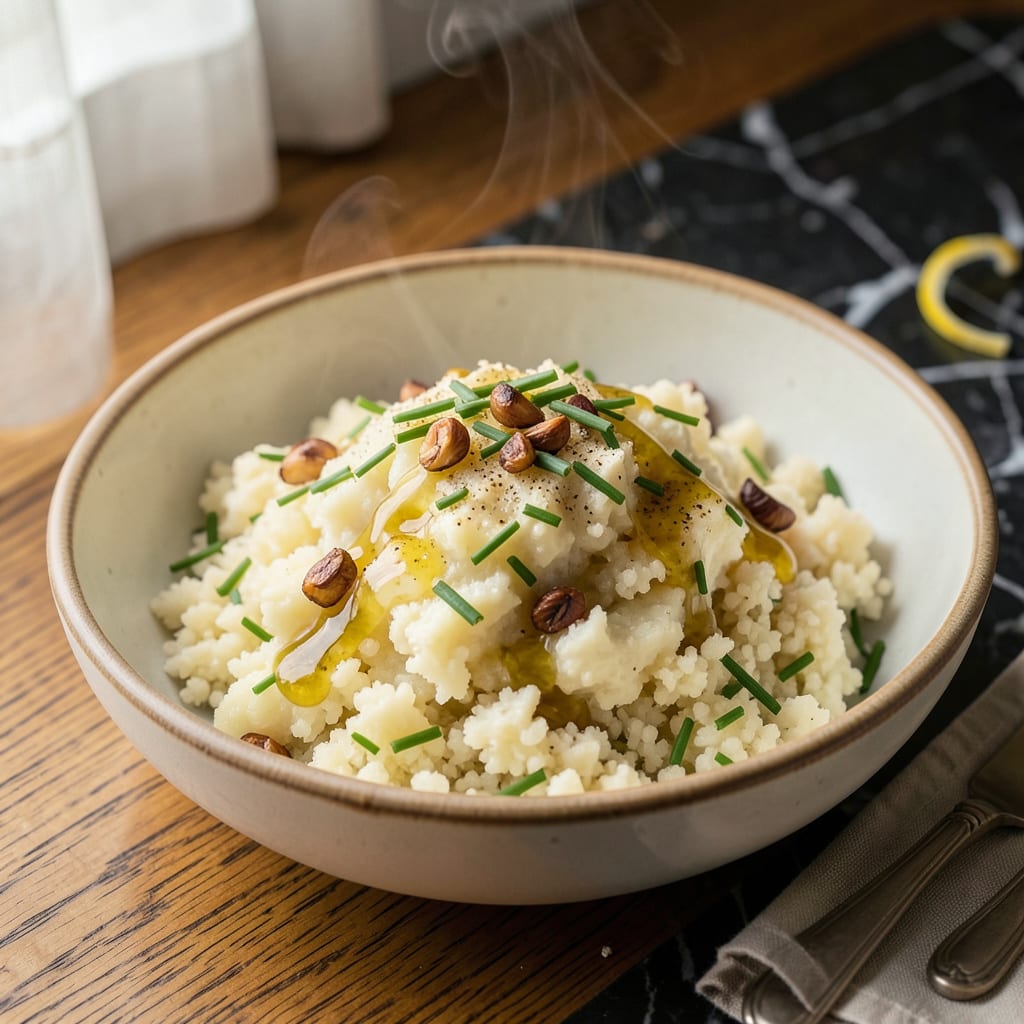
When you need a satisfying alternative to traditional mashed potatoes without sacrificing texture or flavor, this riced potato recipe delivers. The technique transforms ordinary potatoes into light, fluffy grains that mimic rice while maintaining that comforting potato taste. Perfect for those watching their carb intake or simply looking for something different.
This method requires just 20 minutes and basic ingredients you likely already have. The result is versatile enough to serve as a side dish, base for grain bowls, or even a low-carb substitute in stir-fries. With a neutral flavor profile, it readily absorbs herbs, spices, or cheesy additions to match any meal.
Ingredients for Riced Potatoes
Transform ordinary potatoes into a versatile, low-carb alternative with these simple yet precise ingredients.
| Ingredient | Amount | Notes |
|---|---|---|
| Russet Potatoes 🥔 | 2 lb | Peeled and cut into 1-inch cubes |
| Extra-Virgin Olive Oil 🫒 | 2 tbsp | Divided for cooking and finishing |
| Sea Salt 🧂 | 1 tsp | Fine grain, plus more to taste |
| Garlic Cloves 🧄 | 3 cloves | Minced for aromatic base |
| Fresh Chives 🌿 | ¼ cup | Finely chopped for garnish |
| Nutritional Yeast 🧀 | 2 tbsp | For cheesy, umami depth |
| Black Pepper 🌶️ | ½ tsp | Freshly ground for optimal flavor |
| Lemon Zest 🍋 | 1 tsp | Freshly grated for brightness |
| Vegetable Broth 💧 | ¼ cup | Low-sodium preferred for control |
| Smoked Paprika 🌶️ | ½ tsp | Optional for subtle smokiness |
| Fresh Parsley 🌿 | ¼ cup | Chopped, for fresh finish |
| Dijon Mustard 🟡 | 1 tsp | Smooth variety for tang |
[recipeingredientscaler]
The potato selection is critical for optimal texture. Russet potatoes yield the lightest, fluffiest results due to their high starch content—avoid waxy varieties like red or Yukon Gold. For consistent sizing, 1-inch cubes ensure even cooking. The nutritional yeast (I recommend Bragg or Bob’s Red Mill brands) provides the umami depth typically achieved with dairy, while freshly ground black pepper and sea salt elevate the natural potato flavor without overpowering.
For a dairy-free cheesy flavor, increase the nutritional yeast to 3 tbsp or add 1 tbsp white miso paste. If smoked paprika isn’t available, regular paprika plus a pinch of cumin approximates the effect. The vegetable broth can be substituted with water in a pinch, though the flavor will be less pronounced. For those avoiding garlic, 1 tsp asafoetida powder (available at Indian markets) provides a similar aromatic base without the allium content.
The riced potatoes reheat exceptionally well, maintaining texture for up to 5 days refrigerated in an airtight container. For longer storage, freeze in single-serving portions for up to 3 months—reheat gently with a splash of broth to restore moisture. The lemon zest is best added fresh before serving to preserve its bright, citrusy notes. This preparation method works equally well with cauliflower or sweet potatoes for variation.
Why You’ll Love This Recipe
- No Knife Skills Needed: Honestly, the hardest part is peeling the potatoes—after that, it’s just a box grater and a sheet pan. I’ve made this with a toddler clinging to my leg, and it still turned out crispy and golden.
- That Garlic-Chive Magic: Here’s what sold me—the way the olive oil sizzles with minced garlic while the potatoes roast, then finished with fresh chives. The first bite is all buttery texture with that sharp, herby kick. (Yes, I’ve eaten half the pan before it even cooled.)
- Breakfast or Side Dish: I’ve served these alongside steak for date night, but also scrambled them with eggs for a lazy Sunday brunch. They’re my secret weapon for when I need something that plays well with everything.
- Stretches Like a Pro: One pound of russets feeds four as a side, or two as a main with a fried egg on top. Leftovers? Toss them in a skillet the next day—they get even crispier. Budget-friendly doesn’t have to mean boring.
Step-by-Step Instructions for Riced Potatoes
This method transforms russet potatoes into a light, fluffy alternative that rivals traditional mashed potatoes.
Step 1: Prepare and Parcook the Potatoes
Begin by placing the 2 lb Russet Potatoes (peeled and cut into 1-inch cubes) in a large pot. Cover with cold water by 2 inches and add 1 tsp Sea Salt. Bring to a boil over high heat, then reduce to medium and simmer for 8-10 minutes until the cubes are fork-tender but not falling apart.
The goal is to cook them just enough to soften for ricing while maintaining structure. Drain immediately in a colander and let them steam-dry for 2 minutes—this removes excess moisture that would make the final texture gummy rather than fluffy.
Step 2: Rice the Potatoes While Hot
Working in batches, press the warm potato cubes through a ricer or the fine holes of a food mill into a large bowl. If you don’t have a ricer, use a box grater’s smallest holes, but avoid food processors—they create a gluey texture. The potatoes should resemble fine, fluffy snow when properly riced.
Immediately stir in 1 tbsp Extra-Virgin Olive Oil to prevent sticking and add richness. Spread the riced potatoes in an even layer on a baking sheet to cool slightly—this step prevents them from compacting into a dense mass when you incorporate the remaining ingredients.
Step 3: Build the Flavor Base
In a small saucepan, heat the remaining 1 tbsp Extra-Virgin Olive Oil over medium-low heat. Add the 3 cloves Garlic Cloves (minced) and sauté for 1-2 minutes until fragrant but not browned. Remove from heat and whisk in the 0.25 cup Vegetable Broth, 1 tsp Dijon Mustard, 0.5 tsp Smoked Paprika, 0.5 tsp Black Pepper, and 1 tsp Lemon Zest.
This aromatic base adds depth without heaviness. The Dijon mustard provides subtle tang that balances the earthy potatoes, while the smoked paprika contributes warmth. Let the mixture steep for 3 minutes to allow flavors to meld before combining with the potatoes.
Step 4: Combine and Finish
Transfer the warm potato mixture to a large bowl. Pour the garlic-broth mixture over the potatoes, then sprinkle with 2 tbsp Nutritional Yeast. Gently fold everything together with a silicone spatula until just combined—the texture should be light and airy, not compacted. Avoid overmixing, which would release starch and create a pasty consistency.
Taste and adjust seasoning with additional sea salt if needed. The nutritional yeast adds a subtle cheesy note without dairy, while the lemon zest brightens the overall flavor profile. For best texture, serve immediately while still warm.
Step 5: Garnish and Serve
Divide the riced potatoes among four plates. Garnish each serving with 0.25 cup Fresh Parsley (chopped) and 0.25 cup Fresh Chives (finely chopped). The fresh herbs add color and a peppery brightness that cuts through the richness.
For presentation, drizzle each portion with a thin stream of extra-virgin olive oil and a pinch of flaky sea salt. The contrast between the fluffy potatoes and crisp garnishes makes this dish visually appealing while keeping it light enough to serve as a low-carb alternative to traditional mashed potatoes.
Pro Cooking Tips for Great riced potatoes
Potato Selection Matters
I can’t stress enough how crucial the right potato variety is for perfect texture. Russet potatoes are your best choice because their high starch content creates that light, fluffy result we want. I’ve tested this with Yukon Golds, and while they work, the texture ends up slightly denser. Always peel them first—those skins would clog your ricer. 🥔
Ricing Technique Secrets
Timing is everything when ricing. The potatoes must be warm but not piping hot—straight from the pot they’ll turn gummy. I let mine cool for exactly 2 minutes after draining. A stainless steel ricer (I use the OXO Good Grips model) gives the finest texture, but in a pinch, a box grater’s smallest holes work too.
Moisture Control
The enemy of fluffy riced potatoes is excess moisture. After boiling, let the cubes steam-dry in the colander for 2 full minutes. When ricing, spread the potatoes on a baking sheet to cool slightly—this prevents them from compacting when you add the flavor base. I’ve found that skipping this step results in a dense, pasty texture rather than the light, separate grains we’re after.
Flavor Layering
Don’t underestimate the power of blooming your aromatics. When sautéing the garlic, keep the heat at medium-low and pull it off just as it becomes fragrant—about 1-2 minutes. The Dijon mustard might seem unusual, but it adds a subtle tang that balances the earthy potatoes beautifully. I let this mixture steep for 3 minutes before combining for maximum flavor infusion.
Gentle Combining
This is where most people go wrong—overmixing turns your beautiful riced potatoes into glue. Use a silicone spatula and fold just until everything is incorporated. The motion should be more like tossing a salad than stirring batter. I count exactly 10 folds before stopping, which gives me perfect distribution without compacting the texture. 💡
Serving Temperature
Riced potatoes are best served immediately while still warm. If you need to hold them, keep them in a heatproof bowl over a pot of simmering water (like a double boiler) for up to 30 minutes. The texture changes dramatically as they cool, becoming slightly denser. For leftovers, reheat gently with a splash of broth in a covered skillet over low heat.
Nutrition Facts
Frequently Asked Questions
What’s the best tool for ricing potatoes?
A stainless steel ricer yields the finest texture, but a box grater’s smallest holes work too. Avoid food processors—they create a gluey consistency. For best results, rice while potatoes are still warm but not piping hot.
Can I make this ahead of time?
Yes, but texture changes when cooled. Store in an airtight container for up to 5 days. Reheat gently with a splash of broth in a covered skillet over low heat to restore moisture.
Why did my potatoes turn out gummy?
Excess moisture is the likely culprit. After boiling, let cubes steam-dry in a colander for 2 minutes. Also, avoid overmixing when combining with other ingredients—fold gently just until incorporated.
What can I substitute for nutritional yeast?
For a cheesy flavor, use 2 tbsp grated Parmesan (non-vegan) or 1 tbsp white miso paste (vegan). Both add umami depth, though nutritional yeast provides the most neutral, dairy-free option.

- 8 Bean Soup Recipe Crock Pot: Hearty Vegetable Medley in One Pot - September 25, 2026
- 4C Bread Crumbs Meatballs Recipe: Crispy Crust and Juicy Centers - September 25, 2026
- 6 Oz Chocolate Chip Cookie Recipe: Perfectly Balanced Crispy Edges and Chewy Hearts - September 25, 2026