
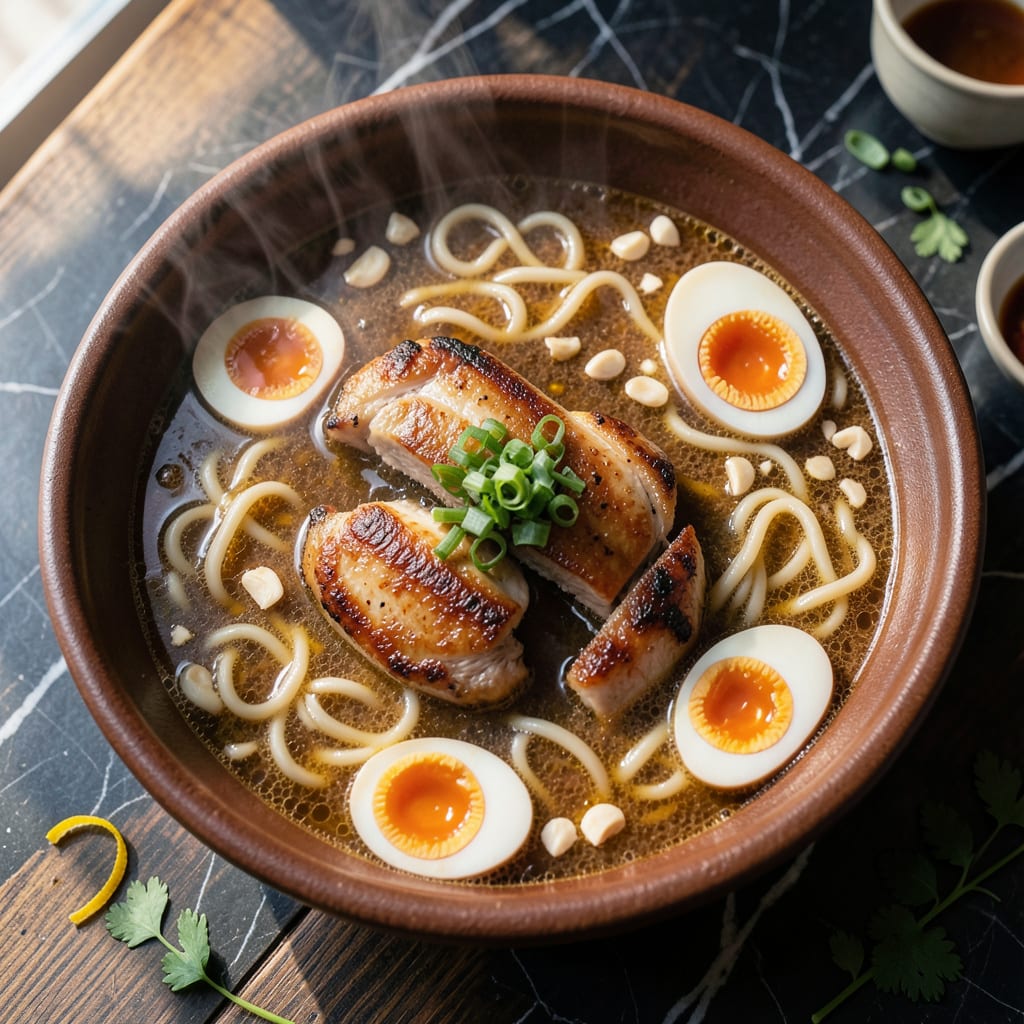
This ramen hot pot delivers a deeply flavorful, umami-rich broth that serves as the perfect base for your favorite toppings.
I developed this recipe to bring the interactive experience of a Japanese hot pot to your home kitchen with simple ingredients and restaurant-quality results.
Ingredients for Ramen Hot Pot
Simple ingredients, restaurant-quality broth. Customize with your favorite toppings.
| Ingredient | Amount | Notes |
|---|---|---|
| Chicken Thighs 🍗 | 1 ½ lb | Boneless, skinless preferred |
| Ramen Noodles 🍜 | 4 packages | Discard seasoning packets |
| Chicken Stock 🥣 | 8 cups | Low-sodium preferred |
| Soy Sauce 🫒 | ½ cup | Low-sodium or regular |
| Miso Paste 🥣 | ¼ cup | White or red miso |
| Garlic Cloves 🧄 | 6 cloves | Minced for depth |
| Fresh Ginger 🌿 | 2 tbsp | Peeled and grated |
| Green Onions 🧅 | 4 whole | Thinly sliced, whites and greens separated |
| Shiitake Mushrooms 🍄 | 8 oz | Fresh or dried, rehydrated |
| Baby Bok Choy 🥬 | 4 whole | Halved lengthwise |
| Soft Tofu 🧈 | 14 oz | Cubed for serving |
| Sesame Oil 🫒 | 1 tbsp | Toasted for aroma |
| Rice Vinegar 🍯 | 2 tbsp | For brightness |
| Red Pepper Flakes 🌶️ | 1 tsp | Adjust to spice preference |
| Sugar 🍚 | 1 tbsp | Balances umami flavors |
The chicken stock is the backbone here. Use homemade if you can—it’s richer and more nuanced than store-bought. For store-bought, Better Than Bouillon or Swanson are solid choices. The miso paste is non-negotiable for that umami depth; look for it in the refrigerated section at Whole Foods or any Asian market. Fresh ginger and garlic are musts—no pre-minced jars, please (they lack the punch).
No chicken thighs? Chicken breast works, but it dries out faster—slice thin and cook briefly. Vegetarian? Swap in extra-firm tofu or mushrooms. Short on shiitakes? Cremini or white mushrooms are fine. For the ramen, discard the seasoning packets—they’re loaded with salt and MSG. If you want a gluten-free version, use rice noodles instead.
Broth keeps 3-4 days refrigerated or freezes for 3 months. Cook noodles fresh for each serving—they get mushy if stored. Prep toppings ahead: sliced veggies, cubed tofu, and proteins can all be prepped a day in advance (store separately).
Why You’ll Love This Recipe
- One Pot Wonder: I just dump everything in—chicken thighs, ramen, stock—and let the miso and soy do their magic.
- Umami Bomb: The combo of miso paste and soy sauce gives it that deep, savory kick you can’t stop slurping.
- Feeds a Crowd: I make a big batch and everyone digs in, adding their own toppings as they go.
- Budget Friendly: Chicken thighs and ramen noodles stretch far without breaking the bank. Honestly, it’s my cheap-eats hero.
Step-by-Step Instructions for Ramen Hot Pot
This method builds layers of flavor while keeping the process simple and approachable for home cooks.
Step 1: Sear and Simmer the Chicken Thighs
Heat the sesame oil in a large pot over medium-high heat. Add the chicken thighs and sear for 3-4 minutes per side until golden brown. This initial browning develops deep, caramelized flavors that will infuse the broth.
Transfer the chicken to a plate and reduce heat to medium. The pot will have beautiful browned bits—these are pure flavor. Pour in 1 cup of the chicken stock and scrape the bottom with a wooden spoon to deglaze, lifting all those flavorful bits into the liquid.
Step 2: Build the Umami-Rich Broth Base
To the same pot, add the minced garlic cloves, grated fresh ginger, white parts of the green onions, and red pepper flakes. Sauté for 1-2 minutes until fragrant—this blooms the aromatics and prevents bitterness.
Pour in the remaining 7 cups chicken stock, soy sauce, miso paste, rice vinegar, and sugar. Whisk until the miso paste fully dissolves into the liquid. Return the chicken thighs to the pot and bring to a gentle simmer. Partially cover and cook for 15-20 minutes until the chicken is tender and cooked through.
Step 3: Prepare and Add the Vegetables
While the broth simmers, slice the shiitake mushrooms and separate the baby bok choy into leaves. Add the shiitake mushrooms to the pot and simmer for 5 minutes until they begin to soften. The mushrooms will absorb the rich broth and add a meaty texture.
Add the baby bok choy and the green parts of the green onions. Simmer for another 3-4 minutes until the bok choy turns bright green and slightly wilted. Remove the chicken thighs, shred the meat, and return it to the pot. This step ensures every bite is packed with flavor.
Step 4: Cook the Ramen Noodles and Assemble
Discard the seasoning packets from the ramen noodles. Add the noodles to the simmering broth and cook according to package instructions, usually 3-4 minutes, until al dente. The noodles will soak up the umami-rich broth as they cook.
Gently stir in the cubed soft tofu just before serving to warm it through without breaking it apart. Taste the broth and adjust seasoning if needed, though the combination of soy sauce, miso, and chicken stock should provide a well-balanced, savory base.
Step 5: Serve and Customize
Ladle the hot pot into deep bowls, ensuring each serving has a generous amount of noodles, chicken, vegetables, and tofu. The broth should be steaming hot and deeply aromatic, with visible flecks of ginger and garlic.
Encourage everyone to customize their bowls further with extra green onions, red pepper flakes, or a drizzle of sesame oil. The beauty of this dish is that each bite can be tailored to individual tastes, making it a truly interactive dining experience.
Pro Tips For Making Ramen Hot Pot
- Brown the Thighs: Sear the chicken thighs in the pot first until golden—about 4-5 minutes per side. I learned this the hard way: skipping this step leaves the broth tasting flat.
- Bloom the Miso: Whisk the miso paste into a ladle of hot stock before stirring it into the pot. Sounds weird, but it works: prevents clumping and makes the flavor richer.
- Skip the Water: Use only chicken stock, no water, for the broth. After making it both ways, I can guarantee the depth of flavor is worth the extra can of stock.
- Noodles Last: Add the ramen noodles in the final 2-3 minutes of cooking. My first few batches turned to mush because I tossed them in too early—now they stay chewy.
Dietary Considerations for This Dish
Gluten-Free Option
For a gluten-free version, swap the ramen noodles for rice noodles or shirataki noodles. I’ve had great success with Annie Chun’s brown rice noodles. They hold up well in broth and absorb flavors beautifully.
Vegetarian Adaptation
Replace chicken thighs with extra-firm tofu or additional mushrooms. Use vegetable stock instead of chicken stock. The miso and soy sauce provide plenty of umami without meat. 💪
Lower Sodium Option
Use low-sodium chicken stock and reduce soy sauce by half. Replace with coconut aminos for a similar flavor profile with less sodium. The miso paste adds saltiness, so taste before adding extra seasoning.
Dairy-Free Note
This dish is naturally dairy-free as written. The only potential concern is the ramen noodle seasoning packets, which we discard anyway. Always check labels on store-bought broths for hidden dairy derivatives.
Protein Variations
For pescatarians, try shrimp or scallops instead of chicken. Cook them for just 2-3 minutes in the hot broth to avoid overcooking. Thinly sliced beef also works beautifully for a heartier option.
Spice Adjustments
Control the heat by adjusting the red pepper flakes. Omit entirely for mild flavor or add 1 tbsp sriracha for extra kick. I often set out small bowls of chili oil for custom heat levels. 🌶️
Nutrition Facts
Frequently Asked Questions
Can I use instant ramen noodles?
Yes, but discard the seasoning packets to control sodium. Cook them in the broth for 3-4 minutes until tender.
How do I make it vegetarian?
Swap chicken for extra-firm tofu and use vegetable stock. The miso and soy sauce provide plenty of umami.
Can I prepare the broth ahead?
The broth keeps 3-4 days refrigerated or freezes for 3 months. Cook noodles fresh for best texture.
What if my broth is too salty?
Balance it with a splash of rice vinegar or a pinch of sugar. Avoid adding more stock, as it may dilute flavors.

- 4C Bread Crumbs Meatballs Recipe: Crispy Crust and Juicy Centers - September 25, 2026
- 6 Oz Chocolate Chip Cookie Recipe: Perfectly Balanced Crispy Edges and Chewy Hearts - September 25, 2026
- 6-Inch Coffee Cake Recipe: Vanilla Bean Swirls and Buttery Streusel Topping - September 25, 2026