
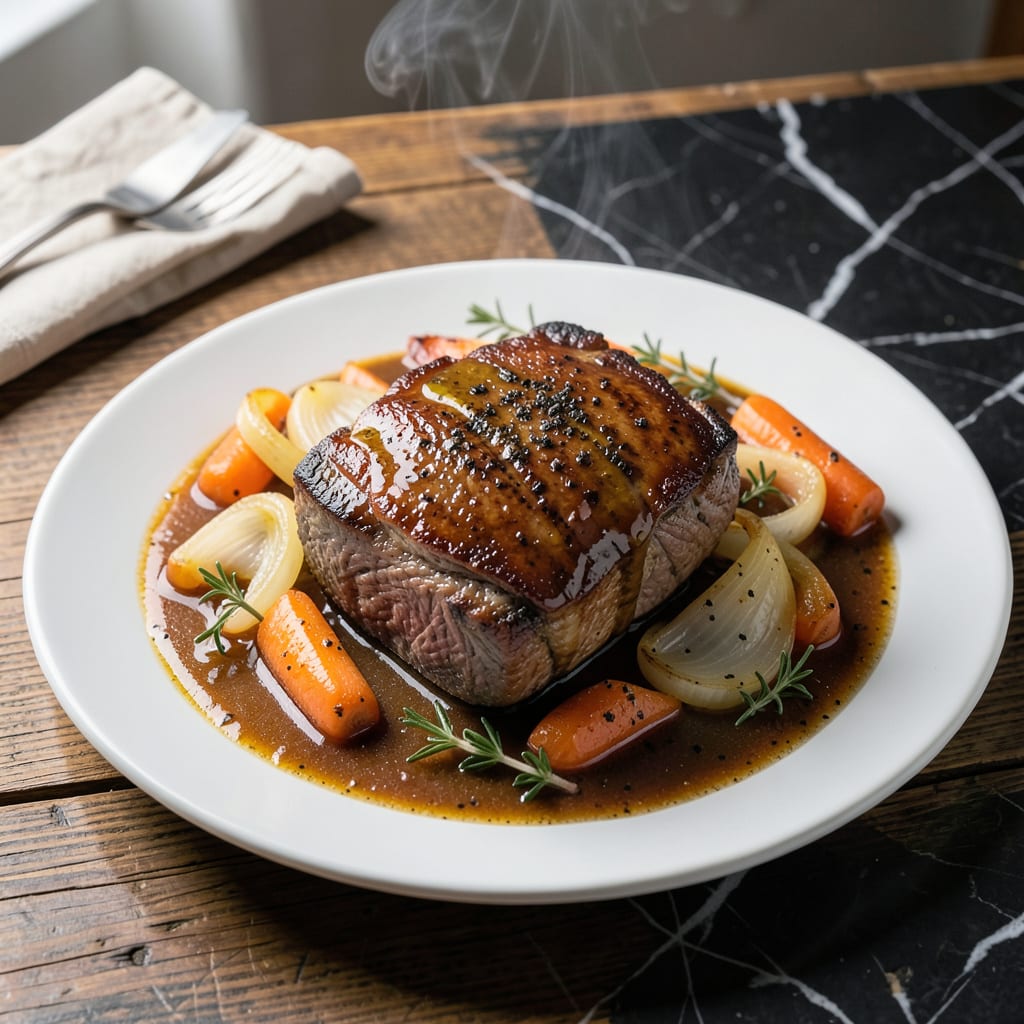
This Dutch oven method transforms a humble chuck roast into a tender, fall-apart centerpiece worthy of fine dining. The red wine braise builds deep, complex flavors that elevate every bite.
Low and slow cooking ensures the meat becomes impossibly melt-in-your-mouth while vegetables soak up the rich, savory sauce. It is the kind of dish that turns an ordinary Sunday into something special.
Ingredients for Restaurant Pot Roast
Transform humble chuck roast with these rich, aromatic ingredients into something extraordinary.
| Ingredient | Amount | Notes |
|---|---|---|
| Chuck Roast 🥩 | 3 lb | Well-marbled, trimmed of excess fat |
| Kosher Salt 🧂 | 2 tsp | Diamond Crystal preferred for even seasoning |
| Freshly Ground Black Pepper 🌶️ | 1 tsp | Coarse grind for texture |
| Olive Oil 🫒 | 2 tbsp | Divided for searing and sautéing |
| Yellow Onion 🧅 | 2 whole | Large, cut into thick slices |
| Carrots 🥕 | 4 whole | Peeled, cut into 2-inch chunks |
| Celery Stalks 🌿 | 3 whole | Cut into large pieces |
| Garlic Cloves 🧄 | 6 cloves | Smashed but left whole |
| Tomato Paste 🍅 | 2 tbsp | Double-concentrated preferred |
| Dry Red Wine 🍷 | 2 cups | Bold variety like Cabernet Sauvignon |
| Beef Stock 🥣 | 2 cups | Low-sodium for controlled seasoning |
| Fresh Thyme Sprigs 🌿 | 4 whole | Plus 1 tsp chopped for garnish |
| Fresh Rosemary Sprig 🍃 | 1 whole | 6-inch sprig for infusion |
| Bay Leaves 🍃 | 2 whole | Dried, whole leaves |
[recipeingredientscaler]
The chuck roast is non-negotiable for that melt-in-your-mouth texture—look for USDA Choice or Prime with abundant marbling. Whole Foods or Costco typically carry excellent options. Avoid pre-cut stew meat; a whole roast lets you control the size of the pieces. The red wine should be something you’d actually drink—a bold Cabernet or Merlot adds the depth this dish demands.
No red wine? Substitute with 1.5 cups beef stock plus 0.5 cup balsamic vinegar for acidity and depth. Fresh herbs are ideal, but dried thyme and rosemary at one-third the amount work in a pinch. Tomato paste can be swapped for 1 cup crushed tomatoes reduced by half. For gluten-free needs, ensure your beef stock is certified as such.
The roast can be prepped a day ahead—sear the meat, then refrigerate with all ingredients before cooking. Leftovers keep beautifully, refrigerated for 4-5 days or frozen for 3 months. The flavors deepen over time, making this even better reheated.
Why You’ll Love This Recipe
- Set It and Forget: I brown the chuck roast, toss in the onion, and let the oven do the heavy lifting for hours.
- Feeds the Week: One batch means Sunday dinner, Monday sandwiches, and Tuesday tacos.
- Budget Hero: A cheap cut like chuck roast becomes a showstopper with minimal effort.
Step-by-Step Instructions for Dutch Oven Braised Pot Roast
This professional method ensures tender, wine-infused results with minimal hands-on time.
Step 1: Sear and Season the Chuck Roast
Pat the 3 lb chuck roast dry with paper towels, then season generously with 2 tsp kosher salt and 1 tsp freshly ground black pepper. This step is non-negotiable—moisture prevents proper browning, and even seasoning is key to balanced flavor throughout.
Heat 1 tbsp olive oil in a Dutch oven over medium-high heat until shimmering. Add the roast and sear undisturbed for 4-5 minutes per side until a deep, rich brown crust forms. This Maillard reaction creates complex flavors that define the dish. Transfer the roast to a plate and set aside.
Step 2: Build the Aromatic Base
In the same Dutch oven, add the remaining 1 tbsp olive oil if needed. Add the 2 whole yellow onion, 4 whole carrots, 3 whole celery stalks, and 6 cloves garlic cloves. Sauté over medium heat for 8-10 minutes until the vegetables soften and begin to caramelize.
Stir in the 2 tbsp tomato paste and cook for 2-3 minutes until it deepens in color and sticks slightly to the bottom of the pot. This step intensifies the tomato flavor and creates a fond that will enrich the braising liquid. The paste should turn a brick-red hue when ready.
Step 3: Deglaze and Braise
Pour in the 2 cups dry red wine and scrape the bottom of the pot to release all the browned bits. Bring to a simmer and cook for 5 minutes to reduce the wine by half. This burns off the alcohol while concentrating the flavor.
Return the roast to the Dutch oven. Add the 2 cups beef stock, 4 whole fresh thyme sprigs, 1 whole fresh rosemary sprig, and 2 whole bay leaves. The liquid should come about halfway up the roast. Bring to a gentle simmer, then cover and transfer to a 325°F oven.
Step 4: Slow-Cook to Perfection
Braise in the oven for 2.5 to 3 hours, turning the roast every 45 minutes to ensure even cooking. The pot roast is done when it yields easily to a fork and the internal temperature reaches 195-200°F.
You’ll know it’s ready when the meat pulls apart with minimal resistance and the vegetables are fork-tender. The braising liquid should be rich, deeply colored, and aromatic. If the liquid reduces too much during cooking, add a splash of additional beef stock to maintain the level.
Step 5: Rest and Serve
Carefully remove the roast from the Dutch oven and transfer it to a cutting board. Tent loosely with foil and let it rest for 15-20 minutes. This allows the juices to redistribute, ensuring a moist, flavorful result.
Skimming excess fat from the braising liquid and reducing it slightly on the stovetop creates a rich, velvety sauce. Serve the pot roast sliced or shredded, spooned with the vegetables and sauce.
Pro Tips For Making Restaurant Pot Roast
- Sear It Hard: Get your oil screaming hot before adding the chuck roast—this builds a deep crust that locks in flavor. I learned this the hard way after too many pale, bland roasts.
- Season Generously: Don’t be shy with the kosher salt and black pepper; a thick, even coating on all sides actually changes the outcome. Sounds obvious, but under-seasoning is the most common mistake.
- Don’t Rush the Sear: Give each side at least 3-4 minutes in the pan to develop that rich brown color—pulling it too soon leaves you with a gray, steamed exterior.
- Add Onions Early: Toss the yellow onions into the pot with the roast during the sear; they’ll caramelize and sweat down, adding a sweet depth to the final dish.
Regional Styles of This Recipe
New England Style
This version adds 1 cup apple cider and 2 tbsp apple cider vinegar to the braising liquid for a sweet-tart twist. I love how the acidity brightens the rich beef flavor. The cider reduces down to a syrupy glaze that’s simply irresistible. 💛
Texas Chuck Wagon
Incorporate 2 chopped chipotle peppers in adobo and 1 tbsp smoked paprika for a smoky, slightly spicy kick. The adobo sauce deepens the complexity. I use San Marzano tomatoes instead of paste for a chunkier texture.
French Daube
Add 4 oz pancetta diced and rendered first, then 8 oz pearl onions and 4 oz mushrooms. Use a full-bodied Côtes du Rhône wine. The pancetta adds a silky richness that’s pure Provençal comfort.
Italian Sunday Gravy
Include 1 lb Italian sausage (sweet or spicy) browned with the roast. Add 1 can (28 oz) San Marzano crushed tomatoes to the braise. The sausage infuses the sauce with incredible depth. 🍝
Southern Mississippi
Stir in 2 tbsp Worcestershire sauce and 1 tsp hot sauce with the wine. Add 1 lb baby potatoes halved during the last 1 hour of cooking. This gives that classic Mississippi pot roast tang.
German Rouladen Style
Pound the chuck thin, spread with 2 tbsp mustard, then roll with bacon, onions, and pickles. Braise as usual. The mustard creates a wonderful crust and the pickles add a bright contrast.
Nutrition Facts
Frequently Asked Questions
What’s the best cut for this dish?
Chuck roast is ideal due to its marbling and connective tissue, which breaks down beautifully during the long 2.5-3 hour braise.
Can I make this in a slow cooker?
Yes! Sear the meat first, then transfer everything to a slow cooker. Cook on low for 8-10 hours or high for 5-6 hours for the same tender results.
Why is my pot roast tough?
It likely didn’t cook long enough. The meat needs to reach 195-200°F internally to break down the collagen. If it’s still tough, return it to the oven for another 30-60 minutes.
Can I use a different wine?
A bold Merlot or Zinfandel works well. Avoid cooking wines—they lack depth. For non-alcoholic, use 1.5 cups beef stock + 0.5 cup balsamic vinegar.

- 4C Bread Crumbs Meatballs Recipe: Crispy Crust and Juicy Centers - September 25, 2026
- 6 Oz Chocolate Chip Cookie Recipe: Perfectly Balanced Crispy Edges and Chewy Hearts - September 25, 2026
- 6-Inch Coffee Cake Recipe: Vanilla Bean Swirls and Buttery Streusel Topping - September 25, 2026