
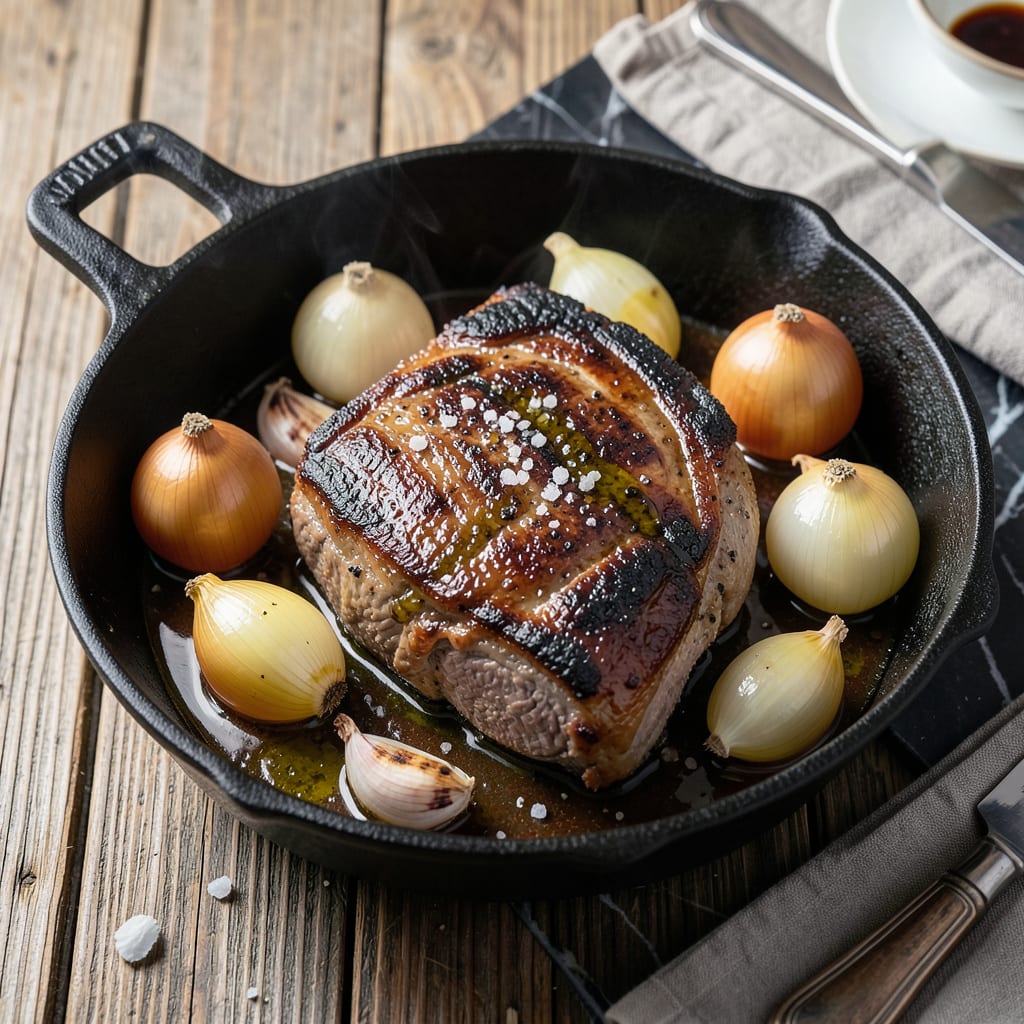
This cast iron-seared pot roast delivers a perfectly crisped crust and slow-braised tenderness that defines comfort food at its best. The sear locks in juices while building deep flavor foundations.
Through careful browning and low, slow cooking, tough cuts transform into fall-apart tender meat swimming in rich, aromatic gravy. The method honors tradition while ensuring foolproof results every time.
Ingredients for Seared Pot Roast
A well-marbled chuck roast and aromatic vegetables form the foundation of this deeply flavorful dish.
| Ingredient | Amount | Notes |
|---|---|---|
| Chuck Roast 🥩 | 3 lb | Well-marbled, boneless preferred |
| Kosher Salt 🧂 | 1 ½ tbsp | Diamond Crystal brand recommended |
| Black Pepper 🌶️ | 1 tbsp | Freshly ground coarse |
| Olive Oil 🫒 | 2 tbsp | High smoke point preferred |
| Yellow Onions 🧅 | 2 whole | Large, roughly chopped |
| Garlic Cloves 🧄 | 6 cloves | Smashed, peeled |
| Carrots 🥕 | 3 whole | Peeled, cut into chunks |
| Celery Stalks 🥬 | 3 whole | Trimmed, cut into chunks |
| Beef Stock 💧 | 3 cups | Low-sodium preferred |
| Red Wine 🍷 | 1 ½ cups | Dry, full-bodied variety |
| Tomato Paste 🍅 | 2 tbsp | Double-concentrated preferred |
| Fresh Thyme Sprigs 🌿 | 4 whole | Stems removed |
| Bay Leaves 🍃 | 2 whole | Dried, whole leaves |
| All-Purpose Flour 🌾 | 2 tbsp | For thickening gravy |
[recipeingredientscaler]
The chuck roast is non-negotiable for optimal results. Look for heavy marbling—this fat renders during the long braise, creating that signature tenderness. Costco or Whole Foods typically carry well-marbled cuts at reasonable prices. Avoid pre-cut stew meat; a whole roast allows you to control the size of each piece, ensuring even cooking and a superior sear.
No red wine? Substitute with additional beef stock and 1 tbsp balsamic vinegar for depth. Fresh thyme can be replaced with 1 tsp dried thyme. If tomato paste isn’t on hand, 2 tbsp ketchup works in a pinch, though the flavor profile will shift slightly. For a gluten-free version, swap the flour for cornstarch when thickening the gravy.
The seared pot roast reheats exceptionally well—flavors deepen overnight. Store in an airtight container in the refrigerator for up to 4 days or freeze for 3 months. Always reheat gently to preserve the meat’s tenderness and prevent drying out.
Why You’ll Love This Recipe
- One Pan Magic: I just sear the chuck roast in olive oil, toss in onions, salt, and pepper—no fancy steps, no extra dishes.
- Crispy, Juicy Perfection: That first bite with the caramelized crust and tender meat? Honestly, it’s why I make this every other week.
- Feeds My Crew: Between us, it’s my go-to for Sunday dinner, and the leftovers make killer sandwiches for lunches all week.
- Budget’s Best Friend: A chuck roast stretches far, and with just salt, pepper, and onions, it’s flavor-packed without breaking the bank.
Step-by-Step Instructions for Seared Pot Roast
Master the technique for a deeply caramelized crust and fall-apart tender meat every time.
Step 1: Season and Sear the Chuck Roast
Pat the 3 lb chuck roast completely dry with paper towels. This is non-negotiable—moisture prevents proper browning. Season all sides aggressively with the 1.5 tbsp kosher salt and 1 tbsp black pepper, pressing firmly so the seasoning adheres.
Heat 2 tbsp olive oil in a heavy cast iron Dutch oven over medium-high heat until shimmering but not smoking. Add the roast and sear undisturbed for 4-5 minutes per side until a deep mahogany crust forms. Don’t move it prematurely—the fond developing in the pan is flavor gold. Transfer to a plate.
Step 2: Build the Aromatic Base
In the same pot, add the 2 whole yellow onions, 3 whole carrots, and 3 whole celery stalks. Cook over medium heat for 8-10 minutes, stirring occasionally, until the vegetables soften and begin to caramelize at the edges.
Stir in the 2 tbsp tomato paste and cook for 2-3 minutes until it darkens slightly and coats the vegetables. Add the 6 cloves garlic cloves, 4 whole fresh thyme sprigs, and 2 whole bay leaves, cooking for 30 seconds until fragrant. This layering builds complexity into the braising liquid.
Step 3: Deglaze and Begin the Braise
Pour in the 1.5 cups red wine and scrape up all the browned bits from the bottom of the pot with a wooden spoon. Let it simmer for 3-4 minutes until reduced by half. This deglazing step dissolves the fond into the liquid, creating a rich foundation.
Return the seared roast to the pot along with any accumulated juices. Add the 3 cups beef stock—it should come about two-thirds up the side of the meat. Bring to a gentle simmer, then cover tightly. The liquid should just barely bubble; a rolling boil will toughen the meat.
Step 4: Slow-Braise to Perfection
Transfer the covered pot to a 325°F oven and braise for 2.5 to 3 hours. Check occasionally and turn the roast once halfway through. You’re aiming for meat that yields easily to a fork but hasn’t yet fallen apart.
The braise is done when the chuck roast reaches an internal temperature of 195-200°F and a probe slides in with no resistance. The vegetables should be fork-tender and the braising liquid deeply colored. This low-and-slow method transforms the collagen in the meat into luxurious gelatin.
Step 5: Thicken the Gravy and Serve
Remove the roast and vegetables to a serving platter and tent with foil. Skim excess fat from the braising liquid, then bring it to a simmer on the stovetop. Whisk in the 2 tbsp all-purpose flour and cook for 3-5 minutes until the gravy thickens enough to coat the back of a spoon.
Slice the roast against the grain or pull it into chunks. Spoon the rich gravy over the top and serve immediately. The meat should be fork-tender with a dark, caramelized crust, and the sauce should have a deep, wine-infused flavor that clings beautifully to every bite.
Pro Tips For Making Seared Pot Roast
- Dry the Roast: Pat the chuck roast completely dry with paper towels before seasoning—any moisture will steam it instead of searing. I learned this the hard way after too many pale, soggy crusts.
- Sear in Batches: If your pan isn’t big enough, sear the roast in two stages rather than crowding it. Steaming from overcrowding ruins the crust you worked so hard to build.
- Use Room-Temp Meat: Pull the chuck roast out of the fridge 30-45 minutes before searing. Cold meat seizes up and won’t develop that deep brown crust as evenly.
- Don’t Rush the Sear: Let the roast sit undisturbed for 3-4 minutes per side on medium-high heat. Flipping too soon gives you a weak crust and a sad pot roast.
Regional Styles of This Recipe
Texas Style
In the Lone Star State, this dish gets a bold kick with chipotle peppers in adobo added to the braising liquid. I use 2-3 chopped chipotles plus 1 tbsp adobo sauce for smoky depth. The heat builds gradually during the long cook, creating a complex, slightly spicy gravy that pairs perfectly with cornbread. 🌶️
French Daube
For a Provençal twist, I add orange zest and herbes de Provence to the searing stage. Use 1 tbsp herbes de Provence and the zest of 1 orange. The citrus brightens the rich beef, while the herb blend adds lavender and fennel notes. Traditionally served with crusty baguette to soak up the sauce.
Midwest Classic
The heartland version often includes mushrooms and pearl onions in the braise. I add 8 oz cremini mushrooms and 1 cup pearl onions with the carrots. The mushrooms absorb the braising liquid, while the onions add sweetness. Mushroom stock can replace half the beef stock for deeper umami.
Italian Sunday Gravy
In Italian-American kitchens, this becomes Sunday gravy with San Marzano tomatoes and Parmesan rind. I stir in 1 can crushed tomatoes and a 2-inch Parmesan rind during the braise. The tomatoes create a thicker, more robust sauce, while the rind melts into the gravy, adding salty richness.
New England
This version incorporates apple cider and maple syrup for a sweet-tart twist. Replace half the wine with 1 cup apple cider and add 2 tbsp maple syrup during deglazing. The cider reduces to a glossy glaze, while the syrup adds a subtle, autumnal sweetness that complements the beef beautifully. 🍁
Nutrition Facts
Frequently Asked Questions
Why sear the meat first?
Searing creates a deeply flavored crust through the Maillard reaction and locks in juices. The browned bits left behind form the base for a rich, complex gravy.
Can I use a different cut of beef?
Avoid lean cuts like sirloin—they dry out during long braising. Stick with well-marbled, tougher cuts like brisket or short ribs. Chuck remains ideal for texture and flavor.
How do I know when it’s done?
The meat should reach 195-200°F internally and pull apart easily with a fork. If it shreds too much, it’s overcooked.
Can I make this in a slow cooker?
Yes, but sear first in a skillet. Transfer everything to the slow cooker and cook on low for 8-10 hours. The texture will differ slightly from oven-braising.

- 4C Bread Crumbs Meatballs Recipe: Crispy Crust and Juicy Centers - September 25, 2026
- 6 Oz Chocolate Chip Cookie Recipe: Perfectly Balanced Crispy Edges and Chewy Hearts - September 25, 2026
- 6-Inch Coffee Cake Recipe: Vanilla Bean Swirls and Buttery Streusel Topping - September 25, 2026