
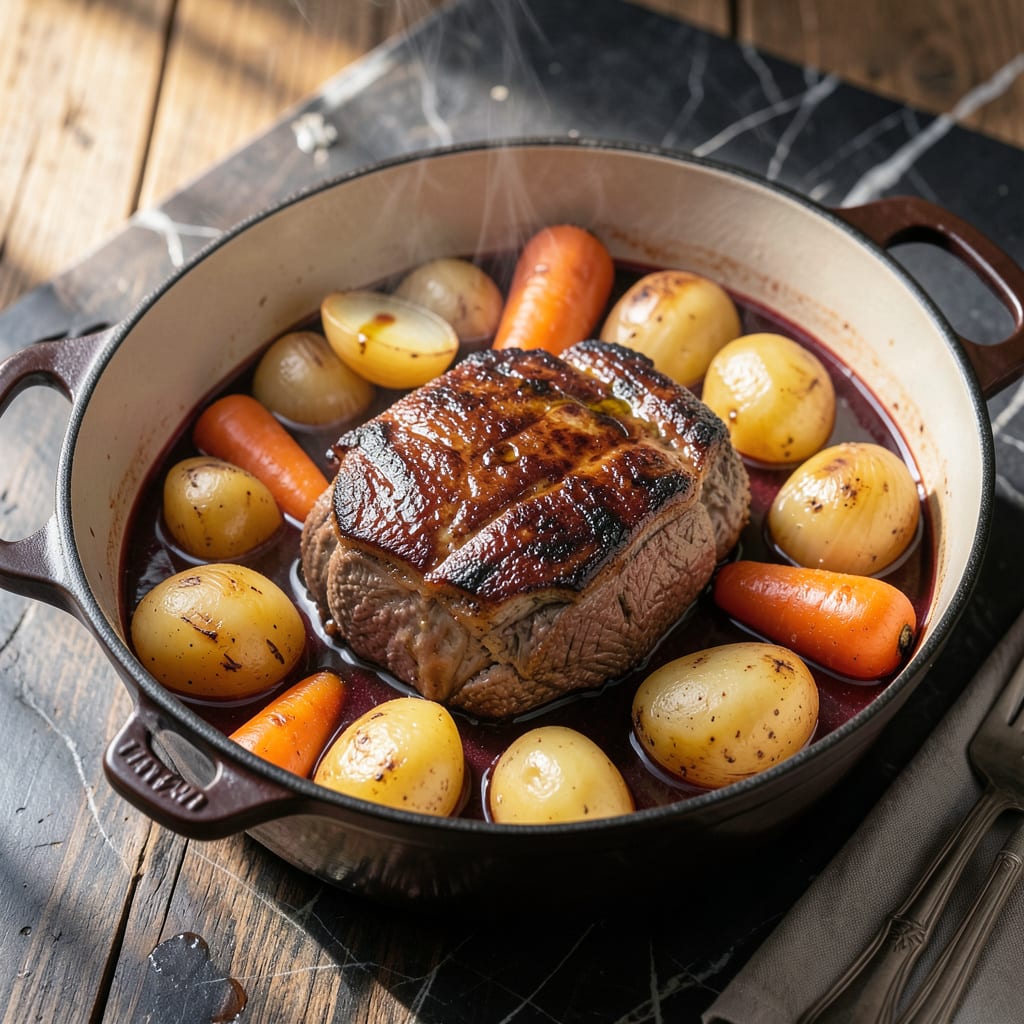
This wine-braised pot roast transforms tough cuts into fall-apart tender perfection through slow roasting. The method combines traditional techniques with simple ingredients for a dish that never fails to impress.
Root vegetables soak up the rich, wine-infused braising liquid as it cooks, creating a complete meal with minimal effort. The result is deeply flavorful beef with a velvety sauce that’s ideal for Sunday suppers or special occasions.
Ingredients for Roasted Pot Roast
A well-marbled chuck roast and wine-infused vegetables create this deeply flavorful classic dish.
| Ingredient | Amount | Notes |
|---|---|---|
| Chuck Roast 🥩 | 3 lb | Well-marbled, trimmed of excess fat |
| Dry Red Wine 🍷 | 2 cups | Bold variety like Cabernet Sauvignon |
| Beef Broth 🥣 | 2 cups | Low-sodium preferred for control |
| Carrots 🥕 | 4 whole | Large, peeled and cut into chunks |
| Yukon Gold Potatoes 🥔 | 1 ½ lb | Peeled and quartered |
| Yellow Onions 🧅 | 2 whole | Large, peeled and quartered |
| Garlic Cloves 🧄 | 6 cloves | Smashed, peeled left whole |
| Tomato Paste 🍅 | 2 tbsp | For depth of umami flavor |
| Fresh Rosemary 🌿 | 2 sprigs | Stems removed before serving |
| Fresh Thyme 🍃 | 4 sprigs | Stems removed before serving |
| Bay Leaves 🌿 | 2 whole | Dried, removed before serving |
| Olive Oil 🫒 | 2 tbsp | Divided for searing and finishing |
| Kosher Salt 🧂 | 1 ½ tsp | Diamond Crystal preferred |
| Black Pepper 🌶️ | 1 tsp | Freshly cracked for best flavor |
[recipeingredientscaler]
The beef is everything here. Chuck roast with visible marbling breaks down beautifully during the long, slow cook. Look for USDA Choice or Prime at Whole Foods or Costco for consistent quality. The wine should be something you’d actually drink—a bold Cabernet Sauvignon or Merlot adds depth without overpowering. Avoid cooking wines; they’re often loaded with salt.
Swapping the wine? Substitute with additional beef broth plus 1 tbsp balsamic vinegar for acidity. No fresh herbs? Dried at one-third the amount works, but add them earlier in cooking. Yukon Golds can be swapped for russet potatoes, though they hold shape better. For extra richness, deglaze the pan with 1 tbsp cognac before adding liquid.
This tastes even better the next day. Store in an airtight container for up to 4 days in the fridge or freeze for 3 months. Reheat gently on the stovetop, adding a splash of water or broth to loosen the sauce.
Why You’ll Love This Recipe
- Hands-Off Cooking: I just sear the chuck roast, toss in the veggies, and let the oven do the work for hours.
- Rich Wine Depth: The dry red wine and beef broth braise together into this deep, velvety sauce that soaks into every bite.
- Sunday Supper Star: It’s my go-to for feeding a crowd, but honestly, I make it on random Tuesdays too.
- Leftovers for Days: One roast turns into sandwiches, tacos, and stew—my wallet thanks me every time.
Step-by-Step Instructions for Wine-Braised Beef With Root Vegetables
Master this technique for fall-apart tender beef with vegetables steeped in deep, wine-infused flavor.
Step 1: Sear the Chuck Roast for Maximum Flavor
Pat the 3 lb chuck roast dry with paper towels and season generously with the 1.5 tsp kosher salt and 1 tsp black pepper. Heat 1 tbsp olive oil in a Dutch oven over medium-high heat until shimmering.
Add the chuck roast and sear undisturbed for 4-5 minutes per side until a deep mahogany crust forms. The meat should release easily from the pot when properly browned. Transfer the roast to a plate and reduce heat to medium.
Step 2: Build the Aromatic Base
In the same pot, add the remaining 1 tbsp olive oil. Add the 2 whole yellow onions, 4 whole carrots, and 6 cloves garlic cloves. Sauté for 5-7 minutes until the onions soften and begin to caramelize at the edges.
Stir in the 2 tbsp tomato paste and cook for 1-2 minutes until it darkens slightly. This step develops the paste’s natural sweetness and removes any raw flavor. Add the 2 sprigs fresh rosemary, 4 sprigs fresh thyme, and 2 whole bay leaves, stirring to combine.
Step 3: Deglaze and Begin the Braise
Pour in the 2 cups dry red wine, scraping the bottom of the pot to release all the browned bits. Bring to a simmer and cook for 3-4 minutes until the liquid reduces by about half.
Return the chuck roast to the pot along with any accumulated juices. Add the 2 cups beef broth and 1.5 lb Yukon Gold potatoes. The liquid should come about halfway up the roast. Bring to a gentle simmer, then cover and transfer to a 325°F oven.
Step 4: Braise to Tender Perfection
Braise for 2.5 to 3 hours, turning the roast every 45 minutes, until the beef is fork-tender and easily pulls apart. Check occasionally to ensure the liquid maintains a gentle simmer; add a splash of broth if it reduces too much.
You’ll know it’s done when a fork inserted into the thickest part of the roast slides in with almost no resistance. The potatoes should be tender and infused with the braising liquid, while the carrots and onions should be soft but still hold their shape.
Step 5: Rest and Serve
Carefully transfer the chuck roast to a cutting board and tent with foil. Skim excess fat from the braising liquid, then discard the rosemary, thyme, and bay leaves. Lightly mash some of the potatoes to thicken the sauce if desired.
Slice the roast against the grain into thick pieces and arrange on a platter with the vegetables. Spoon the braising liquid generously over the top. Serve immediately while hot, ensuring each portion includes plenty of the wine-infused sauce.
Pro Tips For Making Roasted Pot Roast
- Sear it hard: Get your Dutch oven screaming hot before adding the chuck roast—I learned this the hard way after too many pale, sad roasts. That deep brown crust is what builds the rich flavor base for the wine and broth to work with.
- Deglaze properly: After searing, pour in about ½ cup of that dry red wine and scrape the browned bits aggressively with a wooden spoon. Sounds tedious, but those fond bits are pure flavor waiting to dissolve into your braising liquid.
- Skip the small potatoes: Cut Yukon Golds into 2-inch chunks at most, or they’ll turn to mush before the roast is done. I used to leave them whole for presentation, but they’d either be undercooked or fall apart when served.
- Rest before slicing: Let the roast sit covered for 15-20 minutes after pulling it from the oven—this lets the juices redistribute. I was skeptical until I tried it and stopped watching my beautiful slices weep all over the platter.
Perfect Pairings for This Dish
Wine Pairings
Stick with the same bold Cabernet Sauvignon you used for cooking—a 2018 Napa Valley works beautifully. Its robust tannins and dark fruit notes complement the beef’s richness. I also love a Syrah from Walla Walla for its peppery finish. 🍷
Side Dish Ideas
A simple green salad with a tangy vinaigrette cuts through the richness. I toss baby spinach with 1 tbsp Dijon and 3 tbsp olive oil. For starch, crusty sourdough is perfect for soaking up the sauce.
Bread Options
Warm ciabatta or a baguette from your local bakery adds texture contrast. Toast slices and rub with a garlic clove for extra flavor. I always keep a loaf of rustic Italian bread on hand for this dish.
Vegetable Pairings
Steamed asparagus or roasted Brussels sprouts balance the meal’s heartiness. Toss with 1 tbsp olive oil and a pinch of salt. The slight bitterness of greens complements the wine sauce perfectly.
Finishing Touches
Sprinkle with fresh parsley or chopped chives for color. A pat of herb butter on top of each serving melts into the sauce. I finish mine with flaky sea salt for an extra crunch. ✨
Nutrition Facts
Frequently Asked Questions
What’s the best cut for this dish?
Use chuck roast with visible marbling for the most tender results. The fat melts during the long braise, keeping the meat moist. Avoid leaner cuts like round or sirloin tip.
Can I make this ahead of time?
The flavors deepen overnight in the fridge. Reheat gently on the stovetop with a splash of broth. It stores well for 4 days refrigerated or 3 months frozen.
Why is my roast tough?
It likely didn’t cook long enough. Braise until fork-tender, about 2.5-3 hours at 325°F. Check liquid level—add broth if it reduces too much during cooking.
Can I substitute the wine?
Replace with 2 cups beef broth + 1 tbsp balsamic vinegar. The acidity mimics wine’s effect. Use a bold, drinkable red if you do use wine.

- 4C Bread Crumbs Meatballs Recipe: Crispy Crust and Juicy Centers - September 25, 2026
- 6 Oz Chocolate Chip Cookie Recipe: Perfectly Balanced Crispy Edges and Chewy Hearts - September 25, 2026
- 6-Inch Coffee Cake Recipe: Vanilla Bean Swirls and Buttery Streusel Topping - September 25, 2026