
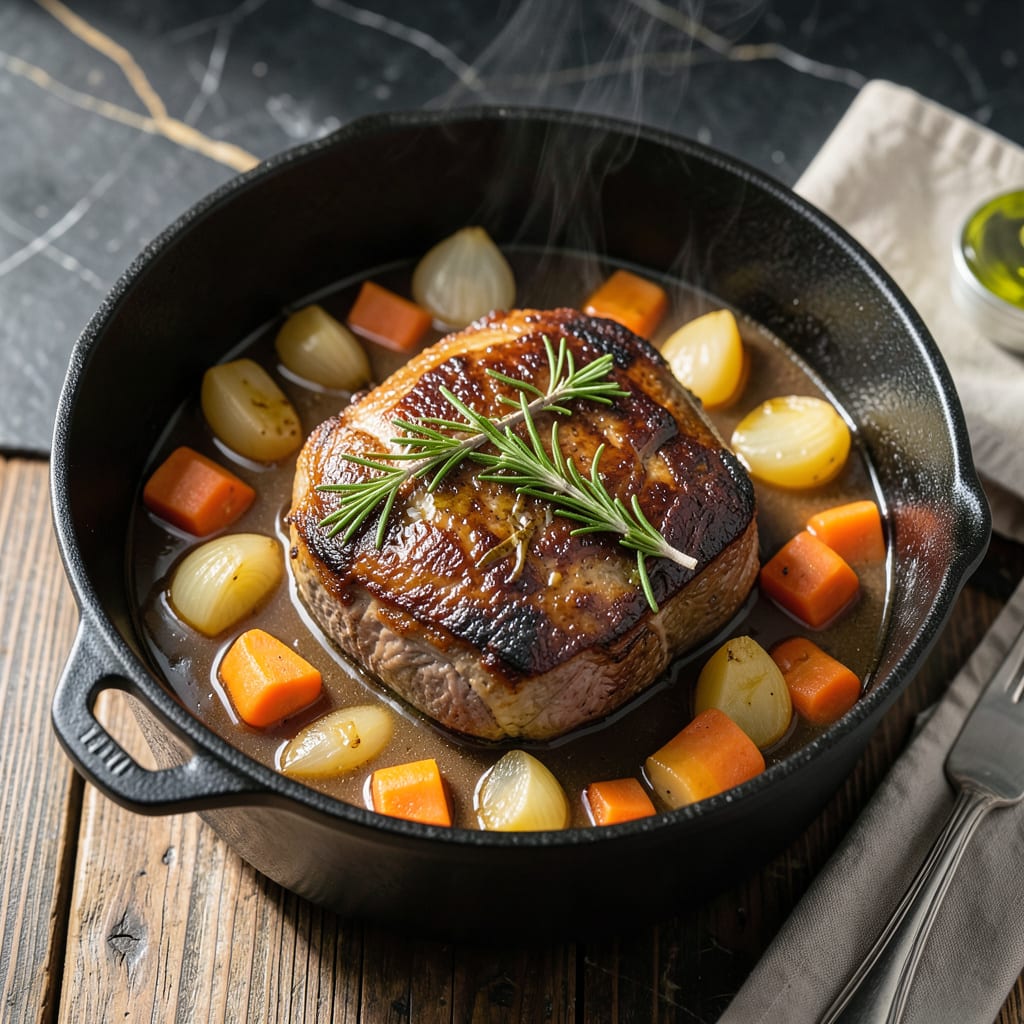
There’s nothing like the aroma of a rosemary-infused pot roast filling your kitchen on a Sunday afternoon. This classic dish transforms humble ingredients into a meal that feels special.
Slow cooking allows the beef to become fall-apart tender, while fresh rosemary adds an earthy depth that defines this time-honored recipe. It’s comfort food at its most satisfying.
Ingredients for Rosemary Pot Roast
Transform humble ingredients into a Sunday classic with these carefully selected components.
| Ingredient | Amount | Notes |
|---|---|---|
| Chuck Roast 🥩 | 3 lb | Well-marbled, bone-in preferred |
| Fresh Rosemary Sprigs 🌿 | 4 pieces | Stems included for infusion |
| Yellow Onions 🧅 | 2 whole | Large, peeled and quartered |
| Carrots 🥕 | 4 whole | Peeled and cut into chunks |
| Garlic Cloves 🧄 | 6 cloves | Peeled and smashed |
| Beef Broth 💧 | 2 cups | Low-sodium preferred |
| Red Wine 🍷 | 1 cup | Dry variety, like Cabernet Sauvignon |
| Tomato Paste 🍅 | 2 tbsp | For depth of flavor |
| Olive Oil 🫒 | 2 tbsp | Extra-virgin for richness |
| Bay Leaves 🍃 | 2 pieces | Dried, for aroma |
| Dijon Mustard 🟡 | 1 tbsp | For tangy complexity |
| Kosher Salt 🧂 | 1 ½ tsp | Diamond Crystal preferred |
| Black Pepper 🌶️ | 1 tsp | Freshly ground for best results |
| All-Purpose Flour 🌾 | 2 tbsp | For thickening the sauce |
The beef is the foundation—chuck roast with good marbling ensures that fall-apart tenderness. Whole Foods or Costco have excellent selections, but any supermarket will do if you look for vibrant red color and visible fat streaks. Fresh rosemary is non-negotiable here; dried simply won’t deliver the same aromatic depth. Grab a bunch from the produce section and give it a good sniff—it should smell piney and bright.
No red wine? Beef broth with a splash of balsamic vinegar mimics the acidity. If you’re out of fresh rosemary, fresh thyme at one-third the amount works in a pinch. For the carrots, parsnips or celery root make great substitutes. The tomato paste can be omitted, but the dish will lack complexity. San Marzano tomatoes blended into a paste can work too.
Leftovers taste even better the next day. Store in an airtight container for up to 5 days in the fridge or freeze for 3 months. Reheat gently on the stove to preserve texture.
Why You’ll Love This Recipe
- Hands-Off Cooking: I toss everything in the Dutch oven and let the oven do the work for hours.
- Herb-Infused Depth: The fresh rosemary and garlic turn the chuck roast into something ridiculously tender and aromatic.
- Sunday Supper Star: It’s my go-to for feeding a crowd or meal prepping lunches for the week.
- Budget Stretcher: A chuck roast feeds my family for two nights, and the leftovers taste even better.
Step-by-Step Instructions for Rosemary Pot Roast
This method delivers a tender, herb-infused pot roast with rich, velvety sauce.
Step 1: Sear the Chuck Roast to Develop Flavor
Pat the 3 lb chuck roast dry with paper towels, then season generously with the 1.5 tsp kosher salt and 1 tsp black pepper. Heat the 2 tbsp olive oil in a Dutch oven over medium-high heat until shimmering.
Sear the roast on all sides for 4-5 minutes per side until deeply browned. This creates a flavorful crust and fond for the sauce. Remove the meat and set aside—it should have a rich, mahogany color with visible caramelization.
Step 2: Sauté Aromatics and Build the Base
In the same pot, add the quartered 2 whole yellow onions, chunked 4 whole carrots, and 6 cloves garlic cloves. Cook for 5 minutes until the onions begin to soften and brown slightly. Stir in the 2 tbsp tomato paste and 1 tbsp Dijon mustard, cooking for 1-2 minutes until the paste darkens.
Pour in the 1 cup red wine and scrape the bottom to release all browned bits. Let it reduce by half—this deglazing step ensures no flavor is wasted.
Step 3: Braise with Herbs and Liquid
Return the chuck roast to the pot. Add the 2 cups beef broth, 4 pieces fresh rosemary sprigs, and 2 pieces bay leaves. The liquid should come about halfway up the meat.
Bring to a gentle simmer, then cover and reduce heat to low. Braise for 3 to 3.5 hours until the meat is fork-tender and easily pulls apart. Turn the roast once halfway through for even cooking.
Step 4: Thicken and Finish the Sauce
Remove the roast and vegetables to a serving platter. Skim excess fat from the braising liquid, then bring it to a simmer. Whisk in the 2 tbsp all-purpose flour and cook for 2-3 minutes until the sauce thickens to a gravy-like consistency.
Taste and adjust seasoning if needed. The sauce should coat the back of a spoon with a rich, glossy finish. Pour it over the pot roast before serving.
Step 5: Rest and Serve
Let the pot roast rest for 15-20 minutes before slicing. This allows the juices to redistribute, ensuring moist, flavorful meat. Serve with the braised vegetables and plenty of the herb-infused sauce.
The rosemary and bay leaves will have perfumed the entire dish with a fragrant depth that defines this Sunday classic.
Pro Tips For Making Rosemary Pot Roast
- Sear the Chuck First: Brown the chuck roast on all sides in a hot Dutch oven before adding liquids—this builds a deep, caramelized crust that infuses the entire pot roast with flavor.
- Bruise the Rosemary: Lightly crush the fresh rosemary sprigs with the flat side of your knife before adding them to release their oils and amplify the aroma in the dish.
- Don’t Rush the Braise: I learned this the hard way—keep the heat low and steady (around 300°F) for at least 3 hours so the collagen in the chuck roast melts into tender perfection.
- Use Whole Garlic Cloves: Skip mincing the garlic and toss in whole peeled cloves instead—they’ll soften into sweet, spreadable bites that soak up the rosemary and beef juices.
Make-Ahead Tips for Leftovers
Overnight Prep Method
I always prep my vegetables the night before—peel and quarter 2 onions, chunk 4 carrots, and smash 6 garlic cloves. Store them in a sealed container with the 4 rosemary sprigs and 2 bay leaves. This saves 20 minutes on cooking day. 💡
Morning Searing
Pat the 3 lb chuck roast dry first thing in the morning and sear it as the instructions describe. Once browned, transfer everything to your slow cooker with the prepped veggies, 1 cup red wine, and 2 cups beef broth. Set to low for 8 hours.
Sauce Thickening Hack
If making ahead, under-reduce the sauce slightly. The next day, skim the fat, then simmer the liquid with 2 tbsp flour until thickened. Flavors deepen overnight, and the sauce will be even richer.
Freezer-Friendly Approach
Cool the completed dish completely, then divide into portions in quart-sized freezer bags. It freezes beautifully for up to 3 months. Thaw in the fridge for 24 hours before reheating. ❄️
Reheating for Best Texture
Gently reheat on the stove over medium-low heat for 15-20 minutes, adding a splash of broth if needed. Microwaving works in a pinch, but stovetop preserves that fall-apart tenderness better.
Nutrition Facts
Frequently Asked Questions
Can I use dried rosemary instead of fresh?
Use 1 tbsp dried rosemary for every 4 fresh sprigs. Dried is more concentrated, so reduce the amount. Add it when braising to infuse the liquid properly.
How do I know when the roast is done?
It should pull apart easily with a fork after 3-3.5 hours of braising. For precision, check internal temp: 195-205°F ensures perfect tenderness.
What if my sauce is too thin?
Simmer uncovered for 5-10 minutes to reduce. If still thin, mix 1 tbsp cornstarch with 1 tbsp cold water and stir in. Cook for 2 minutes to thicken.
Can I make this in a slow cooker?
Yes! Sear the meat first, then cook on low for 8 hours or high for 5-6 hours. Add vegetables halfway through to prevent overcooking.

- 4C Bread Crumbs Meatballs Recipe: Crispy Crust and Juicy Centers - September 25, 2026
- 6 Oz Chocolate Chip Cookie Recipe: Perfectly Balanced Crispy Edges and Chewy Hearts - September 25, 2026
- 6-Inch Coffee Cake Recipe: Vanilla Bean Swirls and Buttery Streusel Topping - September 25, 2026