
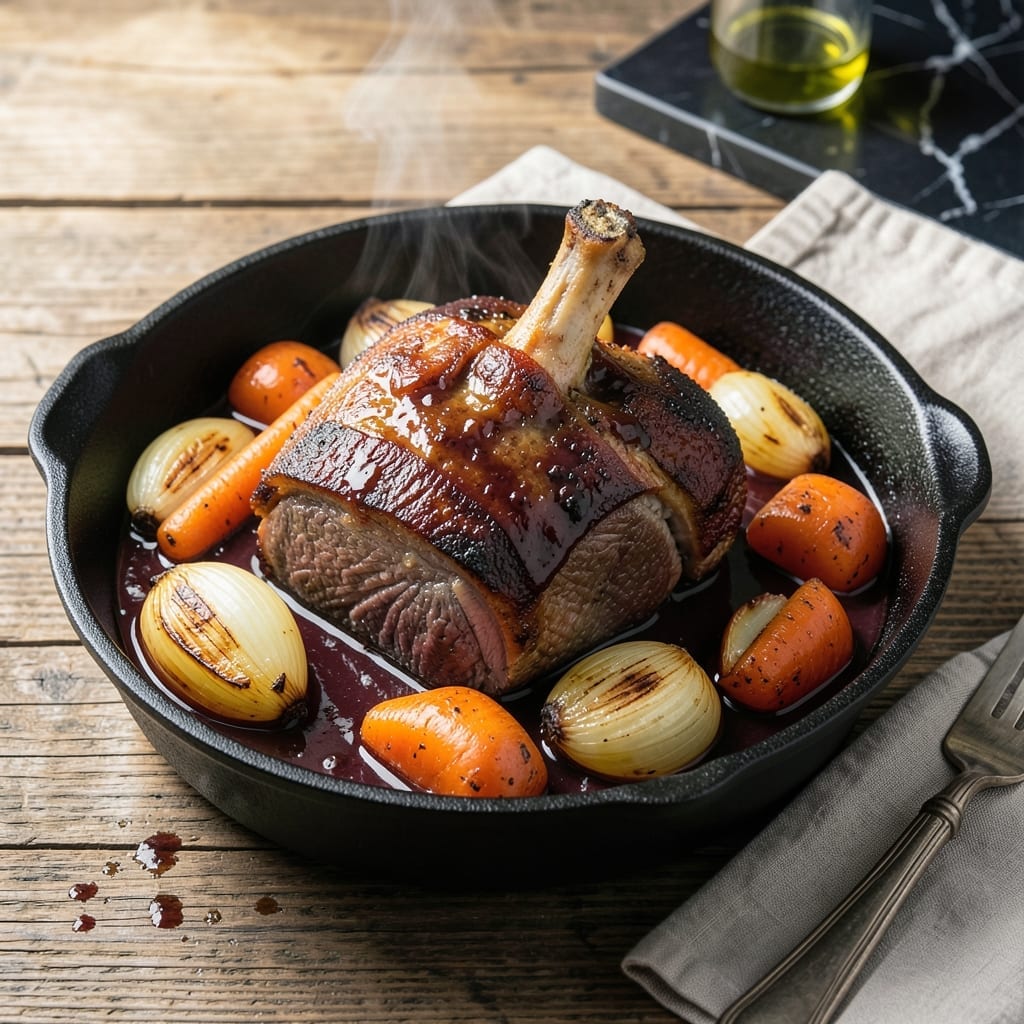
Sunday suppers were made for dishes like this—slow-cooked, deeply flavorful, and guaranteed to bring everyone to the table. The round bone cut transforms into fall-off-the-bone tenderness with the right technique.
This method relies on low, steady heat and a simple braising liquid to break down the connective tissue. Aromatic vegetables and herbs build layers of flavor that penetrate every bite.
The result is a rich, savory centerpiece that pairs perfectly with mashed potatoes or crusty bread. The meat absorbs the cooking liquid, creating its own velvety sauce.
It’s the kind of meal that turns an ordinary weekend into something special. The house fills with an aroma that says dinner is worth the wait.
Ingredients for Round Bone Pot Roast
A well-marbled cut and aromatic vegetables build the foundation for this slow-cooked centerpiece.
| Ingredient | Amount | Notes |
|---|---|---|
| Beef Round Bone Pot Roast 🥩 | 3 lb | Well-marbled, bone-in preferred |
| Olive Oil 🫒 | 2 tbsp | Divided for searing and deglazing |
| Kosher Salt 🧂 | 1 ½ tsp | Diamond Crystal preferred |
| Freshly Ground Black Pepper 🌶️ | 1 tsp | Coarse grind for texture |
| Yellow Onions 🧅 | 2 whole | Large, quartered |
| Carrots 🥕 | 4 whole | Peeled, cut into 2-inch chunks |
| Celery Stalks 🌿 | 3 whole | Cut into 2-inch pieces |
| Garlic Cloves 🧄 | 6 cloves | Smashed, peeled |
| Tomato Paste 🍅 | 2 tbsp | Double-concentrated preferred |
| Dry Red Wine 🍷 | 1 ½ cups | Bold variety like Cabernet |
| Beef Stock 🥣 | 2 cups | Low-sodium preferred |
| Fresh Thyme Sprigs 🌿 | 4 whole | Tied with kitchen twine |
| Bay Leaves 🍃 | 2 whole | Dried, whole leaves |
| All-Purpose Flour 🌾 | 2 tbsp | For thickening sauce |
The beef is non-negotiable—bone-in round roast from a trusted butcher or Whole Foods ensures the connective tissue breaks down properly. Look for bright red meat with abundant marbling (those white fat streaks). Most supermarkets carry pre-cut chuck roast, but request the round bone specifically—it’s leaner but still tender when braised. Avoid any cuts labeled ‘round tip’ as they’ll dry out.
No red wine? Substitute with low-sodium beef broth plus 1 tbsp balsamic vinegar. Fresh thyme can be replaced with 1 tsp dried thyme. In a pinch, beef consommé works for the stock. The tomato paste adds depth, but ketchup in a 1:1 ratio works if that’s all you have. For the flour, cornstarch (1 tbsp mixed with 1 tbsp water) makes a gluten-free thickener.
The roast can be cooled, sliced, and stored in its juices for up to 4 days. It freezes beautifully for 3 months—portion with some liquid to prevent drying. Reheat gently on the stove with a splash of water or stock.
Why You’ll Love This Recipe
- One Pan Magic: It’s just sear, season, and slow cook—no fancy techniques, just simple steps with olive oil, salt, and onions doing the heavy lifting.
- Melt-In-Your-Mouth Richness: The bone-in cut stays juicy and soaks up the deep, savory flavor from the onions and pepper as it cooks low and slow.
- Feeds a Crowd: I serve this to my whole family, and there’s always enough for seconds—plus, it reheats beautifully the next day.
- Budget-Friendly Feast: A hearty pot roast like this stretches a modest piece of beef into a meal that feels indulgent without breaking the bank.
Step-by-Step Instructions for Round Bone Pot Roast
Master this technique and you’ll serve a melt-in-your-mouth centerpiece worthy of any Sunday table.
Step 1: Sear the Beef Round Bone Pot Roast
Pat the 3 lb Beef Round Bone Pot Roast thoroughly dry with paper towels—this ensures a proper sear. Season all sides aggressively with the 1.5 tsp Kosher Salt and 1 tsp Freshly Ground Black Pepper, pressing gently so the seasoning adheres.
Heat 1 tbsp Olive Oil in a heavy Dutch oven over medium-high heat until shimmering. Add the roast and sear for 4-5 minutes per side until a deep, mahogany crust forms. Use tongs to turn it—never pierce the meat, as this releases precious juices. The sear should create a thick fond on the pan bottom, which will flavor your sauce later.
Step 2: Sauté the Aromatic Vegetables
Remove the roast to a plate and reduce heat to medium. Add the remaining 1 tbsp Olive Oil to the pot, then toss in the 2 whole Yellow Onions, 4 whole Carrots, and 3 whole Celery Stalks. Cook for 6-8 minutes, stirring occasionally, until the onions begin to soften and the carrots develop light brown edges.
Stir in the 6 cloves Garlic Cloves and 2 tbsp Tomato Paste, cooking for another 2 minutes until the paste darkens slightly. This builds a deep, savory base for your braising liquid. Be careful not to burn the tomato paste—it can turn bitter quickly at high heat.
Step 3: Deglaze and Begin the Braise
Pour in the 1.5 cups Dry Red Wine and use a wooden spoon to scrape up all the browned bits from the bottom of the pot. Bring to a simmer and cook for 3-4 minutes until the liquid reduces by about half. This step dissolves all that concentrated flavor from the searing process.
Return the roast to the pot along with any accumulated juices. Add the 2 cups Beef Stock, 4 whole Fresh Thyme Sprigs, and 2 whole Bay Leaves. The liquid should come about halfway up the side of the roast—if it doesn’t, add a splash more stock. Bring the mixture to a gentle simmer.
Step 4: Slow Braise to Tenderness
Cover the pot and transfer it to a preheated 325°F oven. Braise for 2.5 to 3 hours, turning the roast every 45 minutes to ensure even cooking. You’ll know it’s ready when the meat pulls away from the bone easily and a fork slides in with no resistance.
About 30 minutes before the end of cooking, whisk the 2 tbsp All-Purpose Flour with 2 tbsp of the braising liquid to create a slurry. Stir this into the pot to thicken the sauce into a rich, velvety gravy. The sauce should coat the back of a spoon but still be pourable.
Step 5: Rest and Serve
Carefully transfer the roast to a cutting board, tent loosely with foil, and let it rest for 15-20 minutes. This allows the juices to redistribute, ensuring each slice is moist and tender. Skim any excess fat from the sauce surface if desired.
Slice the roast against the grain into thick pieces and arrange on a platter. Spoon the vegetable-laden sauce over the top and serve immediately. The meat should be so tender it nearly falls apart at the touch of a fork, with the sauce clinging to every bite.
Pro Tips For Making Round Bone Pot Roast
- Sear It Hard: Use high heat to get a deep brown crust on the round bone pot roast before braising—I learned this the hard way after ending up with gray, bland meat.
- Salt Generously: Coat the beef with kosher salt at least 40 minutes before cooking, or even overnight. The round cut needs that time to absorb the seasoning fully.
- Don’t Rush the Cook: Low and slow is non-negotiable for this tough cut—aim for 3-4 hours at 300°F until it pulls apart with a fork.
- Use Onion Layers: Slice the yellow onions thick and layer them under the roast to create a natural rack and add sweetness to the braising liquid.
Common Mistakes When Making This Recipe
Skipping the Sear
I know it’s tempting to skip this step, but searing the 3 lb Beef Round Bone Pot Roast creates the Maillard reaction that builds deep, complex flavors. Without it, your dish will taste flat. Use medium-high heat and don’t rush the 4-5 minutes per side. 🔥
Overcrowding the Pot
Your Dutch oven needs room for the meat and vegetables to cook properly. If you cram everything in, the temperature drops and the roast steams instead of sears. If necessary, sear the meat in batches and use a pot that’s at least 5-6 quarts.
Wrong Liquid Level
The braising liquid should come about halfway up the roast. Too much and you’ll boil the meat; too little and it’ll dry out. Start with 2 cups Beef Stock and 1.5 cups Dry Red Wine, adding more only if needed during cooking.
Short Braising Time
This cut needs 2.5 to 3 hours at 325°F to break down the connective tissue. Pulling it out early results in tough, chewy meat. I check doneness by testing with a fork—it should slide in effortlessly. ⏰
Not Resting the Meat
Resting for 15-20 minutes after cooking allows juices to redistribute. Slice too soon and all that beautiful moisture ends up on your cutting board. Tent loosely with foil to keep it warm while it rests.
Using the Wrong Cut
Round bone pot roast is ideal for braising. Substituting a leaner cut like round tip will result in dry, stringy meat. If you can’t find round bone, ask your butcher for a well-marbled chuck roast instead.
Nutrition Facts
Frequently Asked Questions
What’s the ideal cooking temperature?
Braise in a 325°F oven for perfect results. This low, steady heat breaks down connective tissue without drying the meat.
Can I use a slow cooker instead?
Yes! Sear first, then cook on low for 8-10 hours or high for 5-6 hours. The texture will be similar but without the oven’s even heat distribution.
How do I know when it’s done?
Test with a fork after 2.5 hours. It should slide in effortlessly with no resistance. The meat will pull away from the bone when ready.
What if my sauce is too thin?
Mix 2 tbsp flour with 2 tbsp braising liquid, then stir into the pot. Simmer for 5-10 minutes to thicken.

- 4C Bread Crumbs Meatballs Recipe: Crispy Crust and Juicy Centers - September 25, 2026
- 6 Oz Chocolate Chip Cookie Recipe: Perfectly Balanced Crispy Edges and Chewy Hearts - September 25, 2026
- 6-Inch Coffee Cake Recipe: Vanilla Bean Swirls and Buttery Streusel Topping - September 25, 2026