
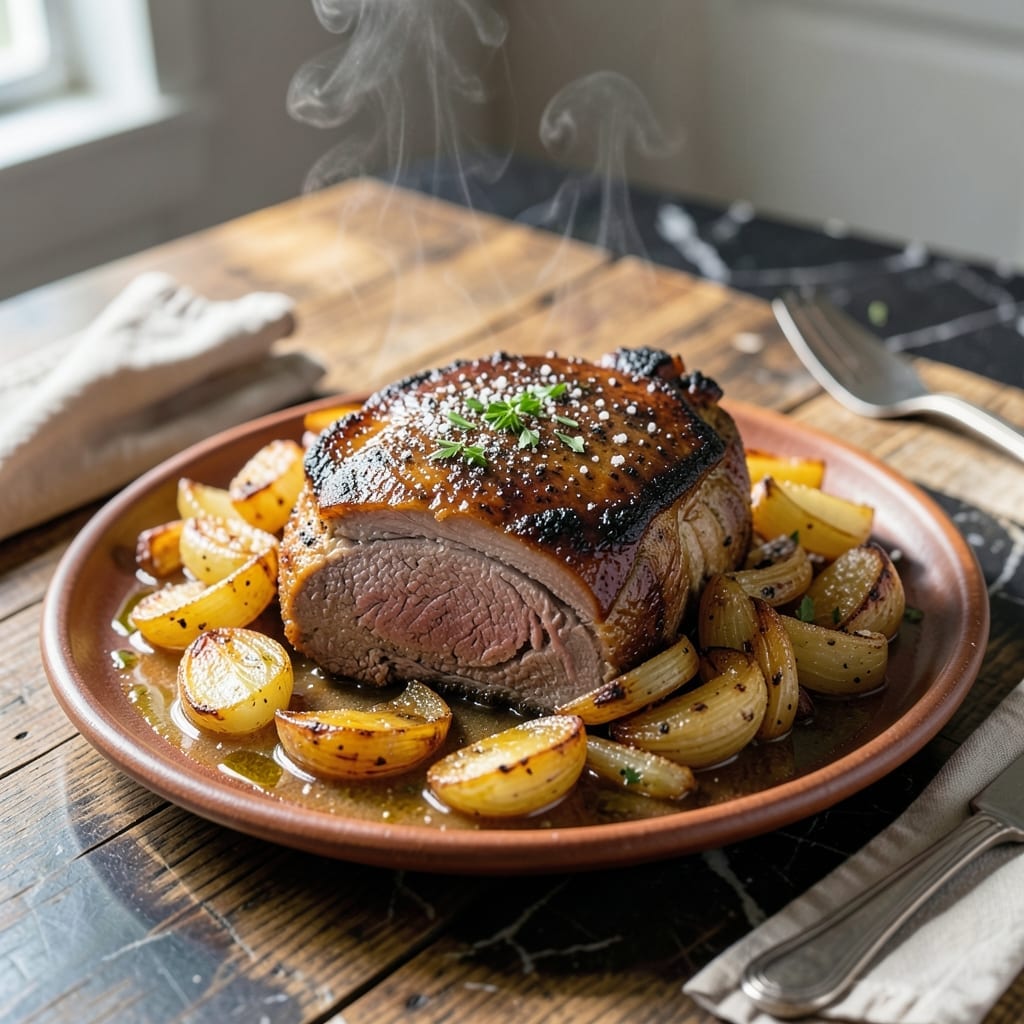
There’s a reason pot roast remains a Sunday dinner classic—it transforms tough cuts into fork-tender perfection through slow braising. This method relies on patient cooking in a flavorful liquid to break down connective tissues.
The red wine and herb combination creates a rich, aromatic base that penetrates the meat deeply. A proper sear before braising builds the foundation for complex flavors in every bite.
What emerges after hours in the oven is meat so tender it falls apart, bathed in a velvety sauce that soaks into every fiber. The vegetables absorb the same rich flavors, making them just as satisfying.
This is comfort food at its most refined, requiring little hands-on time but delivering impressive results. The aroma alone makes the wait worthwhile.
Ingredients for Savory Pot Roast
Quality ingredients transform this classic into something extraordinary with minimal effort.
| Ingredient | Amount | Notes |
|---|---|---|
| Chuck Roast 🥩 | 3 lb | Well-marbled for best texture |
| Kosher Salt 🧂 | 2 tsp | Diamond Crystal preferred |
| Freshly Ground Black Pepper 🌶️ | 1 tsp | Coarse grind for depth |
| All-Purpose Flour 🌾 | ¼ cup | For dredging the meat |
| Olive Oil 🫒 | 2 tbsp | Divided for searing and sautéing |
| Yellow Onions 🧅 | 2 whole | Medium, roughly chopped |
| Garlic Cloves 🧄 | 6 cloves | Smashed for robust flavor |
| Carrots 🥕 | 4 whole | Peeled, cut into chunks |
| Celery Stalks 🥬 | 3 pieces | Cut into large pieces |
| Dry Red Wine 🍷 | 2 cups | Bold variety like Cabernet |
| Beef Stock 💧 | 2 cups | Low-sodium preferred |
| Tomato Paste 🍅 | 2 tbsp | For depth of flavor |
| Fresh Thyme Sprigs 🌿 | 4 pieces | Plus extra for garnish |
| Fresh Rosemary Sprigs 🌿 | 2 pieces | Stems removed before serving |
| Bay Leaves 🍃 | 2 pieces | Dried, whole leaves |
The chuck roast is non-negotiable here—look for well-marbled cuts from a trusted butcher or Whole Foods for the best results. The fat renders down during braising, creating that unctuous sauce. Fresh herbs make a noticeable difference; sourced from farmers markets when possible. The wine should be something you’d drink—Cabernet Sauvignon or Merlot work beautifully.
No red wine? Substitute with additional beef stock plus 1 tbsp balsamic vinegar. Out of fresh herbs? Dried thyme and rosemary at one-third the amount will suffice. For the stock, Better Than Bouillon makes a solid store-bought option. The vegetables can be swapped—parsnips or turnips work as well as carrots.
This tastes even better the next day. Refrigerate leftovers in an airtight container for up to 5 days, or freeze for 3 months. The fat will solidify on top—skim it off before reheating for a cleaner sauce.
Why You’ll Love This Recipe
- I’ll be real: it tastes even better the next day, and stretches to feed my family for two meals.
- One Pot Magic: I toss the chuck roast in flour, sear it in olive oil, and let the oven do the rest—minimal cleanup, maximum flavor.
- Rich and Savory: The Kosher salt and fresh black pepper form a crust that locks in juices, making every bite deeply satisfying.
- Sunday or Tuesday: Honestly, this works for a lazy weekend dinner or a quick weekday meal when I need comfort food fast.
Step-by-Step Instructions for Savory Pot Roast
Master the technique for fall-apart tender meat with rich, wine-infused braising liquid.
Step 1: Sear the Chuck Roast to Develop Deep Flavor
Pat the 3 lb chuck roast completely dry with paper towels. This step is non-negotiable—moisture prevents proper browning. Season all sides aggressively with the 2 tsp kosher salt and 1 tsp freshly ground black pepper, pressing the seasoning into the meat to ensure it adheres.
Dredge the roast in the 0.25 cup all-purpose flour, shaking off excess. Heat 1 tbsp olive oil in a Dutch oven over medium-high heat until shimmering. Sear the chuck roast on all sides for 4-5 minutes per side until deeply browned. The flour coating will create a thick crust that enhances the final sauce.
Step 2: Sauté the Aromatics for Layered Complexity
Remove the seared roast and set aside. In the same pot, add the remaining 1 tbsp olive oil. Add the 2 whole yellow onions, 4 whole carrots, and 3 pieces celery stalks. Sauté for 5-6 minutes until the onions begin to soften and develop caramelized edges.
Add the 6 cloves garlic cloves and 2 tbsp tomato paste, stirring constantly for 1-2 minutes until the tomato paste darkens slightly and coats the vegetables. This step builds the flavor foundation known as the mirepoix, crucial for depth in braised dishes.
Step 3: Deglaze and Build the Braising Liquid
Pour in the 2 cups dry red wine, scraping up all the browned bits from the bottom of the pot with a wooden spoon. These fond particles are pure flavor and will dissolve into the liquid, creating a rich base. Bring to a simmer and cook for 3-4 minutes until the wine reduces by half.
Add the 2 cups beef stock, 4 pieces fresh thyme sprigs, 2 pieces fresh rosemary sprigs, and 2 pieces bay leaves. Return the chuck roast to the pot, ensuring it’s mostly submerged. The liquid should come about two-thirds up the sides of the meat for even cooking.
Step 4: Braise Low and Slow to Perfection
Cover the pot and transfer it to a preheated 325°F oven. Braise for 3 to 3.5 hours, turning the roast every 45-60 minutes to ensure even cooking. The meat is done when it yields easily to a fork and the internal temperature reaches 195-200°F.
Resist the urge to check too frequently—each time you open the oven, you lose valuable heat and extend the cooking time. The low, steady heat breaks down the collagen in the chuck roast, transforming tough connective tissue into silky, melt-in-your-mouth gelatin.
Step 5: Rest and Serve with Braising Liquid
Carefully remove the roast from the pot and transfer it to a cutting board. Tent loosely with foil and let it rest for 15 minutes before slicing or shredding. This allows the juices to redistribute, ensuring moist, flavorful meat.
Skimming excess fat from the braising liquid and reduce it on the stovetop over medium heat for 10-15 minutes if a thicker sauce is desired. Serve the pot roast with the vegetables and a generous spoonful of the reduced braising liquid.
Pro Tips For Making Savory Pot Roast
- Sear It Hard: Get your olive oil smoking hot before adding the floured chuck roast—I learned this the hard way after too many pale, sad pot roasts. That deep brown crust is where all the savory flavor builds.
- Salt the Night Before: After burning a few batches, I finally started salting the roast 12 hours ahead. The kosher salt penetrates deep, making every bite taste seasoned through.
- Skip the Cold Meat: Resist the urge to sear straight from the fridge—let the chuck sit at room temp for 30 minutes first. Cold meat steams instead of browning, and nobody wants a gray pot roast.
- Use a Heavy Pot: Sounds obvious, but a thin pot warps and burns the flour coating. My grandmother swore by her cast iron Dutch oven, and she was right—it distributes heat evenly for perfect caramelization.
Best Sauces and Condiments for This Recipe
Classic Red Wine Gravy
Use the reduced braising liquid as your base—simmer for 10-15 minutes until thickened. I stir in 1 tbsp cold butter at the end for a glossy finish that clings beautifully to the meat and vegetables. This transforms the cooking liquid into a restaurant-quality sauce.
Horseradish Cream Sauce
Whisk ½ cup sour cream with 2 tbsp prepared horseradish and 1 tsp Dijon mustard. The sharpness cuts through the richness of the pot roast perfectly. I like to add 1 tsp fresh chives for color and a mild onion note. 💫
Chimichurri Drizzle
Blend 1 cup fresh parsley, 3 garlic cloves, ¼ cup olive oil, 2 tbsp red wine vinegar, and ½ tsp red pepper flakes. This bright, herby sauce adds a fresh contrast to the deep, slow-cooked flavors. It’s especially good with leftovers.
Caramelized Onion Jam
Slow-cook 2 large onions with ¼ cup balsamic vinegar and 2 tbsp brown sugar until deeply caramelized. The sweet-tart jam complements the savory beef beautifully. I make a big batch and keep it in the fridge for sandwiches too.
Whole Grain Mustard
Stir 2 tbsp whole grain mustard into the braising liquid before serving. The seeds add texture and a tangy bite that enhances the wine and herb notes. Maille brand is my go-to for consistent quality.
Fresh Herb Garnish
Finely chop 2 tbsp fresh parsley and 1 tbsp fresh thyme leaves. Sprinkle over the top just before serving for a pop of color and a burst of fresh flavor. This simple touch makes the dish look as good as it tastes. 🌿
Nutrition Facts
Frequently Asked Questions
What cut works best for this dish?
Chuck roast is ideal due to its marbling and connective tissue, which breaks down beautifully during slow cooking. Avoid lean cuts like sirloin, which can dry out.
Can I make this in a slow cooker?
Yes! Sear the meat first, then transfer everything to a slow cooker. Cook on low for 8-10 hours or high for 5-6 hours for tender results.
How do I know when it’s done?
The meat should reach 195-200°F internally and pull apart easily with a fork. Resist cutting early—it continues cooking as it rests.
Can I use a different liquid?
Replace red wine with extra beef stock plus 1 tbsp balsamic vinegar for acidity. For non-alcoholic, use beef broth with 1 tsp apple cider vinegar.

- 4C Bread Crumbs Meatballs Recipe: Crispy Crust and Juicy Centers - September 25, 2026
- 6 Oz Chocolate Chip Cookie Recipe: Perfectly Balanced Crispy Edges and Chewy Hearts - September 25, 2026
- 6-Inch Coffee Cake Recipe: Vanilla Bean Swirls and Buttery Streusel Topping - September 25, 2026