
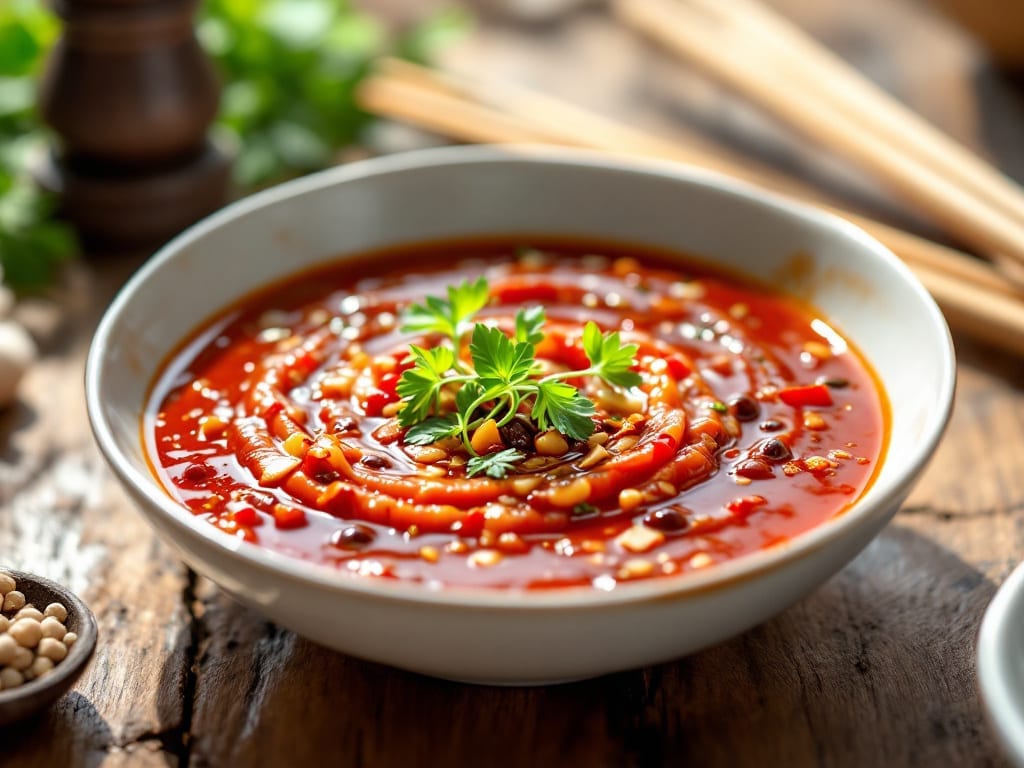
This Sichuan hot pot dipping sauce recipe delivers the bold, layered flavors that define authentic hot pot experiences—spicy, tangy, and packed with umami depth.
The secret lies in balancing chili oil, fermented black beans, and aromatic spices to create a sauce that’s smooth yet fiery, perfect for dipping into simmering broths or fresh vegetables. I’ve refined this recipe over years of testing, ensuring every spoonful delivers that signature Sichuan punch without overpowering the meal.
The foundation of great hot pot sauce is emulsification, where oil and vinegar blend seamlessly to create a velvety texture. Fresh garlic, ginger, and Sichuan peppercorns add complexity, while fermented black beans contribute that unmistakable umami richness.
This sauce isn’t just for dipping—it elevates every bite, transforming simple ingredients into a restaurant-quality experience. The process is straightforward but requires patience to let flavors meld.
What you’ll end up with is a vibrant, aromatic sauce that’s both smooth and intensely flavorful—ready to enhance your hot pot feast. The chili oil provides heat, the vinegar adds tang, and the spices create layers of depth that linger on your palate.
This recipe delivers professional results with simple ingredients, making it perfect for both beginners and seasoned cooks. Let’s get started!
Once mastered, this sauce becomes a versatile staple in your kitchen, pairing beautifully with meats, seafood, and vegetables. Store it in the refrigerator for up to two weeks, allowing flavors to deepen over time.
Adjust the spice level to suit your taste, but remember: the balance of heat, tang, and umami is what makes this sauce truly special.
Ingredients for sichuan hot pot dipping sauce
Nine ingredients blend into a sauce that’s spicy, tangy, and packed with Sichuan soul.
| Ingredient | Amount | Notes |
|---|---|---|
| Chili Oil 🌶️ | ½ cup | Homemade or store-bought Sichuan style |
| Fermented Black Beans 🍆 | ¼ cup | Drained, rinsed, and chopped |
| Dark Soy Sauce 🍶 | ¼ cup | For deep umami flavor |
| Rice Vinegar 🍶 | ¼ cup | White or seasoned preferred |
| Sesame Oil 🫒 | 1 tbsp | Toasted for nutty aroma |
| Garlic Cloves 🧄 | 6 cloves | Freshly minced for strong flavor |
| Fresh Ginger 🌿 | 1 tbsp | Finely grated, peel included |
| Sichuan Peppercorns 🌶️ | 1 tsp | Lightly toasted for aroma |
| Green Onions 🧅 | 3 whole | Thinly sliced, white and green parts |
| Chinkiang Vinegar 🍶 | 1 tbsp | For authentic tanginess (optional) |
The chili oil is non-negotiable—Lao Gan Ma is the gold standard, but any quality Sichuan chili oil works. Fermented black beans add that funky umami, and Asian grocery stores carry them fresh or jarred. Dark soy sauce gives depth, but if you only have light, reduce it first to concentrate the flavor. For garlic and ginger, fresh is a must—dried won’t cut it here. Sichuan peppercorns are key for that signature numbing heat, and Penzeys sells them whole if you want to toast them yourself.
No chinkiang vinegar? Substitute extra rice vinegar plus a splash of balsamic for tang. Short on sesame oil? Toasted peanut oil works in a pinch. The green onions can be swapped for scallions or chives, but keep the white parts—they’ve got more flavor. If you’re sensitive to heat, reduce the chili oil by half and add a pinch of sugar to balance. For extra richness, add 1 tbsp of miso paste—it blends right in. The sauce thickens as it sits, so add a splash of water if it gets too stiff.
This sauce keeps for 2 weeks in the fridge, but flavors deepen over time. For longer storage, freeze in ice cube trays—perfect for single servings. The emulsification happens naturally, but if it separates, whisk in 1 tsp of cornstarch slurry to fix it. Double the batch—it disappears fast during hot pot nights. And trust me, the leftovers taste even better the next day.
Why You’ll Love This Recipe
- Five-Ingredient Magic: I swear by this—just chili oil, fermented black beans, a splash of dark soy, vinegar, and sesame oil. No fancy prep, no stress, and the flavors still pack a punch like a Sichuan street stall.
- Umami Bomb: That fermented black bean paste? It’s where the sauce gets its soul. Rich, salty, and funky—like a secret handshake between dark soy and chili oil that makes every bite sing.
- Game for Any Meal: Use it for dumplings, noodles, or even eggs. I’ve drizzled it over cold rice when I’m too tired to cook, and it turns a simple meal into something special. (Yes, even on a Tuesday night.)
- Pantry Goldmine: No waste here—this sauce keeps for weeks in the fridge. A little goes a long way, so you’re not scrambling to use it up. Plus, all those ingredients? They’re already in my cupboard, waiting for this exact moment.
Step-by-step instructions for Sichuan hot pot dipping sauce
This sauce comes together faster than you’d think—just a few minutes of mixing and you’ll have that signature fiery, aromatic blend.
Toast the Sichuan Peppercorns and Prepare Aromatics
Start by lightly toasting the 1 teaspoon Sichuan peppercorns in a dry skillet over medium heat for about 30 seconds until fragrant. Watch them closely—they burn quickly and lose their delicate aroma. Transfer the toasted peppercorns to a small bowl and let them cool slightly.
While they cool, finely mince the 6 cloves garlic and grate the 1 tablespoon fresh ginger using a microplane or fine grater. You want the ginger to be almost paste-like for even distribution in the sauce. The freshness here makes all the difference—don’t skip this step or you’ll miss that bright, zesty kick.
Combine Wet Ingredients for Umami Depth
In a medium bowl, whisk together the 0.5 cup chili oil, 0.25 cup dark soy sauce, and 0.25 cup rice vinegar. The chili oil should be well-stirred to distribute its heat evenly. Add the toasted Sichuan peppercorns and let them steep in the oil for about 1 minute—this infuses their signature numbing-spicy flavor throughout.
Next, stir in the 1 tablespoon sesame oil and 1 tablespoon chinkiang vinegar. The sesame oil adds nutty warmth while the chinkiang vinegar contributes that authentic tangy depth. The mixture should look glossy and well-combined at this stage. If you’re using chinkiang vinegar, you’ll notice its strong aroma—this is good, as it balances the heat beautifully.
Fold in Aromatics and Fermented Black Beans
Add the minced garlic and grated ginger to the bowl and stir vigorously for 20-30 seconds until fully incorporated. You’ll smell that irresistible garlic-ginger aroma developing—this is where the sauce starts to come alive. The raw garlic should dissolve completely into the oil.
Finally, fold in the 0.25 cup chopped fermented black beans and 3 whole green onions, thinly sliced. The fermented black beans contribute a funky, savory depth that’s essential to authentic Sichuan flavor. Stir everything together until the green onions are evenly distributed. The sauce should have a thick, almost paste-like consistency at this point, with visible flecks of chili oil and black beans.
Adjust and Serve Immediately
Taste the sauce and adjust the balance of flavors. If it needs more heat, add a bit more chili oil. For extra tang, stir in another teaspoon of rice vinegar or chinkiang vinegar. The sauce should have a perfect balance of spicy, tangy, umami, and slightly funky notes.
Transfer the sauce to a small serving bowl or individual ramekins. Serve immediately alongside your hot pot for maximum flavor impact. This sauce keeps well in the refrigerator for up to 5 days, but it’s best enjoyed fresh when the aromatics are at their peak. The heat will mellow slightly as it cools, so don’t be afraid to add a little extra chili oil when serving if you prefer it fierier.
Pro Tips For Making Sichuan Hot Pot Dipping Sauce
- Toast the Beans: Smash the fermented black beans with a mortar and pestle until they’re fine but not powder—think rough sandpaper texture. I learned this the hard way: skipping the toast step makes the sauce taste flat, and skipping the smash makes it clump like mud. Do this in a dry pan over medium heat for 30 seconds max, just until fragrant.
- Balance the Heat: Start with half the chili oil, then taste. The sauce should sing with spice but not scream—add dark soy sauce and rice vinegar gradually to dial it back. I used to dump everything in at once and ended up with a one-dimensional sauce; now I adjust as I go.
- Whisk in Sesame Oil Last: Stir in the sesame oil after everything else is mixed, just before serving. It’s delicate—adding it early will make it evaporate and lose its nutty aroma. A splash of cold water right before serving also helps it emulsify better (yes, even if it sounds counterintuitive).
- Use Aged Vinegar: Skip the cheap rice vinegar—aged vinegar (like black vinegar or 2-year-old rice vinegar) adds depth without overpowering. I was skeptical until I tried it; now I won’t go back. If you’re in a pinch, add a pinch of sugar to mimic the complexity.
Regional styles of this dish
Chengdu Classic Style
This is the most authentic version, where the sauce leans heavily on fermented black beans and chinkiang vinegar for that signature Sichuan funk. In Chengdu, the capital of Sichuan cuisine, hot pot sauce is often thicker, almost paste-like, to cling to meats and vegetables.
I like to add an extra ½ teaspoon of toasted sesame seeds at the end for texture—it’s a pro trick I picked up from a street food stall there.
The heat comes from Lao Gan Ma chili oil, but locals often mix in a pinch of dried chili flakes for extra smokiness. 🌶️
Chongqing Spicy Kick
Chongqing takes hot pot sauce to another level with double the chili oil and a splash of Shaoxing wine (about 1 tablespoon) for depth. The sauce here is thinner, almost like a brothy dip, perfect for soaking up in the bubbling broth.
I swap the fermented black beans for dried shrimp (about 2 tablespoons) to add a briny, umami punch. The key is balancing the numbing Sichuan peppercorn heat with the sharp vinegar—Chongqing style is all about that fiery, tangy contrast. 🔥
Home-Style Variations
Many home cooks in rural Sichuan simplify the sauce by using store-bought chili crisp instead of homemade chili oil. They also often add pickled vegetables (like ½ cup of quick-pickled mustard greens) for a refreshing crunch.
For a sweeter touch, a teaspoon of honey or rock sugar balances the heat—this is common in family-style hot pots where kids are eating too. I’ve even seen versions with crushed peanuts for a nutty crunch, though that’s more of a fusion twist. 💡
Modern Fusion Twist
Urban Sichuan restaurants often blend traditional flavors with global influences. For example, adding 1 teaspoon of miso paste deepens the umami, while a dash of fish sauce (about ½ teaspoon) adds complexity. Some chefs even incorporate gochujang (Korean chili paste) for a smoky-sweet contrast.
I’ve experimented with smoked paprika (about ¼ teaspoon) to mimic the smokiness of grilled meats—it works surprisingly well. The sauce becomes more versatile for dipping everything from lobster to crispy tofu. ✨
Vegetarian Adaptations
For a plant-based version, replace the fermented black beans with mushroom powder (about 1 teaspoon) and use tamari instead of soy sauce. I also add 1 tablespoon of nutritional yeast for a cheesy, umami boost.
The Sichuan peppercorns and chili oil remain the stars, but the sauce takes on a richer, earthier profile. This version is perfect for veggie hot pots and still delivers that signature Sichuan punch without any animal products. 🌱
Nutrition facts
Frequently asked questions
Can I make this sauce spicier or milder?
The recipe is designed to be balanced, but you can easily adjust it. For more heat, add an extra 1-2 tablespoons of chili oil or a pinch of dried chili flakes. To mellow it, reduce the chili oil by 1 tablespoon and add 1 teaspoon of sugar or honey to balance the flavors. The Sichuan peppercorns provide a numbing heat too—remove them if you prefer pure spice.
Why does my sauce separate? How do I fix it?
Separation happens when oil and vinegar aren’t properly emulsified. Stir in 1 teaspoon of cornstarch mixed with 1 tablespoon of water (slurry) and whisk vigorously until smooth. For prevention, blend all ingredients in a food processor for 10-15 seconds instead of stirring by hand. The sauce will thicken naturally as it sits—just give it a quick stir before serving.
What’s the difference between this sauce and regular hot pot dipping sauce?
This recipe captures the authentic Sichuan profile with fermented black beans, Sichuan peppercorns, and chinkiang vinegar—key ingredients missing in generic hot pot sauces. Regular versions often rely on soy sauce and chili flakes, lacking the funky umami and numbing-spicy complexity. Think of this as the “gourmet” version of hot pot dipping sauce.
Can I use this sauce for other dishes besides hot pot?
It’s perfect for dipping spring rolls, grilled meats, or steamed dumplings. Try drizzling it over noodles or mixing it into stir-fries for an instant Sichuan flavor boost. The fermented black beans and chili oil add depth to any dish where you want that signature Sichuan kick.
How do I store leftovers, and can I freeze it?
Store in an airtight container in the fridge for up to 2 weeks. For freezing, portion into ice cube trays and transfer to a bag—thaw in the fridge overnight. The texture may separate slightly after freezing, so whisk or blend before using. The flavors actually improve over time, so leftovers often taste even better!

- Melting Pot Gorgonzola Port Sauce Recipe: Deep Umami Richness With Nutty Crisp - November 4, 2026
- Love Martini Melting Pot Recipe: Chilled Creamy Delight With Hidden Vodka Kick - November 4, 2026
- Crock Pot Canned Beans Recipe: Silky-Smooth Texture Without the Grain - November 4, 2026