
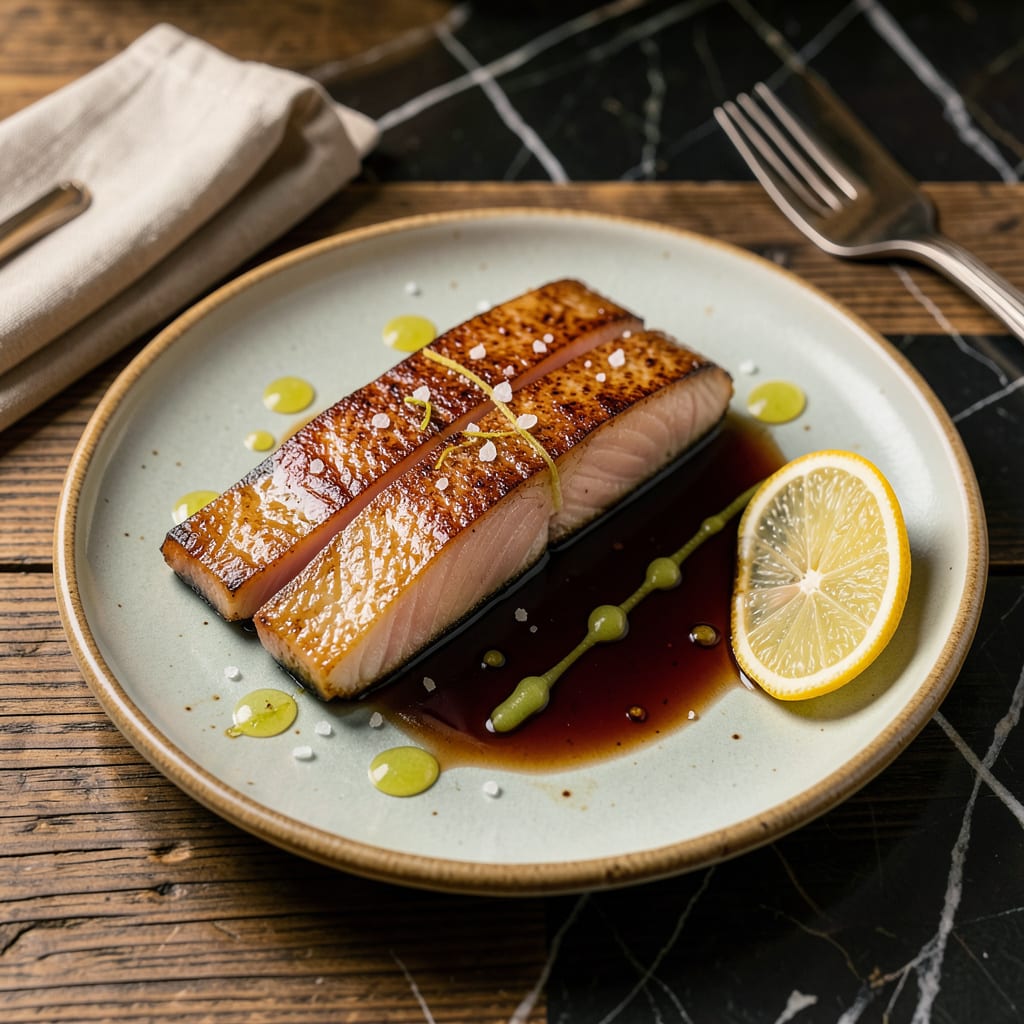
Preparing spotted yellowtail with perfectly crispy skin and tender flesh is one of those culinary achievements that feels impressive yet remains completely approachable. This Japanese-inspired method focuses on precise temperature control and proper skin preparation to create restaurant-quality results at home.
The technique involves scoring the skin for even cooking, patting the fillets completely dry, and searing at high heat just until the skin turns golden and crisp. Finished with a simple citrus-soy glaze, this preparation lets the delicate flavor of the fish shine while adding layers of umami and brightness. Serve with steamed rice and quick-pickled vegetables for a complete meal.
Ingredients for Spotted Yellowtail
Optimal Japanese-inspired ingredients combine for restaurant-quality spotted yellowtail with crisp skin and delicate flesh.
| Ingredient | Amount | Notes |
|---|---|---|
| Spotted yellowtail fillets 🐟 | 4 whole | Skin-on, 6-8 oz each, scored |
| Diamond Crystal kosher salt 🧂 | 1 ½ tsp | Divided for seasoning and drying |
| Neutral high-smoke-point oil 🫒 | 3 tbsp | Grapeseed or avocado preferred |
| Low-sodium soy sauce 🫙 | 2 tbsp | Japanese-style like Kikkoman |
| Mirin 🍶 | 1 ½ tbsp | Authentic Japanese sweet rice wine |
| Fresh yuzu juice 🍋 | 1 tbsp | Or substitute Meyer lemon juice |
| Toasted sesame oil 🫒 | ½ tsp | For finishing glaze |
| Microplaned fresh ginger 🌿 | 1 tsp | Peeled before grating |
| Thinly sliced scallions 🧅 | ¼ cup | For garnish, green parts only |
| Japanese short-grain rice 🍚 | 1 ½ cups | Uncooked, for serving |
| Quick-pickled cucumber slices 🥒 | 1 cup | Thinly sliced, for serving |
| Fresh cilantro sprigs 🌿 | ¼ cup | For garnish, optional |
The spotted yellowtail fillets require skin-on cuts with vibrant coloration, ideally sourced from high-quality seafood purveyors like Whole Foods or local Japanese markets. Standard grocery store fillets work but may lack the fat content needed for perfect crisping. Diamond Crystal kosher salt is specified for its clean flavor and precise measurement control—table salt cannot be substituted at equal volume. The neutral oil must have a smoke point above 450°F (grapeseed or avocado oil) to prevent burning during high-heat searing. For authentic results, Japanese soy sauce (Kikkoman) and hon-mirin (not aji-mirin) are essential for proper umami balance in the glaze.
Fresh yuzu juice provides the signature citrus profile, though Meyer lemon juice offers an acceptable alternative when yuzu isn’t available. The microplaned ginger must be freshly grated—pre-minced ginger lacks the necessary aromatic intensity. For the rice, Japanese short-grain varieties (Koshihikari or Calrose) are mandatory for proper texture; jasmine or basmati cannot be substituted. Quick-pickled cucumbers should be prepared with rice vinegar and a pinch of sugar for balance. If scallions are unavailable, chives may be used at half the quantity, though the flavor profile will differ slightly.
Proper storage maintains ingredient integrity: fillets should be used within 24 hours of purchase, kept on ice in the coldest part of the refrigerator. The prepared glaze components (soy, mirin, yuzu) can be combined and refrigerated for up to 5 days—reheat gently before use. Cooked rice holds at room temperature for 2 hours or refrigerated for 3 days; reheat with a splash of water to restore texture. Pickled cucumbers maintain optimal quality for 1 week when stored in brine in an airtight container.
Why You’ll Love This Recipe
- Five-Ingredient Magic: Honestly, this is the kind of recipe that makes me feel like a genius with barely any effort. Diamond Crystal salt, a quick sear in oil, then just soy sauce and mirin—no measuring cups, no fuss, just clean flavors that let the fish shine.
- That Crispy, Buttery Bite: Here’s what sold me—the way the skin gets crackly in that hot oil while the flesh stays silky. The mirin adds this subtle sweetness that balances the soy’s saltiness, so every bite is this perfect harmony of textures and taste.
- Weeknight to Weekend: I’ve served this on a random Tuesday with rice and steamed greens, then again at a dinner party with fancy sides. The fillets cook in 4 minutes flat, so it’s equally at home with flip-flops or dress shoes.
- Leftovers? Yes, Please: Between us, the flavor actually gets better the next day. Toss the cold flakes over salad or stuff them into a rice bowl—they hold up way better than most fish. And since yellowtail’s affordable compared to salmon or tuna, I don’t stress about making extra.
Step-by-Step Instructions for Spotted Yellowtail
This method delivers perfectly crispy skin and delicate, tender flesh with authentic Japanese flavors.
Step 1: Prepare and Dry the Fillets
Pat the spotted yellowtail fillets completely dry with paper towels, paying special attention to the skin side. This step is crucial for achieving crispy skin. Use 1 tsp of the Diamond Crystal kosher salt to season both sides evenly, then place the fillets skin-side up on a wire rack set over a baking sheet.
Refrigerate uncovered for 30 minutes to allow the skin to dry thoroughly. The surface should feel slightly tacky but not wet when ready. This drying process ensures the skin will crisp properly during cooking rather than steaming.
Step 2: Score and Sear the Skin
Make 3-4 diagonal cuts through the skin (but not into the flesh) of each fillet at 1-inch intervals. This scoring prevents curling during cooking and creates more crispy edges. Heat 2 tbsp of the neutral high-smoke-point oil in a nonstick skillet over medium-high heat until shimmering.
Place the fillets skin-side down in the hot oil, pressing gently with a fish spatula for the first 30 seconds to prevent curling. Cook undisturbed for 4-5 minutes until the skin is deep golden brown and crisp. The edges of the scoring marks should be particularly crispy.
Step 3: Finish with Glaze and Garnishes
While the fillets cook, combine the low-sodium soy sauce, mirin, fresh yuzu juice, and microplaned fresh ginger in a small bowl. When the skin is crisp, flip the fillets and cook for 1-2 minutes until just opaque in the center. Remove from heat and immediately pour the soy-mirin mixture into the pan.
Tilt the pan slightly to pool the glaze, then spoon it over the fillets for 30 seconds to lightly coat. The residual heat will slightly reduce the glaze while infusing the fish with flavor. Transfer the fillets to a serving platter, drizzling any remaining glaze from the pan over the top.
Step 4: Plate with Traditional Accompaniments
Drizzle the spotted yellowtail fillets with the toasted sesame oil and sprinkle with the thinly sliced scallions. The sesame oil adds a nutty aroma that complements the citrus notes from the yuzu, while the scallions provide fresh contrast.
Serve immediately with steamed Japanese short-grain rice and quick-pickled cucumber slices on the side. The cool, tangy cucumbers balance the richness of the fish, while the rice absorbs any excess glaze. Garnish with fresh cilantro sprigs if desired, adding a final layer of bright, herbal flavor to complete the dish.
Perfect Pairings for These Flavors
Japanese Sake Pairings
For an authentic experience, I love serving this dish with a dry junmai sake like Dassai 39 from Yamaguchi Prefecture. The crisp acidity and clean finish cut through the richness of the fish while complementing the citrus notes in the glaze. Serve chilled at 45-50°F in small ceramic cups. 🍶
Crisp White Wines
A Sancerre from the Loire Valley offers the perfect balance of mineral notes and bright acidity to match the delicate fish. The 2022 Domaine Vacheron is my go-to choice—its citrus and flinty undertones echo the yuzu in the glaze. Chill to 48°F for optimal pairing.
Refreshing Beer Options
Japanese lagers like Asahi Super Dry provide a clean, crisp contrast to the umami-rich glaze. The light carbonation helps refresh your palate between bites. For craft beer lovers, a Belgian-style witbier with coriander and orange peel notes works beautifully with the citrus elements.
Side Dish Harmony
The quick-pickled cucumbers are essential—their tangy crunch balances the fish’s richness. I also love adding a small bowl of edamame tossed with flaky sea salt. The bright green color makes the plate pop, and the salty-sweet flavor complements the soy-mirin glaze perfectly.
Rice Variations
While Japanese short-grain rice is traditional, I sometimes swap in black forbidden rice for dramatic contrast. Its nutty flavor and striking color make the dish feel special. Cook it with a 1:1.5 rice-to-water ratio and let it steam for 10 minutes after cooking. ✨
Finishing Touches
A sprinkle of furikake (Japanese rice seasoning) adds texture and umami depth. I use the nori goma variety with sesame seeds. For heat lovers, a tiny pinch of shichimi togarashi (Japanese seven-spice) brings warmth without overpowering the delicate fish flavors.
Nutrition Facts
Frequently Asked Questions
Why score the skin before cooking?
Scoring prevents the fillets from curling during high-heat searing. The 1-inch diagonal cuts also create more crispy edges and help the skin cook evenly. Without scoring, the skin may shrink unevenly and lift from the pan.
Can I substitute lemon juice for yuzu?
Yes, Meyer lemon juice is the best substitute for yuzu. It has a similar sweet-tart balance, though regular lemon juice works in a pinch. Use the same 1 tbsp measurement, but add a pinch of sugar to mimic yuzu’s unique flavor profile.
How do I know when the fish is done?
The flesh should turn from translucent to opaque and flake easily with a fork. For medium-rare, cook until the internal temperature reaches 125-130°F. The skin should be deep golden brown and crisp to the touch.
What’s the best way to reheat leftovers?
Gently warm in a nonstick skillet over low heat for 2-3 minutes per side. Avoid microwaving, as it will make the skin soggy. If the skin loses crispness, place under a broiler for 30 seconds to revive it.
Can I use frozen fillets?
Fresh is always best, but frozen works if thawed properly. Defrost overnight in the fridge, then pat completely dry before cooking. Avoid quick-thawing methods, as they can compromise texture and crispness.

- 8 Bean Soup Recipe Crock Pot: Hearty Vegetable Medley in One Pot - September 25, 2026
- 4C Bread Crumbs Meatballs Recipe: Crispy Crust and Juicy Centers - September 25, 2026
- 6 Oz Chocolate Chip Cookie Recipe: Perfectly Balanced Crispy Edges and Chewy Hearts - September 25, 2026