
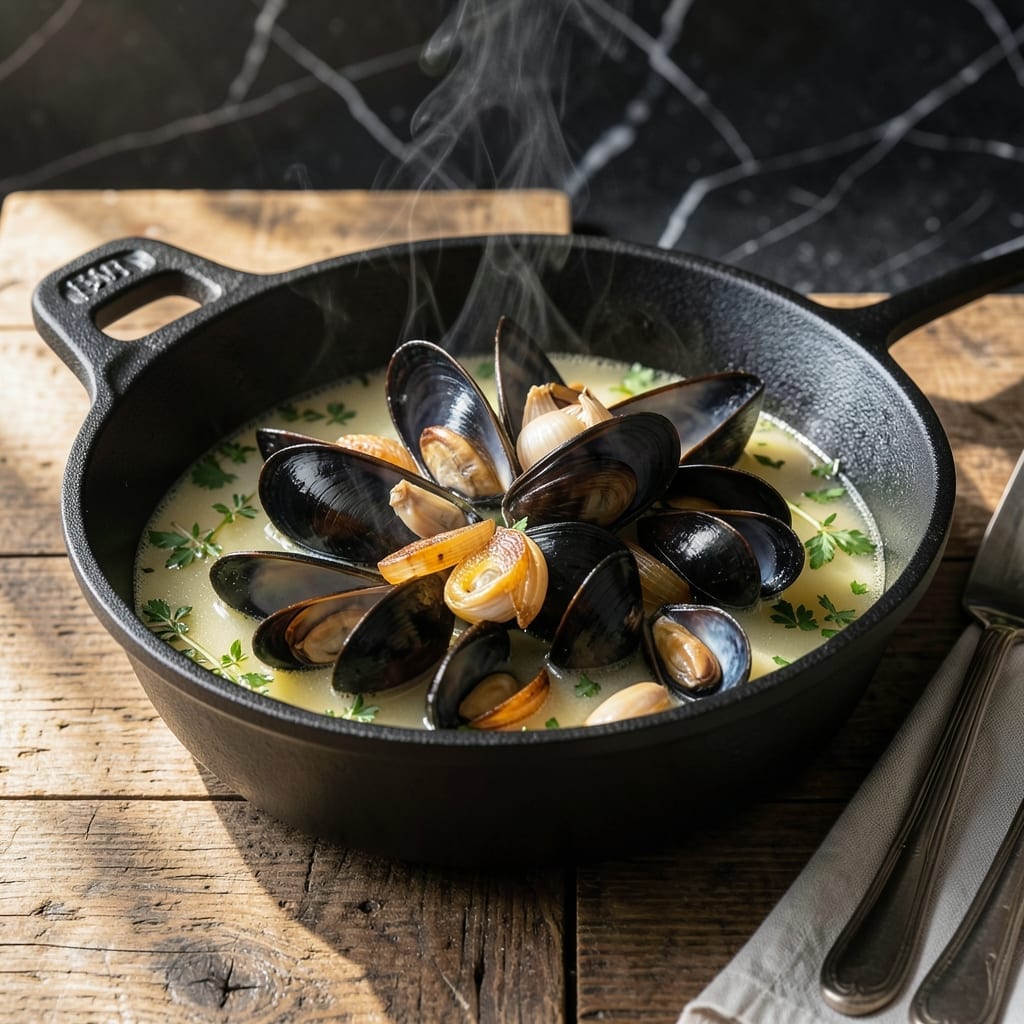
There’s something special about cooking mussels in a Staub pot—the heavy enamel distributes heat perfectly for even cooking. This method brings out the natural sweetness of the mussels while infusing them with aromatic white wine and fresh herbs.
The process is straightforward: sauté aromatics, add wine and herbs, then steam the mussels until they open. The Staub pot’s tight-fitting lid traps steam, ensuring every mussel cooks in just 8-10 minutes.
What emerges is a dish with tender mussels bathed in a fragrant broth that’s perfect for soaking up with crusty bread. The white wine adds brightness, while the herbs contribute layers of fresh flavor.
Serve immediately in the Staub pot for a rustic presentation that’s as impressive as it is delicious. This is restaurant-quality seafood made simple at home.
Ingredients for Staub Mussel Pot
Fresh mussels, aromatic white wine, and herbs create this elegant seafood dish with minimal effort.
| Ingredient | Amount | Notes |
|---|---|---|
| Fresh Mussels 🦪 | 4 lb | Cleaned and debearded |
| White Wine 🍷 | 2 cups | Dry variety like Pinot Grigio or Sauvignon Blanc |
| Shallots 🧅 | 3 whole | Finely minced for aromatics |
| Garlic Cloves 🧄 | 6 cloves | Thinly sliced |
| Fresh Thyme Sprigs 🌿 | 6 sprigs | Tied with kitchen twine |
| Fresh Parsley 🌿 | ½ cup | Roughly chopped |
| Bay Leaves 🍃 | 2 whole | Dried or fresh |
| Unsalted Butter 🧈 | 4 tbsp | For finishing the broth |
| Extra-Virgin Olive Oil 🫒 | 2 tbsp | For sautéing aromatics |
| Kosher Salt 🧂 | 1 tsp | Plus more to taste |
| Freshly Ground Black Pepper 🌶️ | ½ tsp | To finish |
| Lemon 🍋 | 1 whole | Juiced and zested for brightness |
| Crusty Bread 🍞 | 1 pieces | For serving and soaking up broth |
The mussels are everything here. Look for PEI or Mediterranean mussels—fresh, briny, and tightly closed (or closing when tapped). Most seafood counters sell them pre-cleaned, but check for beards and debris. Whole Foods and Local seafood markets are reliable sources. If they smell overly fishy or have cracked shells, skip them. The wine should be something you’d drink—Pinot Grigio or Sauvignon Blanc add the right acidity.
No white wine? Dry vermouth works in a pinch, or use seafood stock plus a splash of lemon juice. Shallots can be swapped for yellow onion at a 1:1 ratio (just dice finer). Fresh herbs are ideal, but dried work at one-third the amount. If thyme isn’t available, rosemary or tarragon add different but complementary notes. The butter at the end enriches the broth—vegan butter works too for a dairy-free version.
Mussels are best cooked the day you buy them—store in the fridge covered with a damp towel for up to 24 hours. Leftover broth? Strain and save for 3 days in the fridge, or freeze for 1 month. Always discard any mussels that don’t open after cooking (don’t force them). Serve with extra bread to mop up every last drop.
Why You’ll Love This Recipe
- I’ll be real: it’s my go-to when I need to impress guests but only have 20 minutes to spare.
- One Pot Wonder: Honestly, I just dump everything in the Staub pot—mussels, wine, shallots—and let the heat do the work.
- White Wine Magic: That first sip of the broth, steeped with garlic and thyme, tastes like a fancy bistro dish I made in my own kitchen.
- Weeknight Hero: I’ll be real: it’s my go-to when I need to impress guests but only have 20 minutes to spare.
Step-by-Step Instructions for White Wine and Herb Infused Mussels
Master the technique of steaming mussels in a Staub pot for perfectly tender results every time.
Step 1: Prepare the Aromatic Base
Heat 2 tbsp extra-virgin olive oil in your Staub pot over medium heat. Add the 3 whole shallots and cook for 3-4 minutes until they become translucent and begin to soften at the edges.
Add the 6 cloves garlic cloves and cook for 30 seconds until fragrant, stirring constantly to prevent burning. The garlic should release its aroma but not take on any color. This aromatic foundation builds layers of flavor for your broth.
Toss in the 6 sprigs fresh thyme sprigs and 2 whole bay leaves, stirring to coat them in the oil. These herbs will infuse during cooking, creating a complex, fragrant base.
Step 2: Deglaze and Steam the Mussels
Pour in 2 cups white wine and increase heat to medium-high. Bring to a simmer and let it cook for 2 minutes to allow the alcohol to burn off and the flavors to meld.
Add the 4 lb fresh mussels to the pot, then immediately cover with the lid. The Staub’s heavy lid creates a perfect seal for steaming. Cook for 5-7 minutes, shaking the pot occasionally to redistribute the mussels.
You’ll know they’re done when all the mussels have opened and the flesh inside is opaque and plump. Discard any mussels that remain closed after cooking, as they may be unsafe to eat.
Step 3: Finish with Bright, Fresh Flavors
Remove the pot from heat and discard the fresh thyme sprigs and bay leaves. Stir in 4 tbsp unsalted butter until completely melted, creating a rich, glossy broth.
Add the juice and zest from 1 whole lemon and 1 tsp kosher salt. Taste and adjust seasoning if needed—the acidity should balance the richness of the butter and wine.
Sprinkle with 0.5 cup fresh parsley and 0.5 tsp freshly ground black pepper, stirring gently to distribute the herbs throughout the broth. The parsley adds a fresh, vibrant finish to the dish.
Step 4: Serve Immediately with Crusty Bread
Ladle the mussels and broth into shallow bowls, ensuring each serving gets plenty of the flavorful liquid. The broth is the star here, packed with the essence of wine, herbs, and seafood.
Serve with 1 pieces crusty bread on the side for soaking up every last drop of the delicious broth. The bread should be fresh and sturdy enough to hold up to the liquid without falling apart.
Encourage your guests to use the empty mussel shells as scoops for the broth. This dish is best enjoyed immediately while the mussels are still warm and the broth is at its most aromatic.
Pro Tips For Making Staub Mussel Pot
- Heat the Pot First: Start your Staub pot empty over medium-high heat for 2 minutes before adding oil—this prevents mussels from sticking and guarantees a better sear on your aromatics.
- Purge the Mussels: Soak mussels in cold salted water with a handful of flour for 20 minutes before cooking. I learned this the hard way after gritty bites ruined my first few batches.
- Skip the Lid: Resist the urge to cover the pot until the very end—steaming mussels too early can make them tough instead of tender.
- Use the Wine Early: Deglaze with white wine right after sautéing shallots and garlic, scraping up those browned bits—it adds depth you can’t get any other way.
Essential Equipment for staub mussel pot
Staub Pot Essentials
I always reach for my 5-6 quart Staub cocotte for mussels—its heavy enameled cast iron retains heat beautifully. The wide base gives mussels room to open evenly, and the tight-fitting lid traps steam perfectly. Look for the matte black interior finish, which is naturally non-stick when properly seasoned. 🔥
Lid Matters
The self-basting lid design is crucial for this dish. The dimpled underside collects condensation and drips it back onto the mussels, keeping them moist. I prefer the Staub Universal Lid if I’m using multiple pot sizes, as it fits both my cocotte and round oven.
Heat Distribution
Staub’s cast iron core distributes heat more evenly than thin stainless steel. For mussels, this means no hot spots that could overcook some while undercooking others. I start on medium heat for the aromatics, then reduce to medium-low once the wine goes in.
Alternative Options
If you don’t have Staub, a Le Creuset Dutch oven works nearly as well. For budget options, Lodge enameled cast iron offers good performance. Avoid thin aluminum pots—they won’t maintain the steady heat needed for perfect steaming.
Serving Advantage
The Staub pot goes straight from stove to table, keeping your mussels hot. I love the rustic presentation, and the enameled surface won’t react with acidic wine. Just add a trivet to protect your table from the hot base.
Care Tips
After cooking, let the pot cool before washing. I hand-wash mine with warm soapy water and dry immediately. The enamel is durable but can chip if you use metal utensils or stack pots carelessly. A little care keeps it looking beautiful for years.
Nutrition Facts
Frequently Asked Questions
Can I use a different type of pot if I don’t have a Staub?
Yes! A Le Creuset Dutch oven or any heavy enameled cast iron pot works well. Avoid thin aluminum pots—they won’t maintain steady heat for even cooking.
What if some mussels don’t open after cooking?
Always discard any unopened mussels after 5-7 minutes of steaming. They may be unsafe to eat, even if they look fine. This is a critical safety step.
Can I substitute the white wine?
Use dry vermouth or a mix of seafood stock with 1 tbsp lemon juice for similar acidity. The dish needs that bright, tangy balance.
How do I know when the mussels are done?
They’re ready when all shells have opened and the flesh is opaque and plump. This typically takes 5-7 minutes in a covered Staub pot.

- 6 Oz Chocolate Chip Cookie Recipe: Perfectly Balanced Crispy Edges and Chewy Hearts - September 25, 2026
- 6-Inch Coffee Cake Recipe: Vanilla Bean Swirls and Buttery Streusel Topping - September 25, 2026
- 1 Hour Soup Recipe: Velvety Richness Without the Wait - September 25, 2026