
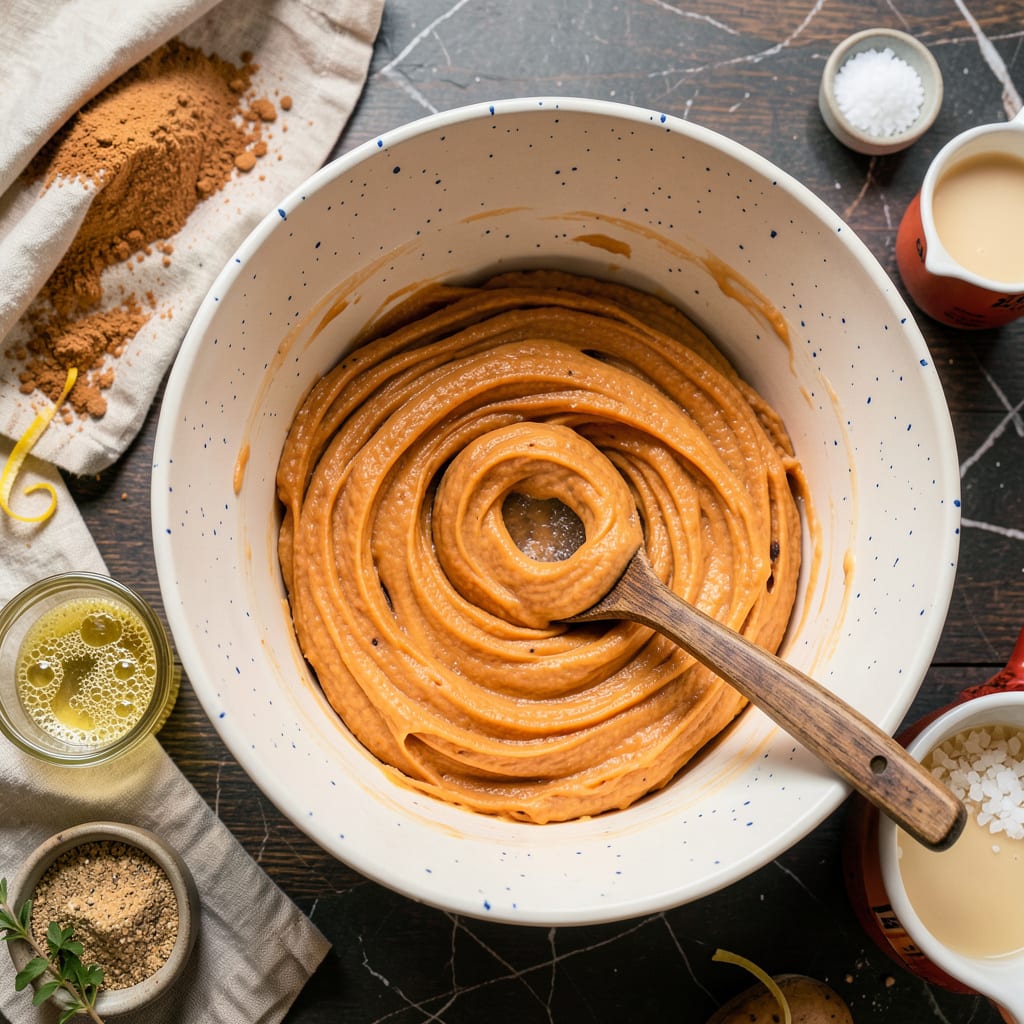
This sweet potato dough transforms ordinary rolls into something extraordinary—naturally sweet, vibrantly golden, and incredibly versatile. Developed through careful testing, the recipe balances moisture from roasted sweet potatoes with just enough flour to create a smooth, elastic dough that’s easy to work with.
Use it as a foundation for dinner rolls, cinnamon buns, or even savory stuffed breads. The dough’s subtle sweetness pairs beautifully with both spiced and herbed applications, while its tender texture ensures professional-quality results every time. Storage-friendly and adaptable, this recipe becomes a kitchen staple.
Ingredients for Sweet Potato Dough
This carefully balanced ingredient list creates a dough that’s naturally sweet, vibrantly golden, and endlessly versatile for rolls or stuffed breads.
| Ingredient | Amount | Notes |
|---|---|---|
| Roasted Sweet Potatoes 🍠 | 1 ½ cups | Mashed, cooled to room temperature |
| Bread Flour 🌾 | 4 cups | Plus extra for dusting |
| Instant Yeast 🍞 | 2 ¼ tsp | Or one standard packet |
| Granulated Sugar 🍚 | ¼ cup | For activating yeast |
| Sea Salt 🧂 | 1 ½ tsp | Fine grain preferred |
| Unsweetened Almond Milk 🥛 | ½ cup | Warmed to 110°F |
| Coconut Oil 🥥 | 3 tbsp | Melted, or vegan butter |
| Ground Cinnamon 🌿 | 1 tsp | Optional for spiced applications |
| Nutritional Yeast 🧀 | 2 tbsp | For depth of flavor |
| Vanilla Extract 🌱 | 1 tsp | Pure extract recommended |
| Orange Zest 🍊 | 1 tsp | Finely grated, optional |
| Maple Syrup 🍁 | 2 tbsp | For subtle sweetness |
The sweet potatoes are the foundation—roast them whole at 400°F until tender (about 45 minutes) for concentrated flavor and moisture. Bread flour ensures proper gluten development; King Arthur or Bob’s Red Mill are reliable brands. Instant yeast is critical for consistent rise; check expiration dates, as old yeast loses potency. The almond milk should be warmed precisely to 110°F—too hot kills yeast, too cool delays activation. Coconut oil adds richness without dairy; refined coconut oil has a neutral flavor if preferred.
For substitutions, butternut squash purée works at a 1:1 ratio for sweet potatoes, though flavor will differ slightly. Any plant-based milk (soy, oat) can replace almond milk, but avoid flavored varieties. Nutritional yeast enhances umami depth; if unavailable, white miso paste (1 tsp) provides similar complexity. The cinnamon and orange zest are optional but recommended for spiced applications; omit for savory uses. Maple syrup can be replaced with agave nectar or date syrup at equal volume.
The dough keeps well—24 hours refrigerated in an oiled bowl, or 3 months frozen in portioned balls. For best texture, bring refrigerated dough to room temperature before shaping. Roasted sweet potatoes can be prepared 2 days ahead and stored airtight. Always measure flour by weight if possible (1 cup ≈ 120g) for precision, as humidity affects volume. Yeast mixtures should foam visibly within 5-10 minutes; if inactive, restart with fresh yeast.
Why You’ll Love This Recipe
- I’ll be real: this dough is my secret weapon for busy weeks. Shape it into dinner rolls tonight, then use leftovers for cinnamon buns tomorrow or flatbreads Thursday. One batch, three meals.
- No Knead Magic: Honestly, this dough comes together faster than my morning coffee. Just mix roasted sweet potatoes (the kind I batch-roast on Sundays) with flour and yeast—no fancy techniques, no standing mixer required.
- Caramelized Comfort: Here’s what sold me—that natural sweetness from roasted sweet potatoes caramelizing against the sea salt. The sugar isn’t just for the yeast; it’s for that subtle molasses-like depth that makes every bite feel like a hug.
- Meal Prep MVP: I’ll be real: this dough is my secret weapon for busy weeks. Shape it into dinner rolls tonight, then use leftovers for cinnamon buns tomorrow or flatbreads Thursday. One batch, three meals.
Step-by-Step Instructions for Sweet Potato Dough
This method ensures consistently soft, flavorful dough with perfect texture every time.
Step 1: Activate the Yeast Mixture
Begin by warming the 0.5 cup unsweetened almond milk to 110°F—use an instant-read thermometer for precision. In a large mixing bowl, combine the warmed almond milk with the 0.25 cup granulated sugar and 2.25 tsp instant yeast. Whisk vigorously until the sugar dissolves completely and the mixture becomes frothy after 5-7 minutes.
This activation step is critical: the yeast should develop a bubbly foam layer that confirms its viability. If the mixture remains flat after 10 minutes, discard it and start again with fresh yeast. The proper temperature ensures activation without killing the yeast, while the sugar provides the necessary food source for fermentation.
Step 2: Incorporate Wet Ingredients and Sweet Potato
To the activated yeast mixture, add the 1.5 cups roasted sweet potatoes (ensuring they’re completely cooled and mashed smooth), 3 tbsp coconut oil, 1 tsp vanilla extract, 2 tbsp maple syrup, and 1 tsp orange zest. Use a sturdy silicone spatula to combine these ingredients until the mixture achieves a uniform consistency without visible sweet potato lumps.
The sweet potatoes contribute natural sweetness and moisture, while the coconut oil adds richness. The vanilla and orange zest provide aromatic complexity that balances the earthy sweet potato flavor. This wet mixture should have the consistency of thick pancake batter before adding the dry ingredients.
Step 3: Develop the Dough Structure
In a separate bowl, whisk together the 4 cups bread flour, 1.5 tsp sea salt, 2 tbsp nutritional yeast, and 1 tsp ground cinnamon. Create a well in the center of the dry ingredients and pour in the wet mixture. Using a dough hook attachment on medium-low speed, mix for 8-10 minutes until the dough forms a cohesive ball that pulls away from the bowl sides.
The dough should feel slightly tacky but not sticky when pressed between fingers. Bread flour’s higher protein content develops the necessary gluten structure for elastic, well-risen rolls. If the dough appears too wet, add additional flour 1 tablespoon at a time until the proper consistency is achieved.
Step 4: First Rise and Gluten Development
Transfer the dough to a lightly oiled bowl, turning to coat all surfaces. Cover with a damp kitchen towel and place in a warm, draft-free environment (ideally 75-80°F) to rise for 1-1.5 hours or until doubled in volume. The dough should spring back slowly when gently pressed with a finger, indicating proper fermentation.
This initial rise allows the yeast to fully activate and develop flavor complexity. The ideal rise environment accelerates fermentation without compromising texture. Avoid overproofing, which can result in collapsed dough structure and excessive sourness.
Step 5: Shape and Final Proof
Punch down the risen dough to release air bubbles, then turn onto a lightly floured surface. Divide into 12 equal portions (about 3 oz each) and shape into smooth balls by rolling between your palms. Arrange the dough balls on a parchment-lined baking sheet, spacing them 2 inches apart to allow for expansion.
Cover loosely with greased plastic wrap and let rise in a warm place for 45-60 minutes until nearly doubled in size. The rolls should look puffy and feel light when gently lifted. This final proof ensures proper oven spring during baking, resulting in the characteristic golden, domed appearance of well-made sweet potato rolls.
Flavor Customization for These Flavors
Spiced Chai Variation
For a warm, aromatic twist, add 1 tsp ground cardamom, ½ tsp ground ginger, and ¼ tsp ground cloves to the dry ingredients. I love this combination with the sweet potato’s natural sweetness—it creates rolls that taste like autumn in every bite. Pair these with chai tea for the perfect cozy breakfast. 🌿
Savory Herb Option
Omit the cinnamon and add 2 tbsp fresh rosemary (finely chopped) and 1 tbsp fresh thyme to the dough. The earthy herbs balance the sweet potato beautifully. I often use this version for dinner rolls alongside roasted meats. The herbs release their fragrance during baking, filling your kitchen with amazing aromas.
Citrus Glazed Rolls
After baking, brush warm rolls with a glaze made from ½ cup powdered sugar, 2 tbsp orange juice, and 1 tsp orange zest. The citrus brightens the sweet potato flavor and adds a beautiful sheen. I make this version for brunches—it’s always the first to disappear from the table. ✨
Chocolate Swirl
Roll out the dough into a rectangle and spread with ¼ cup melted vegan chocolate mixed with 1 tsp cinnamon. Roll tightly, slice into pinwheels, and bake as directed. The chocolate creates delicious pockets in every bite. My kids beg for these as after-school treats.
Cheesy Garlic Bread
Before the final rise, sprinkle shaped rolls with ½ cup vegan mozzarella and 1 tbsp garlic powder. After baking, brush with 2 tbsp melted vegan butter mixed with 1 minced garlic clove. This creates a crispy, cheesy crust that’s irresistible. I serve these with pasta dishes for a complete meal.
Maple Pecan Sticky Buns
Press ½ cup chopped pecans into the bottom of your baking dish, then drizzle with ¼ cup maple syrup and 2 tbsp melted coconut oil. Arrange shaped rolls on top and bake. Invert immediately after baking for caramelized pecan topping. These sticky buns are my go-to for holiday brunches. 💛
Nutrition Facts
Frequently Asked Questions
Can I use canned sweet potatoes instead of fresh?
Fresh roasted sweet potatoes work best for flavor and texture. Canned versions often contain added liquids that alter dough consistency. If using canned, drain thoroughly and pat dry before mashing. You may need to adjust flour by 2-3 tablespoons to compensate.
Why did my dough turn out too sticky?
Sticky dough usually results from excess moisture. Add flour 1 tablespoon at a time during kneading until it pulls away from the bowl. Humidity affects flour absorption, so measurements may vary. Let the dough rest 5 minutes between additions to properly incorporate flour.
How long can I store the dough before shaping?
Store covered in the refrigerator for up to 24 hours. For longer storage, freeze shaped dough balls on a tray, then transfer to airtight containers for 3 months. Thaw overnight in the fridge before final proofing. Cold dough may require 15-20 minutes at room temperature to become pliable.
Can I make this without yeast for a quick version?
For a yeast-free version, replace yeast with 1 tablespoon baking powder and 1 teaspoon baking soda. The texture will be denser, similar to biscuits rather than fluffy rolls. Bake immediately after shaping, as the dough won’t require rising time.

- 8 Bean Soup Recipe Crock Pot: Hearty Vegetable Medley in One Pot - September 25, 2026
- 4C Bread Crumbs Meatballs Recipe: Crispy Crust and Juicy Centers - September 25, 2026
- 6 Oz Chocolate Chip Cookie Recipe: Perfectly Balanced Crispy Edges and Chewy Hearts - September 25, 2026