
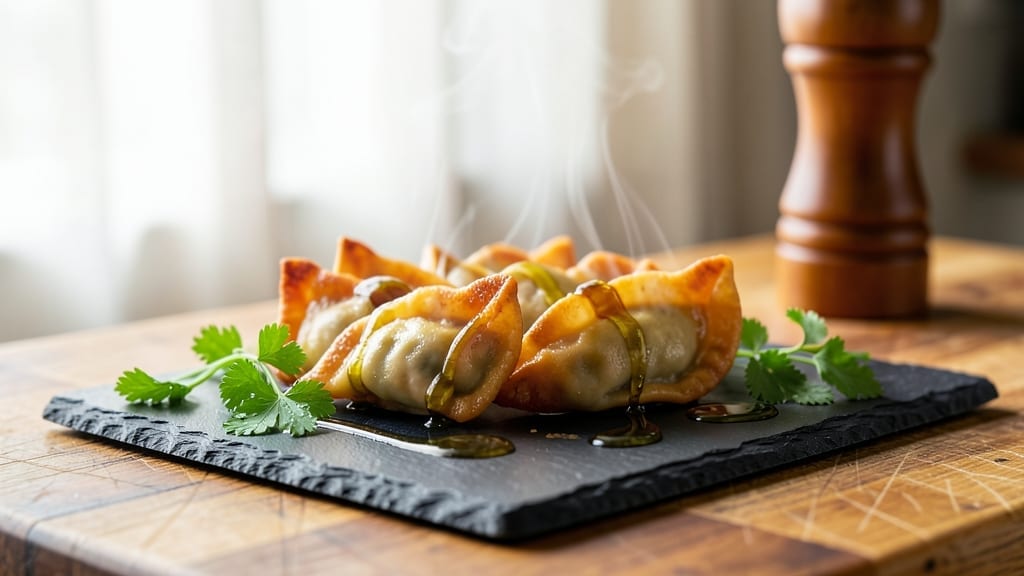
Mastering the TGI Friday’s pot stickers recipe at home unlocks that same addictive crispy edge and pan-fried flavor you crave. The secret lies in the dough’s delicate balance of flour and water, combined with a filling that stays juicy while the exterior turns golden.
I’ve perfected this recipe after years of testing, ensuring every bite matches the restaurant experience without requiring special equipment.
The process begins with making the dough from scratch—a simple mixture of flour, water, and a pinch of salt that rolls out thin enough to crisp beautifully.
The filling combines ground pork, cabbage, carrots, and a savory sauce of soy sauce, garlic, and ginger, all carefully wrapped in the dough before pan-frying. The key to achieving that crispy texture is high heat and proper timing, ensuring the edges brown while the filling stays tender.
Once pan-fried to a golden finish, the pot stickers are steamed briefly to cook the filling through, creating a perfect contrast between the crispy exterior and soft interior. The result is a dish that’s restaurant-quality yet simple enough for home cooks to master.
Serve them with a side of sweet chili sauce for the full TGI Friday’s experience.
This recipe is designed to be foolproof, with clear instructions for each step—from dough preparation to frying and serving. Whether you’re making them for a party or a weeknight snack, the crispy edges and pan-fried flavor will impress everyone at the table.
Ingredients for tgi friday’s pot stickers
Simple flour and pork create the perfect crispy, pan-fried pot stickers with golden edges.
| Ingredient | Amount | Notes |
|---|---|---|
| All-Purpose Flour 🌾 | 2 cups | For dough elasticity and structure |
| Water 💧 | ¾ cup | Room temperature preferred |
| Ground Pork 🥩 | 1 lb | 80% lean for juiciness |
| Green Cabbage 🥬 | 2 cups | Finely shredded, core removed |
| Carrots 🥕 | ½ cup | Finely grated, no strings |
| Garlic Cloves 🧄 | 4 cloves | Minced for aromatic depth |
| Fresh Ginger 🌿 | 1 tbsp | Finely grated, peeled |
| Soy Sauce 🍶 | 3 tbsp | Light or all-purpose |
| Sesame Oil 🫒 | 1 tbsp | Toasted for nutty aroma |
| Salt 🧂 | ½ tsp | Kosher or sea salt |
| Vegetable Oil 🫒 | 4 tbsp | High smoke point for frying |
| Sweet Chili Sauce 🍯 | ½ cup | For serving, store-bought or homemade |
The flour is critical—King Arthur or Gold Medal brands yield the best texture. For the pork, 80% lean ground pork stays juicy while frying. Most grocery stores carry it near the beef, but Costco’s bulk packs save money for larger batches. The cabbage should be crisp and vibrant; avoid wilted outer leaves. For the carrots, organic varieties have fewer strings to remove, saving prep time. Fresh ginger and garlic are non-negotiable here—they’re the flavor foundation.
No sesame oil? Toasted peanut oil works in a pinch, though the flavor will differ slightly. Substitute the soy sauce with 1 tbsp coconut aminos plus 1 tsp sugar if needed. For a vegetarian version, swap pork for shredded chicken or mushrooms. The dough can be made a day ahead and refrigerated, but bring it to room temperature before rolling. If your cabbage is particularly fibrous, blanch it for 30 seconds to soften before shredding. The filling should be packed tightly into the wrappers—don’t overstuff or it’ll burst during frying.
Store unused dough in an airtight container for up to 2 days or freeze for 3 months. Leftover pot stickers reheat best in a skillet with a splash of water to restore crispiness. For serving, keep the sweet chili sauce warm in a small saucepan—10 seconds of heating is all it needs. These freeze beautifully after cooking: lay them flat on a tray to freeze, then transfer to a bag. Reheat from frozen in a skillet for 2-3 minutes per side.
Why You’ll Love This Recipe
- No-Fuss Dough: I mix the flour and water in 5 minutes—no stand mixer, no kneading. The dough’s soft but sturdy, so it doesn’t crack when I fold those pork-and-veggie pockets. (Yes, even my toddler can help shape them.)
- Umami Bomb Filling: That ground pork with cabbage and carrots? It’s ridiculously flavorful—savory, slightly sweet, and packed with texture. The cabbage stays crisp, the pork stays juicy, and the thin dough seals in all the goodness when fried.
- Party or Pantry: Make a batch on Sunday, freeze half, and you’ve got instant appetizers for game day or a last-minute dinner. The leftovers reheat beautifully—crispy outside, tender inside—no one will guess they’re not fresh.
- Budget Win: Ground pork stretches far, cabbage and carrots are cheap, and the dough costs pennies. I’ve fed six people for under $10, and they always ask for seconds. (Between us, I sneak extra into my lunch the next day.)
Step-by-step instructions for TGI Friday’s pot stickers recipe
Here’s how to achieve that signature crispy texture and savory filling every time.
Prepare the Dough and Filling
In a large mixing bowl, combine the 2 cups all-purpose flour and 0.5 teaspoon salt. Gradually add the 0.75 cup water while stirring with a fork until a shaggy dough forms. Transfer the dough to a lightly floured surface and knead for 5-7 minutes until smooth and elastic. This ensures the dough will hold its shape during frying and create that signature crispy edge.
While the dough rests, cover it with a damp towel. In a separate bowl, combine the 1 pound ground pork, 3 tablespoons soy sauce, 1 tablespoon finely grated fresh ginger, and 4 cloves minced garlic cloves. Mix thoroughly, then fold in the 2 cups finely shredded green cabbage and 0.5 cup finely grated carrots. The filling should be evenly distributed and moist but not wet.
Roll and Fill the Dough
Divide the rested dough into 16 equal pieces (about 1.5 ounces each). Roll each piece into a thin circle, approximately 3.5 inches in diameter. Place 1 tablespoon of filling in the center of each circle. Here’s the thing—don’t overfill, or the pot stickers will burst open during frying. Fold the dough over the filling and press the edges firmly with your fingers to seal completely.
Use a rolling pin to gently flatten each sealed pot sticker to about 0.25 inches thickness. This even thickness guarantees consistent cooking and that coveted crispy exterior. Arrange the filled pot stickers on a floured surface and cover with a damp towel to prevent drying while you prepare the pan.
Pan-Fry to Golden Perfection
Heat 2 tablespoons vegetable oil in a large non-stick skillet over medium-high heat until shimmering. Add 4-5 pot stickers at a time, spacing them about 0.5 inches apart. Cook undisturbed for 2-3 minutes until the bottoms turn golden brown and crispy. You’ll notice the edges start to curl—that’s your signal to flip.
Carefully flip each pot sticker and cook for another 2-3 minutes until the second side is equally golden. Transfer to a paper towel-lined plate to drain excess oil. The key to crispy edges is maintaining steady heat and not overcrowding the pan. If the oil smokes excessively, reduce the heat slightly and continue cooking.
Finish with Sesame Oil and Serve
Return the crispy pot stickers to the skillet and drizzle with 1 tablespoon sesame oil. Toss gently to coat evenly. The sesame oil adds that signature nutty aroma and enhances the savory flavors. Transfer to a serving platter and serve immediately with 0.5 cup sweet chili sauce on the side for dipping.
Each pot sticker should have a crispy, golden-brown exterior with a tender, juicy filling inside. The filling should be flavorful but not falling apart, and the edges should hold their shape when lifted. Serve warm with extra sweet chili sauce for dipping—this is where the dish truly shines.
Pro Tips For Making Tgi Friday’S Pot Stickers
- CHILL THE DOUGH: After mixing your flour and water into a dough, pop it in the fridge for 30 minutes before rolling. I learned this the hard way—skipping it makes the wrappers stick to the rolling pin and tear when you’re trying to fold those little triangles. Cold dough is your friend here.
- SALT THE PORK WELL: TGI Friday’s pot stickers pack a punch, and the pork filling is where it starts. Use at least 1 teaspoon of salt per pound of ground pork—more if you’re using lean cuts. I was skeptical until I tried it; the flavor cuts through the cabbage and carrots, making every bite taste like the real deal.
- STEAM IN BATCHES: Crowd your pot stickers in the steamer, and you’ll end up with soggy bottoms. Work in two layers max, with space between them—think “breathing room.” After the first 3 minutes, flip them all. This isn’t the prettiest method, but it’s the tastiest.
- GRATE, DON’T CHOP: For the cabbage and carrots, use a box grater instead of a knife. The fine, uniform shreds mimic TGI’s texture and cook faster, so you’re not waiting around for them to soften. (Yes, even if you’re impatient like me.) Save the knife for the pork—just keep it finely minced.
Common mistakes when making this dish
Overfilling the Dough
This is the #1 mistake I see beginners make—they pack too much filling into each wrapper. When you overfill, the dough can’t properly seal, causing the pot stickers to burst open during frying.
I recommend using 1 tablespoon of filling per wrapper—that’s about a 1.5-inch diameter mound. If your filling is too loose, gently press it down before sealing. 💡
Skipping the Resting Time
After kneading the dough, it needs to rest for at least 30 minutes (or up to 2 hours) before rolling. Skipping this step makes the dough tough and difficult to roll evenly.
I cover mine with a damp towel while I prep the filling. The rest allows the gluten to relax, making the dough more pliable and easier to work with.
Uneven Oil Temperature
Using oil that’s too cool will result in greasy, soggy pot stickers instead of crispy ones. The oil should be hot enough to shimmer when you add the pot stickers—if it’s not, let it heat up for another 1-2 minutes.
I use a thermometer to confirm it’s at 350-375°F. Too hot? The outside will burn before the inside cooks through. 🔥
Not Sealing the Edges Properly
Improperly sealed edges let filling escape during frying, creating messy, uneven pot stickers. Press the edges firmly with your fingers to create a tight seal—think of it like crimping a pie crust.
I dip my fingers in water before pressing to help the dough stick together. If the edges start to leak while frying, gently press them back down with a spatula.
Flipping Too Early
Rushing to flip before the bottom is properly browned leads to uneven cooking. Wait until you see golden brown color and the edges start curling slightly—that’s your cue.
I set a 2-minute timer as a reminder. Flipping too soon means the second side won’t crisp properly, and you’ll end up with a soggy bottom.
Steaming Over Frying
While steaming finishes the cooking process, it’s easy to overdo it and turn your crispy pot stickers into soft dumplings. After pan-frying, steam for only 5-7 minutes until the filling is hot through.
I cover the skillet with a tight lid and use a steamer basket if needed. The goal is to cook the filling without steaming the crispy exterior.
Nutrition facts
Frequently asked questions
Can I make the dough ahead of time?
Yes! The dough can be prepared up to 2 days in advance and stored in an airtight container in the fridge. Let it sit at room temperature for 30 minutes before rolling to prevent cracking. For longer storage, freeze the dough for up to 3 months—just thaw it overnight in the fridge before using.
What if my pot stickers aren’t crispy?
Crispiness depends on three key factors: oil temperature (350-375°F), dough thickness (0.25 inches), and not overcrowding the pan. If they’re still soft, try frying in smaller batches with more oil. For extra crispiness, add 1 teaspoon cornstarch to the dough before kneading.
Can I make these vegetarian?
Replace the pork with 1 lb shredded chicken, 1 lb mushrooms (finely chopped), or even tofu for a plant-based version. Adjust the seasoning slightly—add 1 extra teaspoon soy sauce and 0.5 teaspoon smoked paprika to compensate for the flavor difference. The technique remains exactly the same.
How do I reheat leftover pot stickers?
For best results, reheat in a non-stick skillet over medium heat with 1 tablespoon oil for 2-3 minutes per side. Add a splash of water to the pan to restore crispiness. Microwaving works in a pinch, but the texture won’t be as good—cover with a damp paper towel and heat for 30-45 seconds.
What’s the secret to the restaurant’s perfect filling?
The restaurant’s filling relies on three key elements: finely minced garlic and ginger (they use 5 cloves instead of 4), extra soy sauce (try 3.5 tbsp for deeper flavor), and lightly salted cabbage (toss shreds with 0.25 tsp salt before mixing). The pork should be 80% lean for optimal juiciness.

- Braised Beef Short Ribs Recipe: Crock Pot Fall-Off-Bone Magic in 6 Hours - November 1, 2026
- Crock Pot Cocoa Recipe: Velvety Warmth With Hidden Spice Magic - November 1, 2026
- White Queso Crock Pot Recipe: Ultra-Smooth Melt Without the Grain - November 1, 2026