
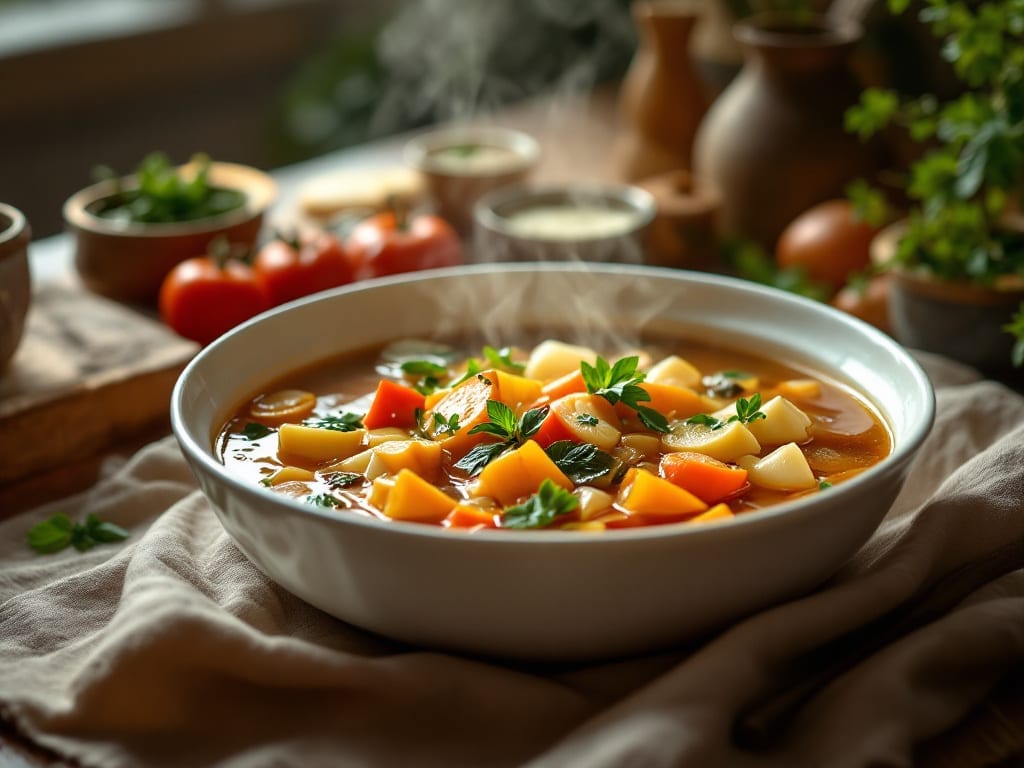
This traditional English hot pot recipe brings hearty comfort to your table with its rich lamb broth, tender vegetables, and golden herbed crust—a dish that’s as much about technique as it is about flavor.
The secret lies in slow-cooking the lamb until it’s fall-apart tender while building layers of aromatic spices that transform simple ingredients into something deeply satisfying.
I first tried this recipe during a chilly British winter, and it became an instant family favorite for its ability to fill a room with warmth and aroma.
The beauty of this dish is in its simplicity and tradition—no fancy equipment needed, just time and patience.
You’ll start with a base of lamb, onions, and root vegetables simmered until the flavors meld into a velvety broth, then top it with a crispy herbed crust that adds texture and depth.
The result is a stew that’s rich enough to stand alone but welcoming enough to share with a crowd. This is the kind of meal that feels like coming home after a long day.
By the time you serve it, you’ll have a steaming pot of tender lamb, perfectly softened vegetables, and that irresistible golden crust that cracks open to reveal layers of savory goodness beneath.
The aroma alone will have everyone gathering at the table, and the first bite delivers on that promise of old-world comfort. It’s the kind of dish that makes you want to linger over dinner, savoring every spoonful.
Perfect for cold evenings or special gatherings, this hot pot serves as both a centerpiece and a conversation starter. Whether you’re recreating a classic Welsh or Scottish tradition or simply craving a hearty meal, this recipe delivers restaurant-quality results with minimal fuss.
Let’s get started on creating your own tradition-worthy hot pot.
Ingredients for traditional english hot pot
Six ingredients for the base, six for the crust—simple but deeply satisfying.
| Ingredient | Amount | Notes |
|---|---|---|
| Lamb Shoulder 🍖 | 2 ½ lb | Bone-in for maximum flavor |
| Yellow Onions 🧅 | 2 whole | Medium size, roughly chopped |
| Carrots 🥕 | 4 whole | Medium size, peeled, halved |
| Russet Potatoes 🥔 | 2 lb | Waxy variety, cubed |
| Swede (Rutabaga) 🥕 | 1 lb | Peeled, cubed |
| Garlic Cloves 🧄 | 6 cloves | Peeled, lightly crushed |
| Fresh Thyme 🌿 | ½ oz | Stems removed, leaves only |
| Fresh Rosemary 🌿 | ¼ oz | Needles only, chopped |
| All-Purpose Flour 🌾 | ½ cup | For herbed crust |
| Breadcrumbs 🍞 | ½ cup | Panko preferred |
| Grated Parmesan Cheese 🧀 | ¼ cup | Freshly grated |
| Beef Stock 💧 | 2 cups | Homemade or quality store-bought |
| Dry Red Wine 🍷 | ½ cup | Bold variety like Cabernet |
| Olive Oil 🫒 | ¼ cup | Extra-virgin for richness |
| Salt 🧂 | 1 ½ tsp | Kosher or sea salt |
| Ground Black Pepper 🌶️ | ½ tsp | Freshly ground preferred |
The lamb shoulder is non-negotiable here—bone-in gives the most flavor, and Costco or Whole Foods usually have the best cuts. Look for good marbling and ask the butcher to trim any large fat chunks if needed. I always grab a 2.5 lb bone-in shoulder—it feeds six and leaves leftovers for sandwiches. For the root vegetables, farmers markets often have the freshest swede and carrots, but the grocery store works too. Just make sure they’re firm and free of soft spots. The thyme and rosemary? Fresh is best—dried works in a pinch, but nothing beats the aroma of fresh herbs simmering in the pot.
No red wine? Substitute beef stock with a splash of balsamic vinegar—it adds depth without the alcohol. Short on fresh herbs? Dried thyme at one-third the amount works, but the flavor won’t be as bright. The breadcrumbs can be regular or panko—panko gives a crispier crust. For the Parmesan, grate it yourself—pre-grated gets clumpy. The olive oil matters here too—use something you’d drizzle on bread, not the cheap cooking oil. And if you’re feeling fancy, add a pinch of smoked paprika to the crust for extra depth.
This stew tastes even better the next day, so make it when you have time. The crust keeps its crunch for about 2 days if you reheat it covered, but the best part is how the flavors meld overnight. Store leftovers in the fridge for up to 5 days or freeze for 3 months. I always double the crust recipe—it’s perfect for topping individual portions when serving. The broth reduces as it sits, so add a splash of water or stock when reheating if needed.
Why You’ll Love This Recipe
- One-Pot Magic: I swear by this—just chuck everything in a heavy pot, add stock, and walk away. The lamb shoulder melts into tender shreds while the veggies soften just enough to soak up that rich, savory broth. No fancy layers, no stress.
- Rich, Rustic Depth: That slow-cooked lamb shoulder? It’s the star—fall-apart tender with a caramelized crust in spots. The swede (don’t knock it till you try it) adds a subtle earthiness that balances the sweetness of the onions and carrots, all wrapped in a broth that tastes like a hug.
- Budget-Buster with Heart: Lamb shoulder is a steal compared to cuts like leg, and swede lasts forever in the fridge. You’re feeding a crowd for pennies, and the result? A steaming pot of comfort that makes even the simplest meal feel like a celebration. (Yes, even on a Tuesday night.)
Step-by-step instructions for traditional English hot pot
Here’s how to create a hearty, rustic hot pot that brings classic English flavors to life.
Prepare the Lamb Shoulder and Vegetables
Begin by patting the 2.5 lb lamb shoulder completely dry with paper towels. This step is crucial for developing that signature crispy crust later. Using a sharp knife, trim away any excess fat, leaving about ¼ inch to protect the meat during cooking.
Next, peel and halve the 4 whole carrots, then peel and cube the 2 lb russet potatoes and 1 lb swede (rutabaga) into even 1-inch pieces. Roughly chop the 2 whole yellow onions, removing the outer skins. Peel and lightly crush the 6 cloves garlic. Strip the leaves from the 0.5 oz fresh thyme and chop the 0.25 oz fresh rosemary needles finely. Set all vegetables aside in separate bowls for easy access during cooking.
Sear the Lamb and Build the Flavor Base
Heat a large Dutch oven over medium-high heat and add the 0.25 cup olive oil. Once shimmering, add the lamb shoulder and sear on all sides until deeply browned, about 8-10 minutes. This step creates the rich, caramelized foundation for your stew. Remove the lamb and set it aside.
In the same pot, add the chopped yellow onions and cook for 5 minutes until softened. Add the garlic cloves and cook for 30 seconds until fragrant. Stir in the 0.5 oz fresh thyme and 0.25 oz fresh rosemary, letting them toast for 1 minute to release their aromatic oils. Pour in the 0.5 cup dry red wine and scrape up any browned bits from the bottom of the pot. Let it simmer for 3 minutes until reduced by half.
Simmer the Stew with Vegetables
Return the lamb to the pot and add the 2 cups beef stock, the 1.5 tsp salt, and 0.5 tsp ground black pepper. Bring to a gentle boil, then reduce heat to low. Add the carrots, russet potatoes, and swede (rutabaga). Cover and simmer for 1 hour 15 minutes, or until the lamb is fork-tender and the vegetables are easily pierced with a knife.
Here’s the thing—don’t peek or stir during this time. Lifting the lid lets steam escape, which can make the cooking process take much longer. The lamb should be falling apart when pressed gently with a fork, and the vegetables should be tender but still holding their shape.
Prepare the Herbed Crust Topping
While the stew simmers, prepare the topping by mixing the 0.5 cup all-purpose flour, 0.5 cup breadcrumbs, and 0.25 cup grated parmesan cheese in a bowl. Stir in 1 tablespoon olive oil from the reserved amount to bind the mixture. The texture should resemble coarse sand—if it’s too dry, add a splash of water.
This crust is what makes this hot pot truly special. It adds a delightful crunch and helps thicken the stew as it bakes, creating a rich, golden topping that contrasts beautifully with the tender meat and vegetables below.
Bake and Finish the Hot Pot
Preheat your oven to 400°F. Once the stew is fully cooked, transfer it to a deep baking dish. Sprinkle the herbed crust mixture evenly over the top, pressing down gently to ensure it adheres. Bake uncovered for 20-25 minutes until the crust is golden brown and bubbling.
Let the hot pot rest for 10 minutes before serving. This resting time allows the flavors to meld together and the crust to set slightly. Serve directly from the pot, letting everyone scoop up their share of tender lamb, vegetables, and that delicious herbed crust. The result is a comforting, traditional English hot pot that’s perfect for cold evenings.
Pro Tips For Making Traditional English Hot Pot
- SEAR THE LAMB FIRST: Skip the slow start—get that lamb shoulder sizzling hard in a dry pot for 5-6 minutes before adding liquid. The crust locks in flavor, and you’ll taste the difference when it braises. (Yes, it’ll look messy at first, but that’s how you know it’s working.)
- PEEL THE SWEDE LAST: I used to peel the rutabaga before cooking, but now I leave the skin on until the very end. It keeps the texture tight and prevents it from turning to mush—just scrub it well and peel after it’s tender. (Your future self will curse you if you skip this.)
- DON’T CROWD THE POT: Toss in the onions, carrots, and potatoes in stages, not all at once. Too much at the start means the veg will steam instead of caramelize, and you’ll end up with sad, pale chunks. (I learned this after one disastrous batch where everything just… dissolved.)
- USE COLD WATER FOR BRAISING: Pour in cold liquid (stock or water) instead of hot—it helps the lamb cook evenly without a sudden temperature shock. Plus, it’s easier to control the simmer and avoid a boil-over. (Sounds weird, but it works—trust me.)
Pro cooking tips for this recipe
Sear Like a Pro
The key to a rich, flavorful hot pot starts with a deep sear on the lamb shoulder. Use a large Dutch oven (I love my Le Creuset signature) and heat it over medium-high heat until it’s screaming hot—you should see smoke when the oil hits it.
Pat the lamb completely dry first; moisture prevents proper browning. Sear for 8-10 minutes until deep golden brown on all sides. This step isn’t just about flavor—it’s about building the Maillard reaction, which creates those complex, savory notes that define the dish. 🔥
Low-and-Slow Simmer
After searing, resist the urge to rush the cooking process. The lamb needs 1 hour 15 minutes of gentle simmering at low heat to become fork-tender. Cover the pot tightly and never lift the lid during this time—steam escape slows cooking and wastes heat.
The vegetables should soften but stay intact; overcooking turns them mushy. I use a meat thermometer to check the lamb’s internal temperature—it should reach 195°F for perfect tenderness.
Herbed Crust Secrets
The crust is where this dish shines, and texture is everything. Mix the breadcrumbs, flour, and Parmesan with just enough olive oil to bind—too much makes it gummy. Press the mixture firmly onto the stew before baking to prevent it from sliding off.
For extra crunch, I sprinkle a pinch of smoked paprika into the crust mix. Bake at 400°F until golden and bubbling—20-25 minutes—but watch closely to avoid burning. A wire cooling rack on top of the pot for the last 5 minutes helps crisp it up even more. ✨
Wine Reduction Trick
Don’t skip the red wine reduction—it’s what elevates this dish from ordinary to extraordinary. After searing the lamb, deglaze the pot with ½ cup dry red wine (I prefer Cabernet Sauvignon for its boldness). Let it simmer until reduced by half—this concentrates the flavors and adds depth.
If you’re avoiding alcohol, substitute with beef stock and a splash of balsamic vinegar, but the wine’s acidity and complexity are hard to replicate. 🍷
Resting for Perfection
Let the hot pot rest for 10 minutes before serving—this is non-negotiable. Resting allows the juices to redistribute, ensuring every bite is moist and flavorful. The crust will firm up slightly, and the stew will thicken just enough to hold its shape when scooped.
If you’re serving a crowd, transfer the pot to a warm oven (200°F) while you plate—this keeps it piping hot and ready to serve. Trust me, skipping this step means a soggy, uneven crust and less tender meat. 💡
Equipment Must-Haves
While you can make this hot pot with basic tools, a few upgrades make life easier. A heavy-bottomed Dutch oven (like All-Clad) prevents hot spots and ensures even cooking. A meat thermometer (I use ThermoWorks Smoke) takes the guesswork out of doneness.
For the crust, a small offset spatula helps spread it evenly, and a wire cooling rack placed over the pot during the final minutes of baking adds that restaurant-quality crisp. Invest in these tools once, and you’ll use them for years of hearty stews. 💪
Nutrition facts
Frequently asked questions
Can I use beef instead of lamb in this hot pot?
The recipe works beautifully with beef chuck roast as a substitute. Use the same 2.5 lb quantity and follow the same searing and simmering times. Beef will yield a slightly richer broth, but the technique remains identical. Just reduce the simmering time by 15 minutes since beef cooks faster than lamb.
What makes the herbed crust different from regular breadcrumbs?
The secret lies in the combination of flour, breadcrumbs, and Parmesan mixed with olive oil. The flour creates a light, airy base while the Parmesan adds umami depth. Pressing it firmly before baking ensures it stays crispy and doesn’t turn soggy. For extra flavor, add 1 tsp dried thyme or ½ tsp smoked paprika to the mix!
How do I know when the lamb is perfectly cooked?
Use a meat thermometer for accuracy—the lamb should reach 195°F internally. If you don’t have one, press the lamb gently with tongs: it should fall apart easily. The vegetables should be tender but still hold their shape. Overcooking turns them mushy, so check them at 1 hour and adjust time as needed.
Can I make this hot pot in a slow cooker?
Brown the lamb and vegetables first, then transfer everything to a 6-quart slow cooker. Add the remaining ingredients and cook on low for 8 hours or high for 5 hours. Skip the baking step—just top with the herbed crust and broil for 5-7 minutes until golden. The slow cooker method yields even more tender meat and deeper flavors.
What’s the best way to reheat leftovers?
Reheat gently in a pot over low heat with a splash of water or stock to prevent drying. For the crust, cover it with foil to keep it crispy. Microwaving works in a pinch, but the texture suffers—always reheat slowly. Leftovers taste even better the next day as flavors meld further!

- Crock Pot Round Steak Recipe: Slow-Sear Crust With Juicy Center - November 6, 2026
- Candied Sweet Potatoes Crock Pot Recipe: Caramelized Sweetness With Zero Effort - November 6, 2026
- Steak Recipe Crock Pot: Juicy, Caramelized Crust in 4 Hours - November 6, 2026