
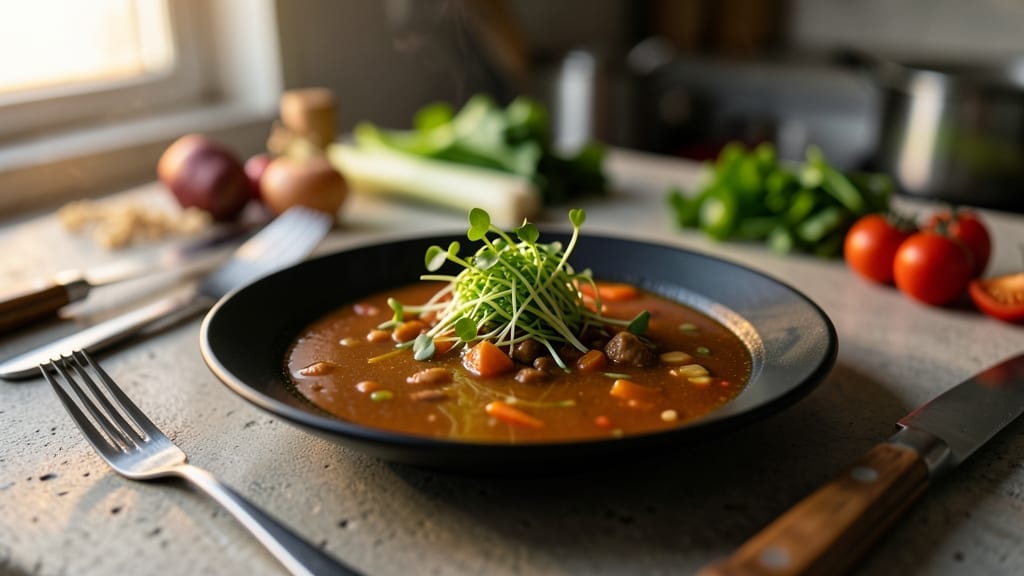
Mastering a traditional hot pot broth recipe transforms a simple meal into a fragrant, communal experience rooted in tradition. This recipe captures the essence of East Asian hot pot culture—where simmering spices, tender meats, and fresh vegetables create a symphony of flavors.
The key lies in layering aromatics and simmering slowly to develop depth, ensuring every sip carries warmth and complexity.
At its heart, this broth requires just six essential ingredients—chicken or pork bones, ginger, garlic, star anise, and a touch of soy sauce—to build a rich, umami-packed foundation. The secret technique? A low-and-slow simmer for at least two hours, allowing flavors to meld without bitterness.
Whether you prefer a clear, delicate broth or a bold, spice-infused base, this method adapts effortlessly to your taste.
What you’ll achieve is a fragrant, golden broth that steams with aromatic herbs and carries layers of savory depth. The result isn’t just a liquid—it’s the soul of a gathering, where every dip of fresh vegetables or slice of marinated meat becomes part of the experience.
Serve it with your favorite proteins, vegetables, and dipping sauces for a meal that feels both nostalgic and refined.
This recipe works equally well for weeknight dinners or holiday feasts, scaling easily to feed a crowd. The beauty of hot pot lies in its versatility—customize it with mushrooms, tofu, or seafood to suit any palate. Ready to bring tradition to your table? Let’s begin with the broth.
Ingredients for traditional hot pot broth
Six aromatic ingredients create the soul of a traditional hot pot broth—rich, layered, and deeply savory.
| Ingredient | Amount | Notes |
|---|---|---|
| Chicken Bones (Back or Neck) 🍗 | 3 lb | Fresh or frozen, organic preferred |
| Fresh Ginger Root 🧅 | ½ lb | Unpeeled, sliced into 1-inch chunks |
| Garlic Cloves 🧄 | 12 cloves | Peeled, smashed lightly for infusion |
| Star Anise Pods 🌿 | 4 whole | Whole, not ground, for aromatic depth |
| Light Soy Sauce 🥄 | ¼ cup | High-quality, low-sodium preferred |
| Dried Shiitake Mushrooms 🍄 | 4 whole | Rehydrated, stems removed for broth |
| Green Onions 🧅 | 2 whole | White and green parts separated, chopped |
| Cinnamon Sticks 🌿 | 2 whole | For subtle warmth and aroma |
| Water 💧 | 8 cups | Filtered or spring water preferred |
| Salt 🧂 | 1 ½ tsp | Diamond Crystal kosher salt |
| White Peppercorns 🌶️ | ½ tsp | Ground fresh for subtle heat |
The bones form the foundation of this broth, so prioritize quality. Organic chicken bones from Whole Foods Market or a trusted butcher yield the deepest flavor, though frozen bones from Costco work perfectly for budget-friendly batches. For maximum umami, roast the bones at 400°F for 20 minutes before simmering to deepen their flavor. Fresh ginger and garlic are non-negotiable—Asian markets often carry larger, more aromatic roots than grocery stores, and their vibrant color signals freshness. Star anise and cinnamon should be whole, not ground, to release their essential oils gradually during simmering. Store spices in airtight containers away from light to preserve their potency for up to 12 months.
No organic bones? Pork bones or a combination of both work equally well, though pork adds a slightly richer depth. Substitute dried shiitake mushrooms with dried porcini or oyster mushrooms for a deeper earthiness. For soy sauce, Japanese light soy sauce (like Kikkoman) is ideal, but any high-quality light soy will suffice. Fresh ginger can be swapped for powdered ginger at one-third the amount, though the flavor will be less complex. If you lack star anise, anise seeds or a pinch of anise extract can mimic its licorice-like aroma, though whole pods are preferred for their slow release of flavor. Always taste the broth before seasoning—adjust salt and pepper to complement your proteins and vegetables.
This broth develops best when simmered slowly, so plan ahead—at least 2 hours for a delicate flavor, up to 4 hours for maximum depth. Store in airtight containers in the refrigerator for 5 days or freeze in ice cube trays for 3 months to preserve freshness. For a restaurant-quality experience, strain the broth through a fine-mesh sieve before serving, then use the strained solids as a base for dumplings or stir-fries. The aroma alone will transform your gathering into a fragrant, communal feast—worth every minute of simmering time.
Why You’ll Love This Recipe
- No-Chop Necessary: I swear by this—just toss in whole ginger slices, smashed garlic cloves, and star anise pods. The bones do all the work while you sip wine and pretend you’re not cooking.
- Umami Bomb: That chicken neck broth? Deep, rich, and caramelized from the bones—no fancy stock pots needed. A splash of light soy at the end ties it all together like a secret handshake.
- Weeknight Crowd-Pleaser: Simmer it for 2 hours, then use it for hot pot, dumplings, or even a quick noodle bowl. Honestly, I’ve made this for date nights, family dinners, and lazy Sundays—it never disappoints.
- Budget Goldmine: Chicken bones are cheap, and this broth stretches for days. Freeze extras for future lazy nights—my wallet and taste buds thank me every time.
Step-by-step instructions for crafting authentic hot pot broth
This method delivers a deeply layered, aromatic broth that captures the essence of traditional hot pot gatherings.
Prepare the Base Ingredients for Maximum Flavor Extraction
Begin by thoroughly rinsing the 3 lb chicken bones (back or neck) under cold water to remove any surface impurities. Pat them dry with paper towels and place them in a large stockpot. The bones should be clean but retain their natural oils, which will contribute to the broth’s richness.
For the 0.5 lb fresh ginger root, use a sharp chef’s knife to slice it into 1-inch thick chunks, leaving the skin on for added texture and flavor. The unpeeled ginger will infuse the broth with a more complex, earthy aroma compared to peeled ginger alone. Set these aside with the chicken bones.
Lightly smash the 12 cloves garlic with the flat side of your knife to expose their inner surfaces without crushing them completely. This creates more surface area for flavor infusion while preventing them from turning bitter. The 4 whole star anise pods and 2 whole cinnamon sticks should remain whole, as their aromatic oils are best released through slow simmering rather than grinding.
Simmer the Broth at Low Heat for Deep Flavor Development
Add the 8 cups water to the stockpot with the prepared chicken bones, ginger, garlic, star anise, and cinnamon sticks. Bring the mixture to a gentle boil over medium-high heat, then immediately reduce the heat to maintain a barely simmering state—you should see only the slightest bubbles breaking the surface. This low-and-slow approach is critical for extracting collagen from the bones without clouding the broth.
Skimming is essential during the first 30 minutes of cooking. Use a fine-mesh skimmer to remove any foam or impurities that rise to the surface. This ensures a crystal-clear broth with no off-flavors. The broth should develop a pale, golden hue as the natural oils from the chicken bones emulsify.
After 30 minutes, add the 4 whole dried shiitake mushrooms (rehydrated and stems removed) and the 0.25 cup light soy sauce. The mushrooms will contribute an umami depth, while the soy sauce adds a subtle salty complexity. Stir gently to combine, ensuring the soy sauce dissolves completely into the liquid.
Build Layers of Aroma Through Controlled Simmering
Continue simmering the broth uncovered for 2 hours, maintaining that gentle bubble. The longer simmer allows the bones to release gelatin, which thickens the broth naturally. Check the broth periodically—if it reduces too much, add hot water as needed to maintain the 8-cup volume. The broth should smell deeply aromatic, with notes of ginger, garlic, and the warm spices.
After 2 hours, remove the broth from heat and let it sit for 15 minutes to allow any suspended particles to settle. This resting period also helps the flavors meld more thoroughly. Strain the broth through a fine-mesh sieve or cheesecloth-lined colander into a clean pot, pressing gently on the solids to extract every last drop of flavor.
Return the strained broth to the stove and bring it back to a gentle simmer. Add the 1.5 tsp salt and 0.5 tsp ground white peppercorns, stirring until fully dissolved. The salt should be added last to balance the broth’s flavor profile without overpowering the delicate aromatics. Taste and adjust the seasoning—traditional hot pot broth should be savory, slightly sweet from the ginger and soy, and subtly spiced.
Finish with Fresh Aromatics for Brightness and Texture
Just before serving, remove the broth from heat and stir in the white parts of the 2 whole green onions, chopped finely. These will add a fresh, crisp contrast to the rich broth. The green onion tops can be reserved for garnishing individual bowls. The broth should now have a vibrant, layered complexity—deep umami from the chicken and mushrooms, bright ginger and garlic, and a warm spice backbone.
For the best texture, serve the broth piping hot at 185°F or higher. The heat will help the broth maintain its clarity and allow the flavors to shine. This method ensures a broth that’s rich enough to stand alone but balanced enough to complement a variety of fresh ingredients and proteins in your hot pot setup.
Pro Tips For Making Traditional Hot Pot Broth
- Char the Bones First: Toss your chicken bones in a screaming-hot wok or skillet for 3-4 minutes until they turn deep brown—this isn’t just for flavor, it’s the foundation of your broth. I used to skip this step, and my broth always tasted flat, no matter how long I simmered it.
- Smash the Ginger: Pound your ginger root with the flat side of a knife or meat mallet until it releases its juices and turns slightly mushy—this releases more aromatic oils into the broth. Fresh ginger is non-negotiable here, but if you’re using a substitute, you’re already losing.
- Don’t Crowd the Pot: Simmer your bones in batches if needed—overloading the pot steams the broth instead of rendering fat, which dulls the flavor. I learned this the hard way when my first attempt turned out watery and pale.
- Toast the Star Anise: Dry-toast the star anise pods in the pot for 30 seconds until fragrant before adding liquid—this deepens their flavor and prevents bitterness. Skip this, and you’ll taste the raw spice instead of the warm, complex notes you want.
Storing and reheating this traditional hot pot broth
Refrigerator Storage
Store your freshly made hot pot broth in airtight glass containers—I prefer mason jars or Pyrex storage bowls—to preserve its clarity and prevent absorption of fridge odors. Let it cool to room temperature (about 1 hour) before transferring, then refrigerate for up to 5 days.
The broth will develop even deeper flavor as it rests, with the gelatin from the bones thickening slightly. Always leave 1-inch headspace to allow for expansion. 🥫
Freezer Preservation
For longer storage, freeze the broth in ice cube trays or silicone molds—this makes it easy to thaw just what you need. Once frozen, transfer cubes to a freezer-safe bag (like Ziploc gallon bags) and flatten to save space.
Label with the date—it stays fresh for 3 months without losing its aromatic depth. When ready to use, thaw overnight in the fridge or reheat directly from frozen over low heat on the stove.
Reheating Techniques
Never microwave your hot pot broth—it destroys the delicate aromatics and creates a rubbery texture. Instead, reheat in a stainless steel pot over low-medium heat until steaming (about 10-15 minutes). For extra richness, add 1-2 tbsp hot water to prevent sticking.
If the broth seems thin after reheating, simmer uncovered for 5 minutes to evaporate excess moisture. Always taste and adjust seasoning—salt and white pepper are key for balancing flavors. 🔥
Reviving Stale Broth
If your broth tastes flat after storage, revive it by simmering with 1-inch fresh ginger slice and 2 smashed garlic cloves for 10 minutes. Strain and discard the aromatics—this jumpstarts the flavors without altering the broth’s clarity.
For extra depth, add 1 tsp light soy sauce or a splash of fish sauce (common in Southeast Asian hot pot traditions). The broth will regain its vibrant, layered complexity in minutes.
Portioning for Hot Pot
Hot pot broth is best served in small individual pots (like ceramic or cast iron teapots) to maintain heat and aroma. For a 6-person gathering, divide the broth into 6-8 oz portions per pot—this ensures everyone gets a fresh batch as they cook their ingredients.
Keep the main pot on low simmer on the stove or in a chafing dish to prevent temperature drops. The continuous gentle heat preserves the broth’s clarity and flavor throughout the meal. ✨
Day-Old Broth Hacks
Use leftover hot pot broth to make quick dumplings, noodle soups, or stir-fry sauces. For dumplings, blend the broth with 1 tbsp cornstarch and 1 tsp sesame oil to create a glossy filling. In noodle dishes, reduce the broth by half to make a glazing sauce for proteins.
Even the strained solids (after simmering) can be sautéed with garlic and chili oil for a flavorful topping—nothing goes to waste in hot pot culture. 💫
Nutrition facts
Frequently asked questions about traditional hot pot broth
Can I substitute pork bones for chicken bones in this recipe?
Pork bones create a richer, deeper flavor due to their higher fat content. For best results, use 3 lb pork neck bones and add 1 extra cinnamon stick to enhance the savory notes. The broth will have a slightly more robust umami profile, perfect for heartier hot pot gatherings.
How do I make this broth spicier for Asian-style hot pot?
Add 1-2 dried red chili pods or 1 tsp Sichuan peppercorns during the final 30 minutes of simmering. For heat without spice, stir in 1 tsp chili oil just before serving. These adjustments create that signature fiery kick while maintaining the broth’s aromatic balance.
Why does my broth turn cloudy after simmering?
Cloudiness usually means the broth boiled too vigorously, breaking down collagen prematurely. To fix this, reduce heat to the gentlest simmer (just small bubbles) and skim foam regularly. For extra clarity, strain through a cheesecloth-lined sieve after simmering. The broth should remain golden and transparent.
Can I make this broth in an Instant Pot or pressure cooker?
Yes, but with adjustments! Use the high pressure setting for 60 minutes, then natural release. Add aromatics (ginger, garlic, star anise) after pressure cooking to prevent burning. The broth will be deeper but slightly thicker—dilute with hot water if needed for serving.
What’s the best way to use leftover broth?
Transform it into noodle soups, dumpling fillings, or stir-fry sauces. For soups, reduce the broth by half to create a glossy sauce. For dumplings, blend with 1 tbsp cornstarch and 1 tsp sesame oil for a silky filling. Even the strained solids make a flavorful topping when sautéed with garlic and chili oil!

- White Queso Crock Pot Recipe: Ultra-Smooth Melt Without the Grain - November 1, 2026
- One Pot Creamy Beef and Shells Recipe: Velvety Mushroom Gravy Magic - November 1, 2026
- Gizzard Recipe Crock Pot: Smoky-Spiced Tenderness in 6 Hours - November 1, 2026