
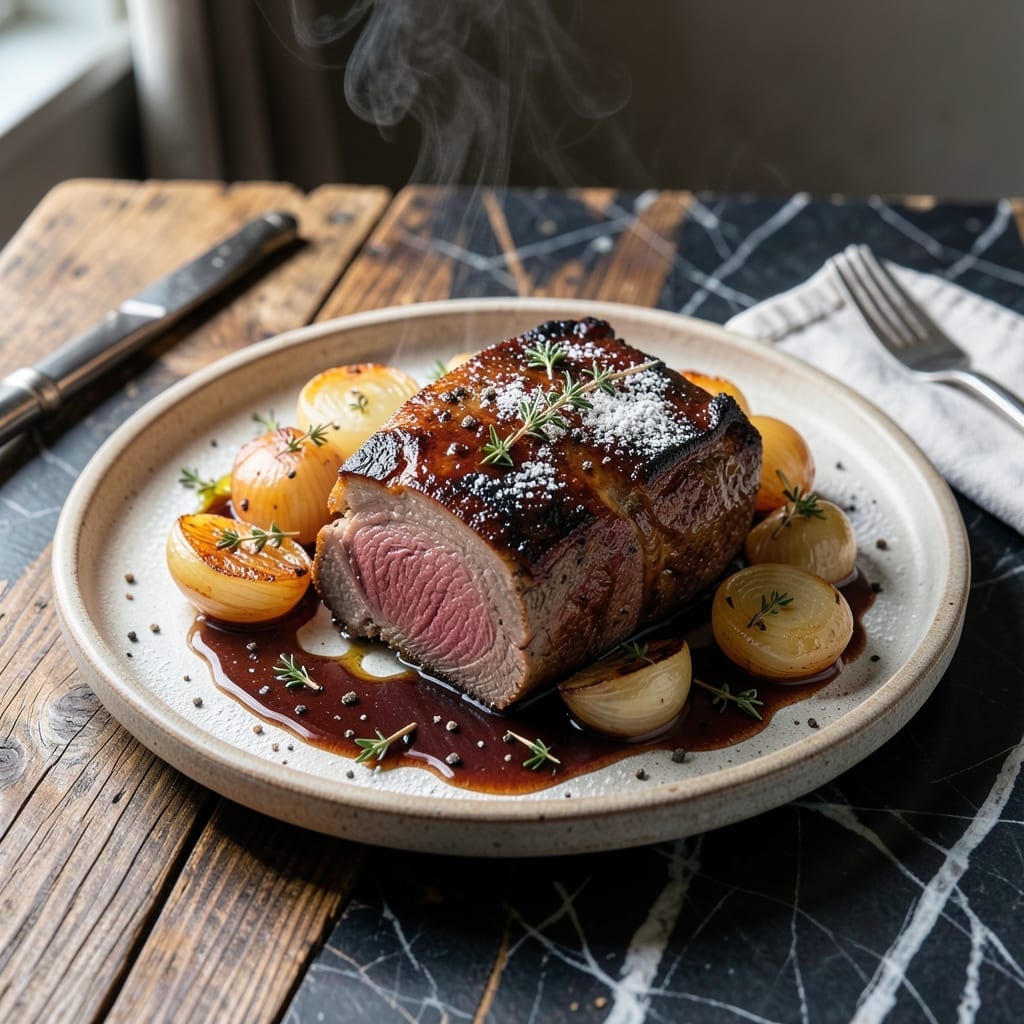
This pot roast delivers the tender, fall-apart beef and rich, wine-infused gravy that made Tyler Florence’s version famous. The secret lies in the long, slow braise that transforms tough cuts into melt-in-your-mouth perfection.
Root vegetables soak up the deep, savory flavors of the braising liquid, creating a complete meal in one pot. I’ve refined the technique to ensure the meat stays moist while developing a caramelized crust.
After hours in the oven, the beef becomes fork-tender and the sauce reduces to a velvety consistency. The wine adds complexity without overpowering the natural beef flavor.
This is comfort food at its most elegant—simple ingredients, foolproof method, and results that taste anything but ordinary.
Ingredients for Tyler Florence Pot Roast
Transform tough chuck into melt-in-your-mouth perfection with these carefully selected ingredients for braising.
| Ingredient | Amount | Notes |
|---|---|---|
| Chuck Roast 🥩 | 3 lb | Boneless, well-marbled preferred |
| Kosher Salt 🧂 | 2 tsp | Diamond Crystal brand recommended |
| Freshly Ground Black Pepper 🌶️ | 1 tsp | Coarse grind preferred |
| All-Purpose Flour 🌾 | ¼ cup | For dusting beef |
| Olive Oil 🫒 | 2 tbsp | Extra-virgin, divided |
| Yellow Onions 🧅 | 2 whole | Large, quartered |
| Carrots 🥕 | 4 whole | Peeled, cut into 2-inch chunks |
| Celery Stalks 🌿 | 4 whole | Cut into 2-inch chunks |
| Garlic Cloves 🧄 | 6 cloves | Smashed, peeled |
| Dry Red Wine 🍷 | 2 cups | Full-bodied like Cabernet Sauvignon |
| Beef Stock 🥩 | 2 cups | Low-sodium preferred |
| Tomato Paste 🍅 | 2 tbsp | Double-concentrated preferred |
| Fresh Thyme Sprigs 🍃 | 4 whole | Plus 2 tsp chopped |
| Fresh Rosemary Sprigs 🍃 | 2 whole | Plus 1 tsp chopped |
| Bay Leaves 🌿 | 2 whole | Dried, for braising liquid |
The beef is non-negotiable here. Chuck roast with good marbling from Whole Foods or Costco delivers the buttery texture this dish demands. Look for a bright red color with visible fat veins throughout—this fat renders down during the long braise. The wine matters too: a bold, dry Cabernet Sauvignon adds depth without sweetness. Avoid cooking wines as they contain added salt.
No red wine? Beef broth with 1 tbsp balsamic vinegar per cup works in a pinch. Fresh herbs are ideal, but dried at one-third the amount is acceptable. For the stock, Better Than Bouillon makes a quality paste that’s more flavorful than boxed broth. Carrots can be baby carrots (halved) if that’s what you have. The tomato paste can be swapped with 1 tbsp ketchup, though the flavor profile shifts slightly.
This tastes even better the next day. Store leftovers in an airtight container for up to 4 days in the fridge or freeze for 3 months. The braising liquid solidifies when chilled—simply reheat gently to restore its velvety consistency. Portion into meal-sized containers for easy reheating throughout the week.
Why You’ll Love This Recipe
- Set It and Forget: Honestly, after searing the chuck roast in olive oil, it’s just a matter of letting the oven do the work.
- Crispy, Tender Perfection: That flour crust on the outside with the fall-apart meat inside? I’ll be real—it’s why I make this every other Sunday.
- Feeds a Hungry Table: Between us, this recipe stretches to feed six with leftovers, perfect for Sunday supper or meal-prepping lunches.
- Pantry-Friendly Star: I love that the only must-haves are salt, pepper, flour, and olive oil—things I always have on hand.
Step-by-Step Instructions for Wine-Enhanced Braised Beef with Root Vegetables
Master the technique that transforms tough cuts into fork-tender perfection with rich, layered flavors.
Step 1: Season and Sear the Chuck Roast
Pat the 3 lb chuck roast completely dry with paper towels—this ensures a proper sear. Season all sides aggressively with the 2 tsp kosher salt and 1 tsp freshly ground black pepper. The salt should create a visible crust on the meat’s surface.
Dust the roast lightly with the 0.25 cup all-purpose flour, shaking off any excess. Heat 1 tbsp olive oil in a Dutch oven over medium-high heat until shimmering. Sear the roast for 4-5 minutes per side until deeply browned and a thick crust forms. This fond development is crucial for flavor depth.
Step 2: Sauté the Aromatic Vegetables
Remove the roast and set aside. Add the remaining 1 tbsp olive oil to the Dutch oven. Add the 2 whole yellow onions, 4 whole carrots, and 4 whole celery stalks. Sauté for 8-10 minutes until the vegetables soften and begin to caramelize at the edges.
Add the 6 cloves garlic cloves and cook for 1 minute until fragrant. Stir in the 2 tbsp tomato paste and cook for 2 minutes, allowing it to deepen in color and develop its raw edge. This creates a rich base for the braising liquid.
Step 3: Deglaze and Begin the Braise
Pour in the 2 cups dry red wine, using a wooden spoon to scrape up all the browned bits from the bottom of the pot. Bring to a simmer and cook for 5 minutes until the liquid reduces by about half. This step intensifies the wine flavor and prevents a watery final sauce.
Return the seared roast to the pot. Add the 2 cups beef stock, 4 whole fresh thyme sprigs, 2 whole fresh rosemary sprigs, and 2 whole bay leaves. The liquid should come about halfway up the roast. Bring to a gentle simmer.
Step 4: Braise to Tenderness
Cover the Dutch oven and transfer to a 325°F oven. Braise for 2.5 to 3 hours, turning the roast every 45 minutes to ensure even cooking. The meat is done when it yields easily to a fork and the internal temperature reaches 195-200°F.
Resist the urge to check too frequently—each time you open the oven, you lose valuable heat and extend the cooking time. The low, steady heat is what transforms the connective tissue into gelatin, creating that signature melt-in-your-mouth texture.
Step 5: Rest and Serve
Carefully remove the roast to a cutting board and tent with foil. Skim any excess fat from the braising liquid and simmer for 5-10 minutes to reduce slightly if desired. The sauce should coat the back of a spoon but remain pourable.
Let the roast rest for 15-20 minutes before slicing against the grain. This allows the juices to redistribute, ensuring each serving is moist and flavorful. Serve with the braised vegetables and sauce spooned over the top.
Pro Tips For Making Tyler Florence Pot Roast
- Sear It Hard: I learned this the hard way—get your olive oil screaming hot before adding the chuck roast so the flour coating forms a deep, mahogany crust. That crust is what gives Tyler’s pot roast its signature rich flavor.
- Season Generously: Don’t be shy with the kosher salt and freshly ground black pepper when coating the roast with flour. Sounds weird, but it works: the flour sticks better and the meat ends up more flavorful.
- Skip the Crowding: After burning three batches, I finally figured out—sear the roast in batches if needed so the pan isn’t overcrowded. Steaming the meat just makes it boil in its own juices instead of browning.
- Rest Before Slicing: Give the pot roast a solid 15-20 minutes under foil after cooking. My grandmother swore by this, and she was right: it keeps all the juices inside where they belong.
Serving Suggestions for This Recipe
Plating Presentation
Slice the beef against the grain into 1-inch thick pieces and fan them across a deep platter. This exposes more surface area to the rich braising liquid. I arrange the caramelized vegetables around the meat for a rustic, family-style presentation. 💫
Garnishing Touches
Sprinkle with 2 tbsp chopped fresh parsley or the reserved 2 tsp chopped thyme right before serving. The bright green adds freshness against the deep browns of the dish. A final drizzle of the reduced sauce over the top ties everything together visually.
Bread for Sauce
Serve with crusty sourdough bread or garlic mashed potatoes to soak up every last drop of the wine-infused gravy. I love using ciabatta rolls from my local bakery—they hold up well to the hearty sauce without falling apart.
Wine Pairing
Pour the same Cabernet Sauvignon you used for cooking—it’s the perfect complement. The wine’s bold tannins cut through the richness of the beef. For a non-alcoholic option, try sparkling pomegranate juice for a festive touch. 🍷
Side Dish Ideas
A simple green salad with a tangy vinaigrette balances the meal’s richness. I toss 5 oz baby spinach with 1 tbsp balsamic vinegar and 3 tbsp olive oil. Roasted Brussels sprouts also work beautifully alongside this hearty main.
Family-Style Service
Bring the entire Dutch oven to the table for a dramatic presentation. The sizzling sound as you lift the lid is pure comfort. I always serve this with a large spoon for the vegetables and sauce, and a sharp knife for carving at the table.
Nutrition Facts
Frequently Asked Questions
What cut of beef works best for this?
Chuck roast with good marbling is ideal. The fat renders down during the 2.5-3 hour braise, creating that signature tenderness. Avoid lean cuts like sirloin—they’ll dry out.
Can I make this without wine?
Yes! Use 2 cups beef broth mixed with 2 tbsp balsamic vinegar for similar depth. The acidity mimics wine’s role in tenderizing the meat.
How do I prevent dry pot roast?
Don’t skip the searing step—it locks in juices. Also, ensure the braising liquid comes halfway up the meat and maintain a 325°F oven temp.
Can I cook this in a slow cooker?
Sear the meat first, then cook on low for 8 hours. Add vegetables in the last 2 hours to prevent mushiness.

- 6 Oz Chocolate Chip Cookie Recipe: Perfectly Balanced Crispy Edges and Chewy Hearts - September 25, 2026
- 6-Inch Coffee Cake Recipe: Vanilla Bean Swirls and Buttery Streusel Topping - September 25, 2026
- 1 Hour Soup Recipe: Velvety Richness Without the Wait - September 25, 2026