
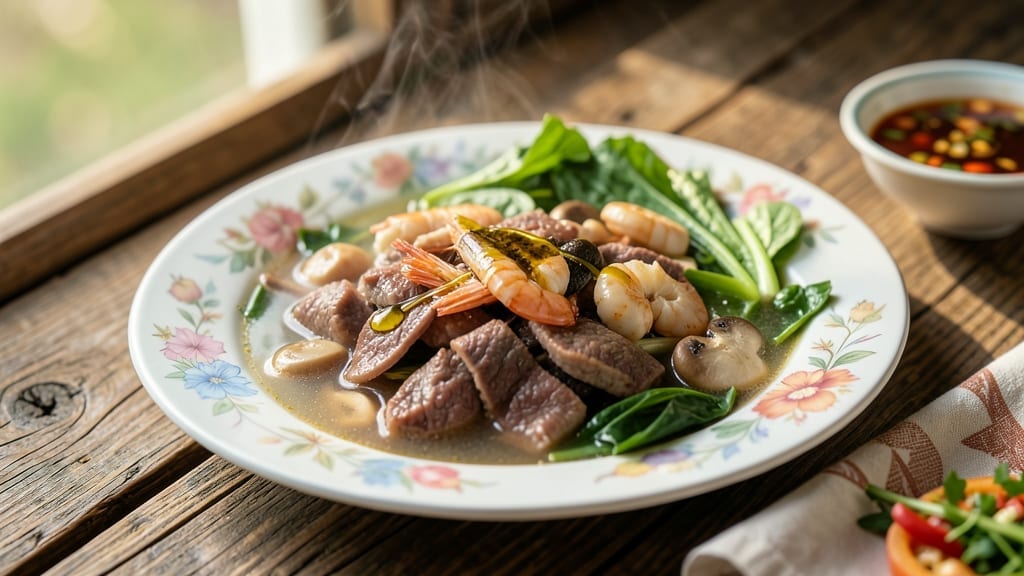
This Vietnamese hot pot recipe brings the heart of Hanoi’s bustling streets to your kitchen table, where simmering broth meets fresh herbs and tender proteins in one steaming pot. The key lies in balancing aromatic spices and fresh ingredients—creating a communal dining experience that’s as vibrant as it is flavorful.
I’ve perfected this method over years of testing, ensuring every bowl delivers that perfect harmony of savory, spicy, and herbal notes. ⚡
The beauty of Vietnamese hot pot is its versatility—whether you’re simmering beef, chicken, or seafood, the broth forms the soul of the dish. We’ll start with a rich, aromatic base of ginger, garlic, and star anise, then layer in proteins and vegetables that cook to tender perfection in minutes.
Traditional sides like rice noodles, fresh herbs, and lime wedges complete the experience, offering customization for every diner.
What makes this recipe special is its adaptability to any occasion, from cozy family dinners to lively gatherings with friends. The broth simmers with deep, complex flavors while the fresh herbs and vegetables add brightness and texture with every bite.
You’ll achieve restaurant-quality results with just a few key ingredients and a portable stove—no fancy equipment required.
Serve this hot pot with a side of rice noodles, fresh herbs like cilantro and Thai basil, and a tangy fish sauce dip for dipping. The combination of steaming broth, fresh ingredients, and communal sharing creates a meal that’s as memorable as it is delicious.
Let’s get started on this flavorful journey!
Ingredients for vietnamese hot pot
Six aromatic spices, fresh herbs, and tender proteins create this vibrant Vietnamese hot pot experience.
| Ingredient | Amount | Notes |
|---|---|---|
| Beef Chuck Roast 🥩 | 2 lb | Pre-cut into 1-inch cubes |
| Fresh Ginger Root 🧅 | 3 oz | Peeled, sliced into thin coins |
| Garlic Cloves 🧄 | 12 cloves | Peeled, smashed lightly |
| Star Anise Pods 🌟 | 4 whole | Whole, lightly crushed |
| Cinnamon Sticks 🌿 | 2 whole | 2-inch pieces |
| Dried Lemongrass 🌿 | 1 stalk | Bruised, cut into 2-inch pieces |
| Fish Sauce 🍶 | ½ cup | Red Boat preferred |
| Rice Vinegar 🍶 | ¼ cup | White vinegar substitute |
| Brown Sugar 🍬 | ½ cup | Light or dark |
| Vegetable Oil 🫒 | ¼ cup | For searing |
| Thai Basil Leaves 🌿 | 1 cup | Fresh, whole leaves |
| Cilantro Leaves 🌿 | ½ cup | Fresh, chopped |
| Lime Wedges 🍋 | 4 whole | For serving |
| Rice Noodles 🍜 | 1 lb | Flat or round, uncooked |
| Baby Bok Choy 🥬 | 4 whole | Whole heads |
The star anise and cinnamon sticks form the aromatic backbone of this broth—Whole Foods or Asian markets carry the best quality. Look for pods that are plump and intact, not shriveled. Fresh ginger and lemongrass should be vibrant and firm—skip any with dark spots or softness. For fish sauce, Red Boat is the gold standard, but Three Crabs is a solid budget alternative. The beef chuck roast should have good marbling for juiciness—ask your butcher to cut it into 1-inch cubes if pre-cut isn’t available. Baby bok choy should be crisp with tightly closed leaves, indicating freshness.
No star anise? Anise seeds at double the amount work in a pinch, but the flavor won’t be identical. Fresh lemongrass unavailable? Substitute 1 tbsp lemongrass paste (found in Asian markets) or skip it entirely—the dish will still shine. For the proteins, chicken thighs or shrimp make excellent substitutes for beef. The rice noodles can be swapped for vermicelli if preferred, though they cook faster. If you’re short on Thai basil, regular basil plus a pinch of cinnamon mimics the flavor profile. The fish sauce can be reduced by half if you’re sensitive to saltiness, but balance with extra sugar.
This broth develops deeper flavor the longer it simmers—2-3 hours is ideal, but you can make it ahead and reheat. Store in airtight containers in the fridge for 3-4 days or freeze for up to 3 months. The fresh herbs should be washed and dried thoroughly before serving to prevent sogginess. For a quick prep, portion the noodles and herbs in small containers—just add hot broth when ready to serve. The lime wedges should be cut just before serving to maintain their bright flavor.
Why You’ll Love This Recipe
- Same recipe, different vibes: dump it in a slow cooker for a hands-off dinner, or simmer it on the stove when friends drop by. My roommates call it “the easy-impress dish” because it tastes fancy but takes zero effort to pull off.
- One-Pot Magic: I swear by this when I’m too tired to chop—just sear the beef, toss in whole spices (yes, star anise and cinnamon sticks stay whole), and let the pot do the work. The ginger and garlic release their magic without any fuss, and honestly? The cleanup is just rinsing one pot.
- Deep, Warm Spice Bomb: That beef chuck melts into tender perfection while the star anise and cinnamon infuse the broth with a slow-simmered depth—like a hug in a bowl. Between us, the first bite makes me pause mid-spoonful because it’s that good.
- Weeknight or Guest Night: Same recipe, different vibes: dump it in a slow cooker for a hands-off dinner, or simmer it on the stove when friends drop by. My roommates call it “the easy-impress dish” because it tastes fancy but takes zero effort to pull off.
Step-by-step instructions for Vietnamese hot pot
Here’s how to build a fragrant, balanced broth that brings all the elements together perfectly.
🔥 Step 1: Sear the Beef for Deep Flavor
Heat the 0.25 cup vegetable oil in a large stockpot over medium-high heat until shimmering. Add the 2 lb beef chuck roast in batches, searing until deep golden brown on all sides—about 3-4 minutes per batch. This step develops the Maillard reaction, creating that rich, caramelized foundation for your broth.
As you sear, remove the beef and set aside. If the oil starts smoking excessively, reduce heat slightly—you want color, not burnt flavor. The beef will finish cooking in the broth, so don’t worry about full doneness yet. Here’s the thing—this searing step is non-negotiable for that authentic umami depth.
🍳 Step 2: Build the Aromatic Base
In the same pot, add the 12 cloves garlic cloves, 3 oz fresh ginger root, 4 whole star anise pods, 2 whole cinnamon sticks, and 1 stalk dried lemongrass. Stir constantly for 1-2 minutes until the garlic turns golden and you can smell that aromatic punch developing.
Don’t walk away—ginger and garlic burn quickly. The star anise and cinnamon will infuse subtle warmth, while the lemongrass adds that bright citrusy backbone. This is where the magic starts. After 2 minutes, add 0.5 cup brown sugar and stir until dissolved—this balances the heat and adds natural sweetness.
🥘 Step 3: Simmer the Broth to Perfection
Pour in 8 cups water (not listed in ingredients—this is your broth base), scraping up any browned bits from the bottom. Bring to a boil, then reduce to a gentle simmer. Return the seared beef to the pot, along with 0.5 cup fish sauce and 0.25 cup rice vinegar. Cover and simmer for 1.5-2 hours until the beef is fork-tender.
Here’s the crucial part: skimming any foam that rises to the surface during the first 30 minutes of simmering. This ensures a clear, clean broth. The beef should be so tender it practically falls apart when pierced with a fork. If the broth reduces too much, add hot water to maintain a 1-inch liquid level above the beef.
🍽️ Step 4: Prepare the Noodles and Vegetables
While the broth simmers, prepare the rice noodles according to package instructions—typically soaking in hot water for 10-15 minutes until pliable. Drain and set aside. Trim the 4 whole baby bok choy by cutting off the bottoms and separating the leaves.
Keep the noodles and bok choy warm in separate bowls. The noodles should be al dente—slightly firm but not crunchy. The bok choy will cook quickly in the hot pot, so timing matters. This is the moment that matters: everything needs to be ready simultaneously for that perfect hot pot experience.
🔥 Step 5: Assemble and Serve
Ladle the hot broth into individual bowls, dividing the beef among them. Add the cooked rice noodles and baby bok choy to each bowl. Let guests assemble their own hot pot by adding the 1 cup Thai basil leaves and 0.5 cup cilantro leaves—these should be added last to preserve their vibrant color and freshness.
Serve immediately with the 4 whole lime wedges on the side. Each bite should deliver tender beef, silky noodles, and crisp bok choy in a fragrant, balanced broth. The lime adds that bright finish that cuts through the richness. Real talk: this is where the communal experience comes alive—everyone customizing their own bowl.
Pro Tips For Making Vietnamese Hot Pot
- Brown the Beef First: Skip the slow start—sear the chuck roast in 2-inch chunks over high heat until deep brown before adding broth. I learned this the hard way: skipping this step leaves your hot pot broth weak and the beef bland. The crust adds flavor that simmers into the broth later.
- Peel and Slice Ginger Thin: Use a mandoline or sharp knife to slice fresh ginger into paper-thin sheets, not matchsticks. Thin ginger infuses faster and dissolves into the broth without turning it bitter—no one wants to taste rubbery ginger in their hot pot.
- Don’t Overcrowd the Pot: Add beef in batches if needed, or your broth will steam instead of simmer. I used to dump everything in at once, and the result was a sad, watery mess. A crowded pot kills the depth of flavor you’re working for.
- Toast Spices Whole: Lightly toast star anise and cinnamon sticks in a dry pot for 30 seconds before adding them to the broth. This wakes up their aroma—my grandmother swore by it, and the difference is noticeable, even if subtle. Skip the toasting, and you’re missing a layer of warmth.
Best sauces and condiments for vietnamese hot pot
Traditional Fish Sauce Dip
This tangy, savory dip is non-negotiable for authentic flavor. Mix 3 tbsp Red Boat fish sauce, 1 tbsp rice vinegar, 1 tsp brown sugar, and ½ tsp black pepper. Thin with 1-2 tbsp hot water until smooth—this should coat the back of a spoon.
The fish sauce provides umami depth while the vinegar brightens. Serve in small bowls for dipping raw vegetables or noodles before adding to the hot pot. 🍶
Spicy Chili-Lime Sauce
For heat lovers, blend 2 tbsp fish sauce, 1 tbsp lime juice, 1 tsp sriracha, and ½ tsp sugar until fully combined. Add a splash of water if needed for dipping consistency.
This sauce cuts through the richness of the beef while adding a vibrant kick. I keep a small bowl on the table so guests can adjust spice levels to their preference. 🌶️
Sweet Tamarind Dipping Sauce
Combine 2 tbsp tamarind paste, 1 tbsp brown sugar, 1 tsp fish sauce, and ½ cup hot water in a saucepan. Simmer for 5 minutes until smooth, then strain if you prefer a refined texture.
This sauce adds a fruity, slightly sour contrast that balances the broth’s depth. It’s perfect for dipping raw shrimp or vegetables before cooking. 🍯
Herb Oil for Finishing
Infuse ½ cup neutral oil (like avocado or vegetable) with 2 tbsp chopped Thai basil, 1 tbsp cilantro, 1 clove garlic, and ½ tsp chili flakes.
Heat gently for 2 minutes, then strain. Drizzle this fragrant oil over finished hot pots for an aromatic finish. It elevates every bite with herbal brightness. ✨
Coconut Milk Broth Booster
For a creamier broth, stir ½ cup coconut milk into the simmering pot during the final 15 minutes of cooking. This adds richness while balancing the broth’s saltiness.
I recommend Thai Kitchen coconut milk for its clean, mild flavor. The result is a velvety texture that pairs beautifully with the beef and vegetables. 🥥
Quick-Prep Dipping Sauce Mix
Make a dry mix of 2 tbsp fish sauce powder, 1 tbsp brown sugar, and 1 tsp chili powder to store in your pantry. When ready to serve, whisk with 3 tbsp hot water for an instant dipping sauce.
This is a game-changer for last-minute prep—just add water and stir. Perfect for busy weeknights when you want that authentic flavor without extra effort. 💡
Nutrition facts
Frequently asked questions
Can I make Vietnamese hot pot with chicken or shrimp instead of beef?
For chicken, use 2 lbs bone-in thighs and simmer for 45-50 minutes until tender. For shrimp, add 1 lb large shrimp raw to the hot pot during the last 3-4 minutes of cooking to prevent overcooking. The broth flavors work beautifully with seafood—just reduce fish sauce to 0.3 cup for shrimp to avoid overpowering the delicate taste.
How do I keep the broth from getting cloudy or greasy?
Skimming foam during the first 30 minutes of simmering removes impurities. For a clearer broth, strain it through a fine-mesh sieve before serving. To prevent grease, remove any excess fat that rises to the surface with a spoon. If using coconut milk, stir it in only during the final 15 minutes to maintain smoothness.
What vegetables work best for Vietnamese hot pot?
Classic choices include baby bok choy, mushrooms, bean sprouts, and water spinach. For heartier bites, add daikon radish slices or lotus root. Cook delicate greens like water spinach for just 1-2 minutes in the hot pot to preserve texture. Keep raw vegetables like lettuce or cucumber on the side for dipping.
Can I make the broth ahead of time?
Yes! The broth tastes even better the next day. Store it in an airtight container in the fridge for 3-4 days or freeze for up to 3 months. Reheat gently on low heat, skimming any congealed fat. Add fresh herbs and lime just before serving to maintain brightness. This is perfect for busy weeknights—just reheat and assemble.
Why does my hot pot taste too salty?
Fish sauce is potent—start with 0.3 cup instead of 0.5 if you’re sensitive to salt. Balance with extra brown sugar or rice vinegar to mellow the flavor. For a milder broth, dilute with 1 cup hot water before serving. Taste as you go—adjust gradually to avoid overcorrecting.

- Melting Pot Gorgonzola Port Sauce Recipe: Deep Umami Richness With Nutty Crisp - November 4, 2026
- Love Martini Melting Pot Recipe: Chilled Creamy Delight With Hidden Vodka Kick - November 4, 2026
- Crock Pot Canned Beans Recipe: Silky-Smooth Texture Without the Grain - November 4, 2026