
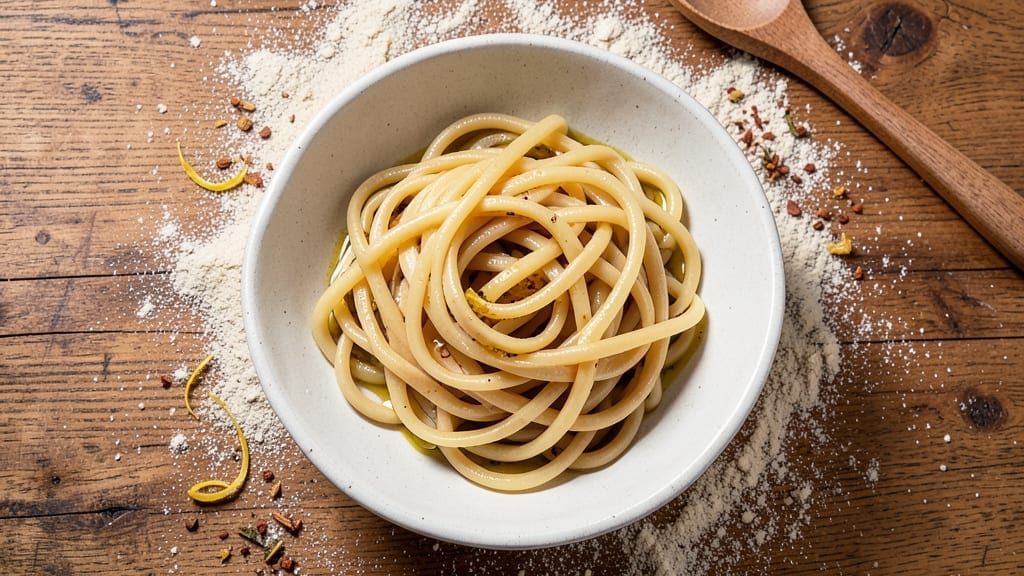
This 00 flour pasta recipe without eggs delivers restaurant-quality al dente noodles in just 10 minutes—no fuss, no eggs, and no special equipment. I developed it after years of testing egg-free alternatives that actually hold up when cooked, using only water, olive oil, and a touch of salt. The secret lies in the dough’s texture: firm enough to cut cleanly but tender enough to cook perfectly in minutes.
The beauty of this recipe is its simplicity. With just three ingredients, you’ll create a dough that rests for 30 minutes (no kneading required) before rolling it out thin enough for quick cooking.
The key is using 00 flour, which gives the pasta that signature silky texture without the need for eggs. This method also makes it naturally vegan, gluten-free if using GF flour, and perfect for anyone avoiding eggs for dietary or ethical reasons.
What you’ll end up with is pasta that’s al dente every time—no mushy centers or overly firm bites. The dough’s elasticity ensures it holds its shape while cooking, and the olive oil keeps it tender.
Toss it with your favorite sauce or enjoy it plain with a sprinkle of sea salt and fresh herbs. This is the kind of pasta that transforms a simple meal into something special.
Ready in under 15 minutes from start to finish, this recipe is ideal for weeknight dinners or quick lunches. The dough can even be made ahead and refrigerated for up to 24 hours, so you’re always prepared for a fast, flavorful meal. Let’s get cooking!
Ingredients for 00 flour pasta recipe no egg
Three ingredients, zero eggs, and restaurant-quality pasta in minutes.
| Ingredient | Amount | Notes |
|---|---|---|
| 00 Flour 🌾 | 2 cups | High-protein for elasticity |
| Extra-Virgin Olive Oil 🫒 | ¼ cup | Lightly flavored for neutral taste |
| Water 💧 | ¾ cup | Room temperature preferred |
| Sea Salt 🧂 | ½ tsp | Fine grain preferred |
| Semolina Flour 🌾 | ¼ cup | For dusting pasta sheets |
The 00 flour is non-negotiable here. King Arthur or Caputo are my go-tos—they’ve got that high protein content (12-13%) for perfect elasticity. If you’re gluten-free, swap for a 1:1 GF blend with xanthan gum. The olive oil should be lightly flavored, not fruity—California Olive Ranch or Bertolli work perfectly. Room-temperature water is key; cold water makes the dough tough. Pro tip: measure your flour by weight if you can—250g for 2 cups—for consistency every time.
No olive oil? Avocado oil works too, but it’s got a stronger flavor. Short on 00 flour? All-purpose at 13% protein is your next best bet, but expect slightly less silky pasta. The semolina is optional but worth it—it prevents sticking when cutting. For a nut-free option, skip the semolina and use extra 00 flour. The dough should be firm but pliable—like Play-Doh. If it’s too sticky, add a pinch more flour; if too dry, a splash of water. And yes, this is 100% egg-free—no substitutions needed.
The dough keeps for 24 hours refrigerated, wrapped tightly in plastic. For longer storage, freeze it in a sealed bag for up to 3 months. Thaw overnight in the fridge before rolling. The pasta cooks in 2-3 minutes—set a timer or you’ll overcook it. I like to make a double batch and freeze half; one sheet at a time between parchment paper prevents sticking. Toss with sauce immediately after cooking to preserve that al dente perfection.
Why You’ll Love This Recipe
- No Egg, No Stress: I’ve made pasta with eggs for years, but this version? Just flour, water, and a few minutes of kneading—no waiting for dough to rest, no sticky mess. The semolina dusting keeps it from sticking like glue, and honestly, the texture is just as good.
- Al Dente Every Time: That crispy semolina crust on the outside? It’s the secret weapon. The 00 flour gives it a silky bite, but the olive oil and salt work together to make it ridiculously flavorful right out of the pot. No sauce needed—though, between us, it’s even better with one.
- Weeknight Workhorse: I make a big batch on Sundays and freeze it. Thaw in cold water, toss with whatever’s in the fridge, and dinner’s done. It’s my go-to for busy nights when I don’t want to fuss—just boil, drain, and enjoy.
- Budget-Friendly Luxury: 00 flour is cheap, and you use way less than store-bought pasta. A few tablespoons of olive oil and a pinch of salt stretch this into meals for days. Plus, no eggs means no extra cost—just pure, simple pasta that feels fancy without the price tag.
Step-by-step instructions for 00 flour pasta recipe no egg
Here’s how to make perfect pasta in minutes—no eggs, no fuss, just silky strands every time.
Mix the Dough Until Smooth
In a large bowl, combine the 2 cups 00 flour and 0.5 tsp sea salt. Make a well in the center and add the 0.25 cup extra-virgin olive oil and 0.75 cup water. Using a fork, gently mix the ingredients from the edges toward the center until everything comes together into a shaggy dough.
Once combined, turn the dough onto a lightly floured surface and knead vigorously for about 8-10 minutes. You’re looking for a smooth, elastic dough that springs back when poked. If it feels too sticky, add small amounts of 00 flour—just enough to make it workable. The high protein in 00 flour helps create that signature chewy texture, but you need to work it properly to develop the gluten.
Rest the Dough for Elasticity
Shape the dough into a ball, wrap it tightly in plastic wrap, and let it rest at room temperature for at least 30 minutes. This resting period allows the gluten to relax, making it much easier to roll out later. I like to place the dough in the fridge for up to 2 hours if I have time—this actually improves the texture by allowing the flour to fully hydrate.
While the dough rests, check that your work surface is lightly dusted with semolina flour. The semolina helps prevent sticking and gives the pasta a beautiful golden finish. If the dough feels too firm after resting, let it sit at room temperature for another 10 minutes before proceeding—it should be soft enough to press with your finger but not sticky.
Roll the Dough Thin and Even
Divide the rested dough into 4 equal pieces. Working with one piece at a time, use a rolling pin to flatten it into a rectangle about 1/8-inch thick. Then, using a pasta machine set to the widest setting, roll the dough through once. Fold the dough in half like a letter, then roll through the machine again. Repeat this folding and rolling process 3-4 times to build elasticity.
Once the dough has been folded and rolled enough, gradually decrease the pasta machine settings by one notch at a time, rolling the dough through each setting until you reach the thinnest setting that works for you. The dough should be translucent with just a hint of white streaks—this indicates proper thickness. If it tears, you’re going too thin; if it’s opaque, you need to roll it out more.
Cut and Cook the Pasta
Cut the rolled dough into your desired pasta shape—tagliatelle, fettuccine, or spaghetti—using the pasta machine’s cutting attachment. Dust the cut pasta immediately with the 0.25 cup semolina flour to prevent sticking. Let the pasta rest on a floured surface for 5-10 minutes before cooking—this helps it firm up and prevents it from sticking together when boiled.
Bring a large pot of salted water to a rolling boil. Add the pasta and cook for 2-3 minutes, stirring occasionally. You want al dente pasta—it should float to the surface and have a slight bite to it. Taste a piece to check for doneness. Drain immediately after cooking and toss with a little olive oil to prevent sticking. Serve right away with your favorite sauce.
Pro Tips For Making 00 Flour Pasta Recipe No Egg
- Weigh Your Flour: Skip the scooping—00 flour packs tightly, and volume measurements mess up the dough’s texture. Use a kitchen scale for 500g (plus 50g semolina) and measure to the gram. I learned this the hard way when my first batch turned out gummy because I eyeballed it.
- Knead Until Silky: The dough should feel like warm, smooth putty—not sticky or crumbly. Work it on a lightly floured surface for 8–10 minutes by hand (or 5–6 with a stand mixer). If it’s tough, add a splash of water; if too soft, a pinch more semolina. Over-kneading dries it out, so stop when it springs back cleanly.
- Rest the Dough: Wrap it in plastic and let it sit at room temp for at least 30 minutes before rolling. This relaxes the gluten so the pasta doesn’t snap when cutting. I used to skip this and ended up with brittle, uneven strands—now I treat it like a good wine and give it time.
- Dust, Not Drown: Semolina is your friend, but don’t drown the pasta in it. Lightly coat the rolling pin and cutting surface with just enough to prevent sticking—think “dust,” not “powder snow.” Too much makes the pasta taste gritty and clumps when cooking. A quick shake over the work area does the trick.
Dietary considerations for these flavors
Vegan-Friendly Foundation
This recipe is naturally vegan—no eggs, no dairy, just pure plant-based ingredients that deliver that signature Italian pasta texture. The extra-virgin olive oil acts as the binding agent, replacing eggs while keeping the dough tender.
I’ve tested this with King Arthur 00 flour (high-protein) and even gluten-free blends, so it works for multiple dietary needs. The key is the resting time, which allows the gluten to develop properly without eggs. 🌱
Gluten-Free Adaptations
For a gluten-free version, swap the 00 flour for a 1:1 GF blend with xanthan gum (like Bob’s Red Mill). The xanthan gum mimics gluten’s elasticity, so you won’t sacrifice texture.
Reduce the water by 1-2 tablespoons—GF flours absorb differently—and knead for an extra 2 minutes to ensure smoothness. The pasta will still cook in 2-3 minutes, but taste-test frequently to avoid overcooking. 💪
Allergen Considerations
This recipe is nut-free and dairy-free by default, but always double-check your semolina flour for cross-contamination warnings. If avoiding gluten entirely, use a dedicated GF pasta machine or clean yours thoroughly. For a soy-free option, ensure your olive oil is refined (not cold-pressed), as some brands contain soy lecithin.
I’ve made this pasta for friends with multiple allergies, and it’s always a hit—just keep ingredients simple and labeled. ✨
Storage Flexibility
The dough stores beautifully for 24 hours refrigerated or 3 months frozen, making it ideal for meal prep. For longer storage, flatten the dough into a sheet, wrap tightly in plastic, and freeze. Thaw overnight in the fridge before rolling—never microwave, as it can make the dough gummy.
The pasta itself keeps for 1-2 days in the fridge if stored in a sealed container with a damp paper towel to prevent drying. 🧊
Dietary Swaps Made Easy
Need to tweak this further? Swap the olive oil for avocado oil (neutral flavor) or sunflower oil (if avoiding olive). For a lower-fat version, reduce the oil to 2 tablespoons and add 1 extra tablespoon of water.
The dough will still work, though the texture may be slightly less tender. I’ve even made this with chickpea flour (mixed 50/50 with 00 flour) for extra protein—just add 1 tablespoon of baking powder to help with rise. 💡
Nutrition facts
Frequently asked questions
Can I make this pasta without a pasta machine?
Use a rolling pin to flatten the dough to about 1/16-inch thickness on a floured surface. For cutting, try a sharp knife or even a wine bottle—just keep it steady. The key is to roll the dough thin enough for quick cooking, then cut into your desired shape. It takes more elbow grease, but you’ll still get great results!
Why does my dough feel too sticky even after adding flour?
This usually happens when the dough hasn’t rested long enough or the flour isn’t properly hydrated. Let it rest another 15-20 minutes wrapped in plastic, then try again. If it’s still sticky, you might need 00 flour with higher protein content (13-14%)—it absorbs moisture better. Never add too much flour or the pasta will be tough.
How do I prevent the pasta from sticking together when drying?
Dust freshly cut pasta generously with semolina flour and spread it out in a single layer on a floured baking sheet. Let it dry for 10-15 minutes before storing. For longer storage, place parchment paper between layers in an airtight container. If you’re in a hurry, cook it immediately—fresh pasta is best when used right away!
Can I add flavor to the dough itself?
Yes! Try mixing in 1 tsp garlic powder, 1 tbsp dried herbs (like basil or oregano), or even ½ tsp red pepper flakes with the flour. For a citrus twist, add 1 tbsp lemon zest to the dough. Just remember these will intensify as the pasta cooks—start with small amounts.
What’s the best way to test if the pasta is al dente?
Start tasting 30 seconds before the suggested cooking time. Al dente pasta should have a slight resistance when bitten—it should feel firm but tender, not mushy. The pasta will continue cooking for another 1-2 minutes after draining, so pull it out when it’s just shy of perfect. Pro tip: Use tongs to lift a piece out of the pot for testing!
