
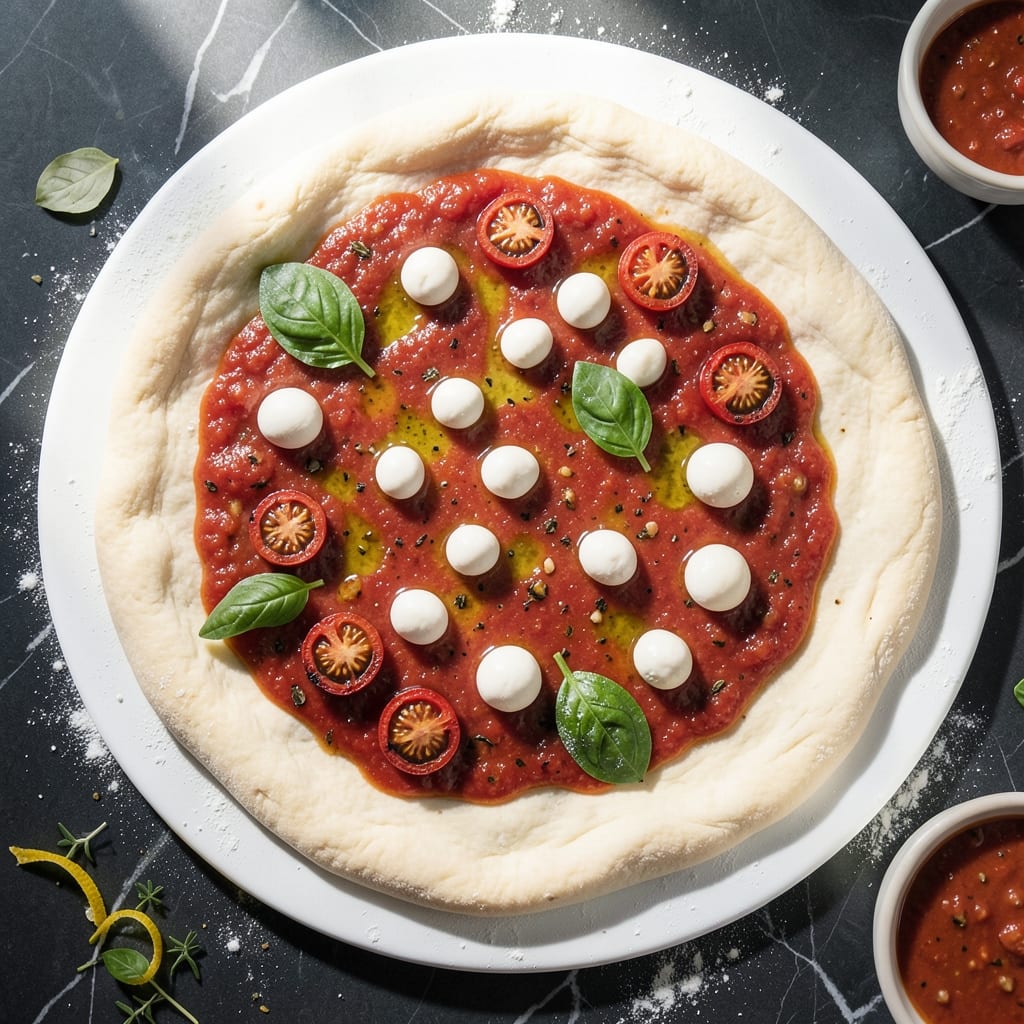
This 1-cup pizza dough recipe delivers restaurant-quality homemade slices with minimal effort—no kneading, no waiting hours, just a foolproof speed crust that’s perfect for quick weeknight dinners. 💛 The secret lies in a simple mix of flour, yeast, and olive oil that develops flavor while you prep your toppings, ensuring a crispy-yet-chewy base every time.
Whether you’re feeding a family or craving a personal-sized pie, this dough transforms ordinary pizza night into something special.
What sets this recipe apart is its versatility and speed—mix, rest, and roll in just 30 minutes, then bake to golden perfection. The dough’s no-knead method eliminates guesswork, while the 1-cup batch scales effortlessly for single servings or larger pizzas by doubling the recipe.
It’s ideal for beginners and seasoned cooks alike, promising a crispy, flavorful crust without the fuss of traditional dough-making.
Imagine the first bite: a crispy, airy crust that holds up to your favorite sauce, cheese, and toppings without sogginess. This dough absorbs flavors beautifully, making it the foundation for endless pizza possibilities—from classic Margherita to loaded meat lovers.
The simple ingredients (flour, yeast, olive oil, salt, sugar) ensure you’ll always have what you need on hand, and the minimal prep means less time spent in the kitchen and more time enjoying the results.
Pair this dough with your go-to sauce, a blend of mozzarella and parmesan, and any toppings you love—veggies, meats, or even dessert-inspired combinations. The customizable nature of this recipe makes it perfect for meal prep, potlucks, or spontaneous cravings.
Ready to elevate your pizza game? Let’s get started with this quick, reliable, and delicious dough.
Ingredients for 1 cup pizza dough
Five pantry staples plus yeast kickstart this foolproof 1-cup pizza dough for quick homemade slices.
| Ingredient | Amount | Notes |
|---|---|---|
| All-Purpose Flour 🌾 | 1 cup | Spooned and leveled, not packed |
| Active Dry Yeast 🍞 | ¼ tsp | Fresh yeast if available (0.125 tsp) |
| Extra-Virgin Olive Oil 🫒 | ¼ cup | High-quality, fruity variety |
| Warm Water 💧 | ½ cup | 110-115°F (lukewarm, not hot) |
| Granulated Sugar 🍚 | 1 tsp | Feeds yeast for activation |
| Fine Sea Salt 🧂 | ½ tsp | Diamond Crystal preferred |
| Cornmeal or Semolina 🌽 | 1 tbsp | For dusting work surface |
| Pizza Sauce 🍅 | ¼ cup | Store-bought or homemade |
| Shredded Mozzarella Cheese 🧀 | ½ cup | Fresh mozzarella preferred |
| Fresh Basil Leaves 🌿 | ⅛ cup | Chopped for garnish |
| Red Pepper Flakes 🌶️ | ¼ tsp | Optional for spicy kick |
The yeast is the magic here—fresh yeast if you can find it, but active dry works fine. Trader Joe’s sells it in tiny jars, perfect for this recipe. Warm water is key: it should feel like a baby’s bath, not a sauna. Too hot and you kill the yeast; too cold and it won’t activate. The flour matters too—King Arthur or Gold Medal are my go-tos for consistent results. No yeast? Instant yeast works at the same amount, but give it an extra 5 minutes to activate. The olive oil should smell fresh and fruity—store-bought bottles can go rancid, so check the expiration date.
No extra-virgin olive oil? Light olive oil or avocado oil works in a pinch, but you’ll lose that rich flavor. The sugar is non-negotiable—it feeds the yeast, so don’t skip it. For the salt, Diamond Crystal dissolves better than table salt, but kosher works too. Short on mozzarella? Provolone or fontina melts beautifully. The basil can be dried if fresh isn’t an option—just use one-third the amount. And if you’re feeling fancy, swap the pizza sauce for tomato passata for a more restaurant-style vibe.
This dough keeps 2 days in the fridge, wrapped tightly in plastic. For longer storage, freeze 3 months by flattening into a disk and wrapping in foil. Thaw overnight in the fridge before using. The cornmeal isn’t just for dusting—it adds a nice crunch to the crust. Make a double batch and freeze half—perfect for lazy pizza nights. And if you’re prepping toppings ahead, keep them separate until baking to avoid soggy crust.
Why You’ll Love This Recipe
- No-Measurement Madness: I swear by this recipe because it’s half the work—just one cup of flour, a pinch of yeast, and a splash of olive oil. No math, no stress, no “did I overmix?” panic. The dough comes together faster than my toddler can spill milk.
- Olive Oil Magic: That extra-virgin olive oil isn’t just a binder—it makes the dough ridiculously tender with a subtle richness. Toast it in the oven, and you’ve got a crispy, golden crust that tastes like a fancy pizzeria, not a weeknight hack.
- Weeknight Wonder: Between us, this is my go-to for lazy Fridays or when the takeout menu feels overwhelming. Roll it out for pizza, fold it into a calzone, or even stretch it into a flatbread. It’s the dough equivalent of a Swiss Army knife.
- Budget-Friendly Stretch: Honestly, this recipe saves me money in two ways: it uses pantry staples, and a single batch stretches for two personal pizzas or one big family meal. Plus, leftovers? Just refrigerate and reheat—no waste, all flavor.
Step-by-step instructions for no-knead speed crust pizza
Here’s how to make crispy, flavorful pizza dough in minutes with zero effort.
👨🍳 Step 1: Activate the Yeast for Perfect Rise
In a small bowl, whisk together the 0.5 cup warm water (110-115°F), 1 tsp granulated sugar, and 0.25 tsp active dry yeast. Let it sit for 5-10 minutes until you see frothy bubbles forming on top—this tells you your yeast is alive and ready to work. If it doesn’t bubble after 10 minutes, your yeast is dead and you’ll need to start over.
I always use fresh yeast when available because it activates faster and gives better flavor. If you’re using active dry yeast, make sure it hasn’t expired—old yeast won’t create that light, airy crust we’re after. The sugar feeds the yeast, helping it multiply and create those tiny air pockets that make pizza dough so light.
🍳 Step 2: Mix the Dough with Minimal Effort
In a large bowl, combine the 1 cup all-purpose flour and 0.5 tsp fine sea salt. Make a well in the center and pour in the yeast mixture and 0.25 cup extra-virgin olive oil. Using a wooden spoon or your hands, gently mix until just combined—you should have a shaggy, sticky dough with a few dry spots remaining. Overmixing develops gluten and makes the dough tough.
The key here is to work quickly. The dough will come together as it rests, so don’t worry if it looks messy now. I like to use my hands for this step because it’s more intuitive than a spoon, and the oil makes it less sticky. If the dough feels too wet, add 1-2 tablespoons more flour—but we’re aiming for a soft, slightly tacky dough, not dry crumbly dough.
⏰ Step 3: Let the Dough Rest While You Prep
Cover the bowl with plastic wrap or a damp towel and let the dough rest at room temperature for 1 hour. This gives the yeast time to work its magic and creates a light, airy texture. I know it seems like a long wait, but this resting period is what transforms our simple ingredients into that perfect pizza crust.
While the dough rests, preheat your oven to 475°F and dust a pizza pan or baking sheet with 1 tbsp cornmeal or semolina. The cornmeal creates a barrier that prevents sticking and adds a nice crunch to the crust. You can also use parchment paper if you prefer—just make sure it’s well-oiled to prevent sticking. This is where the magic happens, so don’t skip this step.
🥘 Step 4: Shape and Assemble Your Pizza
After the resting time, the dough should be noticeably puffier and easier to handle. Turn it out onto your floured surface and gently press it into a ¼-inch thick circle—no need to roll it out perfectly. I like to use my hands for this because it helps distribute the dough evenly while keeping that rustic texture. Stretch it just enough to fit your pizza pan.
Spread the 0.25 cup pizza sauce evenly over the dough, leaving a ½-inch border for the crust. Sprinkle the 0.5 cup shredded mozzarella cheese evenly over the sauce, then scatter the 0.125 cup chopped fresh basil leaves and 0.25 tsp red pepper flakes on top. The basil adds freshness that balances the richness of the cheese, while the red pepper flakes give it just a kick of heat.
🔥 Step 5: Bake to Crispy Perfection
Slide the assembled pizza onto the preheated oven rack or baking sheet and bake for 12-15 minutes until the crust is golden brown and the cheese is bubbly with slight brown spots. You’ll know it’s done when you see the crust edges starting to crisp up and the cheese is fully melted and golden in spots.
Here’s the thing—don’t overbake. The pizza should be hot and the cheese should still be slightly gooey in the center when you take it out. Let it cool for just 2 minutes before slicing so the cheese sets up enough to hold its shape. Serve immediately while it’s hot and crispy—this pizza is best enjoyed fresh from the oven with a cold drink.
Pro Tips For Making 1 Cup Pizza Dough
- Measure Yeast Precisely: Use a kitchen scale for the yeast—1 teaspoon is not the same as 3 grams. I learned this after my dough rose unevenly; the extra weight made all the difference. A tiny imbalance throws off fermentation.
- Bloom the Yeast First: Mix the yeast, sugar, and warm water (110°F) in a separate bowl for 5–10 minutes before adding flour. This guarantees the yeast is active—no waiting for it to wake up mid-dough. Skip this, and you’ll end up with flat, sad pizza.
- Avoid Over-Kneading: Stop kneading when the dough springs back slowly (about 5–7 minutes by hand). Overworking it develops gluten too much, making the crust tough. I used to go until it looked “perfect,” but that’s a rookie mistake.
- Use Room-Temp Flour: Let your flour sit out for 30 minutes before mixing—cold flour slows yeast activation. I was skeptical until I tried it; the dough rises faster and more evenly. (Yes, even if you’re impatient like me.)
Serving suggestions for leftovers
Classic Topping Pairings
Start with the basics: a simple tomato sauce (like Rao’s or your homemade blend) and fresh mozzarella—the combination is timeless. I like to add sliced Roma tomatoes and fresh basil right before serving for that authentic Italian touch.
For a protein boost, top with grilled chicken or pepperoni, but keep it balanced so the crust stays crispy. 🌿
Gourmet Upgrades
Elevate your pizza with burrata cheese for a creamy, luxurious centerpiece. Drizzle with high-quality olive oil and finish with crispy prosciutto for a sophisticated flavor profile. For a veggie-forward option, try roasted red peppers, caramelized onions, and goat cheese—the tangy cheese cuts through the richness beautifully.
Crunchy Additions
Add texture with toasted pine nuts or crispy pancetta for a salty crunch. I also love sprinkling everything bagel seasoning on top before baking—it adds a savory, herby kick that pairs perfectly with the dough. For a sweet contrast, try honey drizzle and walnuts on a dessert-inspired pizza.
Sauce Alternatives
Swap tomato sauce for pesto (basil or sun-dried tomato) for a vibrant green twist. A garlic-white sauce (olive oil, garlic, and parmesan) works wonders with grilled shrimp and lemon zest. For a creamy option, try ricotta mixed with garlic and herbs—it’s lighter than traditional sauce but still flavorful.
Dessert Pizza Twist
Transform your pizza into a dessert with Nutella spread as the base, topped with strawberries, bananas, and a sprinkle of sea salt. For a more decadent option, use mascarpone cheese and cinnamon, then bake until golden.
Serve with a scoop of vanilla ice cream for the ultimate sweet finish. 🍫
Serving Style Tips
Slice your pizza with a sharp pizza cutter or hot knife for clean cuts. Serve on a wooden board or slate platter to keep it warm and presentable. For a fun twist, arrange slices on a cast-iron skillet and drizzle with hot honey or balsamic glaze right before serving.
Pair with a crisp white wine or sparkling water with lemon for the perfect meal. 🍷
Nutrition facts
Frequently asked questions
Can I make this dough without yeast?
This recipe relies on yeast for its light texture, but you can create a flatbread-style crust using 1 cup flour, 0.25 cup olive oil, 0.5 tsp baking powder, and 0.5 tsp salt. Mix, flatten, and bake at 425°F for 10-12 minutes. The result will be more like focaccia than traditional pizza dough—crispy but denser.
Why did my dough turn out too sticky?
Sticky dough usually means one of two things: either your flour was too moist or you used too much olive oil. For this recipe, measure flour by scooping and leveling (don’t pack it down). If the dough feels unmanageable, sprinkle 1-2 tablespoons more flour on your work surface and fold it in gently. The dough should be soft but pliable, not glue-like.
Can I use whole wheat flour instead?
Yes, but replace half the all-purpose flour with whole wheat for a nuttier flavor and slightly denser texture. The dough will be less elastic, so handle it gently when shaping. Add 1 extra tablespoon olive oil to compensate for whole wheat’s dryness. The resting time may need an extra 10-15 minutes for proper rise.
How do I fix overproofed dough?
If your dough rises too much (becomes puffy with holes), it’s overproofed. Punch it down gently, cover, and let it rest for 10-15 minutes before shaping. For best results, keep an eye on the dough during the 1-hour rest—it should double in size but not collapse. If it’s already collapsed, it’s too late to save, but you can still bake it as a flatbread.
What’s the best way to reheat leftover pizza?
For crispy crusts, reheat in a 400°F oven for 5-7 minutes on a baking sheet. For microwave quickness, wrap the slice in a damp paper towel and heat for 20-30 seconds. To revive stale crust, sprinkle with water, cover with foil, and bake at 350°F for 5 minutes before adding toppings.

- 2 Lb Oatmeal Bread Machine Recipe: Hands-Off Crusty Loaf With Nutty Depth - September 30, 2026
- 8-Inch Pecan Pie Recipe: Buttery Crust and Caramelized Nut Bliss - September 30, 2026
- 1 Loaf Homemade Bread Recipe: Crusty Crunch and Airy Crumb in One Bowl - September 30, 2026