
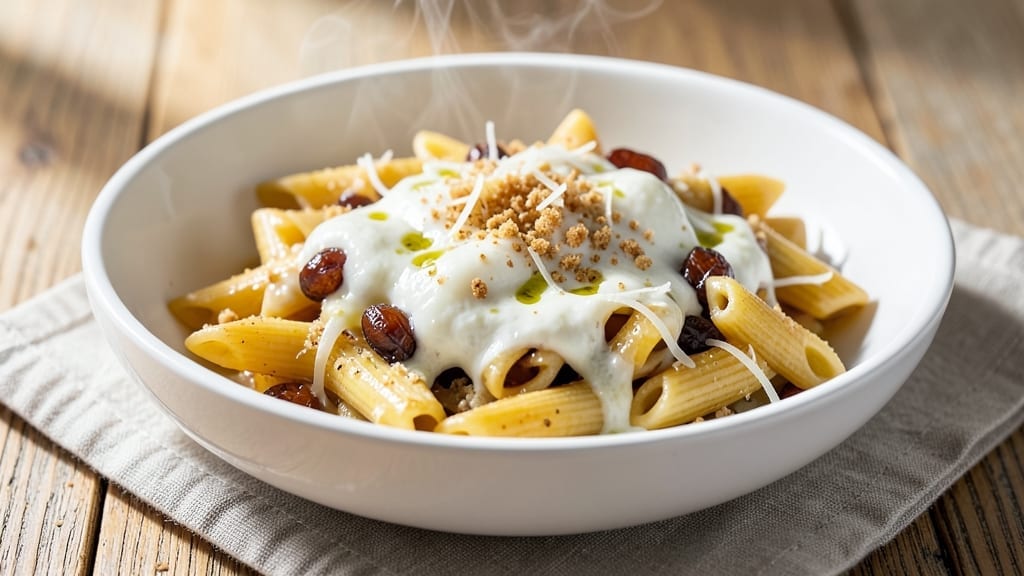
This 5 cheese penne pasta recipe delivers the ultimate comfort food experience with nutty Parmesan and creamy ricotta layers that transform ordinary weeknight dinners into restaurant-worthy meals. The secret lies in balancing five distinct cheeses—each contributing its own texture and flavor—while maintaining a perfectly al dente pasta base.
I’ve perfected this technique over years of testing, ensuring every bite delivers that ideal harmony of creaminess and depth. The foundation begins with high-quality penne tossed in a rich, velvety sauce where Parmesan provides the nutty backbone, ricotta adds luxurious creaminess, and sharp cheddar brings a tangy kick.
Gruyère melts into delicate strands, while Gorgonzola introduces subtle blue cheese complexity that ties everything together. The result is a dish that’s both indulgent and balanced—creamy without being heavy, rich without being overwhelming.
What sets this recipe apart is the layering technique: first building the sauce with aromatic garlic and shallots, then incorporating cheeses in stages to prevent clumping. The final touch? A sprinkle of fresh parsley and a drizzle of olive oil that elevates each forkful.
This isn’t just pasta—it’s a complete, satisfying meal that comes together in under 30 minutes with minimal effort. The beauty of this recipe is its versatility. Serve it as a main course for a family dinner or as an impressive centerpiece for gatherings.
The cheeses can be adjusted based on preference, and the technique works equally well with other pasta shapes. Let’s get cooking!
Ingredients for 5 cheese penne pasta
High-quality penne and five distinct cheeses create a velvety, restaurant-worthy pasta experience.
| Ingredient | Amount | Notes |
|---|---|---|
| Penne Pasta 🍝 | 12 oz | High-quality, al dente preferred |
| Extra-Virgin Olive Oil 🫒 | ½ cup | For sautéing, fruity variety |
| Shallots 🧅 | 2 whole | Minced, for aromatic base |
| Garlic Cloves 🧄 | 4 cloves | Minced, fresh preferred |
| Parmesan Cheese 🧀 | 1 cup | Freshly grated, block preferred |
| Ricotta Cheese 🧀 | 1 cup | Full-fat for creaminess |
| Sharp White Cheddar Cheese 🧀 | ¾ cup | Shredded, tangy variety |
| Gruyère Cheese 🧀 | ½ cup | Shredded, nutty flavor |
| Gorgonzola Cheese 🧀 | ¼ cup | Crumbled, mild blue cheese |
| Heavy Cream 🥛 | ½ cup | Full-fat for richness |
| Fresh Parsley 🌿 | ¼ cup | Chopped, for garnish |
| Salt 🧂 | 1 ½ tsp | Diamond Crystal preferred |
| Black Pepper 🌶️ | ½ tsp | Freshly ground preferred |
| Nutmeg 🌿 | ¼ tsp | Freshly grated for warmth |
The cheeses are the heart of this dish, so quality matters. Parmesan should be freshly grated from a block—pre-grated gets clumpy. For ricotta, full-fat is non-negotiable; it melts beautifully into the sauce. Gruyère and Gorgonzola can be found at specialty cheese shops or the gourmet section of most grocery stores. The Gruyère should have a nutty aroma, while the Gorgonzola should be mild and crumbly, not overly sharp. Penne should be high-quality—look for brands like De Cecco or Barilla for consistent texture. The shallots and garlic are best when fresh, so check their vibrant color before purchasing.
No ricotta? Cream cheese blended with a splash of milk works in a pinch, though it won’t be as creamy. Substituting cheddar? Pepper Jack adds a mild kick. If Gruyère is unavailable, Comté offers a similar nutty profile. For Gorgonzola, blue cheese crumbles can replace it, though the flavor will differ slightly. The heavy cream can be swapped for half-and-half if needed, though the sauce will be slightly lighter. Fresh herbs are ideal, but dried parsley at one-third the amount works if fresh isn’t available. Always taste as you go—adjust salt and pepper to balance the cheeses.
Store any unused cheese in airtight containers in the fridge for up to 1 week, except Parmesan, which lasts 3 months when wrapped tightly. The cooked pasta reheats well, but the sauce is best made fresh—it thickens beautifully when reheated with a splash of milk or water. For meal prep, cook the pasta al dente, toss it with a light drizzle of olive oil to prevent sticking, and store it separately from the sauce. Reheat the sauce first, then combine with pasta just before serving to maintain texture. This dish freezes well for 3 months, though the texture may change slightly upon thawing.
Why You’ll Love This Recipe
- One-Pot Magic: I swear by this recipe when I’m too tired to scrub pots—just toss everything in one skillet, stir, and walk away. The penne soaks up that shallot-garlic oil like a dream, and the cheeses melt right into the sauce without extra effort.
- Umami Bomb: That slow caramelized shallot base? Chef’s kiss. Add the five cheeses—creamy ricotta, sharp pecorino, nutty parmesan—and suddenly you’ve got layers of flavor that taste like you spent hours simmering. (Spoiler: You didn’t.)
- Lunchbox Hero: Between us, this is my go-to for meal prep—cool it down, pack it in containers, and boom, you’ve got a satisfying lunch for three days. The pasta holds its shape, the sauce clings, and honestly? No one skips their second serving.
- Budget Stretch: Five cheeses sound fancy, but I use what’s on sale—mozzarella, provolone, a little gouda—and it still tastes like a restaurant dish. Plus, a big batch feeds four for under $10. Leftovers? Even better reheated the next day.
Step-by-step instructions for 5 cheese penne pasta
This method delivers layers of nutty Gruyère, creamy ricotta, and sharp cheddar in perfect harmony.
Cook the Pasta Al Dente
Bring a large pot of water to a rolling boil and add 1.5 teaspoons of salt—it should taste like the sea. Add the 12 oz penne pasta and cook until 1 minute shy of package directions for al dente texture. The pasta should have a slight bite when bitten—this prevents mushiness when mixed with the cheese sauce.
Reserve 1 cup of pasta water before draining. This starchy liquid is essential for emulsifying the cheese sauce later. I keep a measuring cup nearby to ensure I don’t forget this crucial step—trust me, it makes all the difference in the final consistency.
Sauté Shallots and Garlic
While the pasta cooks, heat 0.5 cup extra-virgin olive oil in a large skillet over medium heat. Add the 2 minced shallots and cook for 3-4 minutes until softened and translucent. This step builds the aromatic base for the dish—don’t rush it or the flavors will be flat.
Add the 4 minced garlic cloves and cook for 30 seconds until fragrant but not browned. Garlic burns quickly, so keep a close eye on it. Remove the skillet from heat and set aside—we’ll return to it after the pasta is cooked.
Create the Cheese Sauce
In a separate saucepan, combine the 1 cup ricotta cheese, 0.5 cup heavy cream, 0.75 cup sharp white cheddar, 0.5 cup Gruyère cheese, 0.25 cup gorgonzola cheese, 0.25 teaspoon nutmeg, 0.5 teaspoon black pepper, and 0.5 teaspoon salt. Cook over low heat for 3-4 minutes, stirring constantly until the mixture is smooth and creamy.
Here’s the thing—ricotta is delicate, so low heat prevents curdling. If the sauce starts to separate, whisk vigorously to re-emulsify. The gorgonzola will add subtle tanginess, while the nutmeg brings warm depth to balance the richness.
Combine Pasta and Sauce
Add the drained pasta to the skillet with the shallots and garlic. Pour in the cheese sauce and toss vigorously to coat every strand. If the sauce looks too thick, add pasta water 1 tablespoon at a time until it reaches a velvety consistency that clings to the pasta without being watery.
I like to work quickly here—each toss should be energetic to distribute the sauce evenly. The pasta should be completely coated in the creamy cheese mixture with no dry spots. If you notice any lumps of cheese, press them through a fine-mesh sieve to achieve that restaurant-quality smoothness.
Finish and Garnish
Return the skillet to low heat and stir in the 1 cup freshly grated Parmesan cheese until melted and fully incorporated. Taste and adjust seasoning with additional salt or black pepper if needed. The sauce should be rich but not overpowering—each bite should showcase the complex interplay of cheeses.
Transfer to serving plates and garnish with 0.25 cup chopped fresh parsley. The parsley adds a bright contrast to the rich cheese flavors. Serve immediately while the pasta is hot and the sauce is at its peak creaminess. This dish tastes best straight from the pan when the cheeses are at their most luxurious.
Pro Tips For Making 5 Cheese Penne Pasta
- Cook shallots slow: I learned this the hard way—chopping shallots too fine and letting them fry fast turns them bitter. Instead, slice them into thin half-moons, then cook them on medium-low heat until they’re golden and soft (about 5-6 minutes). They’ll caramelize just enough to add depth without overpowering the cheese.
- Toast garlic gently: Garlic burns faster than you think, especially when you’re distracted. Add the minced cloves to the pan after the shallots have softened, and keep the heat at a whisper. You want them fragrant, not brown—pull them out when they smell like heaven, not like a campfire.
- Salt pasta water aggressively: The water should taste like the ocean when you dip a raw penne in—no shame in using a full teaspoon of salt per quart. Under-salted pasta water means bland sauce, and no amount of Parmesan shavings will fix it. Taste it; if you flinch, add more.
- Stir cheese in last: I used to dump all five cheeses in at once, thinking it’d melt faster. Wrong. Instead, finish the sauce with just olive oil and a splash of pasta water, then fold in the cheeses one by one—start with the harder ones (Parmesan, Pecorino) and finish with the creamier (Mozzarella, Gorgonzola, whatever fifth you’re using). This keeps the texture velvety, not gloppy.
Perfect pairings for these flavors
Creamy Sauce Pairings
This rich, five-cheese sauce pairs beautifully with balsamic reduction—simmer ¼ cup balsamic vinegar with 1 tbsp brown sugar until syrupy, then drizzle over the pasta.
The tangy-sweet contrast cuts through the richness perfectly. I also love adding a spoonful of crispy pancetta on top for extra texture and salty depth. 🌟
Protein Additions
For a heartier meal, toss in grilled chicken breast or sautéed shrimp just before serving. The protein absorbs the cheese sauce beautifully while adding a satisfying bite.
I recommend 6 oz chicken breast or ½ lb shrimp, seasoned with 1 tsp smoked paprika and ½ tsp garlic powder before cooking. 🍗
Vegetable Sides
A simple garlic roasted broccoli or sautéed spinach balances the richness of the cheese sauce. Toss 4 cups broccoli florets with 1 tbsp olive oil, 2 minced garlic cloves, and ½ tsp red pepper flakes, then roast at 425°F for 15 minutes.
The charred edges complement the creamy pasta beautifully. 🥦
Breadsticks & Dips
Serve with warm garlic breadsticks or crusty Italian bread for dipping. For extra indulgence, prepare a quick white bean dip by blending 1 can white beans, 2 tbsp olive oil, 1 minced garlic clove, and ½ tsp lemon zest.
The earthy beans contrast the cheesy pasta wonderfully. 🍞
Wine & Beverage Pairings
A crisp Italian Pinot Grigio or Chardonnay enhances the dish’s creamy, nutty flavors. For beer lovers, a Belgian witbier like Hoegaarden adds a refreshing citrus note. Avoid heavy reds—they’ll overpower the delicate cheese balance. Sparkling water with lemon also cleanses the palate between bites. 🍷
Dessert Pairings
End the meal with something light to balance the richness, like lemon sorbet or dark chocolate-dipped strawberries. The bright acidity of sorbet refreshes your palate, while the bitterness of dark chocolate complements the cheesy flavors. A simple panna cotta with berry compote also works beautifully. 🍓
Nutrition facts
Frequently asked questions
Can I make this 5 cheese pasta dish ahead of time?
Cook the pasta al dente and toss it with a light drizzle of olive oil to prevent sticking. Store it separately from the cheese sauce in airtight containers. Reheat the sauce first, then combine with pasta just before serving to maintain that creamy, velvety texture. The sauce reheats beautifully with a splash of milk or water if it thickens too much. This method keeps the pasta from becoming mushy while preserving the sauce’s richness.
What if I don’t have all five cheeses?
No problem! You can substitute with similar cheeses: Pepper Jack for cheddar, Comté for Gruyère, or blue cheese crumbles for Gorgonzola. For ricotta, blend cream cheese with a splash of milk (though it won’t be as creamy). The key is maintaining a balance of textures—creamy, sharp, and nutty. Always taste as you go and adjust seasoning accordingly.
Why does my cheese sauce get grainy?
Grainy sauce usually happens from overheating or not enough liquid. Keep the heat low when melting cheeses and stir constantly. If the sauce separates, whisk vigorously or press lumps through a fine-mesh sieve. Always add pasta water 1 tablespoon at a time to thin the sauce gradually—this keeps it silky smooth. The ricotta is especially delicate, so handle it gently.
How can I make this dish lighter?
Use whole wheat penne for extra fiber, reduce heavy cream to ¼ cup, and swap ricotta for low-fat cottage cheese blended smooth. Add roasted vegetables like zucchini or bell peppers to bulk up the dish without extra calories. The sauce will still be rich but more balanced. For extra protein, add grilled shrimp or chicken breast.
What’s the secret to perfectly al dente pasta?
Cook pasta in well-salted boiling water and start testing 1 minute before the package’s suggested time. The pasta should have a slight bite—if you bite into it and it feels firm but tender, it’s perfect. Never overcook! Drain immediately and reserve 1 cup pasta water—this starchy liquid is essential for creating a smooth sauce. The water helps emulsify the cheese mixture for that velvety finish.

- 5 Cheese Penne Pasta Recipe: Nutty Parmesan and Creamy Ricotta Layers - September 26, 2026
- 25 Lb Pizza Dough Recipe: No-Knead Monster for Crowds - September 26, 2026
- 7 Layer Mexican Dip Recipe With Cream Cheese: Bold Flavors Stacked for Crowd-Pleasing Crunch - September 26, 2026