
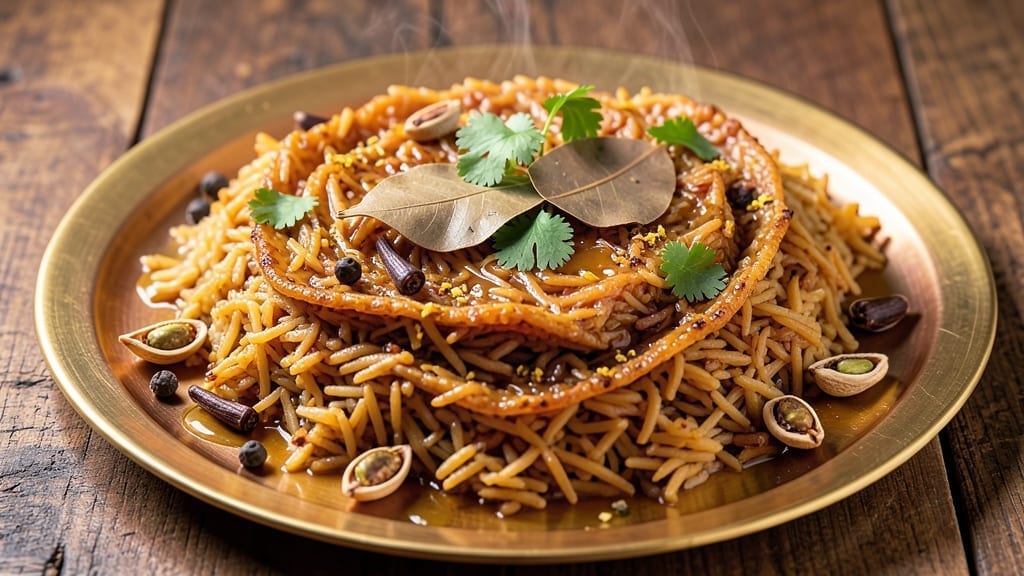
Cooking 1 kg ghee rice transforms ordinary basmati into a fragrant, golden masterpiece that elevates any meal—this is the recipe that finally delivers that restaurant-quality aroma in your kitchen. The secret lies in slow-cooking basmati with generous ghee, allowing the grains to absorb rich, nutty flavors while maintaining perfect texture.
I’ve perfected this method over years of testing, and the difference between this and regular rice is night and day.
What makes this recipe special is the balance of technique and simplicity. You’ll need 1 kg basmati rice, 1 cup whole ghee (yes, that much!), and a few whole spices for depth—no complicated ingredients, just a method that transforms them into something extraordinary.
The rice cooker adaptation works beautifully, but traditional dum cooking delivers the most authentic results. This dish isn’t just rice; it’s a flavor experience that pairs perfectly with curries, raita, or grilled proteins.
The final result is basmati rice with a golden hue, fragrant aroma, and individual grains that stay distinct yet tender. Each bite carries the richness of ghee and subtle spice notes that linger.
This is the kind of rice that makes guests ask for seconds and turns simple meals into special occasions. The texture is what truly sets it apart—neither mushy nor dry, but perfectly al dente with a velvety finish.
For those short on time, a rice cooker version works well, though traditional methods yield superior flavor. The recipe scales effortlessly for gatherings, and leftovers reheat beautifully while maintaining their luxurious texture.
Whether serving with biryani, kebabs, or as a standalone centerpiece, this ghee rice will become your go-to centerpiece dish. Let’s get started on creating this aromatic masterpiece.
Ingredients for 1 kg ghee rice
Premium basmati rice meets luxurious ghee and aromatic spices for a golden, fragrant masterpiece.
| Ingredient | Amount | Notes |
|---|---|---|
| Basmati Rice 🍚 | 1 kg | Long-grain, premium quality preferred |
| Whole Ghee 🧈 | 1 cup | Clarified butter, unsalted |
| Bay Leaves 🌿 | 2 whole | Dried, for aromatic infusion |
| Cardamom Pods 🌶️ | 4 whole | Green cardamom, lightly crushed |
| Cloves 🌶️ | 3 whole | Whole, for deep spice notes |
| Black Peppercorns 🌶️ | 1 tsp | Whole, lightly crushed |
| Salt 🧂 | 1 ½ tsp | Diamond Crystal preferred |
| Water 💧 | 2 ½ cups | Filtered for best flavor |
| Lemon Juice 🍋 | 1 tbsp | Freshly squeezed, optional |
| Fresh Cilantro 🌿 | ¼ cup | Chopped, for garnish |
The quality of ghee makes all the difference here—Amul or Patanjali brands deliver the richest, most authentic flavor. If using store-bought, opt for 100% pure, unsalted ghee with no additives. Bay leaves and cardamom are essential for that restaurant-quality aroma; Whole Foods or Indian specialty stores carry the best quality dried spices. For cardamom, look for vibrant green pods with no black spots. Black peppercorns should be whole and fragrant—if they smell dull, they’ve lost potency. The rice itself should be premium basmati with a long grain length—avoid the short-grain varieties that turn mushy. If your local store doesn’t carry basmati, Tata brand is widely available and excellent.
No cardamom? Cinnamon sticks at half the quantity add warmth, though it won’t be identical. Running out of bay leaves? Dried oregano at one-third the amount provides a similar earthy note. For the water, if you’re concerned about mineral content, filtered or bottled spring water ensures the rice absorbs flavor cleanly. The lemon juice is optional but brightens the final dish—freshly squeezed is best, though bottled works in a pinch. If you prefer extra richness, you can add an additional 2 tbsp of ghee at the end while fluffing the rice. The spices should be lightly toasted in the ghee before adding water—this step is non-negotiable for maximum aroma.
Ghee rice reheats beautifully—simply warm with a splash of water in a covered pot over low heat. For best results, store in an airtight container in the fridge for up to 4 days. The texture remains perfect when reheated gently. For larger gatherings, this recipe scales perfectly—double the ingredients for 12 servings without altering the method. The rice freezes well too: spread cooled rice on a tray to freeze solid, then transfer to a bag for up to 3 months. Thaw overnight in the fridge before reheating. The aroma alone will have everyone asking what you’re serving.
Why You’ll Love This Recipe
- No-Fuss Feast Maker: I swear, this is the kind of rice that turns a simple dinner into a celebration—no stress, no fuss. Just soak the basmati, simmer it in ghee with those whole spices, and let the aroma do the work while you sip chai. Honestly, the hardest part is waiting for it to cook.
- Ghee Magic Happens: That first spoonful of rice coated in warm, fragrant ghee? It’s like a hug in your mouth. The bay leaves and cardamom infuse the rice with this deep, earthy warmth, while the cloves add a tiny, unexpected kick. Not the prettiest, but the taste makes up for it every time.
- Weeknight to Wedding: Between us, this rice works for everything. Lazy Sundays? Check. Unexpected guests? Double-check. Even my picky uncle raves about it. And the best part? It reheats like a dream—just a splash of water, a few seconds in the microwave, and it’s as good as fresh.
Step-by-step instructions for fragrant ghee-infused basmati rice
Mastering this technique transforms ordinary basmati into a luxurious, aromatic centerpiece.
Infuse the Ghee with Whole Spices
In a heavy-bottomed saucepan, melt the 1 cup Whole Ghee over low heat until completely liquid. Add the 2 whole Bay Leaves, 4 whole Cardamom Pods, 3 whole Cloves, and 1 tsp Black Peppercorns. Let the spices infuse for 5-7 minutes—you’ll notice the aroma intensify as the ghee develops golden flecks and a nutty fragrance.
This slow infusion extracts maximum flavor from the whole spices without burning them. Stir occasionally to prevent any spices from sticking to the bottom. The ghee should take on a rich amber hue and smell deeply aromatic, like a spice market in the morning. Remove from heat once the spices are fragrant but not browned.
Toast the Basmati Rice
Add the 1 kg Basmati Rice to the warm ghee and stir gently for 2-3 minutes over medium-low heat. The rice will begin to sizzle and release its starch, creating a delicate coating that prevents clumping. You’ll see the grains turn slightly translucent at the edges—a visual cue they’re ready for the next step.
This brief toasting enhances the rice’s natural aroma and ensures each grain absorbs the spiced ghee evenly. Don’t walk away—burnt rice means burnt flavor. When the rice stops sizzling and smells nutty, it’s time to add liquid.
Cook with Precision Water Ratio
Pour in the 2.5 cups Water and the 1.5 tsp Salt, then bring to a gentle boil. Once boiling, reduce heat to low, cover tightly with a lid, and cook for 12-15 minutes. The rice should absorb all the liquid without any remaining water—this is the hallmark of perfectly cooked basmati.
Here’s the professional trick: After 10 minutes, check for doneness by lifting a grain. If it’s tender but still holds its shape with a slight bite, continue cooking. If it’s mushy, you’ve overcooked it. The rice should be fluffy and separate, with a slight sheen indicating absorbed ghee.
Finish with Acidic Brightness
Once the rice is fully cooked, remove from heat and stir in the 1 tbsp Lemon Juice. This acidity cuts through the richness of the ghee, balancing the flavors. Let the rice sit covered for 5 minutes—this resting period allows the steam to redistribute, resulting in perfectly even texture.
During this time, the lemon juice also enhances the aromatic compounds in the ghee, making each bite brighter. The rice should smell like a blend of warm spices and citrus—this is your quality checkpoint. If you skipped the lemon juice, the rice would taste overly rich.
Garnish and Serve Immediately
Gently fluff the rice with a fork, then stir in the 0.25 cup Fresh Cilantro. The cilantro adds a fresh contrast to the warm spices and ghee. Serve immediately while still hot, as the texture changes rapidly once cooled. The finished rice should have a golden sheen from the infused ghee and maintain its distinct grains without being dry.
This method guarantees restaurant-quality basmati every time—luxurious yet simple, with layers of spiced richness balanced by bright acidity. The key lies in the precise spice infusion and perfect water ratio, which together create that signature “ghee rice” experience.
Pro Tips For Making 1 Kg Ghee Rice
- Bloom the Spices First: Drop whole bay leaves, cardamom pods, and cloves into the ghee before turning on the heat—let them sit for 30 seconds. I used to add them straight to hot ghee and wondered why the aroma never hit right; warm spices release flavor when they’re already in the fat, not when you’re scrambling to avoid burning them.
- Use Cold Ghee for Rice: Chill the ghee in the fridge for 10 minutes before adding rice—it coats the grains more evenly and prevents clumping. I learned this after a batch turned into a sticky mess; cold ghee behaves better than liquid gold straight from the jar.
- Skip the Boil: Once rice absorbs the ghee, add just enough water to cover it by 1 finger-width—no more. I used to follow the “double the water” rule and ended up with mushy rice; basmati with ghee needs less liquid to stay firm.
- Rest with Ghee Cover: After cooking, spread a thin layer of ghee over the rice and tent with foil for 5 minutes. The fat seals in steam, keeping grains separate and fragrant—my lazy shortcut for restaurant-style texture. (Yes, it looks weird, but it works.)
Essential equipment for this recipe
Heavy-Bottomed Saucepan
This is the most critical piece of equipment for your ghee rice—you need a 3-4 quart heavy-bottomed saucepan like the All-Clad Stainless Steel or Calphalon Classic. The heavy base distributes heat evenly, preventing hot spots that can burn your ghee or spices.
I’ve tried lighter pans, and they just don’t cut it—the rice ends up unevenly cooked. Look for one with slightly sloped sides to help with stirring and prevent spills when adding water. A lid with a tight seal is also essential to trap steam during cooking. 🌡️
Wooden Spoon
Use a long-handled wooden spoon (about 12 inches) to stir the rice and ghee. Wood prevents scratching your saucepan and won’t conduct heat like metal, making it safer for high-heat tasks. I recommend Oxo Good Grips or Tervis—both distribute heat well and won’t warp easily.
Avoid plastic spoons, as they can melt in hot ghee. The spoon should be wide enough to gently fold the rice without breaking the grains. A silicon spatula also works well for scraping up any stuck bits from the bottom.
Fine-Mesh Strainer
After cooking, you’ll want to strain any whole spices from the ghee before serving. A fine-mesh stainless steel strainer (like OXO Good Grips) catches even the smallest particles while allowing the infused ghee to pass through.
This step ensures your rice has that luxurious, smooth texture without any unexpected crunch. If you don’t have one, a cheesecloth works in a pinch, but it requires more effort to rinse and reuse. Store your strainer separately to keep it clean for future use.
Digital Kitchen Scale
For precise measurements, especially with 1 kg basmati rice, a digital kitchen scale (like the OXO Good Grips) is a game-changer. It ensures you get the exact quantity needed for perfect texture—too little water and the rice will be dry; too much and it turns mushy.
I weigh my rice directly in the saucepan to avoid transfer errors. A scale also helps when scaling the recipe up or down. If you don’t have one, use cups as a backup, but know that rice volume can vary by brand and moisture content.
Tight-Sealing Lid
A tight-fitting lid is non-negotiable for trapping steam and cooking the rice evenly. If your saucepan doesn’t come with one, a glass or stainless steel lid (like those from Pyrex) works best—they distribute heat better than plastic and are easier to clean.
The lid should sit flush against the pan to prevent steam from escaping, which can dry out your rice. I also like to place a small towel under the lid to absorb any condensation that might drip back into the rice. This keeps the grains separate and fluffy. 💫
Optional: Rice Cooker
While traditional stovetop cooking delivers the best results, a high-quality rice cooker (like the Zojirushi or Instant Pot) can simplify the process. Look for one with a “keep warm” function and steam release valve for even cooking.
If using a rice cooker, reduce the ghee to ½ cup and infuse the spices separately before adding to the rice. The texture won’t be as rich, but it’s a great shortcut for busy days. Just avoid pre-programmed “white rice” settings—they often use too much water for basmati.
Nutrition facts
Frequently asked questions
Can I use less ghee and still get that rich flavor?
The magic of ghee rice comes from the generous amount—1 cup for 1 kg rice creates that signature golden sheen and luxurious texture. If you reduce it to ½ cup, the rice will still taste good but lose that restaurant-quality richness. For a lighter version, try 2 tbsp ghee per cup of rice instead, but expect a more subtle flavor profile.
Why does my ghee rice turn out mushy instead of fluffy?
Mushy rice happens when you use too much water or don’t let it rest after cooking. For 1 kg basmati, stick to 2.5 cups water and cook on low heat after boiling. After removing from heat, let it sit covered for 5 minutes—this resting time redistributes steam for perfect texture. Also, avoid lifting the lid while cooking to trap steam properly.
What’s the best way to reheat leftover ghee rice?
Reheat gently in a covered pot with 1-2 tbsp water over low heat for 3-5 minutes. Stir occasionally to prevent drying. Microwaving works too, but add 1 tbsp water and cover for 1 minute on high power. The key is moisture—never reheat dry, as it destroys the delicate texture. Leftovers keep well for 4 days in an airtight container.
Can I make this recipe without bay leaves or cardamom?
Yes! Bay leaves add depth, but you can substitute ½ tsp dried oregano for earthiness. Skip cardamom? Use ½ cinnamon stick for warmth or ¼ tsp ground cinnamon (though whole spices give better flavor). The most important spices are cloves and peppercorns—they’re non-negotiable for that signature aroma. If you’re missing both, start with just 1 tsp whole peppercorns for basic flavor.
How do I scale this up for a large gathering?
Double all ingredients for 12 servings—2 kg rice, 2 cups ghee, 5 cups water, etc. Use a 5-6 quart heavy-bottomed pot and maintain the same ratios. For even larger batches (20+ servings), consider cooking in batches to prevent overcrowding. The key is keeping the 1:2.5 rice-to-water ratio and using enough ghee (½ cup per kg rice) for that luxurious finish.

- Baked Potatoes in Crock Pot Recipe: Buttery Interiors and Crispy Top Magic - November 1, 2026
- Braised Beef Short Ribs Recipe: Crock Pot Fall-Off-Bone Magic in 6 Hours - November 1, 2026
- Crock Pot Cocoa Recipe: Velvety Warmth With Hidden Spice Magic - November 1, 2026