
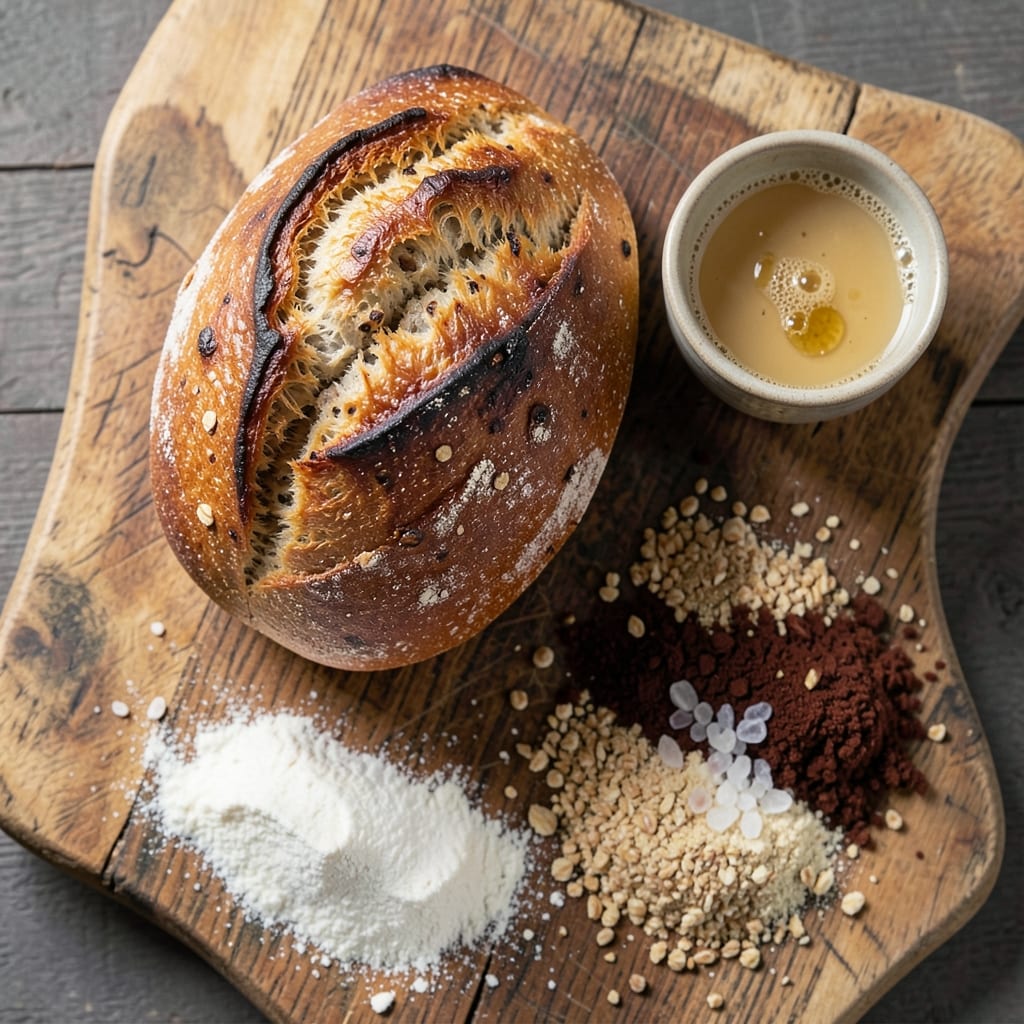
This 1-loaf whole wheat bread recipe delivers a nutty, hearty loaf with a crisp crust and tender crumb—all with no-knead ease. The secret lies in a slow fermentation that develops deep flavor and a light, airy texture without requiring expert technique.
After years of perfecting this method, I’ve finally cracked the code for a foolproof whole wheat loaf that’s as satisfying as it is simple. What sets this recipe apart is the balanced approach to whole wheat flour, which can often yield dense bread.
Here, we use a combination of bread flour and whole wheat to achieve the perfect structure—crispy crust, open crumb, and just the right amount of nutty depth. The dough rests overnight, allowing gluten to relax and flavors to meld naturally, so you wake up to a ready-to-bake loaf.
By the time it emerges from the oven, your bread will have a golden, crackling crust and a soft, slightly chewy interior with pockets of air. The aroma alone—toasted, earthy, and inviting—will make your kitchen feel like a bakery.
This loaf freezes beautifully, too, so you can bake fresh whenever you need it. For extra texture, add seeds or herbs to the dough before shaping—think sunflower, sesame, or rosemary. Let’s get started on this restaurant-quality loaf that’s perfect for sandwiches, toast, or serving alongside soups.
Ingredients for 1 loaf whole wheat bread
Pantry staples plus two flours—bread flour for structure, whole wheat for nutty depth.
| Ingredient | Amount | Notes |
|---|---|---|
| Bread Flour 🌾 | 3 cups | High-protein for structure |
| Whole Wheat Flour 🌾 | 2 cups | Unbleached for nutty flavor |
| Active Dry Yeast 🍞 | ¼ oz | Or 2 1/4 tsp (1 packet) |
| Warm Water 💧 | 1 ½ cups | 110°F for ideal yeast activation |
| Granulated Sugar 🍚 | 1 tbsp | Feeds yeast for fermentation |
| Salt 🧂 | 2 tsp | Diamond Crystal preferred |
| Olive Oil 🫒 | 2 tbsp | Extra-virgin for richness |
| Sunflower Seeds 🌻 | ¼ cup | Optional for texture (toasted) |
| Sesame Seeds 🌿 | ¼ cup | Optional for texture (toasted) |
| Rosemary Sprigs 🌿 | 2 whole | Fresh, for aromatic crust |
| Cornmeal 🌽 | ½ cup | For dusting loaf pan |
| Ice Water ❄️ | ½ cup | For shaping final dough |
The flour blend is everything. King Arthur bread flour gives that perfect open crumb, while Bob’s Red Mill whole wheat delivers the nutty flavor without density. If you can only find one type of whole wheat flour, unbleached is non-negotiable—bleached loses that toasty aroma. For yeast, FreshPuff active dry yeast is my go-to, but any packet will work. The warm water should feel like bathwater—not too hot, not too cold. If your kitchen runs cool, let it sit for 5 minutes to reach that 110°F sweet spot.
No sunflower seeds? Pumpkin seeds or flaxseeds work just as well—just toast them first in a dry pan for 3-4 minutes until fragrant. Short on rosemary? Thyme or oregano add a different but equally lovely aroma. The cornmeal is key for that classic bread texture—don’t skip it. And if you’re worried about the dough sticking, lightly grease the pan too. For the ice water, use actual ice cubes melting in a bowl—cold water straight from the tap can shock the dough.
This dough is a 24-hour project, but it’s worth it. Shape it loosely into a ball, cover with a damp towel, and let it ferment at room temperature. The next day, the dough will nearly double in size—that’s perfect. For storage, wrap the cooled loaf in a clean kitchen towel and keep it in a paper bag at room temperature for 3 days. Freezes beautifully too—up to 3 months—just thaw overnight on the counter. The crust stays crispy even after reheating, so slice and toast to revive it.
Why You’ll Love This Recipe
- No-Knead Magic: I swear by this method—just mix the whole wheat flour with bread flour, sprinkle in yeast and sugar, then let it rise while I sip coffee. No stand mixer, no stress, just hands-on time that’s actually relaxing.
- Nutty Depth: That combo of whole wheat and bread flour gives it a satisfying chew and a subtle sweetness from the granulated sugar. Honestly? It tastes like a bakery loaf, but with none of the guilt.
- Weeknight Workhorse: Toss it in the freezer for sandwiches later or serve it warm with soup. I’ve used it for toast, garlic bread, even French toast—it’s the one loaf that does it all without extra effort.
- Budget-Friendly Staple: Five ingredients, zero specialty items. The yeast stretches a little flour far, and a single loaf lasts me days. Between us, this is how I feed my family well without breaking the bank.
Step-by-step instructions for no-knead whole wheat bread
Let’s make this nutty, hearty loaf with minimal effort but maximum flavor—no kneading required.
Activate the Yeast and Mix the Dough
In a large mixing bowl, combine the 1.5 cups warm water (around 110°F) with the 1 tbsp granulated sugar and 0.25 oz active dry yeast. Let this sit for 5-10 minutes until the mixture becomes frothy and bubbly—this confirms the yeast is alive and ready to work. If it doesn’t bubble, your yeast may be dead, and you’ll need to start over.
Next, add the 3 cups bread flour, 2 cups whole wheat flour, and 2 tsp salt to the bowl. Stir with a wooden spoon or silicone spatula until a shaggy dough forms. The whole wheat flour will make this dough stickier than all-purpose, so don’t worry if it feels messy. Once combined, drizzle in the 2 tbsp olive oil and mix until fully incorporated. The dough should be soft but not wet—if it’s too sticky, add 1 tablespoon of bread flour at a time until it pulls away from the sides of the bowl.
Toast the Seeds and Infuse the Dough
While the dough rests, toast the 0.25 cup sunflower seeds and 0.25 cup sesame seeds in a dry skillet over medium heat for 3-4 minutes, stirring constantly, until they turn golden and fragrant. This step enhances their nutty flavor and prevents them from becoming bitter. Let them cool completely before adding them to the dough.
In a small bowl, gently tear the 2 whole rosemary sprigs into smaller pieces (no need to chop finely—they’ll infuse flavor as they bake). Add the toasted seeds and rosemary to the dough along with the 0.5 cup ice water. Mix everything together until the seeds and herbs are evenly distributed. The ice water will firm up the dough slightly, making it easier to handle later.
Let the Dough Rise Overnight
Cover the bowl with a damp kitchen towel or plastic wrap and let the dough rise at room temperature for 12-16 hours. This slow rise allows the whole wheat flour to fully hydrate and develop deep flavor. The dough should nearly double in size and look puffy with small bubbles on the surface. If your kitchen is cold, place the bowl in a slightly warm spot (like near the oven with the light on) to encourage fermentation.
Here’s the thing—don’t rush this step. The longer the rise, the better the flavor. If you forget to start it in the evening, you can even let it rise overnight in the fridge for up to 24 hours, though it may take a bit longer to fully proof. The cold slows fermentation, which can actually improve the bread’s texture and taste.
Shape and Second Rise
Lightly flour a clean surface with bread flour and turn out the dough. Gently fold the dough over itself a few times to release any large air pockets, then shape it into a loose round loaf. Place it seam-side up in a 9×5-inch loaf pan that’s been lightly dusted with 0.5 cup cornmeal (this prevents sticking and adds a subtle crunch). Cover the pan with a damp towel and let the dough rise for another 1-2 hours, or until it’s puffy and just about fills the pan.
For an extra-crispy crust, preheat your oven to 450°F while the dough rises. If you’re short on time, you can skip the second rise and bake immediately, but the flavor won’t be as developed. The dough is ready when it springs back slowly when poked with a finger—this means it’s properly proofed and ready for the oven.
Bake to Golden Perfection
Once the dough has risen, place the loaf pan in the preheated oven and bake for 30-35 minutes, until the top is deep golden brown and sounds hollow when tapped on the bottom. The internal temperature should reach 190-200°F when checked with an instant-read thermometer. If the top browns too quickly, tent the pan with foil to prevent over-browning while the center finishes cooking.
Remove the bread from the oven and let it cool in the pan for 10 minutes, then transfer it to a wire rack to cool completely. This resting period is crucial—it allows the bread to set and prevents a gummy texture. Once cooled, slice with a serrated knife for clean cuts. The crust should be crisp and aromatic, while the interior should be tender with a subtle sweetness from the whole wheat flour and a fragrant herbal note from the rosemary.
Pro Tips For Making 1 Loaf Whole Wheat Bread
- Bloom the Yeast First: Skip mixing dry yeast straight into the flour—it’s a rookie move. Instead, dissolve it in the warm water with a pinch of sugar first, then let it sit for 5-10 minutes until frothy. Whole wheat dough is dense enough to hide underactive yeast, and this step guarantees it’ll rise properly. (Yes, even if you’re impatient like me.)
- Mix Flours Separately: Whole wheat flour absorbs moisture like a sponge, while bread flour needs to hydrate evenly. Weigh them separately, then combine after mixing with water—this keeps the dough from turning into a sticky mess. I learned this the hard way after wrestling with dough that clung to my hands like glue.
- Don’t Over-Knead: Whole wheat dough is tougher than all-purpose, so it’s easy to overwork it. Stop when the dough springs back slowly when poked (about 8-10 minutes by hand). Over-kneading develops too much gluten, making the bread dense instead of light. Trust your fingers—you’ll feel the difference.
- Use a Dutch Oven: Whole wheat bread dries out faster than white bread, so steam is your friend. Place a metal bowl of boiling water in the oven before baking, then transfer the loaf into a hot Dutch oven. The trapped steam gives you a crisp crust without burning the top. (No Dutch oven? A heavy pot with a lid works too.)
Storing and reheating your leftovers
Room-Temp Storage
Wrap your cooled loaf in a clean kitchen towel or paper bag—this mimics a bakery environment by trapping moisture while allowing airflow. Store at room temperature for up to 3 days in a dark, dry place (like a bread box or countertop).
The crust stays crisp while the crumb remains soft, perfect for toast or sandwiches. I swear by this method for my morning routine—just slice and toast straight from the fridge. 💫
Fridge Preservation
For longer storage, slice the loaf and wrap individual portions in plastic wrap or parchment paper. Place in an airtight container with a paper towel to absorb excess moisture and keep it fresh for 5-7 days.
The whole wheat flavor actually deepens slightly in the fridge, making it ideal for meal prep. I often make a double batch on weekends and freeze half for later.
Freezer Magic
This bread freezes beautifully for up to 3 months with zero texture loss. Wrap the whole loaf tightly in plastic wrap, then place inside a freezer bag with all air squeezed out. Label with the date!
To revive, thaw overnight at room temperature or warm slices in a toaster or oven at 300°F for 5-7 minutes until crispy again. The seeds stay crunchy and the rosemary aroma intensifies after freezing. ✨
Reheating Secrets
For that fresh-from-oven experience, preheat your oven to 350°F and warm slices wrapped in aluminum foil for 8-10 minutes. The foil traps steam to revive moisture without drying out the crust.
Or, for quick toasts, use a toaster set to medium heat—just 1-2 minutes brings back that perfect crunch. Pro tip: Spritz slices with water before toasting for extra crispiness.
Crust Revival
If your bread’s crust loses its snap after storage, don’t toss it! Pop the whole loaf in a cold oven (turned on to 300°F) for 5 minutes to refresh the exterior.
The heat reactivates the starches, restoring that satisfying crackle. I do this with stale loaves all the time—it’s like giving bread a second life. 🔥
Slice Smart
Always use a serrated knife for clean cuts that minimize crumbling. For extra-crispy toast, slice the loaf thin (about ¼ inch) and toast immediately after baking. Store slices in a single layer in the freezer to prevent sticking—just separate them with parchment paper before freezing.
The thin slices make perfect crostini for dipping in olive oil and balsamic vinegar.
Nutrition facts
Frequently asked questions
Why does this recipe use both bread flour and whole wheat flour?
Bread flour provides the high protein (12-14%) needed for that perfect open crumb structure, while whole wheat adds nutty depth and fiber. The 3:2 ratio balances chewiness with tenderness—pure whole wheat often yields dense bread. Think of it as the architectural support meeting the flavor star!
Can I make this without a loaf pan?
Shape the dough into a boule (round) or batard (oval) and bake on a parchment-lined sheet. For extra crustiness, bake at 425°F for 20-25 minutes, then reduce to 375°F for 10-15 minutes to finish. Brush with water every 5 minutes for that bakery-style shine.
What if my dough doesn’t rise overnight?
Check your yeast first—it should bubble within 5-10 minutes in warm water. If the dough is flat, try these fixes: place the bowl in a warmer spot (like a turned-off oven with light on), cover tightly with plastic wrap, or let it rise 24 hours in the fridge. Cold slows fermentation but enhances flavor!
How do I know when the bread is fully baked?
Look for deep golden brown color and listen for a hollow sound when tapping the bottom. The internal temp should hit 190-200°F on an instant-read thermometer. If unsure, bake 5 more minutes—whole wheat bread continues cooking slightly after removal.
Can I substitute seeds or herbs?
Swap seeds for pumpkin, flax, or chia (toast first!). For herbs, try thyme, oregano, or basil—just use ½ tsp dried or 2 fresh sprigs**. Skip seeds? No problem—the recipe still delivers that perfect texture! The rosemary adds aroma, but it’s optional for a neutral flavor profile.

- 4 Ingredient Pignoli Cookie Recipe: Almond Joy Crunch in 15 Minutes - September 25, 2026
- 4-Ingredient Meatloaf Recipe No Bread: Moist and Savory Without a Single Crumb - September 25, 2026
- 3 Lb Potato Salad Recipe: Bold Mustard & Herb Crunch in One Bowl - September 25, 2026