
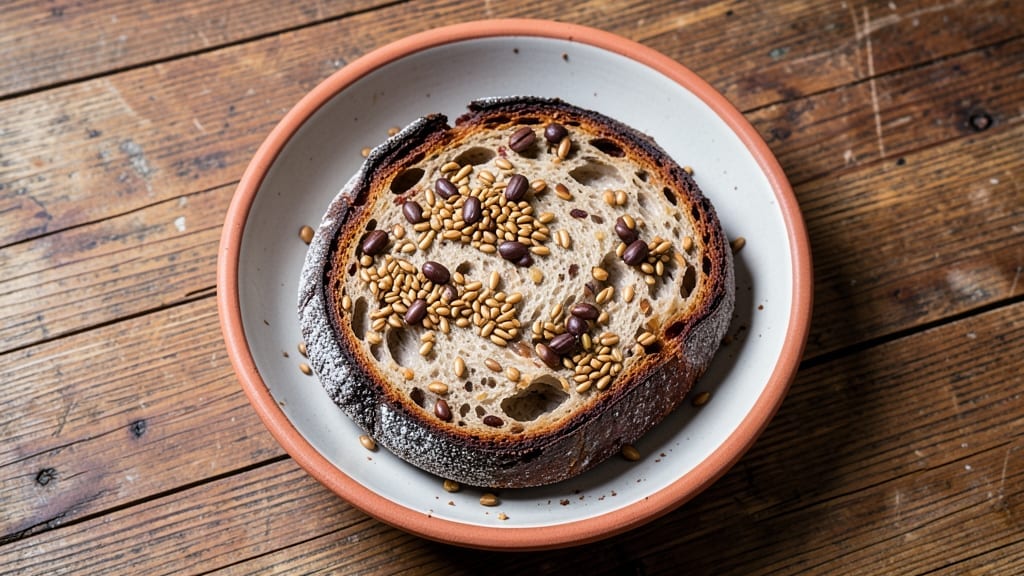
This 10-grain sourdough bread recipe transforms your kitchen into a bakery with its crusty crunch and nutty depth, all while harnessing the power of fermentation for unmatched flavor. The secret lies in blending whole grains like rye, barley, and spelt—not just for nutrition, but for texture and complexity.
I developed this recipe after years of experimenting with grain blends, and the results are a loaf that’s impossible to resist.
The beauty of this recipe is in its foolproof technique—no fancy equipment required, just time and patience. Each grain plays a role: rye adds chew, barley contributes sweetness, and whole wheat brings structure.
The sourdough starter ferments for 12 hours, developing tangy depth while breaking down phytic acid for easier digestion. This isn’t just bread; it’s a nutrient-dense masterpiece that elevates any meal.
By the final proof, your dough will be light, elastic, and ready for the oven, where it transforms into a loaf with a shatteringly crisp crust and a crumb so open it’s almost airy.
The aroma alone will have everyone gathering around the table. This recipe delivers restaurant-quality sourdough without the guesswork—perfect for feeding a crowd or gifting to neighbors who’ll be jealous of your baking skills.
Once baked, the bread’s nutty undertones and fermented richness make it ideal for sandwiches, toast, or simply enjoyed with butter. The grains stay chewy yet tender, never gummy or dense.
Whether you’re a seasoned baker or a beginner, this recipe builds confidence with every batch. Let’s get started on your first loaf—your kitchen will never be the same.
Ingredients for 10 grain sourdough bread
Ten whole grains, one sourdough starter—this is your bakery in a loaf.
| Ingredient | Amount | Notes |
|---|---|---|
| Active Sourdough Starter 🍞 | 1 cup | Unfed, 100% hydration |
| Whole Wheat Flour 🌾 | 2 cups | King Arthur preferred |
| Rye Flour 🌾 | 1 ½ cups | Dark rye for depth |
| Barley Flour 🌾 | 1 cup | Pearl or whole grain |
| Spelt Flour 🌾 | 1 cup | Freshly milled if possible |
| Whole Grain Spelt 🌾 | ½ cup | Toasted for nuttiness |
| Whole Oat Flakes 🌾 | ½ cup | Steel-cut preferred |
| Whole Rye Berries 🌾 | ¼ cup | Soaked overnight |
| Whole Buckwheat Groats 🌾 | ¼ cup | Toasted lightly |
| Whole Millet 🌾 | ¼ cup | Toasted for sweetness |
| Whole Flaxseeds 🌾 | 2 tbsp | Ground for nutrition |
| Unsalted Butter 🧈 | ½ cup | Cold, cubed |
| Granulated Sugar 🍚 | 1 tbsp | White or raw cane |
| Diamond Crystal Kosher Salt 🧂 | 2 tsp | Fine grain preferred |
| Water 💧 | 2 ½ cups | Filtered, room temp |
| Cornmeal 🌽 | ¼ cup | For dusting |
The grains are the soul of this bread. King Arthur whole wheat and Bob’s Red Mill rye are my go-tos from Whole Foods or Amazon—both ship fast when you need a bulk order. Spelt and buckwheat? Local grain mills or specialty stores carry them, but don’t stress if you can’t find them—substitute with extra whole wheat. The rye berries and millet need soaking (overnight in water), but if you’re short on time, toast them extra long to mimic the texture. Pro tip: Toast all grains lightly before mixing—they’ll develop deeper flavors and won’t compete with the sourdough’s tang.
No spelt flour? Substitute with whole wheat plus 1 tbsp extra flour—it won’t be identical, but you’ll still get that nutty complexity. Buckwheat groats can be swapped for toasted quinoa at half the amount. The flaxseeds are non-negotiable for texture and omega-3s, but if you’re allergic, chia seeds work 1:1. Butter matters here—European-style has more fat content for that rich crumb. Short on butter? Coconut oil at 1:1 ratio, but it’ll be slightly denser. The sugar? Date sugar or coconut sugar adds caramel notes if you’re feeling fancy. And yes, you can skip the cornmeal—just use extra flour for dusting.
This dough is a 12-hour fermenter, so plan ahead. Store your grains in airtight containers in a cool, dark pantry—they’ll stay fresh for 6-12 months. The sourdough starter? Keep it in the fridge and feed it weekly. Once mixed, the dough can rest in the fridge overnight for even more flavor development. Baked loaves keep well at room temp for 3 days, wrapped in a towel, or freeze for 3 months. Toasting revives stale bread—375°F for 5-7 minutes works every time. And if you make extras? Gift them. Trust me.
Why You’ll Love This Recipe
- No-Fuss Mix-In: I swear by the 10-minute toss of whole wheat, rye, and spelt—just fold them into your starter dough like you’re making a salad. The grains do all the work while you sip your coffee.
- Earthy Depth Bomb: That rye and barley combo? It’s like a warm hug for your sandwiches—chewy, nutty, and just slightly tangy. Honestly, my toast never tasted this good before.
- Weeknight Workhorse: Slice it for breakfast, pack it for lunch, or use it to soak up soup broth. Between us, I’ve fed a dinner party, packed lunches for three kids, and even made croutons—all from one loaf.
- Pantry Stretch: I buy my grains in bulk, and this recipe uses them up without waste. That rye flour? Lasts me months, and the whole wheat adds fiber without breaking the bank. My wallet and waistline thank me.
Step-by-step instructions for 10-Grain sourdough bread
Here’s how to craft a rustic, multi-grain loaf with a crisp crust and nutty interior.
Toast and Prepare Whole Grains
Preheat your oven to 350°F. Spread the 0.5 cup whole grain spelt, 0.25 cup whole buckwheat groats, and 0.25 cup whole millet on a baking sheet. Toast for 12-15 minutes until fragrant and lightly golden—this enhances their nutty flavors. Let cool completely before using.
While the grains toast, soak the 0.25 cup whole rye berries in 1 cup of the 2.5 cups water for 4 hours or overnight. This softens them for better texture. Drain before using, reserving the soaking liquid for hydration later.
Mix the Dough Base
In a large mixing bowl, combine the 1 cup active sourdough starter, 2 cups whole wheat flour, 1.5 cups rye flour, 1 cup barley flour, and 1 cup spelt flour. Add the 0.5 cup toasted whole grain spelt, 0.5 cup whole oat flakes, 0.25 cup toasted buckwheat groats, 0.25 cup toasted millet, and 0.25 cup drained rye berries.
In a separate bowl, whisk together the 2 tbsp ground whole flaxseeds, 1 tbsp granulated sugar, and 2 tsp diamond crystal kosher salt. Gradually add this to the dry ingredients while mixing. Slowly pour in the remaining 1.5 cups water (from the soaking liquid plus fresh) until a shaggy dough forms.
Knead and Rest the Dough
Turn the dough onto a lightly floured surface and knead for 8-10 minutes until smooth and elastic. The dough will be denser than traditional sourdough due to the whole grains. Shape into a round boule and place in a lightly greased bowl.
Cover with a damp towel and let rise at room temperature for 4-6 hours until nearly doubled in size. The dough should spring back slowly when poked—this indicates proper fermentation. If using a proofing box, reduce this time to 2-3 hours at 80°F.
Shape and Final Proof
Punch down the dough gently and shape it into a round loaf or batard. Place on a parchment-lined baking sheet dusted with 0.25 cup cornmeal. Cover and refrigerate for 12-16 hours for cold fermentation, which develops deeper flavor and improves texture.
Remove from the fridge and let sit at room temperature for 1-2 hours until the dough springs back when poked. Preheat your oven to 450°F with a Dutch oven inside for 30 minutes. Transfer the dough to the hot Dutch oven and bake.
Bake for Crusty Perfection
Bake covered for 30 minutes, then remove the lid and bake uncovered for another 20-25 minutes until the crust is deep golden brown. The internal temperature should reach 205-210°F. Tap the bottom—it should sound hollow.
Let cool on a wire rack for at least 2 hours before slicing. The bread will continue to develop flavor as it cools. Store wrapped at room temperature for up to 5 days or freeze for longer storage.
Pro Tips For Making 10 Grain Sourdough Bread
- Prep the Grains First: DESCRIPTION: Sift the whole wheat, rye, barley, and spelt flours together before mixing—this cuts out lumps and ensures even hydration. I used to skip this, and my dough always felt uneven. Takes 2 minutes but saves 20 minutes of frustration later.
- Hydrate the Starter Right: DESCRIPTION: Feed your starter with equal parts flour and water (1:1:1 ratio) 12 hours before baking—this guarantees peak activity when you mix it in. I learned this the hard way after a sluggish starter ruined a loaf. No shortcuts here.
- Autolyse for 30 Minutes: DESCRIPTION: Mix the flours and water (no salt or starter yet) and let it sit covered for 30 minutes. This relaxes the gluten and makes the final kneading easier—especially important with dense whole grains. I was skeptical until I tried it.
- Steam the First 15 Minutes: DESCRIPTION: Place a metal tray on the oven rack before baking, then pour boiling water into it when the loaf goes in. The steam helps the crust rise properly without cracking—critical for a loaf packed with heavy whole grains. No steam? Cover the loaf with foil for the first 15 minutes instead.
Make-ahead tips for this 10 grain sourdough bread
Prep Ahead Strategy
Start the night before by toasting your grains and soaking the rye berries. I place them in separate airtight containers in the fridge—this keeps everything fresh and ready.
The soaked berries can stay refrigerated for up to 24 hours, while the toasted grains hold their flavor for 3 days. This prep saves you 2 hours of morning work and ensures your grains are perfectly hydrated and flavorful. 🌾
Cold Fermentation Boost
After your initial bulk fermentation, transfer the shaped dough to the fridge for 12-16 hours—this cold proof is my secret weapon. It develops deeper flavor, improves texture, and makes the dough easier to handle. I cover it with a damp towel inside a plastic bag to prevent drying.
Remove it 1-2 hours before baking to let it come to room temperature naturally. This step is non-negotiable for that restaurant-quality crumb. ❄️
Batch and Freeze
Make two doughs at once and bake them back-to-back. I shape the second dough while the first bakes, then freeze the second loaf immediately after cooling. Wrap each loaf tightly in plastic wrap followed by a kitchen towel.
These frozen loaves keep for 3 months—just thaw at room temperature for 2 hours before slicing. Perfect for lazy mornings or when you need a backup loaf. 💫
Grain Prep Shortcuts
Short on time? Toast your grains in a dry skillet over medium heat for 5-7 minutes instead of the oven. For the rye berries, soak them in 1 cup boiling water for 1 hour—this mimics overnight hydration.
I also keep pre-toasted grains on hand in my pantry; they’re ready to mix in 30 seconds. Just store them in a sealed jar for up to 2 weeks.
Storage Hacks
Let baked loaves cool completely, then slice and freeze individual portions in quart-sized freezer bags. Toast straight from frozen—no thawing needed! For short-term storage, wrap the whole loaf in a clean kitchen towel and place it in a burlap sack (available at baking supply stores).
This keeps the crust crisp for 5 days at room temperature. 🥖
Make-Ahead Meal Prep
Use your baked loaves to prep sandwiches in advance. Assemble fillings like turkey and avocado or hummus and roasted veggies, then wrap tightly in parchment paper. Store in the fridge for 3 days—the bread stays fresh, and the fillings don’t get soggy.
For breakfast, slice the loaf and freeze the slices on a tray. Once frozen, transfer to a bag and toast directly from frozen for 3-minute portions in the morning. 💡
Nutrition facts
Frequently asked questions
Why does this recipe use so many different grains?
Each grain contributes unique texture and flavor: rye adds chew, barley brings sweetness, and spelt enhances nuttiness. The combination creates a complex, satisfying bite while boosting fiber and nutrients. Whole grains also improve digestion by breaking down phytic acid during fermentation.
Can I substitute any of the grains if I can’t find them?
Yes! Swap spelt with extra whole wheat (plus 1 tbsp flour), or replace buckwheat with toasted quinoa at half the amount. For rye berries, use additional whole rye flour. The key is maintaining the 2.5 cups total grain volume—just adjust hydration slightly if needed.
How do I know when the dough is properly fermented?
Look for these signs: the dough should nearly double in size, have a bubbly surface, and spring back slowly when poked. For cold fermentation, it may not visibly rise much but will develop deeper flavor. If it springs back quickly, it needs more time.
What’s the best way to store leftover bread?
Wrap cooled loaves in a clean kitchen towel and place in a burlap sack to maintain crispness for 5 days. For longer storage, slice and freeze portions—then toast straight from frozen. The towel method preserves texture better than plastic bags.
Can I make this recipe without a Dutch oven?
Yes! Use a baking sheet with steam trays (place a tray of boiling water below) or a pizza stone. The crust may be slightly less crisp, but the interior will still be delicious. Preheat everything for 30 minutes at 450°F to mimic the Dutch oven’s heat retention.

- 12 Bean Chili Recipe: Hearty Slow-Cooked Depth With 12 Legumes - October 17, 2026
- 5 Seed Bread Recipe: Nutty Crunch and Artisan Flavor in One Loaf - October 17, 2026
- 1 Lb Macaroni Salad Recipe: Bold, Crunchy, and Crowd-Pleasing - October 17, 2026