
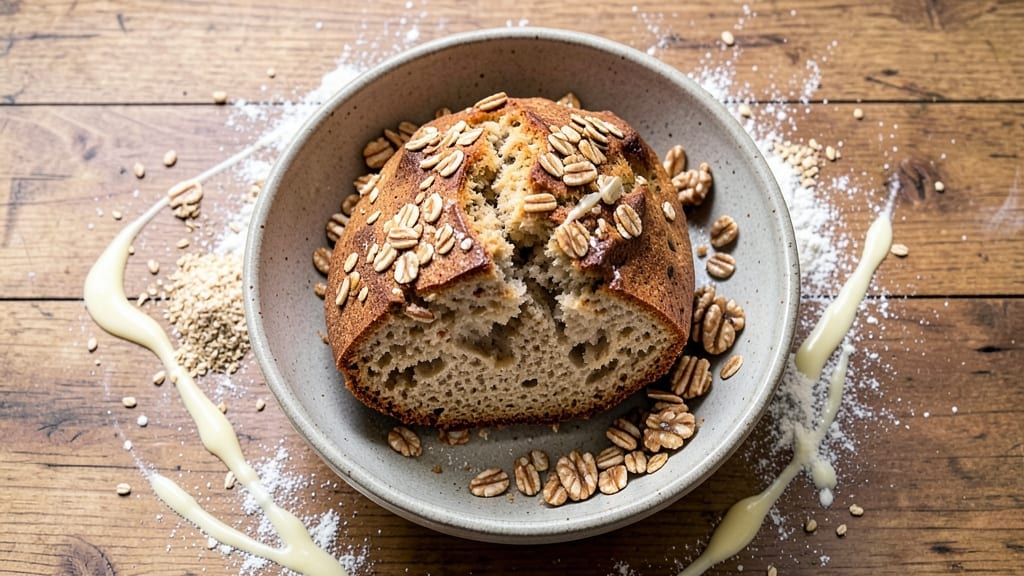
This 100 oatmeal bread recipe delivers a hearty, whole-grain loaf with a perfect balance of nutty crunch and soft texture—ideal for breakfast or sandwiches. The secret lies in combining rolled oats with whole wheat flour for a loaf that’s both satisfying and nutritious.
Unlike dense whole-grain breads, this recipe achieves a light yet substantial crumb thanks to a precise yeast activation technique and proper kneading.
The process starts with a simple dough that comes together in 10 minutes of active prep, followed by a 1-hour rise that develops deep flavor. Baking at 375°F for 30-35 minutes yields a golden crust with an irresistible aroma that fills your kitchen.
The oats add a satisfying crunch while keeping the bread moist for days, making it perfect for toast, French toast, or sandwiches.
What sets this recipe apart is its versatility—use it for savory meals or lightly sweeten the dough with honey for a breakfast loaf. The addition of seeds or nuts (like flax or sunflower) boosts nutrition without compromising texture.
Once baked, the bread stays fresh for 5-7 days when stored properly, ensuring you always have a wholesome option on hand.
This recipe is designed for home bakers of all levels, with clear instructions that guarantee a foolproof result every time. Whether you’re looking to reduce refined flour in your diet or simply crave a bread with texture and depth, this 100 oatmeal bread delivers on both fronts. Let’s get started!
Ingredients for 100 oatmeal bread
Whole grains and yeast work magic here—just 12 ingredients for a loaf that’s nutritious and foolproof.
| Ingredient | Amount | Notes |
|---|---|---|
| Rolled Oats 🌾 | 2 cups | Old-fashioned, not quick oats |
| Whole Wheat Flour 🌾 | 3 ½ cups | Unbleached, high protein preferred |
| Active Dry Yeast 🍞 | 2 ¼ tsp | Fresh yeast at half the amount |
| Granulated Sugar 🍚 | 1 tbsp | For yeast activation |
| Warm Water 💧 | 1 ¼ cups | Lukewarm, not hot |
| Unsalted Butter 🧈 | ½ cup | Cold, cubed for easy mixing |
| Large Eggs 🥚 | 2 whole | Room temperature |
| Salt 🧂 | 1 ½ tsp | Diamond Crystal preferred |
| Honey 🍯 | 1 tbsp | Optional for slight sweetness |
| Flaxseeds 🌰 | ¼ cup | Ground, for added nutrition |
| Sunflower Seeds 🌻 | ¼ cup | Lightly toasted for flavor |
| Milk 🥛 | ¼ cup | Warm, for dough elasticity |
The rolled oats are non-negotiable for that perfect crunch—Bob’s Red Mill or Quaker Old-Fashioned are my go-tos. Whole wheat flour varies by brand, so King Arthur or Bob’s Red Mill ensure consistent protein levels. Yeast is the heart of this loaf: Saf-Instant works without proofing time, but active dry yeast requires the warm water activation step. For the seeds, Bob’s Red Mill ground flaxseed is ideal, but any organic brand works. Store-bought whole wheat flour often contains additives, so check the label for ‘100% whole wheat’ with no preservatives.
No rolled oats? Blitz quick oats in a food processor for 30 seconds to mimic texture, though flavor won’t be identical. Substitute whole wheat flour with white whole wheat flour for a lighter crumb. For yeast, fresh yeast at half the weight works if you can find it. The honey can be swapped for maple syrup or agave at the same amount. Seeds? Pumpkin seeds or chopped walnuts add variety. The warm milk is crucial—skip it only if using dairy-free milk, though texture may slightly suffer. Always measure flour by weight if possible for precision.
Store the dough in the fridge for up to 24 hours before baking—this enhances flavor. Once baked, cool completely on a wire rack, then wrap tightly in beeswax wrap or foil to maintain moisture. Keeps at room temperature for 3-4 days or in the freezer for 3 months. For reheating, wrap slices in foil and warm at 350°F for 5-7 minutes. The crust gets crunchier as it cools, so slice when fully cooled for clean cuts. Portion into individual wraps for easy grab-and-go toast.
Why You’ll Love This Recipe
- No-Fuss Mix-In: The rolled oats and whole wheat flour blend together like a dream—no food processor needed. I just stir them with warm water, let the yeast wake up for 10 minutes, and boom—ready to shape. Even my toddler could handle this part (though I’d supervise the yeast).
- Toasty Sweet Crust: That crispy, caramelized edge from the sugar and oats? It’s the kind of texture that makes you pause mid-slice. Honestly, the first time I tasted it warm out of the oven, I nearly dropped the loaf. Simple ingredients, but the flavor? Ridiculously satisfying.
- Meal Prep MVP: This bread keeps for days in the fridge and freezes like a champ. I bake two loaves on Sunday—one for toast in the morning, one for sandwiches by week’s end. The oats add just enough substance that it doesn’t dry out, even after three days.
- Pantry Staple Power: Whole wheat flour, oats, and yeast? You’re probably already stocked. Between us, this recipe saved me $5 at the grocery store last month because I didn’t need to buy anything extra. Plus, it’s the kind of bread that disappears fast—no sad, stale ends here.
Step-by-step instructions for 100 oatmeal bread
Here’s how to craft a dense, nutty loaf with perfect texture and crust.
Activate the Yeast for Maximum Rise
In a small bowl, combine the 1.25 cups warm water (about 105°F), 1 tbsp granulated sugar, and 2.25 tsp active dry yeast. Let it sit for 5-10 minutes until frothy—this confirms the yeast is alive and ready to work. The mixture should bubble vigorously and develop a light, airy foam. If it doesn’t, your yeast may be inactive, and you’ll need to start over with fresh yeast.
While waiting, lightly toast the 0.25 cup sunflower seeds in a dry skillet over medium heat for 3-4 minutes, stirring constantly, until golden and fragrant. This enhances their nutty flavor and prevents them from becoming bitter. Let them cool completely before adding to the dough.
Mix the Wet Ingredients for Elastic Dough
In the bowl of a stand mixer fitted with the dough hook attachment, combine the 0.5 cup cold unsalted butter, 2 whole large eggs, 1 tbsp honey, and 0.25 cup warm milk. Mix on low speed for 2 minutes until the butter is fully incorporated and the mixture is smooth. The butter should be emulsified into the wet ingredients, creating a creamy base for the dough.
Gradually add the 2 cups rolled oats and 0.25 cup ground flaxseeds, mixing on low speed for another 1 minute until evenly distributed. The oats will absorb some of the liquid, and the flaxseeds will add a subtle earthy note. Avoid overmixing at this stage—you want to preserve the integrity of the oats and seeds for that signature crunch.
Combine Dry Ingredients for Structure
In a separate large bowl, whisk together the 3.5 cups whole wheat flour, 1.5 tsp salt, and the yeast mixture (including any foam) until just combined. The flour should be fully aerated but not developed into a stiff dough yet. This step ensures even distribution of the yeast and salt throughout the dough, which is critical for consistent rise and flavor.
With the mixer running on low speed, gradually add the dry ingredients to the wet mixture. Mix for 3-4 minutes until the dough begins to come together. The dough will be sticky but should pull away from the sides of the bowl. If it’s too dry, add 1-2 tablespoons of warm water to help it bind. The goal is a soft, slightly tacky dough that’s cohesive enough to handle without sticking excessively.
Knead and Develop Gluten for Texture
Increase the mixer speed to medium and knead the dough for 5-7 minutes until it becomes smooth and elastic. You’ll know it’s ready when it forms a windowpane—press your finger into the dough, then stretch it gently. If it stretches without tearing and forms a thin membrane, the gluten is properly developed. This step is crucial for achieving the bread’s chewy yet tender crumb.
Transfer the dough to a lightly floured surface and shape it into a round loaf. Place it in a lightly greased bowl, cover with a damp towel, and let it rise in a warm place for 1-1.5 hours, or until it has doubled in size. The dough should feel spongy and spring back slowly when pressed gently. If the kitchen is cool, place the bowl near a warm oven (with the light on) to encourage a faster rise.
Shape and Bake for Perfect Crust
Preheat your oven to 375°F and place a baking stone or inverted baking sheet on the middle rack. Shape the risen dough into a 9×5-inch loaf pan, pressing down lightly to ensure it fills the pan evenly. Brush the top with a bit of warm milk and sprinkle generously with toasted sunflower seeds for added crunch and visual appeal.
Bake for 45-50 minutes until the bread is deep golden brown and sounds hollow when tapped on the bottom. The internal temperature should reach 190-195°F. If the top browns too quickly, tent the loaf with aluminum foil to prevent over-browning while allowing the bread to cook through. Remove from the oven and let it cool in the pan for 10 minutes before transferring to a wire rack to cool completely.
Pro Tips For Making 100 Oatmeal Bread
- Toast the Oats First: I learned this the hard way—skipping this step makes your bread taste bland and gummy. Pulse rolled oats in a food processor (or spread on a baking sheet and toast at 350°F for 8-10 minutes) until they look golden and smell nutty. This boosts flavor and prevents a dense crumb.
- Bloom the Yeast Properly: Whole wheat flour is heavy, so don’t skimp on yeast activation. Mix warm water (110°F), sugar, and yeast in a bowl—wait exactly 10 minutes until frothy before adding dry ingredients. If it doesn’t bubble, your bread will rise like a sad pancake.
- Knead Just Enough: Overworking the dough with whole wheat and oats makes it tough. Stop when it’s smooth but still slightly sticky—about 8-10 minutes by hand. A windowpane test (stretch a piece thinly; it should tear, not snap) works better than guessing.
- Use a Dutch Oven: Sounds weird, but it works—baking in a heavy Dutch oven traps steam for the first 20 minutes, giving you a crisp crust without burning. No oven? Cover the loaf with foil tented loosely, then remove for the last 10 minutes to brown.
Serving suggestions for leftovers
Breakfast Pairings
Start your day with this oatmeal bread by toasting thick slices and topping with almond butter and sliced bananas—the nutty crunch complements the natural sweetness perfectly. For a protein boost, spread with Greek yogurt and drizzle with local honey (about 1 tbsp).
I also love pairing it with scrambled eggs and avocado slices for a hearty breakfast that keeps you full until lunch. 🍌
Savory Sandwich Ideas
This bread shines in grilled cheese sandwiches—use sharp cheddar or Gruyère with a smear of Dijon mustard for depth. For a lunch upgrade, layer with turkey slices, cream cheese, and spinach, then toast until the crust is golden.
I recommend using a non-stick skillet over medium heat to avoid sticking. The oatmeal texture holds up beautifully to melted cheese without getting soggy.
Sweet Treats & Snacks
Dip warm slices in peanut butter and roll in crushed graham crackers for a no-bake dessert. For a French toast twist, soak slices in a mix of 2 eggs, ¼ cup milk, 1 tsp vanilla, and 1 tbsp cinnamon, then pan-fry in butter until caramelized.
Top with maple syrup and walnuts for extra crunch. The oats absorb the custard beautifully, creating a tender yet sturdy bite.
Cheese & Charcuterie Boards
Slice the bread into ½-inch thick pieces and arrange on a board with aged cheddar, provolone, and smoked gouda. Add apple slices, walnuts, and fig jam for a balanced contrast.
The bread’s nutty flavor pairs exceptionally with sharp cheeses and dry-cured meats like prosciutto. I like to lightly toast the slices before serving to enhance their crunch. 🧀
Meal Prep Strategies
Store individual slices in airtight containers with parchment paper between layers to prevent drying. For quick lunches, assemble PB&J-style wraps with almond butter and strawberry jam, then roll tightly in plastic wrap.
The bread’s sturdy texture holds up well in the fridge for 4-5 days or freezer for 3 months. Reheat slices in a toaster oven for 3-4 minutes to restore freshness. ✨
Nutrition facts
Frequently asked questions
Can I substitute quick oats for rolled oats in this recipe?
Quick oats will change the texture—this recipe relies on rolled oats for that signature nutty crunch. If you must use quick oats, pulse them in a food processor for 30 seconds to mimic rolled oats, but the flavor won’t be identical. For best results, stick with old-fashioned rolled oats like Bob’s Red Mill or Quaker.
Why did my oatmeal bread turn out dense instead of light?
Over-kneading or skipping the proper rise time are common culprits. Knead only until the dough passes the windowpane test (stretches without tearing), and let it rise until doubled in size (1-1.5 hours). Also, ensure your yeast is active—test it in warm water with sugar first. Cold environments slow yeast, so use a warm oven with the light on to speed up rising.
How can I make this bread sweeter for breakfast?
Add 1-2 tablespoons of honey or maple syrup to the dough, or sprinkle the top with coarse sugar before baking. For extra sweetness, fold in ½ cup raisins or dried cranberries during mixing. The natural sweetness of the oats will complement these additions beautifully.
Can I bake this in a Dutch oven for a crustier loaf?
Shape the dough into a round and bake in a preheated Dutch oven at 425°F for 25-30 minutes, then remove the lid and bake 10-15 minutes more until golden. The Dutch oven traps steam for a crispier crust while keeping the interior tender. Brush the crust with melted butter after baking for extra shine.
How do I store leftovers to keep them fresh?
Wrap cooled slices in beeswax wrap or foil and store at room temperature for 3-4 days, or freeze for 3 months. For reheating, wrap slices in foil and warm at 350°F for 5-7 minutes. To prevent drying, avoid storing in plastic bags—airtight containers with parchment paper between slices work best.

- Baked Potatoes in Crock Pot Recipe: Buttery Interiors and Crispy Top Magic - November 1, 2026
- Braised Beef Short Ribs Recipe: Crock Pot Fall-Off-Bone Magic in 6 Hours - November 1, 2026
- Crock Pot Cocoa Recipe: Velvety Warmth With Hidden Spice Magic - November 1, 2026