
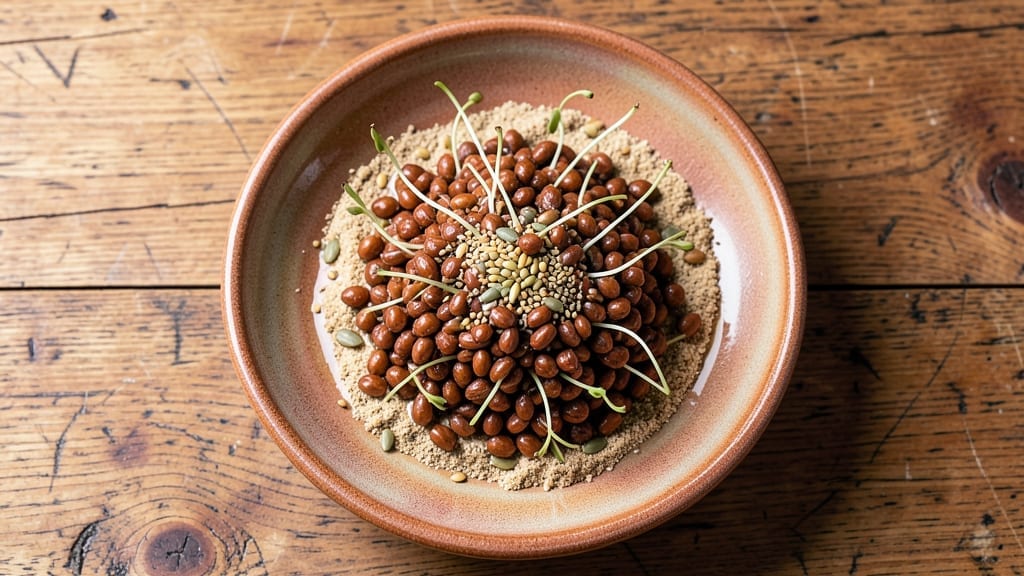
This 100% sprouted rye bread recipe delivers a nutrient-packed loaf with a deep, tangy flavor and satisfying chew—perfect for plant-based diets. The secret lies in soaking whole rye berries overnight, which unlocks enzymes, boosts digestibility, and creates that signature dense yet airy crumb.
Unlike traditional rye bread, this version skips yeast entirely, relying instead on a natural fermentation process that builds complexity over 12 hours of cold proofing.
The result is a loaf with exceptional texture—crisp golden crust, tender crumb, and a subtle sourness that pairs beautifully with plant-based butter or hummus. Hydration control is key here; the dough will feel sticky, but resist the urge to add extra flour.
Instead, use a light dusting of rye flour on your hands and surface to maintain structure while keeping the interior moist and flavorful. This recipe also includes optional additions like flaxseeds or sunflower seeds for extra crunch and nutrition.
Baking this bread requires patience, but the payoff is worth it: a loaf that stays fresh for 5-7 days when wrapped properly. The tangy depth comes from the fermentation process, which develops naturally as the dough rests.
For best results, use a Dutch oven to create that signature oven spring, and let the bread cool completely on a wire rack before slicing—this prevents a gummy interior.
Whether you’re serving it toasted with avocado or as a base for open-faced sandwiches, this bread will become a staple in your kitchen.
For those new to sprouted grains, don’t be intimidated by the soaking step—it’s simple and transforms the texture and flavor dramatically. The recipe also includes troubleshooting tips for common challenges like overproofing or dense crumb.
Ready to bake a loaf that’s as nutritious as it is delicious? Let’s get started with the full step-by-step guide.
Ingredients for 100 sprouted rye bread
Twelve nutrient-rich ingredients for a loaf packed with tangy depth and satisfying chew.
| Ingredient | Amount | Notes |
|---|---|---|
| Whole Rye Berries 🌾 | 12 cups | Organic preferred, soaked overnight |
| Filtered Water 💧 | 6 cups | Room temperature for hydration |
| Rye Flour 🌾 | 6 cups | Lightly dusted on hands/surface |
| Flaxseeds 🌰 | 1 cup | Ground for omega-3 boost |
| Sunflower Seeds 🥜 | ½ cup | For added crunch and nutrition |
| Apple Cider Vinegar 🍎 | 2 tbsp | For fermentation kickstart |
| Sea Salt 🧂 | 2 tsp | Fine grain preferred |
| Maple Syrup 🍁 | ½ cup | Vegan honey substitute |
| Active Dry Yeast Substitute 🍞 | ¼ tsp | Sourdough starter or omit |
| Whole Wheat Flour 🌾 | 2 cups | For structure and flavor |
| Nutritional Yeast 🍄 | ¼ cup | For cheesy depth and B vitamins |
| Coriander Seeds 🌿 | 1 tbsp | Toasted for aromatic depth |
The rye berries are the foundation—Bob’s Red Mill or King Arthur organic rye berries work best. Soak them overnight in filtered water with a splash of apple cider vinegar to unlock enzymes and boost digestibility. If you’re short on time, pre-soaked rye berries from health food stores like Whole Foods will save you 12 hours. The flaxseeds and sunflower seeds add texture and nutrition, but you can omit them if needed. For the flour, King Arthur rye flour has the best consistency, though any quality rye flour will work. The nutritional yeast is non-negotiable for that cheesy depth—Bragg is the gold standard, but any reputable brand will do.
No maple syrup? Agave nectar or date syrup works in a 1:1 ratio—just adjust the flavor to taste. Skipping the yeast substitute entirely? This recipe works beautifully as a 100% sourdough starter loaf—just replace with 1 cup active starter. The coriander seeds are optional but add a lovely aromatic touch; if you’re out, toasted sesame seeds make a great substitute. For the hydration, resist the urge to add extra flour—the dough should feel sticky. Instead, use a light dusting of rye flour on your hands and surface. The whole wheat flour adds structure without overpowering the rye flavor, but you can swap it for more rye flour if you prefer.
This dough requires patience—12 hours of cold proofing develops the tangy depth. Store the soaked rye berries in the fridge in an airtight container for up to 3 days before baking. The finished loaf keeps beautifully for 5-7 days wrapped in a clean kitchen towel, or freeze slices for up to 3 months. For best texture, always cool the bread completely on a wire rack before slicing. The crust will crisp up as it cools, creating that perfect contrast with the tender interior.
Why You’ll Love This Recipe
- No-Fuss Sprouting: I just soak the whole rye berries overnight—no fancy equipment, no stress. The next morning, I blend them into a batter so smooth, my mixer barely breaks a sweat, and those flaxseeds add just enough body without extra work.
- Earthy Depth: That first bite? The rye berries bring this bread a nutty, almost caramelized richness, while the sunflower seeds add a subtle crunch. Honestly, it’s the kind of flavor that makes store-bought loaves taste like a sad afterthought.
- Weeknight Hero: This bread is my go-to for sandwiches, toast, or even croutons—no one questions why I’m eating it cold straight from the fridge. Between us, it’s the only loaf that doesn’t get tossed after three days.
- Budget-Friendly Staple: Rye berries and whole grains stretch my grocery budget, and a single batch lasts me nearly a week. I’ll be real: my freezer’s full of slices ready for quick breakfasts or last-minute charcuterie boards—zero waste, all flavor.
Step-by-step instructions for sprouted rye bread
Transforming whole rye berries into a nutrient-dense loaf requires patience and precision.
Sprout the Whole Rye Berries
Place the 12 cups Whole Rye Berries in a large bowl and cover them completely with the 6 cups Filtered Water at room temperature. Let them soak for 12-14 hours at 70-75°F until they’ve sprouted small tails—about ¼ inch long. Drain thoroughly using a fine-mesh strainer, shaking gently to remove excess water.
Transfer the sprouted berries to a clean kitchen towel and spread them in a single layer. Fold the towel and let them dry for 30 minutes at room temperature. This step is critical—it prevents a gummy texture in your final loaf. The berries should feel slightly tacky but not wet when you press them between your fingers.
Prepare the Seed and Grain Mixture
In a food processor, grind the 1 cup Flaxseeds and 1 tbsp Coriander Seeds into a fine meal. Toast them lightly in a dry skillet over medium heat for 2-3 minutes until fragrant, then let cool. In a separate bowl, combine the toasted seed mixture with the 0.5 cup Sunflower Seeds and set aside.
Toast the 6 cups Rye Flour and 2 cups Whole Wheat Flour in the same skillet over medium-low heat for 5 minutes, stirring constantly, until golden and aromatic. Let cool completely before mixing with the other ingredients. This toasting step enhances flavor and removes any raw taste from the flours.
Mix the Wet Ingredients
In a large mixing bowl, whisk together the 0.5 cup Maple Syrup, 2 tbsp Apple Cider Vinegar, 2 tsp Sea Salt, and 0.25 cup Nutritional Yeast until fully dissolved. Add the 6 cups Filtered Water and stir to combine. The mixture should be smooth with no lumps—this is your hydrator base.
Gradually add the sprouted rye berries to the wet mixture, stirring gently to avoid breaking them apart. Incorporate the toasted flour blend and the seed mixture, mixing just until combined. The dough will be thick and sticky—this is normal for sprouted rye bread. Cover the bowl with a damp towel and let rest for 30 minutes at room temperature.
Shape and Ferment the Dough
Line a 9×13-inch baking pan with parchment paper, spraying lightly with oil to prevent sticking. Transfer the dough to the prepared pan, spreading it evenly into a ½-inch thick layer. Cover with a damp towel and let ferment at 75°F for 8-10 hours until the dough has risen by about 25% and develops a slightly tangy aroma.
During fermentation, check the dough every 2 hours after the first 4 hours. If the surface develops a skin, gently press it down with oiled fingers to prevent cracking. The dough should feel slightly springy when pressed—this indicates proper fermentation. Over-fermenting can result in a dense loaf, so monitor closely.
Bake to Perfection
Preheat your oven to 375°F with a baking stone or inverted baking sheet inside for 30 minutes. This creates steam and ensures even baking. Score the dough in a crosshatch pattern using a sharp knife, cutting through to the pan. Pour ½ cup water into the bottom of the pan to create steam.
Bake for 45-50 minutes until the top is deep golden brown and the internal temperature reaches 205°F when measured with an instant-read thermometer. If the edges brown too quickly, tent loosely with foil. The loaf should sound hollow when tapped on the bottom. Let cool completely on a wire rack for 2 hours before slicing—this prevents a gummy texture.
Pro Tips For Making 100 Sprouted Rye Bread
- Soak the Berries Overnight: I learned this the hard way—trying to rush the soaking of whole rye berries just leaves them tough and underdeveloped. Give them a full 12-16 hours in filtered water (about 1.5 cups per 1 cup berries) at room temperature, then drain and rinse before using. The extra time makes the texture light and chewy, not dense.
- Use a Scale for Flour: Rye flour is deceptive—scooping it by volume leads to inconsistent results every time. Weigh your rye flour (and seeds) in grams for accuracy, especially since this recipe relies on the balance between berries and flour. A 1% difference in flour can throw off hydration and rise.
- Don’t Over-Knead the Dough: This isn’t pizza dough—rye bread dough is delicate. Once you’ve mixed in the soaked berries, flax, and sunflower seeds, knead just until the ingredients come together (about 3-4 minutes by hand). Overworking it develops too much gluten, and you’ll end up with a gummy, heavy loaf instead of the airy crumb you’re after.
- Proof in a Warm Drawer: Skip the oven for proofing—rye bread rises slowly, and a warm spot (like a turned-off oven with a bowl of hot water) keeps it consistent. Cover the dough loosely and let it double in size (about 2-3 hours), then shape and proof again for 30-45 minutes. Cold weather? Extend this step—rye dough needs patience.
Serving suggestions for 100 sprouted rye bread
Toasted Toppings
Transform your sprouted rye into a crunchy masterpiece by toasting thick slices in a dry skillet over medium heat for 2-3 minutes per side until golden brown. Spread with vegan butter (I love Miyoko’s) and sprinkle with everything bagel seasoning or crushed red pepper flakes for instant flavor.
For extra richness, drizzle with maple syrup or tahini—both complement the bread’s tangy depth beautifully. 🥖
Plant-Based Spreads
This bread pairs perfectly with creamy plant-based spreads that balance its robust flavor.
Try cashew cheese (blend 1 cup soaked cashews, 2 tbsp lemon juice, and 1 tsp apple cider vinegar until smooth), avocado mash with lime juice and cilantro, or hummus with a swirl of olive oil.
For a sweet twist, spread with almond butter and top with sliced banana or fig jam. The bread’s dense texture holds up beautifully to these toppings.
Open-Faced Sandwiches
Use thick slices as a base for hearty open-faced sandwiches. Layer with marinated tempeh bacon, roasted red peppers, sautéed mushrooms, and a smear of garlic aioli (mix ½ cup vegan mayo, 1 minced garlic clove, and 1 tsp lemon juice).
For a Mediterranean twist, top with olives, kalamata olives, and vegan feta. The bread’s tangy flavor cuts through rich toppings without overpowering them.
Bread Pudding
Save stale slices for a decadent vegan bread pudding. Cube the bread and toss with 1 cup coconut milk, ½ cup almond milk, 2 tbsp maple syrup, and 1 tsp vanilla extract.
Bake at 350°F for 30-40 minutes until golden. Top with cinnamon, toasted pecans, and a drizzle of caramelized agave. This dessert highlights the bread’s nutty, slightly sweet notes—perfect for breakfast or dessert. 🍮
Dipping Bread
Serve warm slices as a dipping bread alongside soups, stews, or curries. The dense texture soaks up flavors beautifully while maintaining structure. For a savory dip, mix ½ cup tahini, 2 tbsp lemon juice, 1 minced garlic clove, and ¼ cup water until smooth.
For something lighter, blend 1 cup cucumber, 2 tbsp vegan yogurt, and 1 tsp dill into a refreshing dip. The bread’s tangy profile enhances every bite.
Breakfast Pairings
Start your day with this bread as a base for vegan breakfast bowls. Toast a slice and top with scrambled tofu (seasoned with turmeric, black salt, and nutritional yeast), sautéed spinach, and avocado slices.
For a sweet breakfast, spread with almond butter, sprinkle with chia seeds, and drizzle with date syrup. The bread’s hearty texture makes it ideal for hearty morning meals without feeling heavy. 🍳
Nutrition facts
Frequently asked questions
Why do I need to soak the rye berries overnight?
Soaking unlocks enzymes that improve digestibility and create the bread’s signature tangy flavor. The 12-hour soak also breaks down phytic acid, making nutrients more bioavailable. Skipping this step can result in a gummy texture and less flavorful loaf.
Can I make this bread without a Dutch oven?
Yes, but you may need to adjust baking time. Use a baking stone or inverted sheet pan instead. For extra steam, place a tray of boiling water in the oven during the first 20 minutes of baking. Expect a slightly denser crust without the Dutch oven’s steam effect.
What if my dough feels too sticky?
That’s completely normal for sprouted rye! Avoid adding extra flour—it can make the bread dense. Instead, wet your hands and use a light dusting of rye flour when handling. The dough should feel tacky but not wet when pressed.
How do I store this bread to keep it fresh?
Wrap the cooled loaf tightly in a clean kitchen towel, then place in an airtight container. It stays fresh for 5-7 days at room temperature. For longer storage, freeze slices wrapped in parchment paper for up to 3 months.
Can I substitute regular rye flour for the whole berries?
Not directly—the whole berries provide the unique texture and nutrition. However, you can use pre-sprouted rye berries from health stores to save time. For a similar flavor, blend 6 cups rye flour with 2 cups whole wheat flour and adjust hydration slightly (add ¼ cup more water).

- Baked Potatoes in Crock Pot Recipe: Buttery Interiors and Crispy Top Magic - November 1, 2026
- Braised Beef Short Ribs Recipe: Crock Pot Fall-Off-Bone Magic in 6 Hours - November 1, 2026
- Crock Pot Cocoa Recipe: Velvety Warmth With Hidden Spice Magic - November 1, 2026