
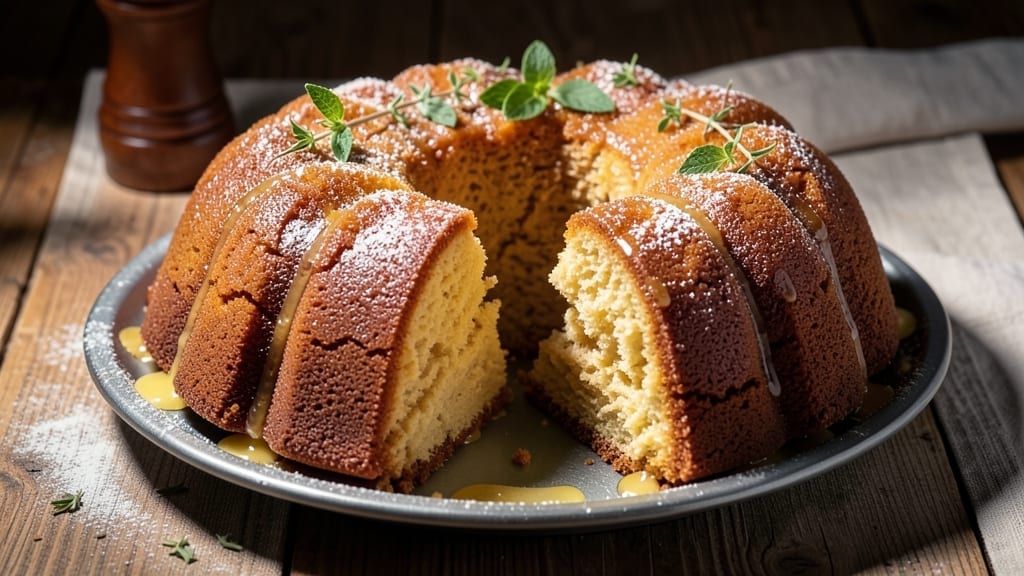
A 12-yolk pound cake delivers the kind of ultra-moist, velvety texture that makes every slice irresistible. The secret lies in those extra yolks—rich, buttery, and packed with natural emulsifiers that create a tender crumb and keep it moist for days.
This isn’t your average cake; it’s a showstopper that bakes up golden and dense, with a vanilla bean aroma that lingers long after the first bite.
The key to success is balancing the extra yolks with precise measurements—1 cup butter, 2 cups sugar, and 12 egg yolks (no whites!)—to avoid a greasy texture. The cake bakes at 325°F for 60-75 minutes, yielding a perfectly domed loaf with a crackly top.
Patience is critical here: resting it for 15 minutes before frosting ensures clean slices every time.
What sets this recipe apart is its foolproof moisture—no dry crumbs, no crumbly texture. The yolks create a fine, even crumb while keeping the cake tender, making it ideal for layering with cream cheese frosting or dusting with powdered sugar.
It’s the kind of cake that tastes homemade, even when you’re feeding a crowd.
For best results, use vanilla bean paste (not extract) for deeper flavor, and don’t overmix the batter—just until combined. This cake is worth the effort, delivering restaurant-quality richness in a classic form. Ready to bake?
Ingredients for 12 yolk pound cake
Twelve yolks, one ultra-moist pound cake that’ll wow everyone at your table.
| Ingredient | Amount | Notes |
|---|---|---|
| Unsalted Butter 🧈 | 1 cup | Room temperature, not melted |
| Granulated Sugar 🍚 | 2 cups | Superfine preferred for smoothness |
| Large Egg Yolks 🥚 | 12 whole | Room temperature, no whites |
| All-Purpose Flour 🌾 | 2 ½ cups | Sifted, spooned lightly |
| Vanilla Bean Paste 🌿 | 2 tbsp | Not extract, for real flavor |
| Baking Powder 🧂 | 1 ½ tsp | Aluminum-free preferred |
| Salt 🧂 | ½ tsp | Fine sea salt |
| Whole Milk 🥛 | ¾ cup | Room temperature |
| Vanilla Extract 🍋 | 1 tsp | Pure vanilla, not imitation |
| Powdered Sugar 🍚 | 1 cup | For dusting, optional |
| Unsalted Butter 🧈 | ¼ cup | Melted, for pan greasing |
| All-Purpose Flour 🌾 | 2 tbsp | For pan dusting |
The butter and yolks are non-negotiable here—European-style unsalted butter (like Plugrá or Land O’Lakes Cultured) gives the richest flavor, but any good brand works. Yolks need to be room temp—pop them in a warm water bath for 10 minutes if they’re straight from the fridge. The vanilla bean paste is where magic happens—Madagascar beans from Trader Joe’s or Whole Foods are my go-to. Skip the extract unless you’re in a pinch, and even then, you’ll taste the difference. For the flour, King Arthur or Gold Medal are my trusty brands—they bake up lighter than store-brand stuff.
No vanilla bean paste? Double the extract, but you’ll miss that complex depth. Running low on butter? Vegetable shortening at half the amount keeps it moist (though less flavorful). The milk can be swapped for heavy cream for extra richness, but whole milk gives the perfect balance. Superfine sugar isn’t mandatory, but it dissolves faster—pulse regular sugar in a food processor if you’re in a bind. And if you’re worried about overmixing, fold just until combined—this batter is delicate. The baking powder? Clabber Girl is my go-to, but check expiration dates—old leaveners = flat cake.
This cake stays moist for 5-7 days wrapped at room temp or 2 weeks in the fridge. For longer storage, wrap tightly in plastic and freeze—it’ll keep for 3 months and thaw beautifully. I always bake mine in a 10-inch tube pan (like Wilton), but a bundt pan or springform works too. Brush the warm cake with simple syrup (equal parts sugar and water, heated) if you want extra moisture. And save those scraps—they make killer French toast. Trust me, you’ll want seconds.
Why You’ll Love This Recipe
- No Mixer Needed: I swear by this—just cream butter and sugar until light, then fold in yolks and flour. No electric mixer, no fuss, and the result is always moist. That vanilla paste? It’s the secret weapon—intense, buttery, and worth every penny.
- Rich Without Overpowering: Twelve yolks mean pure, velvety richness, but the sugar and flour balance it perfectly. No artificial heaviness—just a tender crumb that’s almost too good to slice. Honestly, I’ve made pound cakes with fewer yolks, and this one wins every time.
- Weeknight Meal Prep Gold: Bake it once, slice it all week. Toasted with butter? Breakfast. Sliced with jam? Snack. Even crumbled over ice cream—yes, I’ve done it. It’s my go-to when I need something reliable that doesn’t scream “I spent hours in the kitchen.”
- Budget-Friendly Luxury: Butter and eggs are the stars here, but they stretch further than you’d think. A single batch feeds a crowd or lasts me days of solo indulgence. No weird ingredients, no waste—just pure, satisfying cake that feels like a treat without breaking the bank.
Step-by-step instructions for 12-Yolk pound cake
Here’s how to bake a perfectly moist, ultra-rich pound cake with that signature vanilla bean depth.
Prepare the Pan and Prep Ingredients
Preheat your oven to 350°F and grease a 10-inch Bundt pan thoroughly with the 0.25 cup melted unsalted butter, letting any excess drip out. Dust the pan generously with the 2 tbsp all-purpose flour, tapping out any excess. This prevents sticking and ensures easy release later.
While the oven heats, bring the 1 cup unsalted butter and 2 cups granulated sugar to room temperature. They should be soft enough to leave a slight indent when pressed, but not melted. Room temperature ingredients mix more evenly and create a lighter texture. Place the 12 whole large egg yolks in the refrigerator for now—we’ll use them cold to prevent scrambling.
Cream Butter and Sugar to Peak Volume
In a stand mixer fitted with the paddle attachment, beat the 1 cup unsalted butter and 2 cups granulated sugar on medium speed for 4-5 minutes. You’re looking for a pale, fluffy mixture that nearly doubles in volume and leaves clean streaks on the bowl. This step incorporates air, which creates that signature tender crumb.
Here’s the thing—don’t rush this. The mixture should be thick enough to hold a peak when the beaters are lifted. If it’s still grainy after 5 minutes, keep mixing. This ensures your cake will rise properly and stay moist for days. I’ve found that using superfine sugar speeds up this process slightly, but regular granulated works fine if you give it the full time.
Add Egg Yolks and Vanilla Gradually
Reduce the mixer speed to low and add the 12 whole large egg yolks, one at a time, mixing just until each is fully incorporated. After the last yolk, add the 2 tbsp vanilla bean paste and 1 tsp vanilla extract, mixing for another 30 seconds. The vanilla bean paste adds real depth that extract can’t match.
This is where precision matters. Add the yolks slowly to prevent scrambling, and don’t overmix after adding them. The mixture should be smooth and slightly thickened. If it looks curdled at all, don’t worry—it will come together in the next step. The key is patience here; rushing leads to dense cake.
Combine Dry Ingredients and Milk
In a separate bowl, whisk together the 2.5 cups all-purpose flour, 1.5 tsp baking powder, and 0.5 tsp salt. Sift the flour first to aerate it, then whisk in the leavening agents. Add the 0.75 cup whole milk and mix until just combined—you should still see some dry flour streaks.
With the mixer on low speed, gradually add the dry mixture to the butter-sugar-yolk mixture, mixing just until the batter is smooth. Overmixing develops gluten, which makes cake tough. Stop as soon as the flour disappears. The batter should be thick but pourable. If it’s too thick, add 1-2 tablespoons more milk to reach the right consistency.
Bake to Golden Perfection
Pour the batter into the prepared Bundt pan and smooth the top. Bake for 50-60 minutes until a toothpick inserted in the center comes out clean and the top springs back when pressed lightly. The cake should be deep golden brown with a slight crack on top—this indicates it’s fully baked.
I like to tent the pan loosely with foil after 30 minutes to prevent over-browning, but check at 50 minutes to ensure it’s not drying out. The cake is done when the edges pull away from the pan slightly and the center is set. Remove from the oven and let cool in the pan for 15 minutes, then invert onto a wire rack to cool completely before dusting with the 1 cup powdered sugar if desired.
Pro Tips For Making 12 Yolk Pound Cake
- Cream Butter and Sugar Slow: I used to rush this step, but pound cake demands patience—beat the butter and sugar for a solid 4-5 minutes until it’s pale, fluffy, and just starting to thicken. That extra time dissolves sugar crystals properly, so your cake doesn’t turn out dense or gummy. (Yes, even if you’re impatient like me.)
- Room-Temp Everything: Cold eggs and butter are the enemy here. Let yolks sit in warm water for 10 minutes and take the butter out of the fridge 1 hour ahead—this ensures even emulsification and a smoother batter. I learned this the hard way after a cake that looked perfect but tasted like it had pockets of resistance.
- Sift the Flour Twice: Don’t just eyeball it—sift the flour once through a fine-mesh sieve, then sift it again into the bowl. This aerates it and prevents a heavy texture. (Bonus: Use a rubber spatula to gently fold it in—don’t overmix, or you’ll toughen the gluten.)
- Bake Until Springy: The cake’s done when it pulls away from the pan edges and springs back when pressed—not when the toothpick comes out clean. Overbaking dries out the yolks’ richness, and underbaking leaves it gummy. If you’re unsure, check at 55-60 minutes (for a 9×5-inch pan) and tent with foil if the top browns too fast.
Perfect pairings for these flavors
Cream Cheese Frosting
This cake practically begs for a creamy cream cheese frosting—the tangy contrast to the rich, vanilla-yolk cake is unbeatable. Whip 8 oz cream cheese with 1 cup unsalted butter (softened), 3 cups powdered sugar, and 1 tsp vanilla extract until light and fluffy.
Spread a thin layer between cake layers and generously on top. For extra flair, dust with toasted coconut flakes or crushed vanilla wafers. 💛
Whipped Vanilla Buttercream
For a lighter option, try a whipped vanilla buttercream. Beat 1 cup unsalted butter (room temp) with 4 cups powdered sugar and 2 tbsp vanilla bean paste until smooth. Add ½ cup heavy cream and whip until stiff peaks form.
This frosting is less sweet but still luxurious, letting the cake’s natural vanilla shine. Pair with fresh raspberries for a summery touch.
Caramel Drizzle
Elevate your cake with a salted caramel drizzle. Heat 1 cup granulated sugar in a saucepan until melted, then add ½ cup heavy cream and simmer until thickened.
Stir in 2 tbsp butter and ½ tsp flaky sea salt. Drizzle over the cake before serving—it adds a gooey, buttery contrast that’s irresistible. 🍯
Fruit Compote Toppings
Brighten the richness with a warm fruit compote. Simmer 2 cups mixed berries (strawberries, blueberries, raspberries) with 2 tbsp sugar and 1 tsp lemon juice until syrupy.
Spoon over cake slices or use as a filling between layers. A blackberry bourbon compote (add 1 tbsp bourbon) adds depth for adult gatherings.
Chocolate Ganache
For chocolate lovers, a dark chocolate ganache is a game-changer. Melt ½ cup dark chocolate chips with ½ cup heavy cream, then drizzle over the cake. Let it set slightly before slicing.
Add crushed hazelnuts for crunch or sea salt flakes for a sophisticated finish. The contrast of chocolate and vanilla is pure indulgence. 🍫
Nutrition facts
Frequently asked questions
Why does this recipe use 12 yolks instead of whole eggs?
The extra yolks create an ultra-moist, velvety texture that whole eggs can’t match. Yolks contain natural emulsifiers that bind fat and moisture, while egg whites would make the cake denser and risk over-leavening. This ratio ensures a fine, even crumb that stays tender for days.
Can I substitute some yolks with egg whites for a lighter cake?
Not recommended—this recipe relies on the richness of yolks for its signature texture. If you must reduce fat, swap 1-2 yolks with whites** (same volume), but test with a smaller batch first. The cake may be slightly less moist and more delicate. For best results, stick to the full 12 yolks.
What’s the best way to tell when the cake is fully baked?
Look for three signs: a toothpick inserted in the center comes out clean, the edges pull away slightly from the pan, and the top springs back when pressed gently. The cake should be deep golden brown with a slight crack—this indicates proper doneness. Overbaking dries it out, so check at 50 minutes if unsure.
How do I store leftover cake to keep it moist?
Wrap tightly in plastic wrap or aluminum foil and store at room temperature for 3-4 days. For longer storage, refrigerate (up to 1 week) or freeze (up to 3 months). To revive, slice and warm for 10-15 seconds in the microwave with a damp paper towel. Avoid cutting until fully cooled to prevent crumbling.
Can I make this cake in a different pan shape?
Yes! Use a 9-inch round or square pan—reduce bake time by 10-15 minutes (check at 45 minutes). For a bundt pan, stick to the original time. Avoid glass pans—they conduct heat differently and may require 10-15°F lower temp. Always grease and flour thoroughly to prevent sticking.

- 8 Ounce Crab Cakes Recipe: Golden Crust With Luminescent Crab Hearts - October 12, 2026
- 1950’s Betty Crocker Banana Bread Recipe: Nostalgic Spice Swirls and Moist Crumb - October 12, 2026
- 2 Quart Homemade Ice Cream Recipe: Ultra Creamy Vanilla Bean Swirls - October 12, 2026