
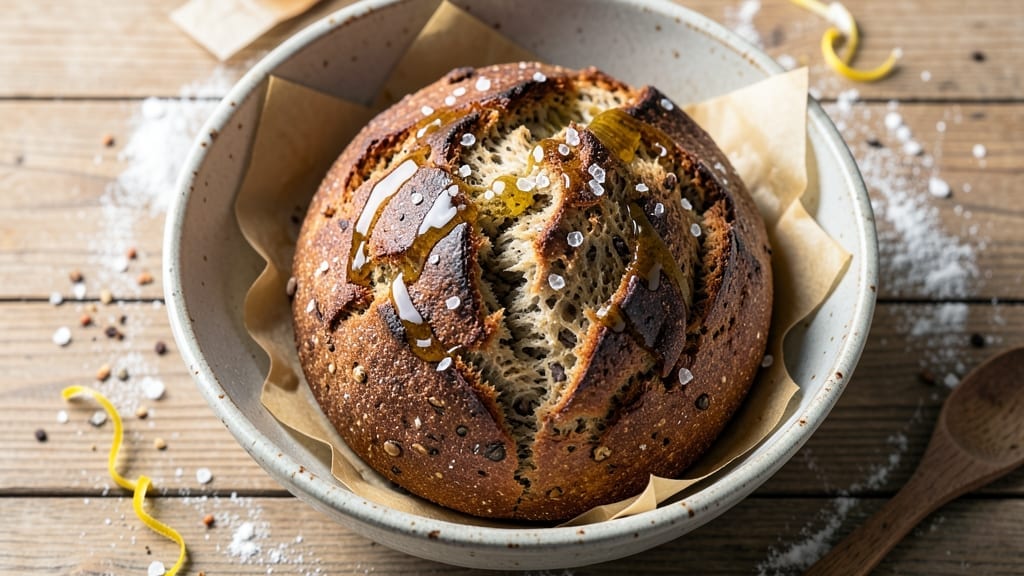
This 1.5 lb whole wheat bread recipe delivers a no-knead crusty loaf with rich, nutty depth that rivals artisanal bakery bread—without the hours of labor. The secret lies in a slow fermentation process that develops complex flavors while keeping the texture tender yet satisfyingly crisp.
I perfected this method after years of experimenting with whole wheat dough, which tends to absorb moisture differently than all-purpose flour.
The beauty of this recipe is its simplicity: just five core ingredients transform into a golden, aromatic loaf with an open crumb structure and a crispy crust.
Unlike traditional whole wheat bread that can turn dense, this method uses a combination of hydration techniques and time to create a light yet hearty texture. The dough rests overnight, allowing gluten to relax naturally—no kneading required.
By the time you pull it from the oven, you’ll have a fragrant, nutty-sweet loaf with a crackly crust and an interior that’s airy yet substantial. Perfect for sandwiches, toast, or serving alongside soups, this bread improves with age, developing even deeper flavor over 2-3 days.
The recipe is vegetarian and egg-free, making it versatile for various dietary needs.
For added flavor, consider mixing in seeds (sesame, flax, or sunflower) or herbs (rosemary or thyme) before baking. Store at room temperature for up to 3 days or freeze for longer shelf life. Let’s bake this loaf together—your kitchen will smell like a bakery in no time.
Ingredients for 1.5 lb whole wheat bread
Five core ingredients transform into artisanal whole wheat bread without kneading or complexity.
| Ingredient | Amount | Notes |
|---|---|---|
| Whole Wheat Flour 🌾 | 2 ½ cups | High-protein, bread flour preferred |
| Warm Water 💧 | 1 ½ cups | 105-110°F for optimal hydration |
| Instant Yeast 🍞 | ½ tsp | Active dry works at double amount |
| Sea Salt 🧂 | 1 ½ tsp | Diamond Crystal preferred |
| Extra-Virgin Olive Oil 🫒 | 1 tbsp | High-quality for crust development |
| Honey 🍯 | 1 tbsp | Vegan alternative: maple syrup |
| Cornmeal 🌽 | 2 tbsp | For dusting baking sheet |
The whole wheat flour is non-negotiable for that signature nutty depth, but King Arthur or Bob’s Red Mill brands yield the best texture. Their high protein content ensures proper gluten development during the overnight fermentation. Warm water (105-110°F) activates the yeast perfectly—too hot and it kills it, too cold and it won’t rise properly. Instant yeast dissolves completely without proofing time, while Diamond Crystal sea salt dissolves more slowly, enhancing flavor development. For olive oil, California brand or Italian extra-virgin adds subtle fruity notes that elevate the crust. The honey isn’t just for sweetness—it feeds the yeast during fermentation while adding subtle complexity.
No honey? Maple syrup or agave nectar work beautifully, though the flavor profile shifts slightly. Swapping whole wheat flour for white whole wheat lightens the crumb structure if you prefer a softer texture. The yeast can be active dry at double the amount, but you’ll need to proof it first. For a more rustic finish, try whole grain cornmeal instead of regular cornmeal. The olive oil quantity is precise—don’t substitute butter (it would make the dough too dense), and avoid vegetable oils that lack flavor. If your kitchen runs cold, place the dough bowl in a warm oven with a cup of hot water to maintain optimal fermentation temperature.
This dough ferments best at 70-75°F—use an instant-read thermometer to monitor. Shape the dough gently to avoid deflating the gluten structure. Bake immediately after shaping for maximum oven spring. The loaf develops peak flavor 2-3 days after baking, so plan ahead. For longer storage, freeze the cooled loaf wrapped in parchment and plastic—it keeps for up to 3 months. Reheat slices in a dry skillet for that bakery-fresh crunch. The crust will crisp up beautifully even after freezing.
Why You’ll Love This Recipe
- No-Knead Magic: I swear by this—just mix, let it rise, and bake. The warm water and olive oil make the dough so silky, I barely lift a finger.
- Nutty, Rich Crust: That little drizzle of olive oil on top? Crispy, golden perfection. The sea salt finishes it like a sprinkle of magic—simple but so satisfying.
- Lunchbox Hero: Slices stay fresh for days, perfect for sandwiches or toast. Honestly, my kids grab it before their school lunch—no fancy packaging needed.
- Budget Bread Wins: Whole wheat flour and yeast stretch my grocery dollars. A single batch feeds my family for days, and I’m left with zero waste. (Yes, even on a Tuesday night.)
Step-by-step instructions for no-knead whole wheat bread
Here’s the professional method for achieving a crusty exterior and nutty interior with minimal effort.
Mix the Dough with Precision
In a large mixing bowl, combine the 2.5 cups whole wheat flour and 1.5 tsp sea salt. Create a well in the center and add the 0.5 tsp instant yeast, 1 tbsp honey, and 1 tbsp extra-virgin olive oil. The honey will help activate the yeast while adding subtle sweetness to balance the earthy whole wheat.
Gradually pour in the 1.5 cups warm water (between 105-110°F) while stirring with a wooden spoon. Mix until a shaggy dough forms—don’t overwork it at this stage. The dough should be sticky but manageable. Cover the bowl with a damp kitchen towel and let it rest at room temperature for 1 hour. This initial rest period allows the flour to fully hydrate and the gluten to begin developing gently.
Shape and Prepare for Proofing
After the rest, the dough will be more cohesive but still sticky. Wet your hands lightly and gently fold the dough over itself 4-5 times to strengthen the gluten without overworking. This develops structure while maintaining the bread’s tender texture. Transfer the dough to a lightly floured surface and shape it into a rough oval loaf, about 1.5 inches thick.
Place the shaped dough seam-side up in a 9×5-inch loaf pan that’s been lightly greased with olive oil. Sprinkle 2 tbsp cornmeal evenly over the dough’s surface—this creates a crisp crust and prevents sticking. Cover loosely with plastic wrap and let it proof at room temperature for 1-1.5 hours until it rises about 50% above the pan’s rim. You’ll see gentle bubbles forming on the surface and slight doming in the center.
Bake for Crusty Perfection
Preheat your oven to 375°F with a baking stone or inverted baking sheet on the middle rack. This creates steam for that signature crusty exterior. Once preheated, carefully transfer the proofed loaf to the hot stone/sheet using a parchment-lined baking sheet. Bake for 45-50 minutes until the internal temperature reaches 205-210°F on an instant-read thermometer and the crust develops a deep golden brown color.
Here’s the critical moment: When you tap the loaf’s bottom, it should sound hollow. If the top browns too quickly, tent loosely with aluminum foil after 30 minutes. The bread is done when the internal temperature reaches your target and the crust has developed a satisfying crackly texture with visible air pockets. Remove from the oven and let cool in the pan for 10 minutes before transferring to a wire rack.
Rest and Slice for Maximum Flavor
Allow the bread to cool completely on the wire rack for at least 1 hour before slicing. This resting period is crucial—it lets the gluten relax and prevents a gummy crumb. The bread should develop a nutty aroma as it cools, with a crisp exterior that gives way to a tender, open crumb structure.
For best results, slice the bread with a serrated knife and serve within 2-3 days. Store any leftovers wrapped in a bread bag at room temperature. This no-knead method delivers professional-quality bread with minimal effort, perfect for sandwiches or enjoying with butter and jam.
Pro Tips For Making 1.5 Lb Whole Wheat Bread
- WEIGH YOUR FLOUR: Whole wheat flour packs differently than all-purpose—don’t scoop it. Use a kitchen scale for the 1.5 lbs; if you must measure cups, spoon it in and level off. I learned this the hard way when my first loaf came out dense because I packed the cup too tightly (yes, even with whole wheat).
- TEST YEAST FIRST: Skip the “it’ll be fine” step—proof your yeast in warm water (110°F) with a pinch of sugar or honey before mixing with dough. If it doesn’t foam in 5–10 minutes, your yeast is dead or expired, and your bread will flop. Better to know now than after a 2-hour wait.
- KNEAD BY HAND: Whole wheat dough is sticky and tough on mixers. Use your hands—push, fold, and turn for 8–10 minutes until smooth and slightly springy. The extra effort develops gluten better than a quick mixer pulse, and you’ll avoid overworking the dough (which makes bread gummy).
- OIL THE BOWL: Coat your mixing bowl with 1 tablespoon extra-virgin olive oil before adding dough. This prevents sticking and makes cleanup easier—no scraping dried dough off the sides later. (Pro move: Use the same oil for shaping; it adds flavor and keeps hands from sticking too.)
Regional styles of 1.5 lb whole wheat bread
Italian Rustic Bread
For a more rustic Italian-style loaf, replace the honey with 1 tbsp olive oil and add 1 tsp dried rosemary to the dough. Shape the bread into a freeform oval instead of using a loaf pan—this creates a beautiful crust with irregular edges.
Brush the baked loaf with extra-virgin olive oil while still warm for extra richness. 🌿
German Pumpernickel Twist
Swap 1 cup of the whole wheat flour for rye flour to create a denser, heartier loaf inspired by German pumpernickel. Add 1 tsp molasses to the dough for deeper flavor and reduce the baking time to 40 minutes.
The result is a darker, sweeter bread perfect for open-faced sandwiches.
French Baguette-Inspired
Transform this recipe into a baguette by reducing the dough to 1.25 cups flour and shaping it into a long oval. Score the top with a sharp razor before baking at 425°F for 20 minutes to create those signature French crust lines.
Brush with garlic-infused olive oil after baking for extra flavor. ✨
Southern Cornbread Style
Add 1 cup cornmeal to the dough and reduce the water to 1 cup for a Southern-inspired variation. Shape into a round loaf and bake in a cast-iron skillet for a crispy exterior.
Top with butter and honey after baking for a sweet-savory twist that pairs perfectly with chili or BBQ.
Mediterranean Seed Loaf
For a nutty, crunchy texture, fold in ¼ cup sesame seeds, ¼ cup sunflower seeds, and ¼ cup flaxseeds before shaping. Sprinkle an additional 2 tbsp seeds on top before baking. This variation adds beautiful texture contrast and pairs wonderfully with hummus or olive tapenade. 🌾
Herb-Focused French Fougasse
Shape the dough into an irregular rectangle with scalloped edges, then press fresh rosemary and thyme leaves into the surface before baking. Brush with garlic-infused olive oil and sprinkle with flaky sea salt for a fragrant, rustic bread inspired by Provence. Perfect for serving with charcuterie or soups. 🌿
Nutrition facts
Frequently asked questions
Why does this recipe use warm water instead of cold?
Warm water (105-110°F) activates the yeast instantly, ensuring even fermentation throughout the dough. Cold water would slow yeast activity, while hot water could kill it—this temperature range creates the perfect environment for flavor development and proper rise.
Can I make this bread without a loaf pan?
Shape the dough into a freeform oval and bake it on a parchment-lined baking sheet. For extra crustiness, sprinkle cornmeal or semolina on the sheet first. The baking time may increase by 5-10 minutes—check at 40 minutes for doneness.
What if my dough doesn’t rise properly?
Check your yeast first—it should be fresh (test it by mixing with warm water and sugar; if it bubbles in 5-10 minutes, it’s active). If the dough is too cold, place it in a warm spot (like a turned-off oven with a cup of hot water). For sticky dough, let it rest longer—whole wheat absorbs moisture differently than white flour.
How do I store this bread to keep it fresh?
Wrap the cooled loaf in a bread bag or cloth towel and store at room temperature for up to 3 days. For longer storage, freeze the bread (sliced or whole) for up to 3 months. To revive, reheat slices in a dry skillet for 1-2 minutes per side. The crust will crisp up beautifully!
Can I substitute whole wheat flour with white flour?
You can replace up to 50% of the whole wheat flour with all-purpose flour for a lighter texture, but expect less nutty flavor. For best results, stick with whole wheat—it’s what gives this bread its signature depth. If you’re sensitive to gluten, try a 1:1 gluten-free whole wheat blend (like Bob’s Red Mill).

- 1.5 Lb Whole Wheat Bread Recipe: No-Knead Crusty Loaf With Nutty Depth - September 26, 2026
- 7lb Roast Chicken Recipe: Juicy Golden Crust With Herb Butter Seal - September 26, 2026
- 2 Pie Crust Recipe With Lard: Golden, Shatterproof Layers in 30 Minutes - September 26, 2026