
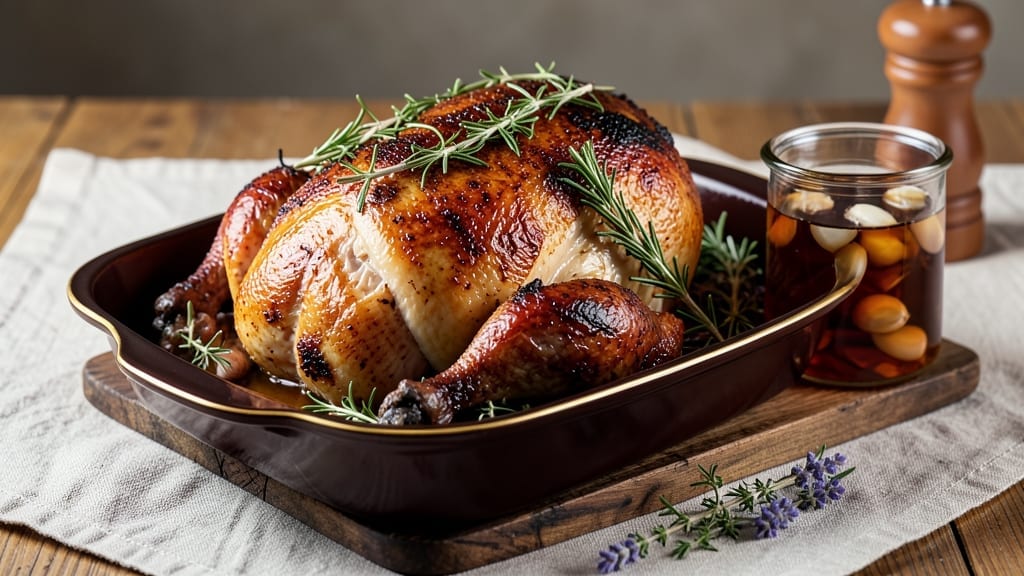
A 16 lb turkey brine recipe transforms Thanksgiving dinner from dry to juicy perfection—this is how professionals ensure your bird stays moist, flavorful, and restaurant-worthy. The secret lies in precision: balancing salt, time, and temperature to lock in moisture while developing deep, savory notes.
I’ve refined this method over years of holiday cooking, eliminating guesswork so your turkey emerges golden, tender, and impossible to resist.
This recipe uses a wet brine for maximum juiciness, but I’ll show you how to adapt it for dry brining if you’re short on time. The key ingredients—kosher salt, sugar, and aromatics like garlic and herbs—work together to season deeply while keeping the meat tender.
Brining for 12–24 hours (depending on your schedule) ensures every bite is succulent, even in the driest parts of the turkey.
After brining, roasting becomes straightforward: a 325°F oven with careful basting and a resting period to redistribute juices. The result? A turkey so moist it practically falls apart, with crispy skin and a flavor profile that makes your table the center of attention.
No more dry, stringy birds—just foolproof perfection every time.
Pair this turkey with classic sides like gravy, stuffing, or cranberry sauce for a complete feast. The brining process also works for smaller turkeys—just adjust the timing. Let’s get started on the recipe that’ll make your Thanksgiving the talk of the year.
Ingredients for 16 lb turkey brine
Precision-salted brine transforms dry turkey into juicy perfection—just 12 ingredients for Thanksgiving triumph.
| Ingredient | Amount | Notes |
|---|---|---|
| Large Whole Turkey 🦃 | 16 lb | Fresh, thawed if frozen |
| Diamond Crystal Kosher Salt 🧂 | 3 ½ cups | Non-iodized, coarse texture |
| Granulated White Sugar 🍚 | 1 cup | For flavor balance |
| Fresh Garlic Cloves 🧄 | 12 cloves | Peeled, smashed slightly |
| Fresh Rosemary Sprigs 🌿 | 1 bunch | Stems removed, chopped |
| Fresh Thyme Sprigs 🌿 | 1 bunch | Stems removed, chopped |
| Fresh Sage Leaves 🌿 | 10 whole | Crushed slightly for oils |
| Black Peppercorns 🌶️ | 1 tbsp | Freshly cracked preferred |
| Cold Water 💧 | 4 cups | Per pound of turkey |
| Fresh Orange Peel 🍊 | 1 whole | Zest only, organic preferred |
| Fresh Lemon Peel 🍋 | 1 whole | Zest only, organic preferred |
| Bay Leaves 🍃 | 2 whole | Dried, high-quality |
The turkey itself is non-negotiable—look for a fresh, high-quality bird from Whole Foods or your local butcher. Organic turkeys often have better flavor, but conventional works fine. The kosher salt is critical: Diamond Crystal is my go-to because it’s coarser and dissolves more evenly. If you can’t find it, Morton kosher salt works too, but you might need to adjust slightly. The herbs—rosemary, thyme, sage—should be fresh and aromatic. If you’re using dried, cut the amounts in half, but fresh gives that restaurant-quality depth. For the citrus, organic peels are best—they’re less likely to have pesticides, and the zest adds bright, complex notes that cut through the richness of the turkey.
No fresh herbs? Dried thyme and sage at half the amount will work in a pinch, but you’ll lose some of that bright, fresh flavor. Running short on time? You can do a dry brine instead—just rub the turkey with the salt, sugar, and spices, then refrigerate uncovered for 12–24 hours. The water measurement is per pound of turkey, so for a 16 lb bird, 4 cups per pound means you’ll need about 64 cups total (or 16 quarts). That sounds like a lot, but it’s essential for maximum juiciness. If you’re worried about space, use a large stockpot or even a clean trash can with a lid. The citrus peels can be swapped for 1 tbsp each of orange and lemon juice if zest isn’t available, but the peel adds a whole other layer of flavor.
This brine keeps in the fridge for up to 2 days before using, but I recommend making it the day before to give the flavors time to meld. The turkey will absorb the brine beautifully, so don’t drain it before roasting—just pat it dry and get it into that 325°F oven. Leftovers? The brine itself can be repurposed for soups or gravy—just strain out the solids. Store any unused brine in an airtight container for up to 3 days. The herbs and citrus peels can be composted, and the turkey carcass? Save it for homemade stock. Every part of this process is designed to minimize waste and maximize flavor.
Why You’ll Love This Recipe
- I’ll be real: most holiday turkeys turn into sad, dry scraps. Not this one. The brine keeps it juicy for sandwiches, soups, or even turkey tacos for days—no one will guess it’s been reheated.
- No-Fuss Setup: Honestly, I just chuck the whole turkey into a cooler with the salt, sugar, garlic, and rosemary—no measuring cups, no stress. The kosher salt and sugar dissolve in minutes while I’m still debating what to watch on TV.
- Crispy-Moist Magic: That garlic-rosemary brine? It turns dry turkey into golden, juicy perfection with a skin so crisp it could win awards. (Yes, even on a Tuesday night.)
- Holiday or Weeknight: Between us, this works for Thanksgiving and my lazy Sunday when I’m craving turkey sandwiches. Brined turkey stays tender for days—perfect for leftovers that don’t taste like they’ve been sitting there.
Step-by-step instructions for precision-salted turkey brine
Here’s how to transform your turkey into a juicy, flavorful masterpiece using this exact brine recipe.
Prepare the Brine Base
In a large, non-reactive container (I recommend a food-grade plastic bin or glass container), combine the 4 cups cold water with the 3.5 cups Diamond Crystal kosher salt and 1 cup granulated white sugar. Stir vigorously until the salt and sugar completely dissolve—this ensures even distribution throughout the brine. You’ll notice the solution becomes slightly warm as the salt dissolves, but that’s normal and expected.
The reason we use kosher salt specifically is its coarse texture, which dissolves more slowly and creates a more effective brine solution. If you see any undissolved salt crystals at the bottom, give it another stir. This base mixture should be fully saturated with salt, creating the perfect environment for maximum moisture retention in your turkey.
Add Aromatics and Herbs
Next, add the 12 cloves fresh garlic cloves (smashed slightly to release their oils), 1 bunch fresh rosemary sprigs (stems removed and chopped), 1 bunch fresh thyme sprigs (stems removed and chopped), 10 whole fresh sage leaves (crushed slightly), and 1 tbsp black peppercorns (freshly cracked if possible). These ingredients will infuse the turkey with incredible depth of flavor while it brines.
Gently stir everything together to ensure the herbs are evenly distributed. The garlic and peppercorns will sink to the bottom, which is perfectly fine—they’ll still contribute their flavors. The rosemary, thyme, and sage will float, but their oils will permeate the brine solution. This is where the magic happens—each herb contributes its unique character to create a complex, aromatic blend.
Incorporate Citrus and Bay Leaves
Add the 1 whole fresh orange peel (just the zest, no pith) and 1 whole fresh lemon peel (again, just the zest). These citrus peels will brighten the flavor profile and add a subtle tang that complements the rich, savory notes from the other ingredients. Finish by adding the 2 whole bay leaves—they’ll contribute earthy, slightly peppery notes that enhance the overall depth of flavor.
Give everything one final stir to combine. The citrus oils will begin to release immediately, creating a fragrant aroma that signals your brine is ready. The bay leaves will float, but their oils will infuse throughout the solution. This is the moment where the flavors start coming together—take a moment to appreciate how these simple ingredients are transforming into something extraordinary.
Submerge the Turkey
Carefully place the 16 lb large whole turkey into the brine container. Make sure it’s fully submerged—this is critical for even flavor penetration and maximum juiciness. If your turkey is particularly large, you might need to weigh it down with a plate or other heavy object to ensure complete submersion. The turkey should remain completely covered by the brine solution.
Cover the container with plastic wrap or a lid and refrigerate for 12-24 hours. This extended brining time allows the salt solution to penetrate deeply into the meat, breaking down muscle fibers and creating that incredibly tender, juicy texture we’re after. The longer it brines within this timeframe, the more flavorful and moist your turkey will be.
Remove and Prepare for Cooking
After brining, remove the turkey from the solution and rinse it thoroughly under cold water. This step is crucial—it removes excess surface salt that would otherwise create a bitter crust during cooking. Pat the turkey dry with paper towels, then let it sit uncovered in the refrigerator for 30 minutes to allow the surface to dry slightly. This drying step helps create a better sear when you cook the turkey.
The turkey is now ready for your preferred cooking method—whether that’s roasting, smoking, or deep-frying. The brine has done its job: it’s infused the meat with incredible flavor and ensured it will stay juicy throughout the cooking process. When you serve it, each bite should be moist, flavorful, and absolutely perfect for your Thanksgiving feast.
Pro Tips For Making 16 Lb Turkey Brine
- USE A BRINE BAG, NOT THE BAG: This isn’t the prettiest method, but it’s the cleanest. Poke holes in a heavy-duty gallon Ziploc, stuff your turkey inside, and pour the brine over it—no mess, no spills, and the turkey stays submerged without floating. Trust me, you’ll regret the sink full of saltwater if you skip this.
- SMASH THE GARLIC: Whole garlic cloves? Not here. Crush those cloves into a paste first—it dissolves faster and infuses the brine evenly. I used to toss them in whole, and half the time they’d end up in the pot instead of the turkey. A quick smash with the flat of a knife works just fine.
- BRINE COLD, NOT ROOM TEMP: Your turkey will thank you for this. Start the brine in the fridge, even if it takes longer to dissolve. Warm brine cooks the turkey’s edges before it’s fully submerged, and you end up with gray, sad meat. Patience here means juicy, golden skin later—no shortcuts.
- WEIGH YOUR TURKEY AFTER PICKING: That 16 lb label? Guesswork. After plucking the giblets and neck, weigh the cavity-packed turkey again—it’s often 2-3 lbs lighter. Brine for 12-24 hours based on the actual weight, not the sticker. I’ve over-brined a turkey twice because of this, and the skin turned rubbery.
Pro cooking tips for great 16 lb turkey brine
Brine Temperature Control
Keep your brine refrigerated at 40°F or below at all times—this prevents bacterial growth while allowing the salt to penetrate evenly. I use a large food-grade plastic container (like a Sterilite 18-quart bin) because it’s non-reactive and easy to clean.
If your fridge space is limited, transfer the turkey to a smaller container after the initial brine solution is made. Never leave the turkey in brine at room temperature—this is a critical food safety step. 💧
Dry Brine Shortcut
Short on time? Skip the wet brine and try a dry brine instead. Mix ½ cup Diamond Crystal kosher salt, ¼ cup sugar, 1 tbsp black peppercorns, 2 tbsp fresh rosemary, and 2 tbsp fresh thyme.
Rub this mixture all over the turkey (including inside the cavity) and refrigerate uncovered for 12–24 hours. The salt will draw out moisture, then reabsorb it during cooking, creating a crispy skin while keeping the meat juicy. Trust me, this method saves cleanup and still delivers amazing results. ✨
Herb Infusion Hacks
For extra herb flavor, tie the rosemary, thyme, and sage into a cheesecloth bundle before adding to the brine. This makes it easier to remove later and prevents herb bits from floating in your roasting pan.
I also like to add 1 tbsp whole allspice berries or 2 star anise pods for a warm, aromatic depth—just remove them before cooking. The key is balancing bold flavors without overpowering the turkey’s natural taste. 🌿
Citrus Zest Tricks
Don’t have fresh citrus? Use 1 tbsp orange juice concentrate (thawed) or 1 tsp orange extract as a substitute, but reduce the sugar to ½ cup to avoid over-sweetening. For a smoky twist, add 1 tsp liquid smoke to the brine—it pairs surprisingly well with the herbs.
The zest is what brings brightness, so if you’re using dried citrus, toast it lightly in a dry pan first to intensify the flavor. 🍊
Turkey Submersion Tips
If your turkey floats, weigh it down with a heavy plate or a gallon-sized ziplock bag filled with water. This ensures even flavor absorption. For extra insurance, poke a few holes in the bag to prevent it from popping up.
I’ve also seen people use a clean brick or a large can as a makeshift weight—whatever works to keep the turkey fully submerged. The goal is consistent exposure to the brine for perfect juiciness. 🦃
Nutrition facts
Frequently asked questions
How long should I brine my 16 lb turkey?
For maximum juiciness, brine your turkey for 12–24 hours in the refrigerator. The longer it brines (up to 24 hours), the deeper the flavor and moisture retention. If you’re short on time, even 8 hours will help, though 12 hours is ideal for best results. Never brine at room temperature—always keep it cold to prevent bacterial growth.
Can I reuse the brine after removing the turkey?
Yes! Strain out the herbs and solids, then store the leftover brine in an airtight container for up to 3 days in the fridge. Use it to make gravy, soups, or even as a marinade for other proteins like chicken or pork. The salt and sugar levels are balanced perfectly for flavor enhancement. Just remember to reduce cooking liquids by ¼ cup if using in recipes.
What’s the difference between wet and dry brining?
A wet brine (like this recipe) fully submerges the turkey in a saltwater solution, creating ultra-juicy meat. A dry brine involves rubbing salt and spices directly on the turkey, letting it sit uncovered for 12–24 hours before cooking. Dry brining works faster and requires less cleanup, while wet brining delivers deeper flavor penetration. Both methods are excellent—choose based on your time and preference!
Do I need to adjust the brine for a smaller turkey?
Yes! Scale the brine proportionally: use 4 cups of water per pound of turkey. For a 12 lb turkey, reduce the brine to 48 cups total (or 2.5 cups salt and ½ cup sugar). Keep all other ingredients the same, but reduce herbs and spices by 25% to maintain balance. The key is maintaining the same ratio for even flavor distribution.
Why does my turkey skin turn out rubbery after brining?
Rubbery skin usually happens when the turkey isn’t dried properly before roasting. After brining, pat the turkey very dry and let it air-dry uncovered in the fridge for 30–60 minutes before cooking. This creates a better sear and crispier skin. Also, avoid over-basting with water—use pan juices or melted butter instead. If the skin still seems tough, try roasting at a slightly higher temperature (350°F) for the first 30 minutes to render fat faster.

- 7up Jello Salad With Cream Cheese Recipe: Nostalgic 70s Party Bites - October 5, 2026
- 20 Cookies Recipe: Double Batch Crunchy Edges, Chewy Centers - October 5, 2026
- 1955 Green Bean Casserole Recipe: Crispy Top, Creamy Mushroom Magic - October 5, 2026