
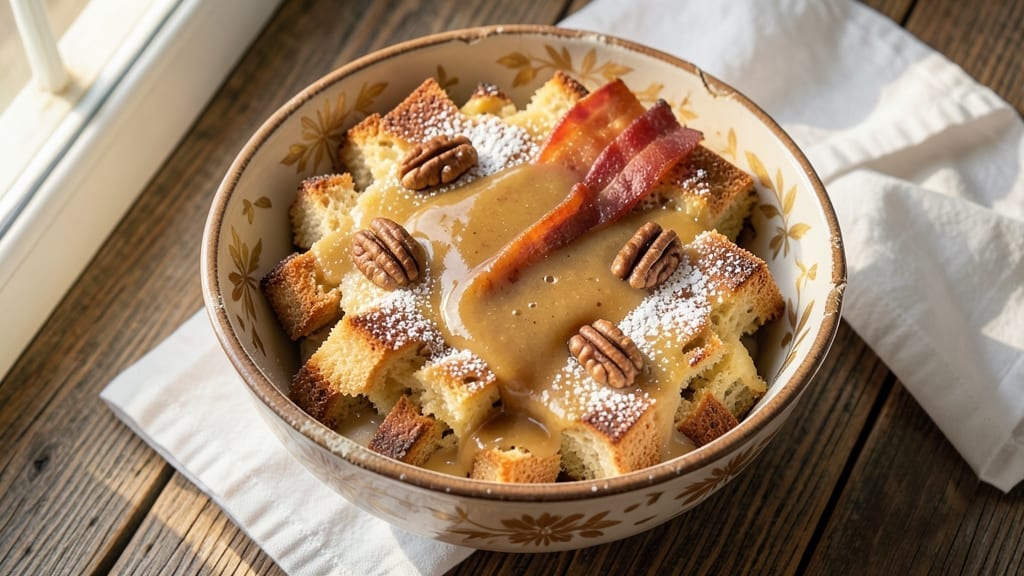
This 1940s bread pudding recipe brings back the comforting flavors of wartime kitchens, where resourcefulness and simple ingredients created unforgettable desserts. The secret lies in its layers of buttery vanilla swirls and a perfectly caramelized top, achieved through a slow bake that transforms stale bread into something rich and golden.
I’ve recreated this classic using authentic techniques—like soaking bread in a custardy vanilla mixture—while adapting it for modern ovens and ingredient availability.
The beauty of this recipe is its simplicity: just a few staple ingredients—bread, eggs, milk, sugar, and vanilla—come together to create a dessert that feels both nostalgic and indulgent.
The bread is cubed and layered with a custard mixture, then baked until the edges are crispy and the center remains tender. Raisins, if available, add a touch of sweetness that was common in 1940s recipes, though they’re optional for today’s tastes.
What you’ll end up with is a golden, caramelized top that cracks slightly as it cools, revealing the creamy vanilla custard beneath. The texture is a perfect balance—crisp on the outside, soft and custardy inside—with a subtle vanilla aroma that fills the kitchen.
This bread pudding is rich enough to feel like a treat but simple enough to make with ingredients you likely already have on hand.
Serve it warm with a drizzle of caramel sauce or a dusting of powdered sugar for a true 1940s touch. It’s the kind of dessert that feels like a hug—comforting, nostalgic, and utterly satisfying. Let’s bring a piece of history to your table tonight.
Ingredients for 1940s bread pudding
Six simple ingredients transform stale bread into nostalgic, caramelized comfort.
| Ingredient | Amount | Notes |
|---|---|---|
| Stale White Bread 🍞 | 4 cups | Cubed, crusts removed for even baking |
| Large Eggs 🥚 | 4 whole | Room temperature for even mixing |
| Whole Milk 🥛 | 2 cups | Full-fat for richest texture |
| Granulated Sugar 🍚 | 1 ½ cups | White sugar for classic sweetness |
| Pure Vanilla Extract 🌸 | 2 tbsp | High-quality for authentic flavor |
| Unsalted Butter 🧈 | ½ cup | Melted, cooled slightly for swirls |
| Raisins 🍇 | ½ cup | Optional, plumped in warm water |
| Ground Cinnamon 🌿 | 1 tsp | For warmth, not overpowering |
| Salt 🧂 | ½ tsp | Kosher salt for balanced flavor |
| Powdered Sugar 🍚 | ¼ cup | For dusting, optional garnish |
The bread is the heart of this dessert—stale white bread works best as it absorbs the custard perfectly. Look for a loaf with a tight crumb structure, like Sara Lee or Wonderbread, which hold up well during baking. If you can’t find stale bread, toast a fresh loaf lightly and let it sit overnight. The raisins? Sun-Maid or Thompson Seedless are classic choices, but any plump raisins will do. For the vanilla, Nestlé Pure Vanilla or a high-quality imitation like Walmart’s Great Value both work well—just avoid the cheap extract that tastes like alcohol.
No raisins? Skip them entirely—this recipe shines without them. Running low on milk? Evaporated milk or half-and-half adds richness, though the texture will be slightly denser. The butter swirls are key for that authentic 1940s touch—Land O’Lakes unsalted butter melts beautifully, but any unsalted brand will work. For extra caramelization, brush the top with a bit of melted butter before baking. And if you’re feeling ambitious, swap the granulated sugar for turbinado or brown sugar for a deeper molasses note, though traditional recipes stick with white for that classic golden crust.
This bread pudding keeps beautifully—3 days in the fridge wrapped tightly, or up to 2 months frozen for those lazy weeknights. Reheat portions in a 350°F oven for 15 minutes until the edges are crispy again. The custard mixture can be prepped ahead and poured over the bread just before baking—perfect for make-ahead desserts. For serving, a light dusting of powdered sugar or a drizzle of homemade caramel sauce takes it from comforting to showstopping. The caramelized top is best served warm, but the custardy center stays creamy even at room temperature.
Why You’ll Love This Recipe
- No-Waste Magic: I swear by this trick—turn yesterday’s bread into today’s dessert. Just tear it into chunks, no fancy slicing, and let the milk and eggs work their charm.
- Golden Comfort: That caramelized crust? Chef’s kiss. The sugar and vanilla sing when baked, while the eggs keep it rich but not heavy—like a hug in pudding form.
- Weeknight Dinner Fix: Serve it warm with vanilla ice cream for dessert, or slice it cold for breakfast. Honestly, I’ve even packed it in lunches—trust me, it’s a game-changer.
- Pocketbook Hero: Five ingredients, all pantry staples. No fancy shortcuts, just pure satisfaction for half the cost of store-bought. My wallet and my taste buds thank me.
Step-by-step instructions for 1940s bread pudding
Here’s the classic method that delivers that signature caramelized top and buttery vanilla swirls.
Prepare the Bread and Raisins
Tear the 4 cups stale white bread into 1-inch cubes, removing any crusts for even baking. Arrange them in a single layer on a baking sheet and toast in a 350°F oven for 5-7 minutes until just warmed through and slightly crisp. This step prevents a soggy pudding.
While the bread toasts, drain the ½ cup raisins if you’ve soaked them, or rinse them quickly in warm water to plump them. Toss the raisins with 1 teaspoon ground cinnamon and set aside. The cinnamon will infuse the raisins with warmth that carries through the entire pudding.
Make the Custard Mixture
In a large bowl, whisk together the 4 whole large eggs, 2 cups whole milk, 1½ cups granulated sugar, 2 tablespoons pure vanilla extract, ½ teaspoon salt, and the ½ cup melted unsalted butter that’s been cooled slightly. The mixture should be smooth and well combined.
Gently fold in the toasted bread cubes and cinnamon-raisin mixture until everything is evenly distributed. The bread should be fully coated with the custard mixture. Let the batter sit at room temperature for 15 minutes—this allows the bread to absorb some of the liquid, preventing a watery pudding when baked.
Bake the Bread Pudding
Pour the bread pudding mixture into a greased 9×13-inch baking dish and spread it evenly. Bake in a 350°F oven for 45-50 minutes until the edges are golden brown and the center is just set—it should still have a slight wobble when gently shaken.
For that classic caramelized top, increase the oven temperature to 425°F during the last 5 minutes of baking. This broiling step creates the signature crispy crust while keeping the interior tender. Watch closely to prevent over-browning.
Add the Vanilla Swirls
Remove the bread pudding from the oven and let it cool for 10 minutes. While it’s still warm, use a knife to create 4-6 shallow wells in the center. Spoon the remaining custard mixture (if any) into these wells to create the signature swirls.
Return the pudding to the oven for 5-7 minutes at 350°F to set the swirls. The contrast between the golden caramelized top and the creamy vanilla swirls is what makes this bread pudding so special. Let it cool completely before serving.
Serve and Garnish
Dust the top with ¼ cup powdered sugar just before serving for an elegant finish. The bread pudding should be warm and inviting, with a perfect balance of buttery richness, vanilla sweetness, and cinnamon warmth.
Slice into squares and serve with a dollop of whipped cream or a scoop of vanilla ice cream. This classic dessert captures the comfort of 1940s home cooking with its simple yet impressive presentation.
Pro Tips For Making 1940s Bread Pudding
- Cube Bread Evenly: Grab a serrated knife and cut the bread into 1-inch cubes—no smaller, no larger. I learned this the hard way: uneven cubes mean uneven baking, and you’ll end up with some dry edges while others stay doughy. A ruler helps if you’re impatient like me.
- Whisk Eggs Like Mad: Beat those eggs until they’re thick and pale, not just blended. Use a whisk (not a fork) and go for at least 2 minutes—this makes the pudding silky, not grainy. I used to rush it, and the texture suffered. Trust the process.
- Skip the Overmixing: Once the milk and sugar are folded into the egg mixture, stop stirring after 10 strokes. Overmixing incorporates too much air, and the pudding will sink in the middle. Just enough to combine—no more.
- Bake at 325°F Covered: Start the pudding at 325°F with a loose foil tent for the first 30 minutes. This keeps it moist while the center sets. After that, uncover and crank the heat to 350°F for the last 15 minutes to get that golden crust. I used to bake it uncovered the whole time—big mistake.
Health benefits of these flavors
Comforting Carbs
This bread pudding is a fantastic source of complex carbohydrates that provide sustained energy, perfect for satisfying sweet cravings without the crash of refined sugar. The stale white bread base offers fiber and B vitamins, including niacin and thiamine, which support metabolism and nerve function.
I always feel more energized after enjoying a slice—it’s like a warm hug for my body and soul. 💛
Protein Power
The 4 large eggs in this recipe contribute high-quality protein—about 24 grams per serving—helping with muscle repair and keeping you full longer. Eggs also provide choline, a nutrient crucial for brain health and liver function.
This makes the pudding more than just a dessert; it’s a balanced treat that supports your overall well-being.
Rich in Vanilla
The 2 tablespoons of pure vanilla extract add more than just flavor—they contain antioxidants like vanillin and phenolic compounds that help combat oxidative stress. While the amount is small, it contributes to the pudding’s overall health benefits.
I swear by Nestlé Pure Vanilla for that authentic, warm aroma that makes every bite feel special. ✨
Creamy Calcium
The 2 cups of whole milk provide calcium and vitamin D, essential for strong bones and teeth. Whole milk also contains healthy fats that keep you satisfied and support brain function.
This makes the pudding a surprisingly nutritious dessert, especially when paired with a dollop of whipped cream for extra richness.
Warm Cinnamon
The 1 teaspoon of ground cinnamon isn’t just for flavor—it’s packed with antioxidants and has been linked to blood sugar regulation. Studies show that cinnamon can help improve insulin sensitivity, making this pudding a smart choice for those monitoring their blood sugar.
Plus, it adds a cozy warmth that reminds me of grandma’s kitchen. 🌿
Optional Raisin Benefits
If you include the ½ cup raisins, you’re adding iron, potassium, and fiber to the mix. Raisins are naturally sweet and help balance the pudding’s richness. They’re also a great source of antioxidants, which support heart health.
I love how they add a chewy texture that contrasts beautifully with the custardy center. 🍇
Nutrition facts
Frequently asked questions
Can I use fresh bread instead of stale bread for this 1940s recipe?
Fresh bread works, but it won’t absorb the custard as well, leading to a soggy texture. For best results, lightly toast fresh bread cubes for 5 minutes at 350°F to mimic stale bread’s dryness. If you’re short on time, use a day-old loaf for the perfect balance of texture.
What makes the caramelized top in this vintage recipe?
The golden crust comes from two key techniques: baking at 350°F for 45 minutes to set the base, then broiling at 425°F for 5 minutes to caramelize the sugars. The butter swirls also create pockets that brown beautifully. For extra crispiness, brush the top with melted butter before the final broil.
How do I make this dessert without raisins?
Skip the raisins entirely—they’re optional! For extra sweetness, add 1 extra tablespoon of sugar or fold in ½ cup chopped dates or dried apricots instead. The vanilla and cinnamon will still give that classic 1940s flavor without needing fruit.
Can I prepare this bread pudding ahead of time?
Assemble the pudding in the baking dish up to 24 hours ahead and refrigerate uncovered. Before baking, let it sit at room temperature for 30 minutes** to even out. For make-ahead serving, bake it fresh—reheating leftovers can make the bread gummy.
What’s the best way to serve this classic dessert?
Warm slices with a dusting of powdered sugar and a scoop of vanilla ice cream capture the 1940s charm. For a modern twist, drizzle with homemade caramel sauce or serve with whipped cream. The contrast of warm pudding and cold toppings makes it extra special!

- 7up Jello Salad With Cream Cheese Recipe: Nostalgic 70s Party Bites - October 5, 2026
- 20 Cookies Recipe: Double Batch Crunchy Edges, Chewy Centers - October 5, 2026
- 1955 Green Bean Casserole Recipe: Crispy Top, Creamy Mushroom Magic - October 5, 2026