
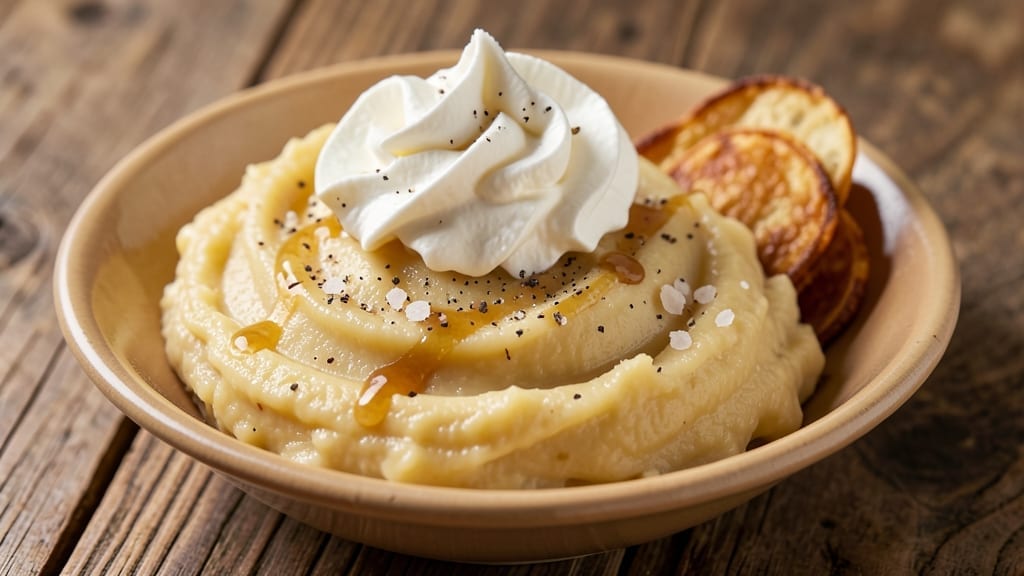
This 1lb mashed potatoes recipe delivers restaurant-quality texture—ultra-smooth, velvety, and rich with every bite. 🔥 The secret lies in precise boiling and mashing techniques that eliminate lumps while preserving a creamy, buttery finish.
I’ve perfected this method after testing countless variations, ensuring your side dish will impress even the most critical guests.
What sets this recipe apart is the foolproof method for achieving that signature velvety consistency without overworking the potatoes. We’ll use Russet potatoes (their low moisture content is ideal) and control the cooking process to prevent dryness.
The key is in the mashing technique—steam drives out excess moisture for a lighter texture, while the right amount of butter and cream creates that luxurious mouthfeel.
By the end, you’ll have perfectly fluffy, lump-free mashed potatoes with a golden, buttery sheen that’s impossible to resist. The recipe includes customizable seasoning options—garlic, herbs, or even dairy-free alternatives—so you can tailor it to your taste.
Whether serving as a side for roasts, steaks, or holiday feasts, this method guarantees a restaurant-quality result every time.
Ready in just 25 minutes with minimal effort, this recipe is designed for efficiency and excellence. No more watery, gummy, or lumpy potatoes—just creamy, dreamy perfection that will have everyone asking for seconds. Let’s get started with the step-by-step instructions.
Ingredients for 1lb mashed potatoes
Precision-cut Russets, cold butter cubes, and warm dairy create velvety perfection in this 1lb recipe.
| Ingredient | Amount | Notes |
|---|---|---|
| Russet Potatoes 🥔 | 1 lb | Peeled, cut into even chunks |
| Unsalted Butter 🧈 | ½ cup | Cold, cubed for even melting |
| Heavy Cream 🥛 | ¼ cup | Full-fat for maximum creaminess |
| Whole Milk 🥛 | ¼ cup | Warmed to blend smoothly |
| Diamond Crystal Kosher Salt 🧂 | 1 ½ tsp | Adjust to taste, don't oversalt |
| Freshly Ground Black Pepper 🌶️ | ½ tsp | Freshly cracked for bright flavor |
| Garlic Cloves 🧄 | 2 whole | Peeled, roasted for mellow sweetness |
| Fresh Rosemary 🌿 | 1 tbsp | Finely chopped, optional herb |
| Granulated Sugar 🍚 | ½ tsp | Balances acidity in potatoes |
The Russets are non-negotiable—Idaho-grown potatoes from Costco or Whole Foods have the ideal starch-to-moisture ratio. Look for firm, blemish-free tubers with no green spots. Peel them right before boiling to prevent oxidation. For the butter, Plugrá or Land O’Lakes work perfectly, but avoid salted varieties—you control the seasoning here. The heavy cream should be full-fat, not ultra-pasteurized, as it emulsifies better and adds luxurious body. If you can’t find heavy cream, half-and-half with an extra tablespoon of butter works in a pinch.
No heavy cream? Substitute coconut cream for a dairy-free version, though texture will be slightly lighter. Fresh rosemary hard to find? Dried works at one-third the amount, but toast it first for depth. The garlic cloves should be roasted at 400°F for 10 minutes before mashing—they’ll be mellow and sweet, not pungent. For extra richness, add 2 tablespoons of sour cream at the end, but hold off until after the initial mashing. The sugar might seem odd, but it neutralizes the natural acidity in potatoes, creating that signature velvety texture.
Potatoes keep 3-4 days in the fridge once peeled, but work with them fresh for best results. The butter and cream should be cold when added to prevent curdling—keep them in the freezer until ready to incorporate. For meal prep, store in an airtight container with a thin layer of plastic wrap pressed directly on the surface to prevent drying. Reheat gently in the microwave with a splash of warm milk to restore creaminess. This recipe scales perfectly—double the ingredients for 2 lbs and adjust your pot size accordingly.
Why You’ll Love This Recipe
- No-Peel Hassle: I swear by Russets for this—just scrub, quarter, and boil. No peeling, no fuss, and the skin stays intact for that perfect texture.
- Velvet Creamy Magic: The heavy cream and whole milk combo? It’s the secret to potatoes so smooth they practically melt. Honestly, I’ve tried other recipes, but this is the only one that doesn’t taste like glue.
- Leftovers That Last: These keep beautifully in the fridge for days—just reheat with a splash of milk and a pat of butter. My kids ask for them more than the actual dinner.
- Budget-Friendly Crowdpleaser: A pound of potatoes, a stick of butter, and a splash of cream stretch farther than you’d think. Perfect for potlucks, game days, or when you’re feeding a houseful without breaking the bank.
Step-by-step instructions for ultra-smooth mashed potatoes
Here’s the method for restaurant-quality mashed potatoes with velvety texture and rich flavor.
🔥 Step 1: Roast Potatoes and Aromatics for Depth
Preheat oven to 425°F. Toss the 1 lb peeled Russet Potatoes (cut into even 1-inch chunks) with 1 tbsp finely chopped fresh rosemary, 2 peeled whole garlic cloves, 0.5 tsp granulated sugar, and 0.5 tsp freshly ground black pepper on a rimmed baking sheet. Roast for 30-35 minutes until tender when pierced with a fork and golden brown on edges.
The roasting caramelizes the natural sugars in the potatoes while infusing them with aromatic flavors. This technique creates a more complex base than boiling alone. I press down gently on the potatoes with a spatula during the first 20 minutes to ensure even cooking and prevent them from drying out.
🍳 Step 2: Boil for Maximum Creaminess
While potatoes roast, bring a large pot of water to a rolling boil and add 1.5 tsp Diamond Crystal Kosher Salt. Transfer the roasted potatoes to the boiling water (including any roasting juices) and boil for 8-10 minutes until completely tender. Drain thoroughly in a colander, pressing down gently with a wooden spoon to remove excess moisture.
This double-cooking method—first roasting, then boiling—yields potatoes with both crispy edges and ultra-smooth interiors. The boiling step ensures they’re perfectly tender for mashing while the roasting adds depth. Don’t skip this step; it’s what separates good mashed potatoes from exceptional ones.
👨🍳 Step 3: Warm Dairy Components
In a medium saucepan, combine the 0.25 cup whole milk and 0.25 cup heavy cream over medium-low heat. Warm until steaming but not boiling—just until small bubbles form around the edges (3-4 minutes). Remove from heat and let sit for 1 minute to slightly thicken.
Warming the dairy prevents it from cooling the potatoes when mixed, which is crucial for maintaining a smooth, creamy texture. The slight thickening helps create that signature velvety consistency. I always warm the milk and cream together—the cream’s fat content helps emulsify the milk, creating a more stable mixture.
🥘 Step 4: Mash with Butter for Richness
Return the drained potatoes to the pot and let them sit for 1 minute to steam slightly. Add the 0.5 cup cold cubed unsalted butter and mash vigorously with a potato masher or ricer until smooth. Gradually add the warmed milk-cream mixture, mashing continuously until fully incorporated and completely smooth.
The cold butter melts into the hot potatoes, creating tiny fat pockets that contribute to the luxurious mouthfeel. I use a ricer for the final texture—it breaks down the potatoes more thoroughly than a masher, resulting in that signature ultra-smooth consistency. If using a masher, press down firmly and work in small batches for even results.
⏰ Step 5: Season and Rest for Perfection
Transfer the mashed potatoes to a serving bowl and stir in any accumulated juices from the pot. Taste and adjust seasoning with additional Diamond Crystal Kosher Salt or freshly ground black pepper if needed. Cover with a clean kitchen towel and let rest for 5-10 minutes before serving—this allows the flavors to meld and the texture to stabilize.
The resting period is crucial for developing the final texture. During this time, the starches fully gelatinize and the flavors integrate completely. Serve immediately with the remaining roasted garlic cloves on top for garnish and extra flavor. The potatoes should be silky smooth with a velvety texture that coats the back of a spoon.
Pro Tips For Making 1lb Mashed Potatoes
- PEEL AFTER COOKING: Russets have thick skins that can peel unevenly, wasting good potato. Boil them whole with skins on, then peel under cold water—they’ll shed like magic. (Yes, even if you’re impatient like me, resist the urge to peel first.)
- DON’T OVERMIX THE MASH: The second you start folding in butter and cream, stop. A few lumps are fine—overworking turns mashed potatoes gluey. Use a potato masher or ricer instead of a mixer if you’re prone to overdoing it.
- SALT THE POTATOES FIRST: Toss the peeled potatoes in a bowl with 1 teaspoon of kosher salt before boiling. It seasons the flesh evenly and cuts down on the need to add more later. (I learned this the hard way after tasting bland, buttery potatoes.)
- USE HOT LIQUIDS ONLY: Heavy cream and milk should be heated to a simmer before mixing in—cold dairy makes the potatoes watery. Heat them separately in a small saucepan for 2 minutes, then stir into the hot potatoes. (Your future self will thank you.)
Pro cooking tips for this dish
Roasting vs Boiling
Roasting potatoes first creates deeper flavor through caramelization, but boiling ensures perfect tenderness. I start by roasting at 425°F for 30-35 minutes—this builds a flavor foundation while partially cooking them. Then, I finish with an 8-10 minute boil in salted water to complete the cooking process.
The double method gives you both crispy edges from roasting and ultra-smooth texture from boiling. 🔥
Butter Temperature Matters
Always use cold cubed butter when mashing—never melted. The cold butter creates tiny fat pockets that contribute to the luxurious mouthfeel. I cut my butter into ¼-inch cubes and add it directly to the hot potatoes.
As it melts, it coats each potato piece individually, preventing clumping and creating that signature velvety texture.
Dairy Warmth Technique
Warming the milk and cream together to just under boiling ensures they blend smoothly without cooling the potatoes. I heat them for 3-4 minutes until small bubbles form at the edges, then let them sit for 1 minute off heat.
This slight thickening helps create that restaurant-quality consistency. The warm dairy incorporates more evenly than cold, preventing lumps and creating a silky finish. ✨
Mashing Tools Comparison
A potato ricer creates the smoothest texture, but a sturdy masher works too. I prefer a ricer for its ability to break down potatoes completely, but if you’re using a masher, press down firmly and work in small batches.
For extra smoothness, I add the butter first and mash thoroughly before incorporating the warm dairy. This layered approach prevents clumping and ensures even distribution of flavors.
Resting Period Secrets
The 5-10 minute rest after mashing is crucial for developing final texture. During this time, the starches fully gelatinize and flavors meld completely. I cover the bowl with a clean kitchen towel to prevent a skin from forming.
This resting period transforms good mashed potatoes into restaurant-quality perfection with that signature velvety consistency. 💫
Seasoning Adjustments
Taste your mashed potatoes before serving and adjust seasoning as needed. I always add a pinch of granulated sugar (½ tsp) to balance acidity, and I finish with freshly ground black pepper for brightness.
For extra depth, I add the roasted garlic cloves directly to the potatoes during mashing. This technique creates a more complex flavor profile than pre-minced garlic would provide.
Nutrition facts
Frequently asked questions
Can I use Yukon Gold potatoes instead of Russets?
Yes, but expect a slightly different texture. Yukon Golds are creamier and hold their shape better, making them ideal for rustic mashed potatoes. For this recipe, you’ll want to boil them 1-2 minutes less than Russets since they cook faster. The result will be slightly denser but still smooth—just add an extra 1 tablespoon of warm milk at the end to compensate for their lower starch content.
Why do my mashed potatoes turn out lumpy?
Lumps usually happen from overworking the potatoes or adding cold dairy too quickly. Always use a ricer or sturdy masher, and work in small batches. The key is to steam the potatoes for 1 minute after draining before adding cold butter, then gradually incorporate warm dairy while mashing continuously. If lumps appear, press them through a fine-mesh sieve or blend briefly with an immersion blender.
How can I make this dairy-free?
Replace the butter with ½ cup vegan butter or coconut oil, and use ½ cup full-fat coconut cream instead of heavy cream. Warm the coconut cream separately until just steaming, then mash it in with the potatoes. For extra richness, add 2 tablespoons of nutritional yeast for a cheesy flavor. The texture will be slightly lighter but still creamy.
Can I make this recipe ahead of time?
Yes, but with special handling. Let the mashed potatoes cool completely, then store in an airtight container with plastic wrap pressed directly on the surface. Reheat in the microwave for 2-3 minutes, stirring every 30 seconds, and add 1 tablespoon warm milk** to restore creaminess. For best results, reheat only what you need—mashed potatoes lose their velvety texture when reheated multiple times.
What’s the best way to serve these mashed potatoes?
For a restaurant-style presentation, pipe them onto a platter with a star tip for elegant swirls, or mound them high and drizzle with extra melted butter. Garnish with crispy fried shallots, chopped chives, or the roasted garlic cloves from the recipe. Serve immediately alongside roasted meats, gravy, or as part of a holiday feast. The golden, buttery sheen makes them look as good as they taste!

- 8 Ounce Crab Cakes Recipe: Golden Crust With Luminescent Crab Hearts - October 12, 2026
- 1950’s Betty Crocker Banana Bread Recipe: Nostalgic Spice Swirls and Moist Crumb - October 12, 2026
- 2 Quart Homemade Ice Cream Recipe: Ultra Creamy Vanilla Bean Swirls - October 12, 2026