
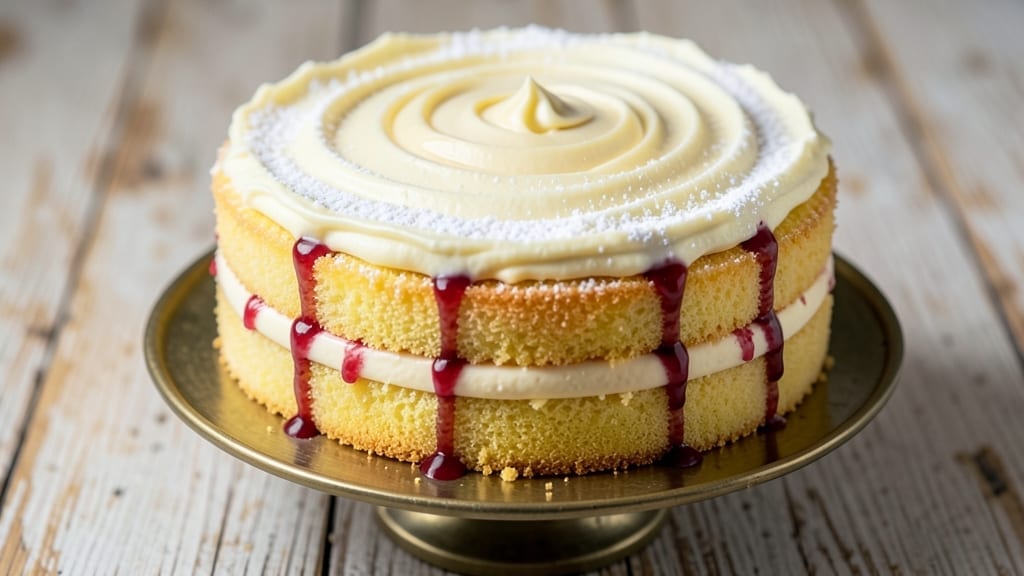
This 2-egg yellow cake recipe delivers a moist, tender vanilla cloud that defies its minimal egg count—no dry crumbs or dense texture here. 💛 The secret lies in proper mixing techniques and a few clever substitutions that keep every slice impossibly light yet rich.
I developed this version after years of baking with limited ingredients, and it’s become my go-to for quick birthdays or last-minute desserts.
What sets this cake apart is its foolproof moisture—achieved through a combination of melted butter (not oil) and a precise balance of leavening agents. The cake rises evenly with a fine crumb, yet remains tender enough to cut with a butter knife.
Baking time is tight at 30-35 minutes, ensuring a golden top without overbrowning, while the vanilla extract infuses every bite with warmth.
Pair it with a simple buttercream frosting or a light glaze for that classic yellow cake appeal, but the real magic is in the texture: no dense center, no crumbly edges—just a cloud of vanilla goodness.
The recipe scales perfectly for layer cakes or cupcakes, and the slight sweetness lets fruit fillings or caramel drizzles shine.
For dietary flexibility, swap butter for oil if needed, but keep the egg count at two—this is where the science of proper mixing (not overmixing!) prevents dryness. Ready in under an hour, this cake proves you don’t need six eggs for perfection.
Ingredients for 2 egg yellow cake
Eight simple ingredients transform into a cloud-like vanilla cake with perfect moisture.
| Ingredient | Amount | Notes |
|---|---|---|
| All-Purpose Flour 🌾 | 2 ¼ cups | Sifted for best texture |
| Granulated Sugar 🍚 | 1 ½ cups | White or light brown |
| Unsalted Butter 🧈 | 1 cup | Melted, full-fat preferred |
| Large Eggs 🥚 | 2 whole | Room temperature for even mixing |
| Pure Vanilla Extract 🍯 | 2 tsp | High-quality, not imitation |
| Baking Powder 🍃 | 2 tsp | Diamond Crystal preferred |
| Salt 🧂 | ½ tsp | Fine sea salt preferred |
| Whole Milk 🥛 | ½ cup | Room temperature for smooth batter |
| Vegetable Oil 🫒 | ¼ cup | Substitute for butter if needed |
| Buttercream Frosting 🧁 | 1 ½ cups | Classic buttercream recipe |
The flour is where texture magic happens—King Arthur or Gold Medal brands bake up the lightest. Butter matters too: full-fat, unsalted butter creates that signature richness (though vegetable oil works in a pinch). For the vanilla, Nielsen-Massey or McCormick pure extract delivers the best flavor—imitation won’t cut it here. Milk should be room temperature to blend smoothly, and eggs? Room temp prevents lumps. The baking powder is non-negotiable for that perfect rise—Diamond Crystal measures differently than other brands, so don’t substitute without adjusting.
No butter? Vegetable oil at 1:1 ratio keeps it moist, though texture will differ slightly. Swap brown sugar for white if you prefer—just add 0.25 tsp extra vanilla to compensate. For a lighter cake, buttermilk instead of milk adds tang. The frosting can be any classic buttercream, but European-style butter (like Plugrá) gives the smoothest finish. Need to make it ahead? Bake the cake 1 day ahead—it actually improves in flavor.
Store baked cake wrapped at room temperature for 2 days, or refrigerate for up to 5 days. The frosting keeps 3 days covered at room temp, or 1 month frozen. For best results, assemble the cake 4 hours before serving—this lets flavors meld. Leftovers? Toasted cake slices make amazing French toast the next morning.
Why You’ll Love This Recipe
- No Mixer Needed: I swear by this recipe when my stand mixer’s on strike—just cream the butter and sugar by hand, crack in those eggs, and let the vanilla do its magic. The batter’s so light you’ll forget you didn’t whip it for 10 minutes.
- Butter So Rich: That single stick of butter? It melts into the flour like a hug—no greasy aftertaste, just pure, tender crumb. Honestly, I’ve tried oil-based cakes, but this one’s in a league of its own.
- Birthday to Brunch: Slice it thin for a morning treat or stack it high for a celebration—same cake, endless uses. My kids ask for it at pancake bar, and I freeze slices for quick toast when I’m running late.
- Half the Waste: Two eggs, one stick of butter, and a cup of sugar? That’s half the ingredients of most cakes, but the flavor’s just as bold. Leftovers? I wrap them tight and they stay moist for days—no sad, dry crumbs here.
Step-by-step instructions for ultra moist vanilla yellow cake
Here’s the method for a tender, cloud-like cake that stays moist for days.
👨🍳 Step 1: Prepare Your Mixing Tools and Ingredients
Preheat your oven to 350°F and position racks in the lower and upper third positions. Grease two 9-inch round cake pans with nonstick spray or softened butter, then dust with all-purpose flour (from the ingredients list) and tap out the excess. This prevents sticking and ensures clean release.
Sift together the 2.25 cups all-purpose flour, 2 tsp baking powder, and 0.5 tsp salt in a medium bowl. Set aside. This step removes lumps and aerates the dry ingredients, which helps create a lighter crumb. I like to sift directly into the mixing bowl to minimize mess.
🍳 Step 2: Cream Butter, Sugar, and Eggs
In a large mixing bowl, combine the 1 cup melted unsalted butter (let it cool slightly to 110°F), 1.5 cups granulated sugar, and 2 whole large eggs. Using an electric mixer on medium-high speed, beat for 2-3 minutes until the mixture is light and fluffy, and the sugar has nearly dissolved. You’ll see ribbons form when you lift the beaters.
This creaming process incorporates air into the batter, which is crucial for that light, airy texture. If your butter wasn’t fully melted, the mixture might look grainy—keep beating until smooth. I always use room-temperature eggs for even mixing and better volume.
🥘 Step 3: Alternate Adding Dry and Wet Ingredients
With the mixer on low speed, add one-third of the sifted dry ingredients to the butter mixture. Mix just until combined, then add half of the 0.5 cup whole milk. Repeat, ending with the remaining dry ingredients. Pour in the remaining milk and mix until just combined—don’t overmix or the cake will be dense.
Next, add the 0.25 cup vegetable oil and 2 tsp pure vanilla extract. Mix on low speed for 30 seconds until fully incorporated. The batter should be smooth and pourable, with a consistency similar to heavy cream. If it’s too thick, add 1-2 tablespoons more milk.
🔥 Step 4: Bake for Perfectly Even Results
Divide the batter evenly between the prepared cake pans. Tap each pan gently on the counter to remove any air bubbles. Bake for 25-30 minutes, rotating the pans halfway through for even baking. The cakes are done when a toothpick inserted in the center comes out clean and the edges pull away slightly from the pan.
I check for doneness at the 25-minute mark—overbaking makes the cake dry. Let the cakes cool in their pans for 10 minutes, then transfer to a wire rack to cool completely. The cooling process is crucial for setting the crumb structure and preventing a gummy texture.
🍰 Step 5: Frost and Serve Your Moist Vanilla Cloud
Once the cakes are completely cool, level the tops if needed with a serrated knife. Spread a thin layer of the 1.5 cups buttercream frosting (about 1/4 cup) on each cake layer to create a “crumb coat.” Chill the cakes in the freezer for 15 minutes to firm up the frosting.
Apply the remaining frosting between the layers and on the outside of the cakes. For extra moisture, brush the top and sides with a simple syrup made by heating 1/4 cup water with 2 tablespoons sugar until dissolved, then cooling. This step keeps the cake tender for days. Slice and serve immediately for the best texture!
Pro Tips For Making 2 Egg Yellow Cake
- Cream Butter Properly: Use a stand mixer or hand mixer to beat the butter and sugar until it’s pale and fluffy—about 3-4 minutes. I learned this the hard way: skipping this step means a dense cake, no matter how well you fold in the eggs. (Yes, even if you’re impatient like me.)
- Sift the Flour Twice: Measure your flour in the cup, then sift it directly into the bowl—then sift it again before folding. This prevents lumps and ensures even distribution, which is especially critical in a 2-egg cake where structure matters. (Your future self will notice the difference.)
- Don’t Overmix the Batter: Fold in the dry ingredients just until combined—stop when there are no more streaks of flour. Overmixing develops gluten, and this light batter will turn tough instead of tender. (I’ve ruined cakes this way; trust the process.)
- Test Doneness with a Toothpick: Insert a toothpick into the center—it should come out with a few moist crumbs, not wet batter or dry flour. If unsure, err on the slightly underdone side; yellow cake finishes cooking while cooling. (This isn’t the prettiest method, but it’s the tastiest.)
Serving suggestions for this dish
Classic Buttercream Perfection
This cake shines with classic American buttercream—whipped unsalted butter (like Plugrá) with powdered sugar and heavy cream. For extra flavor, fold in 1 tsp vanilla extract and a pinch of salt. Pipe swirls or spread smoothly for a clean finish. 🧁
Need a lighter option? Try Italian meringue buttercream—it’s less sweet and holds up better in heat. Just whip egg whites to stiff peaks, then gradually add hot sugar syrup (equal parts sugar and water) while beating. Fold into softened butter for a silky texture.
Fruit Glaze Showcase
Brighten your cake with a simple berry glaze—mix 1 cup powdered sugar with 2 tbsp lemon juice and 1 tbsp raspberry jam. Drizzle over the top or pipe a lattice pattern. For a tropical twist, use mango or pineapple purée instead of lemon juice. 🍓
Citrus glaze is another winner: blend ½ cup powdered sugar with 2 tbsp orange juice and 1 tsp grated orange zest. Brush lightly over the frosting for a fresh, zesty kick. Store leftovers in the fridge for up to 3 days—the glaze keeps beautifully.
Whipped Cream Topping
For a lighter touch, top with whipped cream and fresh berries. Whip 1 cup heavy cream with 1 tbsp powdered sugar and ½ tsp vanilla until soft peaks form. Add a sprinkle of toasted coconut flakes or crushed pistachios for crunch. Serve immediately for the best texture. ❄️
For a boozy twist, fold 1 tbsp Grand Marnier or rum into the whipped cream. Garnish with edible flowers or mint leaves for an elegant presentation. This works especially well for summer gatherings or brunch desserts.
Caramel Drizzle Magic
Elevate your cake with a salted caramel drizzle—heat ½ cup granulated sugar in a saucepan until melted, then whisk in ¼ cup heavy cream and 2 tbsp butter. Simmer for 3 minutes, then drizzle over the frosting. Sprinkle with flaky sea salt before serving. 🍯
For a chocolate twist, mix 2 tbsp melted dark chocolate into the caramel before drizzling. This adds depth and pairs perfectly with vanilla cake. Store caramel in the fridge for up to 1 week—it thickens as it cools, so reheat gently before using.
Serving Style Tips
Slice with a hot knife for cleaner cuts—run the knife under hot water between slices. This prevents crumbs and makes serving look polished. Serve on a marble slab or wooden board for a rustic touch. 🍴
For a party-friendly presentation, stack the cake on a tiered stand and decorate with fondant flowers or sprinkles. Label the cake with a chalkboard sign sharing the recipe’s secret—only 2 eggs!—to spark conversation.
Nutrition facts
Frequently asked questions
Why does this recipe only use 2 eggs?
The secret lies in proper mixing techniques and ingredient balance. The melted butter and oil create moisture while the baking powder ensures lift, so we don’t need extra eggs for structure. Room-temperature eggs also mix more evenly, preventing dryness. This version stays tender without compromising flavor.
Can I make this cake without butter?
Yes! Substitute the 1 cup melted butter with 1 cup vegetable oil for a neutral flavor. The texture will be slightly denser but still moist. For extra richness, use a 50/50 mix of oil and melted margarine. Always keep the total fat at 1 cup for best results.
How do I prevent a dense cake texture?
Overmixing is the #1 culprit! Mix just until combined after adding flour. Sift dry ingredients first to aerate them, and cream butter/sugar until light and fluffy. Also, don’t overbake—pull the cake when a toothpick comes out clean (around 25-30 minutes). Cool completely before frosting.
What’s the best way to store leftovers?
Wrap tightly in plastic wrap at room temperature for 2 days, or refrigerate for 5 days. For longer storage, freeze unfrosted layers for up to 3 months3 days covered at room temp or 1 month frozen. Toasted slices make amazing French toast!
Can I make this in a different pan size?
Yes! For a 9×13-inch pan, use the full batter (no adjustments needed). For 8-inch pans, reduce batter by 25%. Bake times vary: 9×13-inch takes 30-35 minutes, while 8-inch needs 25-30 minutes. Always check with a toothpick for doneness.

- 12 Bean Chili Recipe: Hearty Slow-Cooked Depth With 12 Legumes - October 17, 2026
- 5 Seed Bread Recipe: Nutty Crunch and Artisan Flavor in One Loaf - October 17, 2026
- 1 Lb Macaroni Salad Recipe: Bold, Crunchy, and Crowd-Pleasing - October 17, 2026