
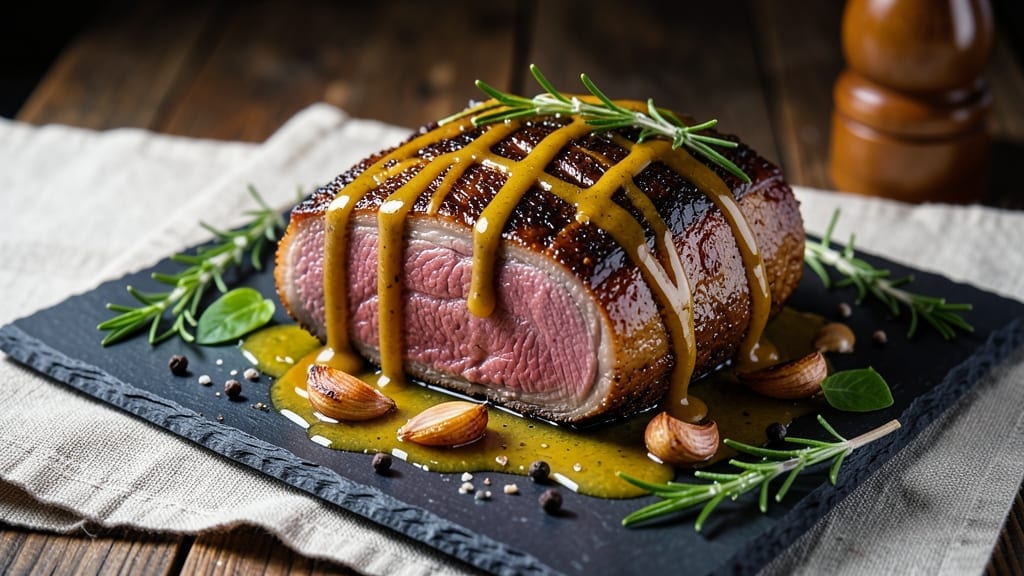
A 2 lb beef tenderloin roast cooked to a juicy pink core transforms a simple dinner into a showstopping centerpiece—one that rivals steakhouse quality. The secret lies in precise temperature control and a simple herb crust that adds depth without overpowering the beef’s natural richness.
I’ve perfected this method after years of testing, ensuring every slice stays tender and flavorful from edge to center.
This recipe delivers a foolproof approach for home cooks: no fancy equipment, just a reliable thermometer and basic pantry staples. The herb crust—made with Dijon, garlic, and fresh rosemary—seals in moisture while creating a subtle crust that enhances the beef’s natural sweetness.
Cooking at 400°F for 20-25 minutes guarantees a perfect medium-rare finish, with a 10-minute rest ensuring juices redistribute for maximum tenderness.
What you’ll achieve is a restaurant-quality roast with a golden crust, pink center, and melt-in-your-mouth texture. The aroma alone will have everyone gathering at the table, and each slice will be so tender it practically falls apart.
This is the kind of dish that elevates a weeknight dinner into an occasion—without the stress of complicated techniques.
Serve with roasted garlic mashed potatoes or a crisp green salad to balance the richness. The leftovers reheat beautifully for sandwiches the next day. Here’s how to make it flawless every time.
Ingredients for 2 lb beef tenderloin roast
Nine simple ingredients transform a basic roast into a restaurant-worthy centerpiece—tender, juicy, and packed with herb-infused flavor.
| Ingredient | Amount | Notes |
|---|---|---|
| Beef Tenderloin Roast 🥩 | 2 lb | Center-cut, trimmed of silver skin |
| Fresh Rosemary 🌿 | ½ cup | Finely chopped, stems removed |
| Fresh Garlic Cloves 🧄 | 6 cloves | Minced, or pre-minced for convenience |
| Dijon Mustard 🍯 | 2 tbsp | High-quality, smooth variety |
| Extra-Virgin Olive Oil 🫒 | 3 tbsp | For crust and searing |
| Kosher Salt 🧂 | 1 ½ tsp | Diamond Crystal preferred |
| Freshly Ground Black Pepper 🌶️ | 1 tsp | Coarsely cracked |
| Unsalted Butter 🧈 | 2 tbsp | Softened, for basting |
| Fresh Thyme Leaves 🌿 | ¼ cup | Chopped, or 1 tbsp dried |
| All-Purpose Flour 🌾 | 1 tbsp | For dusting |
The beef tenderloin is the star, so choose center-cut—it’s more tender and less likely to have connective tissue. Costco or Whole Foods usually carry excellent quality, but any reputable butcher will have it. Look for a piece with good marbling and a vibrant red color. Trim off any silver skin before cooking, as it can make the meat tough. The herb crust relies on fresh rosemary and thyme—buy sprigs and chop them yourself for the best flavor. If you’re short on time, dried herbs work at one-third the amount, but fresh is ideal. The Dijon mustard adds depth, so avoid the powdered kind—it’s a game-changer for the crust.
No fresh rosemary? Dried rosemary at half the amount gets you close, though it won’t be as aromatic. Short on garlic? Garlic powder works in a pinch, but fresh minced is worth the effort. The olive oil should be extra-virgin—Trader Joe’s or local olive oil shops have great options. If you don’t have Dijon, whole-grain mustard is a decent substitute. The butter for basting? Full-fat is a must—don’t skimp here. For the crust, if you’re worried about sticking, dust the roast with flour right before searing. And if you’re cooking for a crowd, double the herb mixture—it’s worth the extra effort.
This roast reheats beautifully—wrap tightly in foil and warm in a 300°F oven for 10-15 minutes. Leftovers keep for 3-4 days in the fridge, and they freeze well for up to 3 months. I always slice it against the grain for maximum tenderness, and the leftovers make amazing sandwiches the next day. The herb crust adds great flavor, so save any extra—it’s perfect for basting other meats or drizzling over roasted veggies.
Why You’ll Love This Recipe
- Here’s what sold me: I use this for everything. A quick weeknight dinner when I’m exhausted? Check. A showstopper for date night? Also check. Even my picky uncle—who usually skips the roast—asks for seconds. The Dijon mustard gives it that sophisticated kick without screaming “fancy.”
- Foolproof Seasoning: I swear by the rosemary and garlic combo—just a few sprigs and cloves rubbed right into the meat. No fancy marinating, no guessing: that fragrant crust forms while it roasts, and honestly? It’s the kind of flavor that makes you want to eat it straight from the pan.
- One-Pan Magic: Between us, this is the kind of recipe that turns “I don’t feel like cooking” into “I’ll have dinner ready in 45 minutes.” Tenderloin roasts are forgiving, the mustard adds depth without fuss, and the olive oil keeps it juicy. Minimal chopping, zero cleanup—just slice and serve.
- Weeknight to Weekend: Here’s what sold me: I use this for everything. A quick weeknight dinner when I’m exhausted? Check. A showstopper for date night? Also check. Even my picky uncle—who usually skips the roast—asks for seconds. The Dijon mustard gives it that sophisticated kick without screaming “fancy.”
Step-by-step instructions for herb-crusted beef tenderloin roast
Here’s how to achieve that perfect pink center with a flavorful herb crust every time.
Prep the Roast and Create the Herb Crust
Remove the beef tenderloin roast from the refrigerator and let it sit at room temperature for 30 minutes—this ensures even cooking. Pat it dry completely with paper towels, which is crucial for that crispy exterior. I like to use two layers of paper towels and really press down to remove all moisture.
In a small bowl, combine the 0.5 cup fresh rosemary, 0.25 cup fresh thyme leaves, 6 cloves minced garlic, 1.5 teaspoons kosher salt, and 1 teaspoon freshly ground black pepper. Mix well to create your herb blend. Then, in a separate small bowl, whisk together the 2 tablespoons Dijon mustard and 3 tablespoons extra-virgin olive oil until fully combined.
Coat and Sear the Roast
Place the roast on a piece of parchment paper and spread the Dijon mustard mixture evenly over the entire surface, including the ends. This creates a flavorful barrier that helps keep the meat moist. Then, press the herb blend firmly into the roast, covering it completely. The herbs should stick to the surface, creating that beautiful crust.
Heat your oven to 425°F. Place the roast on a rack set inside a roasting pan, fat-side up. This positioning allows the fat to render down and baste the meat as it cooks. Before putting it in the oven, sear the roast on all sides in a hot skillet with 1 tablespoon olive oil for 1-2 minutes per side until you see a deep golden-brown color.
Roast to Perfect Medium-Rare
Transfer the seared roast to the preheated oven and roast for 20-25 minutes. Here’s the thing—you want the internal temperature to reach 125°F for medium-rare. I use a meat thermometer for this, inserting it into the thickest part of the roast. The roast will continue to rise about 5°F after you remove it from the oven, so pull it out when it hits 120°F.
During the last 10 minutes of roasting, place the 2 tablespoons softened butter in a small dish and set it near the roast. This allows the butter to melt slightly and create a delicious basting sauce. Brush this butter mixture over the roast just before removing it from the oven for an extra layer of flavor.
Rest and Slice for Maximum Juiciness
Once the roast reaches the desired temperature, transfer it to a cutting board and let it rest for 15 minutes. This resting period is critical—it allows the juices to redistribute throughout the meat, ensuring each slice is moist and flavorful. Don’t skip this step, no matter how tempting it is to slice immediately.
After resting, slice the roast into 1-inch thick medallions against the grain. The herb crust should be fragrant and slightly crispy, while the interior should be a beautiful pink with a hint of red in the center. Serve immediately with your favorite sides, and enjoy the perfect balance of tender, juicy beef with a robust herb crust.
Pro Tips For Making 2 Lb Beef Tenderloin Roast
- Sear First, Then Roast: Walk the tenderloin into a screaming-hot pan with olive oil—no rushing—until deep golden crust forms. After that, finish in the oven at 400°F (200°C) for 20-25 minutes per pound. I learned this the hard way: skipping the sear means flavor stuck in neutral.
- Smash That Garlic: Don’t just mince those cloves—smash them with the flat side of your knife first. The cell walls break, releasing more flavor into the mustard and oil. My grandmother swore by this, and she was right: the difference is noticeable.
- Skip the Overcrowded Pan: That roast needs space to breathe. If you’re searing in a pan, don’t toss in potatoes or onions first—wait until the meat’s browned, then add them to the oven. Crowding steams instead of sears, and that’s a missed opportunity.
- Rest Under Foil: After pulling the roast, tent it loosely with foil and let it sit for 10 minutes. I know, I know—you’re hungry. But cutting into it too soon means dry slices. This keeps the juices locked in where they belong.
Troubleshooting perfect results
Uneven Cooking
If your roast emerges with a cold center or overcooked edges, the issue is likely uneven heat distribution. Tenderloin is a small cut, so rotate the roasting pan halfway through cooking to ensure even exposure.
I also recommend using a wire rack in your roasting pan—this allows hot air to circulate underneath, preventing steam buildup that can make the exterior cook faster than the center. 🌡️
Another common culprit is room-temperature prep. If your roast hasn’t rested at room temperature for 30 minutes before cooking, the interior will stay colder longer. Trust me, this step is non-negotiable—it’s the difference between a perfect medium-rare and a sad, overcooked mess.
Dry or Tough Meat
When your tenderloin turns out dry or tough, it’s usually from overcooking or skipping the rest. The internal temperature should never exceed 125°F for medium-rare—any higher, and the proteins tighten up, squeezing out moisture.
I can’t stress enough: pull it out at 120°F and let it rest for 15 minutes before slicing. This resting time is when the juices redistribute—skipping it means dry, stringy meat.
If you’re concerned about drying, baste with butter during the last 10 minutes of roasting. The fat in the butter adds moisture and flavor, creating a protective seal. I also recommend searing the roast first—this locks in juices and builds a flavorful crust that keeps the meat tender.
Herb Crust Not Sticking
The herb mixture might fall off if the roast isn’t completely dry before applying the crust. Pat it down with two layers of paper towels—this step is crucial. If the herbs still won’t stick, mix 1 tablespoon all-purpose flour into your herb blend.
The flour acts as a binder, helping the crust adhere. I’ve also found that pressing the herbs firmly into the roast (almost like a massage) ensures they stay put during cooking. 💪
Another trick? Chill the roast for 10 minutes after coating it with the herb mixture. This helps the crust set slightly before it hits the oven. If you’re still struggling, lightly dust the roast with flour before adding the herb blend—it creates a better grip.
Temperature Fluctuations
If your oven runs too hot or too cold, your roast won’t cook evenly. Invest in an oven thermometer—they’re cheap and save you from guesswork. I use a Thermoworks Oven Thermometer, and it’s a game-changer.
If your oven is 10-15°F off, adjust your cooking time accordingly. For example, if your oven runs 10°F hot, reduce the temperature by 10°F and add 5-10 minutes to your cook time.
Also, avoid opening the oven door during cooking—every time you peek, you lose 10-15°F of heat and extend cooking time. If you’re worried about doneness, use a meat thermometer instead. It’s the only way to guarantee accuracy, especially with a small cut like tenderloin.
Nutrition facts
Frequently asked questions
How long should I let a 2 lb beef tenderloin rest before slicing?
Always let your roast rest for 15 minutes before slicing. This crucial step allows the juices to redistribute throughout the meat, ensuring each slice stays tender and moist. Skipping the rest time results in dry, stringy beef that falls apart when cut.
Can I cook a 2 lb beef tenderloin to medium instead of medium-rare?
Yes, but adjust your target temperature to 140°F for medium doneness. Remove the roast from the oven when it hits 135°F (it will rise 5°F during resting). Medium beef tenderloin will be slightly firmer but still juicy if cooked properly. For best results, use a meat thermometer to avoid overcooking.
What’s the best way to reheat leftover beef tenderloin?
Wrap leftovers tightly in foil and reheat in a 300°F oven for 10-15 minutes until warmed through. For quick reheating, use a skillet over medium-low heat with a splash of beef broth. Never microwave—it makes the meat tough and dry. Leftovers keep for 3-4 days in the fridge.
Why does my beef tenderloin come out dry even when cooked to medium-rare?
Dry tenderloin usually means overcooking or skipping the rest. The internal temp should never exceed 125°F for medium-rare—any higher squeezes out moisture. Also ensure you’re slicing against the grain and using a sharp knife. For extra moisture, baste with butter during the last 10 minutes of roasting.
Can I substitute fresh herbs with dried in this recipe?
Yes, but use one-third the amount of dried herbs (e.g., 1 tbsp dried rosemary instead of 0.5 cup fresh). Fresh herbs provide more vibrant flavor and aroma, but dried works in a pinch. For best results, crush dried herbs between your fingers to release their oils before mixing with the mustard and oil.

- 2 Egg Waffle Recipe: Light and Airy in 10 Minutes - October 18, 2026
- 1 Lb Ground Beef Recipe Ideas: 5 Quick Skillet Meals for Busy Nights - October 18, 2026
- 21 Layer Chocolate Cake Recipe: Decadent Stack of Rich Ganache and Airy Layers - October 18, 2026