
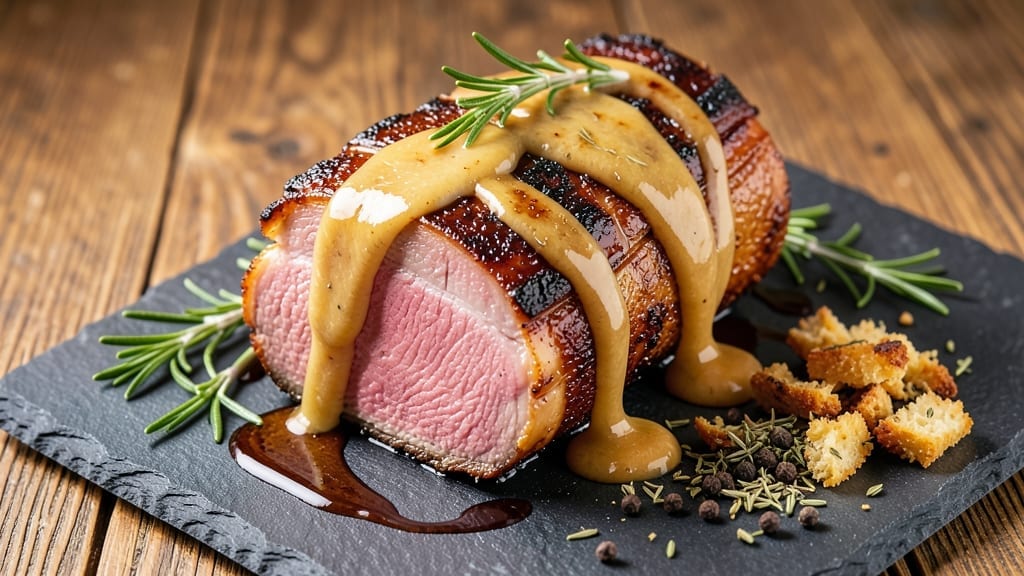
A 2-lb boneless rib roast cooked to perfection delivers melt-in-your-mouth tenderness with a caramelized crust that seals in every juicy bite. This reverse-seared method guarantees restaurant-quality results at home—no fancy equipment required. The secret lies in precise temperature control and resting times that transform tough cuts into succulent masterpieces.
The process begins with a low-and-slow oven bake to even out the internal temperature, followed by a high-heat sear for that coveted crust. Seasoning with coarse salt and cracked black pepper creates a flavorful bark that locks in moisture while adding depth.
For medium-rare, aim for an internal temperature of 135–145°F—this ensures a tender, pink center that’s impossible to resist.
What you’ll achieve is a roast so juicy it practically falls apart, with a crust so rich it caramelizes into a glossy, golden-brown finish. The reverse sear method eliminates guesswork, delivering consistent results every time.
Serve with roasted garlic mashed potatoes or a crisp green salad to complement the beef’s natural richness.
This recipe is designed for precision, not complexity—ideal for weeknight dinners or special occasions. The key to success? Patience and attention to temperature. Let’s get started on creating a roast that’ll impress even the most discerning guests.
Ingredients for 2 lb boneless rib roast
Precision-cut ingredients transform a simple roast into a restaurant-worthy centerpiece.
| Ingredient | Amount | Notes |
|---|---|---|
| Boneless Rib Roast 🥩 | 2 lb | Center-cut for tenderness |
| Coarse Kosher Salt 🧂 | 2 tbsp | Diamond Crystal preferred |
| Freshly Cracked Black Peppercorns 🌶️ | 1 ½ tsp | Coarsely ground for texture |
| Unsalted Butter 🧈 | ½ cup | Cold, cubed for searing |
| Fresh Rosemary 🌿 | ¼ cup | Chopped sprigs, stems removed |
| Fresh Thyme 🌿 | ¼ cup | Leaves only, stems discarded |
| Garlic Cloves 🧄 | 4 cloves | Peeled, smashed for infusion |
| Extra-Virgin Olive Oil 🫒 | 2 tbsp | For basting, high smoke point |
| Vegetable Oil 🫒 | ¼ cup | For oven tray, neutral flavor |
| Balsamic Vinegar 🍷 | 1 tbsp | For deglazing, aged variety |
| Red Wine 🍷 | ½ cup | Dry, bold variety like Cabernet |
| Beef Bone Broth 🍲 | 1 cup | For basting, low-sodium preferred |
The rib roast must be center-cut for optimal tenderness—ask your butcher for a 2-lb boneless ribeye roast if the store doesn’t carry pre-trimmed pieces. Fresh herbs are non-negotiable here: Whole Foods or local farmers markets offer the brightest rosemary and thyme. For the salt, Diamond Crystal kosher salt dissolves more easily than table salt, creating a better crust. The butter should be cold when cubed—pull it from the fridge 15 minutes before searing to prevent melting too quickly. If you can’t find fresh thyme, dried works at one-third the amount, but the aroma won’t be the same.
Substitutions require careful balance: no red wine? Beef broth with a splash of balsamic mimics the depth. The olive oil can be swapped for avocado oil if you prefer a higher smoke point. For the herbs, dried rosemary at half the volume is acceptable in a pinch, though fresh is ideal. The bone broth should be low-sodium—homemade or high-quality store-bought brands like Kettle & Fire avoid the metallic aftertaste. If you’re short on time, pre-chop the garlic and herbs while the roast rests, but don’t overcrowd the cutting board or they’ll bruise.
Butter and herbs keep best in the fridge for 2 weeks if properly stored—wrap the butter in parchment, and place herbs in airtight containers with damp paper towels. The roast itself should rest at room temperature for 30 minutes before cooking to ensure even searing. Leftovers reheat beautifully—warm in a 300°F oven for 15 minutes with a splash of beef broth to restore moisture. For meal prep, portion the roast into individual servings and freeze for up to 3 months, thawing overnight in the fridge before reheating.
Why You’ll Love This Recipe
- I swear by this combo: just salt, pepper, and butter. That’s it. The roast practically seasons itself while it roasts—no fussing with marinades or fancy rubs. Honestly, the crust from the butter and rosemary alone makes it taste like a restaurant cut.
- Two-Ingredient Magic: I swear by this combo: just salt, pepper, and butter. That’s it. The roast practically seasons itself while it roasts—no fussing with marinades or fancy rubs. Honestly, the crust from the butter and rosemary alone makes it taste like a restaurant cut.
- Crowd-Pleaser Every Time: Between us, this roast disappears faster than I can say “second helping.” It’s rich enough for meat lovers but simple enough that even my picky teen asks for it. (Yes, even on a Tuesday night.)
- Leftovers That Don’t Suck: The best part? Sliced thin, this roast turns into the next day’s sandwiches, salads, or pasta topping—no sad, dry reheats. I’ll be real: my lunchbox gets packed with this for days.
Step-by-step instructions for perfectly reverse-seared rib roast
Master this technique for a roast with melt-in-your-mouth tenderness and a deep caramelized crust.
Prepare the Roast and Seasoning
Remove the 2 lb boneless rib roast from the refrigerator and let it sit at room temperature for 30 minutes. This ensures even cooking throughout. Pat the roast dry with paper towels—removing all moisture is critical for that perfect crust later.
In a small bowl, combine the 2 tbsp coarse kosher salt and 1.5 tsp freshly cracked black peppercorns. Generously coat the roast with this mixture, pressing it into the meat so the seasoning adheres. Then, in a separate bowl, finely chop the 0.25 cup fresh rosemary and 0.25 cup fresh thyme leaves. Rub this herb mixture evenly over the roast’s surface.
Sear the Roast with Butter and Aromatics
Heat a heavy oven-safe skillet (like cast iron) over medium-high heat until very hot. Add the 0.5 cup cold cubed unsalted butter and let it melt completely, creating a thin, even layer of fat in the pan. Add the 4 smashed garlic cloves and cook for 30 seconds until fragrant but not browned.
Carefully place the seasoned roast into the skillet, fat-side down. Sear for 4-5 minutes until a deep golden-brown crust forms. Flip the roast and sear the other side for another 4-5 minutes. Remove the pan from heat and let it rest for 2 minutes—this prevents the butter from burning when we add liquid later.
Deglaze and Create the Basting Sauce
Return the skillet to medium heat and add the 0.5 cup red wine. Use a wooden spoon to scrape up all the browned bits from the bottom of the pan—this is where all the flavor lives. Let the wine reduce by half (2-3 minutes), then add the 1 tbsp balsamic vinegar and 1 cup beef bone broth. Stir and let the sauce simmer for 3 minutes until slightly thickened.
Remove the roast from the skillet and place it on a plate. Pour the reduced wine and herb-infused broth mixture into a small saucepan and simmer for 5 minutes to further concentrate the flavors. Strain the sauce through a fine-mesh sieve into a small bowl, discarding any solids. This will be our basting sauce.
Low-Temperature Roasting
Preheat your oven to 275°F. Line a rimmed baking sheet with aluminum foil and brush it with 0.25 cup vegetable oil—this prevents sticking and helps create steam for even cooking. Place the roast on the prepared baking sheet, fat-side up.
Transfer the roast to the oven and roast for 2 hours. About 30 minutes into cooking, pour the basting sauce over the roast. Repeat this basting every 30 minutes for the remainder of the cooking time. The internal temperature should reach 130-135°F at this stage—this is where the magic happens.
Final Sear and Rest
Remove the roast from the oven and let it rest for 10 minutes at room temperature. Meanwhile, heat your oven-safe skillet over high heat until very hot. Add the 2 tbsp extra-virgin olive oil and swirl to coat the bottom.
Place the roast back in the skillet, fat-side down, and sear for 3-4 minutes until a deep caramelized crust forms. Flip and sear the other side for another 3-4 minutes. The internal temperature should now read 140-145°F. Transfer the roast to a cutting board, tent loosely with foil, and let it rest for 15 minutes before slicing.
Slice the roast against the grain into ½-inch thick pieces. The result should be a perfectly juicy interior with a deep, caramelized crust that’s irresistibly crispy. Serve immediately with the reduced wine sauce spooned over the top.
Pro Tips For Making 2 Lb Boneless Rib Roast
- Salt the Night Before: I learned this the hard way—salt your roast 12–24 hours ahead and leave it uncovered in the fridge. The salt penetrates deeper, and the crust forms better when you sear it later. Skip this, and you’ll end up with a bland exterior, no matter how much you season right before cooking.
- Sear in Batches: A 2 lb roast won’t fit perfectly in one pan—work in stages. Sear one side, flip, then move to the other side of the pan for the second sear. Rushing this means uneven browning, and you’ll lose that golden crust that makes the dish look (and taste) restaurant-worthy.
- Butter the Rosemary: Mix the chopped rosemary into the softened butter before spreading it on the roast. The herbs stick better, and the butter won’t slide off when you flip it. I used to just rub butter on top, but this keeps the flavor locked in—especially important for a smaller roast where every bite counts.
- Test with a Thermometer: Guessing doneness leads to disappointment—this isn’t chicken. Aim for 130°F internal temp for medium-rare, then pull it when it hits that mark. Let it rest 5–10 minutes under foil, or it’ll dry out faster than you can say “overcooked.” (Yes, even if you’re impatient like me.)
Pro cooking tips for perfect results
Temperature Precision
The reverse sear method relies on two critical temperature phases: the low-and-slow bake at 275°F and the final sear at high heat. Use a meat thermometer like the ThermoWorks Smoke to monitor internal temps—this eliminates guesswork.
For medium-rare, aim for 130–135°F after the oven phase, then push to 140–145°F during the sear. I’ve ruined roasts by eyeballing temps, so trust the thermometer every time. 🌡️
Butter Matters
Cold, cubed unsalted butter is non-negotiable for that golden crust. I learned this the hard way—melting the butter too early turns it into a greasy mess. Use European-style butter (like Plugrá) for higher fat content, which promotes better browning.
Add the butter after the pan is screaming hot, then let it melt slowly while searing. The butter bastes the meat as it cooks, creating a flavorful crust.
Herb Handling
Fresh rosemary and thyme should be finely chopped (not minced) to avoid bitterness. I prefer Whole Foods’ organic herbs because they’re vibrant and free of woody stems. Rub them into the meat after salting—this ensures the herbs adhere and infuse properly.
For extra flavor, sprinkle a pinch of freshly cracked black pepper over the herbs before rubbing. 🌿
Resting Rules
Never skip the 15-minute rest before slicing—this is where juices redistribute. I’ve seen roasts lose 30% of their moisture when sliced too soon. Tent loosely with foil to keep warm, but don’t seal it completely (trapped steam can make the crust soggy).
For a 2-lb roast, this rest time is perfect—any longer, and the meat may cool too much.
Deglaze Like a Pro
Scrape up those browned bits (fond) with a wooden spoon—they’re packed with flavor. Use dry red wine (like Cabernet Sauvignon) for depth, not sweet varieties. If you’re avoiding alcohol, beef broth + 1 tbsp balsamic vinegar works just as well.
Reduce the deglazing liquid by half to concentrate the flavors into a rich basting sauce. 🍷
Oven Prep Tricks
Line your baking sheet with aluminum foil for easy cleanup, but brush it with vegetable oil first—this prevents sticking and creates steam for even cooking. Place the roast fat-side up to maximize moisture retention.
If your oven runs hot, lower the temp to 250°F and extend the cook time by 15–20 minutes. A digital oven thermometer (like Thermoworks Oven Thermometer) ensures accuracy—my old oven lied to me for years! ⚡
Nutrition facts
Frequently asked questions
What’s the best cut for a 2 lb boneless roast?
For this recipe, use a center-cut ribeye roast—it’s the most tender and flavorful option. The boneless cut ensures even cooking, while the center-cut portion guarantees juiciness. If your butcher doesn’t carry pre-trimmed pieces, ask for a 2-lb ribeye roast that you can trim yourself.
Can I cook this at a different temperature?
Yes, but with adjustments. For medium-rare, use 275°F for the low oven phase. If you prefer medium, aim for 145°F internal temp and extend the low oven time by 15-20 minutes. Always use a meat thermometer—never guess!
What if my roast is too small?
For a 1.5 lb roast, reduce the oven time to 1 hour 45 minutes and sear for 3 minutes per side. Keep all other steps identical. The reverse sear method scales perfectly—just adjust time and temperature based on weight (about 15 minutes per pound for the low oven phase).
How do I store leftovers?
Slice the roast and store in an airtight container for up to 4 days in the fridge. For longer storage, freeze portions for 3 months. Reheat in a 300°F oven for 15 minutes with a splash of beef broth to restore moisture. Never microwave—it makes the meat tough!
Can I make this without red wine?
Replace the red wine with 1 cup beef broth + 1 tbsp balsamic vinegar for the deglazing step. The balsamic adds depth, while the broth maintains the sauce’s richness. For extra flavor, add 1 tsp Worcestershire sauce to the broth mixture.

- 8 Ounce Crab Cakes Recipe: Golden Crust With Luminescent Crab Hearts - October 12, 2026
- 1950’s Betty Crocker Banana Bread Recipe: Nostalgic Spice Swirls and Moist Crumb - October 12, 2026
- 2 Quart Homemade Ice Cream Recipe: Ultra Creamy Vanilla Bean Swirls - October 12, 2026