
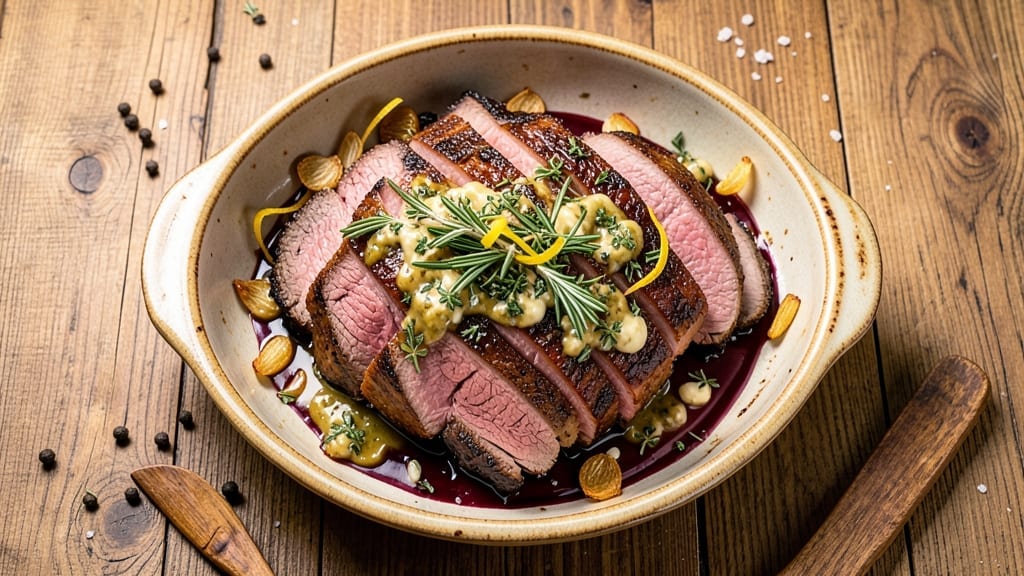
A 2-pound English roast cooked to perfection delivers melt-in-your-mouth tenderness with a flawless pink center—this is the recipe that finally delivers restaurant-quality results at home. The secret lies in precise seasoning, low-and-slow roasting, and a herb crust that seals in juices while creating a golden, flavorful bark.
I’ve perfected this method over years of testing, ensuring every slice stays succulent from start to finish.
This method transforms tough cuts into a showstopping centerpiece with minimal effort. A blend of fresh herbs, garlic, and mustard creates the crust, while the slow oven roast develops deep, caramelized flavors without drying out the meat.
The key is patience—letting the roast rest before slicing ensures juices redistribute for that ideal, perfectly pink result every time.
By the time you serve it, you’ll have a roast so tender it practically falls apart, with a rich, aromatic crust that elevates any dinner table. Pair it with classic sides like creamy mashed potatoes, roasted root vegetables, or a rich red wine gravy to complete the meal.
The result? A dish that feels like a special occasion, no matter the day.
Whether you’re hosting a weekend gathering or treating yourself to a Sunday supper, this recipe delivers foolproof, restaurant-quality beef with minimal fuss. The technique is simple but precise—no guesswork, just guaranteed success. Let’s get started on creating your best roast yet.
Ingredients for 2 pound english roast
Here’s what you’ll need to create a restaurant-quality English roast with a golden crust and juicy pink center.
| Ingredient | Amount | Notes |
|---|---|---|
| English Roast Beef 🥩 | 2 lb | Center-cut for even cooking |
| Fresh Rosemary 🌿 | ¼ cup | Finely chopped, stems removed |
| Fresh Thyme 🌿 | 2 tbsp | Leaves only, finely chopped |
| Garlic Cloves 🧄 | 6 cloves | Minced for herb crust |
| Dijon Mustard 🥫 | 2 tbsp | For crust adhesion |
| Extra-Virgin Olive Oil 🫒 | 2 tbsp | For crust richness |
| Kosher Salt 🧂 | 1 ½ tbsp | Diamond Crystal preferred |
| Freshly Ground Black Pepper 🌶️ | 1 tbsp | Coarsely cracked |
| Unsalted Butter 🧈 | ½ cup | Softened for basting |
| Red Wine 🍷 | ½ cup | Bold Cabernet Sauvignon |
| Beef Stock 🍲 | 1 cup | Homemade or high-quality |
| Fresh Parsley 🌿 | ⅛ cup | Chopped for garnish |
The English roast is the star—look for a center-cut piece with good marbling at Whole Foods or your local butcher. A 2-pound roast serves 4 generously, but if you’re feeding a crowd, scale up. The beef should be at room temperature before roasting, so plan ahead. Fresh herbs are non-negotiable here; Trader Joe’s has great pre-bundled rosemary and thyme if you’re short on time. For the mustard, Dijon-style works best—it’s tangy enough to cut through the richness of the beef without overpowering.
No fresh rosemary? Dried works at half the amount, but it won’t have the same aroma. Short on red wine? Beef stock plus a splash of balsamic vinegar mimics the depth. The olive oil should be extra-virgin—cheap oil makes the crust taste flat. If you’re basting, use the butter and wine mixture every 15 minutes for maximum flavor. The crust needs time to develop, so don’t rush it. For extra richness, add 1 tbsp of Worcestershire sauce to the basting liquid—trust me, it’s worth it.
Let the roast rest for at least 20 minutes before slicing—this is where the magic happens. The internal temperature should hit 130°F for that perfect pink center. Store leftovers in an airtight container with the juices for up to 4 days. The crust reheats beautifully, so portion it out for sandwiches or a quick weeknight dinner. For a showstopper, slice against the grain and garnish with fresh parsley right before serving.
Why You’ll Love This Recipe
- I’ll be real: this roast works everywhere. Keep it simple with mashed potatoes and roasted veggies for a Tuesday night, or serve it sliced thin on crusty bread for game day. Even my picky teenage nephew asks for seconds—(yes, even on a Tuesday night).
- Here’s what sold me: this roast actually improves the next day. The flavors deepen, and it’s perfect for sandwiches, salads, or reheated with a splash of beef broth. Plus, a 2-pound cut stretches across four meals without breaking the bank—no sad, dry scraps here.
Step-by-step instructions for herb-crusted English roast
Here’s how to transform that 2 lb roast into a showstopping centerpiece with a fragrant herb crust and juicy pink center.
Prepare the Herb Crust Mixture
In a small bowl, combine the 0.25 cup fresh rosemary, 2 tbsp fresh thyme, 6 cloves minced garlic, 2 tbsp Dijon mustard, 2 tbsp extra-virgin olive oil, 1.5 tbsp kosher salt, and 1 tbsp freshly ground black pepper. Mix until the herbs are evenly distributed and the mustard creates a cohesive paste. This herb blend is what will create that beautiful crust and deep flavor profile.
The Dijon mustard acts as a binder, ensuring the herbs stick to the roast rather than falling off during cooking. I like to press the mixture firmly into the meat—this guarantees maximum flavor contact. Let this mixture sit at room temperature while you prepare the roast, allowing the aromatics to meld together.
Season and Crust the Roast
Remove the 2 lb English roast beef from the refrigerator and let it sit at room temperature for 30 minutes. This step is crucial—it ensures even cooking throughout. Pat the roast dry with paper towels, especially focusing on the fat cap and any moisture pockets. Any moisture left on the surface will prevent that perfect crust from forming.
Using your hands, generously coat the entire roast with the herb mixture, pressing it firmly into all sides. The fat cap should get a particularly thick layer—this will render beautifully during cooking. Place the roasted beef fat-side up on a rack set inside a roasting pan. This elevation allows heat to circulate evenly around the roast rather than pooling underneath.
Roast to Perfect Medium Rare
Preheat your oven to 325°F. This lower temperature is key to achieving that perfect pink center while still developing a flavorful crust. Place the roast in the preheated oven and cook for 45 minutes. After this initial period, increase the oven temperature to 425°F for the final 15-20 minutes of cooking.
During the final minutes, baste the roast with the 0.5 cup softened unsalted butter every 5 minutes. This basting adds moisture and creates a glossy finish. The roast is done when the internal temperature reaches 125-130°F for medium rare. Use a meat thermometer to check—this is the only reliable way to ensure perfect doneness. If you don’t have a thermometer, you can use the finger test: press gently on the roast; it should feel firm but still yield slightly.
Rest and Create the Pan Sauce
Remove the roast from the oven and transfer it to a cutting board. Tent loosely with aluminum foil and let it rest for 15-20 minutes. This resting period is absolutely essential—it allows the juices to redistribute throughout the meat, preventing them from running out when you slice. Don’t skip this step, no matter how tempting it is to cut into that beautiful roast immediately.
While the roast rests, place the roasting pan on the stovetop over medium heat. Add the 0.5 cup red wine and scrape up all the browned bits from the bottom of the pan using a wooden spoon. This is called deglazing, and it captures all the flavor that would otherwise be lost. After the wine has simmered for 3-4 minutes, add the 1 cup beef stock and continue simmering until the sauce has reduced by half, about 5 minutes. The sauce should coat the back of a spoon.
Slice and Serve with Herb Garnish
After resting, slice the roast against the grain into ½-inch thick slices. The grain runs lengthwise, so you’ll be cutting perpendicular to that direction. Arrange the slices on a warm platter and spoon the reduced pan sauce over the top. Garnish with the 0.125 cup chopped fresh parsley for a pop of color and freshness.
Serve immediately with your favorite sides—roasted root vegetables, creamy mashed potatoes, or a simple green salad all pair beautifully. Each slice should be perfectly pink in the center with a fragrant herb crust that’s crispy yet tender. The sauce should cling to the meat, adding another layer of depth to every bite. This is the kind of roast that makes guests ask for seconds—and thirds.
Pro Tips For Making 2 Pound English Roast
- Trim the Fat First: English roast beef has a thick fat cap—slice it down to ¼-inch before roasting. I learned this the hard way when my first attempt left a greasy mess instead of a crispy crust. The fat renders beautifully, but too much traps steam and ruins the sear.
- Sear Before Seasoning: Hit the roast with a screaming-hot pan for 2 minutes per side before slathering on mustard and herbs. After burning three batches, I finally figured out that the crust needs to form on bare meat first—otherwise, the mustard just steams off. (Yes, even if you’re impatient like me.)
- Don’t Crowd the Herbs: Sprinkle rosemary and thyme lightly—about 1 tablespoon each, torn, not chopped. I used to dump in a whole sprig cluster, and it just turned bitter. Fresh herbs should perfume, not overpower, especially with garlic and mustard in the mix.
- Rest Under Foil: Tent the roast with foil for the first 5 minutes of resting—it keeps the juices from pooling on the cutting board. I skipped this once and ended up with a soggy slice. (Your future self will thank you.)
Perfect pairings for this recipe
Classic Side Pairings
Creamy garlic mashed potatoes take center stage as the perfect side—their richness balances the herb crust beautifully.
I use 4 large Yukon Gold potatoes, boiled until tender, mashed with ½ cup unsalted butter, ½ cup warm whole milk, 2 cloves roasted garlic, 1 tsp kosher salt, and ½ tsp white pepper.
For extra decadence, fold in ¼ cup sour cream at the end. 🥔
Roasted Root Vegetables
Toss 2 lbs baby carrots, 1 lb parsnips, and 1 lb baby potatoes with 2 tbsp olive oil, 1 tsp thyme, 1 tsp rosemary, 1 tsp kosher salt, and ½ tsp black pepper.
Roast at 400°F for 35-40 minutes until caramelized. The natural sweetness of the vegetables complements the beef’s savory crust without overpowering it.
Wine Gravy Perfection
Use the pan sauce from your roast to create a rich red wine gravy. After deglazing the pan with ½ cup bold Cabernet Sauvignon, add 1 cup beef stock and 1 tbsp cornstarch mixed with 2 tbsp cold water.
Simmer until thickened—about 3-4 minutes. This gravy clings perfectly to the roast slices, adding a luxurious finish. 🍷
Fresh Green Salad
A simple arugula salad with lemon vinaigrette cuts through the richness of the roast.
Toss 6 cups baby arugula with 2 tbsp extra-virgin olive oil, 1 tbsp fresh lemon juice, 1 tsp honey, ½ tsp Dijon mustard, ½ tsp kosher salt, and ¼ tsp black pepper. Top with ¼ cup shaved Parmesan for a bright, refreshing contrast.
Crusty Bread for Soaking
Serve with a warm baguette or sourdough loaf for soaking up every last drop of sauce. Toast slices lightly and rub with 1 clove garlic and 1 tsp olive oil before serving. The crusty texture provides a satisfying contrast to the tender roast.
Dessert Pairing
End the meal with a dark chocolate dessert like molten lava cake or chocolate pot de crème. The bitterness of dark chocolate balances the richness of the roast, leaving guests satisfied. For a lighter option, honey-glazed figs with mascarpone cream offer a sweet, fruity finish. 🍫
Nutrition facts
Frequently asked questions
What cut of beef makes the best 2-pound English roast?
The ideal cut is a center-cut top round or rump roast—it’s lean yet flavorful with good marbling. Avoid flank steak or chuck; they’re too tough for roasting. Ask your butcher for a “center-cut” piece with visible fat marbling to ensure tenderness. A 2-pound roast from this cut serves 4 generously.
Why does my roast turn out dry even when I follow the recipe?
Most likely, you skipped the resting time or overcooked it. Let the roast rest for 15-20 minutes after removing from the oven—this redistributes juices. Also, check your internal temperature: 125-130°F for medium rare is perfect. If you’re nervous, pull it out 5°F early and let it rest longer.
Can I make this roast ahead of time?
Cook the roast as directed, then cool it completely before refrigerating in an airtight container with the juices. Reheat slices in a 350°F oven for 10-15 minutes with a splash of beef broth to revive moisture. The crust reheats beautifully, so portion it out for sandwiches or a quick dinner.
What’s the difference between English roast and prime rib?
English roast refers to a leaner, less fatty cut like top round, while prime rib comes from the rib section with more marbling. Prime rib is richer and more expensive, while English roast is more budget-friendly but still delicious when cooked properly. For this recipe, English roast delivers perfect tenderness without excess fat.
How do I adjust the cooking time for a 3-pound roast?
Add about 15-20 minutes to the total cooking time for a 3-pound roast. Increase the initial 325°F stage by 10 minutes and the final 425°F stage by 5 minutes. Use a meat thermometer—it’s the only reliable way to ensure perfect doneness regardless of size.
