
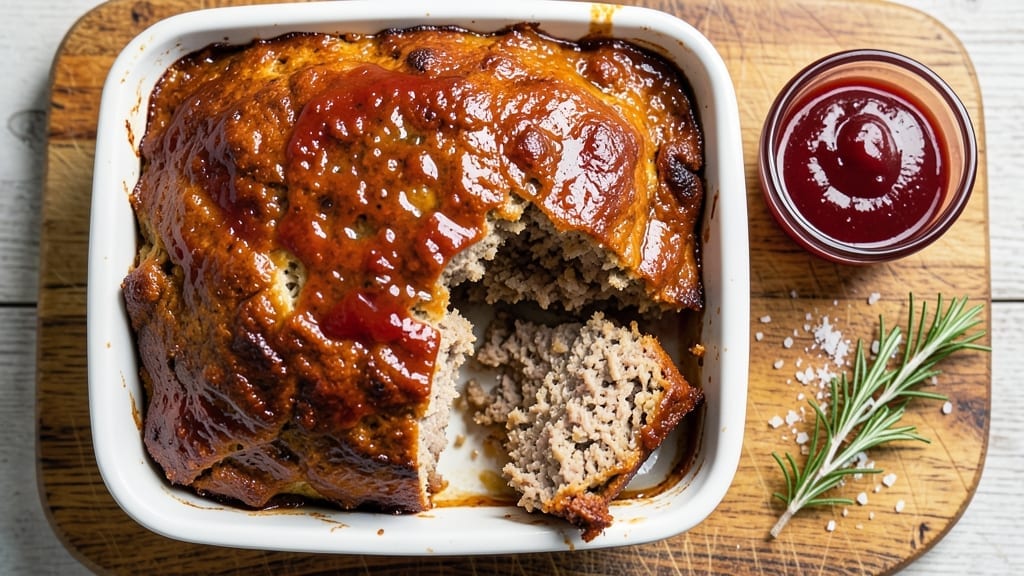
This 2-pound ground turkey meatloaf recipe delivers all the comfort of classic meatloaf with a lighter, juicier twist—no dry crumbles or soggy tops. The secret lies in a simple binder technique that keeps the turkey moist while creating that signature crispy glaze.
I perfected this version after years of battling dry meatloaf, and it never fails to impress, even with turkey’s tendency to dry out.
What sets this recipe apart is the foolproof glaze that forms a caramelized crust without requiring extra effort. A basic mix of ketchup, brown sugar, and Worcestershire sauce does the trick, brushing on just before baking ensures that perfect golden finish.
The meatloaf bakes at 375°F for 50-60 minutes, giving you time to prep sides or set the table.
By the time it emerges from the oven, you’ll have a juicy, tender meatloaf with a glossy, slightly sweet glaze that holds together beautifully. The texture is moist throughout, with just enough structure to slice neatly—no more crumbling disasters.
Serve with mashed potatoes, roasted vegetables, or a simple green salad for a complete meal.
For added flavor, consider stuffing the center with cheese, sun-dried tomatoes, or sautéed mushrooms before shaping. The optional variations let you customize while keeping the core technique simple. Let’s get started on this crowd-pleasing classic!
Ingredients for 2 pound ground turkey meatloaf
Juicy turkey meatloaf starts with these quality ingredients—simple yet essential for perfect texture and glaze.
| Ingredient | Amount | Notes |
|---|---|---|
| Lean Ground Turkey 🦃 | 2 lb | 93% lean or higher for moisture retention |
| Large Eggs 🥚 | 2 whole | Room temperature for even binding |
| Ketchup 🍅 | ½ cup | Unsweetened for authentic flavor |
| Brown Sugar 🍚 | 3 tbsp | Light or dark variety preferred |
| Worcestershire Sauce 🥫 | 1 tbsp | Vegetarian version if needed |
| Diamond Crystal Kosher Salt 🧂 | 1 tsp | Fine grain for even distribution |
| Ground Black Pepper 🌶️ | ½ tsp | Freshly cracked for robust flavor |
| Onion Powder 🧅 | 1 tsp | Freshly ground preferred |
| Garlic Powder 🧄 | 1 tsp | Not garlic salt |
| All-Purpose Flour 🌾 | ¼ cup | For structural integrity |
| Unsalted Butter 🧈 | 2 tbsp | Cold, cubed for glaze richness |
| Fresh Parsley 🌿 | ¼ cup | Chopped, for garnish |
| Olive Oil 🫒 | 1 tbsp | For greasing loaf pan |
The ground turkey’s fat content is critical here. 93% lean or higher ensures moisture without excess grease—Costco or Whole Foods carry high-quality options in bulk. If your turkey comes pre-ground, check the label for fat percentage; anything lower than 93% risks dryness. The eggs act as the binder, so room temperature eggs (taken out 30 minutes before mixing) incorporate better for a uniform texture. For the glaze, Heinz unsweetened ketchup is my go-to—it has the right balance of tang and sweetness without added sugars. Brown sugar adds caramelization to the glaze, so light or dark varieties work equally well; just avoid powdered sugar substitutes.
No Worcestershire sauce? Substitute with 1 tbsp soy sauce plus 1 tsp apple cider vinegar for umami depth. Fresh parsley is ideal for garnish, but dried parsley at one-third the amount works in a pinch. The all-purpose flour acts as a structural stabilizer—King Arthur or Gold Medal brands are reliable choices. For the glaze, if you’re avoiding butter, substitute with 2 tbsp olive oil, though butter creates a richer, more caramelized finish. The onion and garlic powders provide aromatic complexity; Penzeys brand offers high-quality, freshly ground options if you want to splurge. If you prefer a sweeter glaze, add an extra tablespoon of brown sugar, but don’t exceed 4 tablespoons total to avoid overpowering the turkey’s flavor.
This meatloaf keeps beautifully for 4 days in the refrigerator, wrapped tightly in aluminum foil. For longer storage, slice and freeze portions for up to 3 months—thaw overnight in the fridge before reheating. To reheat, cover with foil and warm at 350°F for 20-25 minutes or until internal temperature reaches 165°F. The glaze reheats well, so don’t hesitate to make extra for leftovers. For serving, I always garnish with fresh parsley just before plating—it adds a pop of color and freshness that elevates the dish. The meatloaf also freezes exceptionally well before baking, so you can prep the mixture ahead and bake straight from frozen (add 10-15 minutes to baking time).
Why You’ll Love This Recipe
- No-Fuss Mix-In: The ground turkey, eggs, and Worcestershire sauce come together in one bowl—no fancy techniques. I swear by the brown sugar-ketchup glaze for that caramelized crust without extra effort.
- Sweet-Savory Magic: That brown sugar in the glaze? It’s the secret weapon. The Worcestershire deepens the flavor while the ketchup keeps it tangy—like a cross between a classic meatloaf and a sticky, satisfying dessert.
- Lunchbox Hero: Slice it up and pack it for work or school lunches. The texture holds perfectly, and kids (and adults) actually eat their veggies when you mix in a handful of grated carrots or zucchini.
- Budget Meal Stretch: Two pounds feeds four hungry people for dinner and leftovers. The turkey’s lean but filling, and the glaze stretches to cover a whole loaf—no wasted ingredients here.
Step-by-step instructions for juicy ground turkey meatloaf
Here’s the method for a perfectly moist meatloaf with a glossy glaze—no dry crumbles or messy toppings.
Prepare the Binding Mixture
In a medium bowl, whisk together the 2 whole large eggs until frothy. Add the 0.5 cup ketchup, 1 tablespoon Worcestershire sauce, 1 teaspoon onion powder, 1 teaspoon garlic powder, 1 teaspoon Diamond Crystal kosher salt, and 0.5 teaspoon ground black pepper. Mix until fully combined—the eggs should create a smooth, slightly thickened base that will help bind the meatloaf without making it dense.
I like to let this mixture sit for 2 minutes while I prep the turkey. This resting period allows the seasonings to meld slightly, ensuring even flavor distribution throughout the meatloaf. The ketchup’s acidity also helps tenderize the lean turkey, which can be prone to drying out.
Combine Ingredients for Maximum Moisture
In a large mixing bowl, gently combine the 2 pounds of lean ground turkey with the egg mixture. Using your hands, mix just until the turkey is evenly moistened—overmixing develops gluten and creates a tough texture. Sprinkle the 0.25 cup all-purpose flour evenly over the mixture and fold it in with a spatula to distribute evenly.
The flour acts as a natural thickener and helps create that classic meatloaf texture without adding bulk. I press the mixture lightly in the bowl to ensure all the flour is incorporated, but I avoid compacting it too much—this keeps the meatloaf tender rather than dense. The goal is uniform moisture distribution without overworking the protein.
Shape and Prepare for Baking
Lightly grease a 9×5-inch loaf pan with 1 tablespoon olive oil. Transfer the turkey mixture to the prepared pan and shape it evenly, pressing gently to remove any air pockets. The loaf should be about 1 inch thick—this size bakes evenly without drying out the center. Smooth the top with your fingers for an even surface.
Here’s the thing—don’t overpress. You want just enough compression to create a smooth loaf, but too much pressure can squeeze out moisture and create a dry result. The sides should be slightly textured from your fingers, which helps the glaze adhere better later. Place the pan on a baking sheet to catch any potential drips.
Create the Signature Glaze
In a small bowl, combine the 3 tablespoons brown sugar and the 2 tablespoons cold unsalted butter. Rub the mixture between your fingers until it forms a crumbly paste—this should take about 30 seconds. Spread this evenly over the top of the meatloaf, pressing down lightly with the back of a spoon to ensure good contact with the surface.
The butter and brown sugar create a caramelized crust that seals in moisture while adding sweetness to balance the savory flavors. I press it down gently to create a smooth, even layer—this prevents thick spots that might burn during baking. The glaze should look like a thin, even coating rather than clumpy patches.
Bake to Juicy Perfection
Preheat your oven to 350°F. Bake the meatloaf for 60-65 minutes until the internal temperature reaches 160°F and the edges are deep golden brown. The glaze will bubble and caramelize, creating that beautiful glossy finish we’re after. If the top browns too quickly, loosely tent it with aluminum foil for the last 10 minutes to prevent over-browning.
This is where patience pays off—lean turkey needs time to cook through without drying out. The internal temperature is your best indicator, but also watch for the glaze to set and the edges to pull away slightly from the pan. The meatloaf should feel firm to the touch but still spring back slightly when pressed gently with a finger.
Rest and Garnish
Remove the meatloaf from the oven and let it rest in the pan for 10 minutes. This resting period allows the juices to redistribute throughout the meatloaf, ensuring each slice remains moist. While it rests, sprinkle the 0.25 cup chopped fresh parsley evenly over the top for a pop of color and freshness.
I know it’s tempting to slice immediately, but resisting this urge makes all the difference in texture. The parsley not only looks beautiful but also adds a bright contrast to the rich, savory flavors. Serve the meatloaf with your favorite sides—mashed potatoes, roasted vegetables, or a simple green salad all pair beautifully with this juicy centerpiece.
Pro Tips For Making 2 Pound Ground Turkey Meatloaf
- Preheat Pan First: Lean ground turkey dries out fast, so start with a hot, oiled pan—425°F is your sweet spot. I learned this the hard way after my first batch turned into a sad, rubbery brick because I skipped this step. The initial sear locks in moisture while the edges crisp up.
- Mix Eggs Last: Add those eggs right before shaping—no need to overwork the turkey. I used to toss them in early, and the meatloaf always ended up dense. Stir them in just until combined, then fold gently. The texture stays light, and the eggs bind without turning it into a gluey mess.
- Skip the Overmixing: Once you’ve got the turkey, ketchup, and Worcestershire combined, stop. Overmixing makes the meatloaf tough, and nobody wants that. Press it into the pan once, then let it rest—no need to “fix” the shape. Your future self will thank you when it slices neatly.
- Baste with Pan Juices: After 20 minutes in the oven, pull the meatloaf out and spoon those caramelized pan juices over the top. The brown sugar in your glaze will cling to them, creating a sticky, glossy crust that’s way more flavorful than just ketchup. Do this once, then finish baking—it’s the thing that matters most.
Storing and reheating this 2 pound ground turkey meatloaf
Refrigerator Storage
Your turkey meatloaf stays fresh for up to 4 days in the refrigerator when stored properly. After it cools completely, wrap it tightly in aluminum foil or place it in an airtight container with a damp paper towel to maintain moisture.
I like using glass Pyrex containers because they keep the meatloaf from absorbing fridge odors. Always let it cool for 2 hours before storing to prevent condensation, which can make the texture soggy. 💫
Freezer Prep Tips
For longer storage, freeze the meatloaf before or after baking. If baking first, slice it into portions before freezing. If prepping ahead, shape the loaf into your pan, cover tightly with plastic wrap, then place in a freezer bag with all air removed.
This method preserves texture for up to 3 months. For best results, thaw overnight in the fridge before reheating. Never microwave frozen meatloaf directly—this creates uneven heating and dry spots.
Reheating Methods
For stovetop reheating, cover the meatloaf with foil and warm in a skillet over medium-low heat for 15-20 minutes, adding 2 tablespoons water or broth to prevent drying.
The oven method is gentler: wrap the meatloaf in foil and reheat at 350°F for 20-25 minutes until reaching an internal temperature of 165°F. Microwave reheating works in a pinch—cover with a damp paper towel and heat in 30-second intervals on medium power, stirring between each interval.
Glaze Preservation
The caramelized glaze reheats beautifully, but if you’re concerned about it drying out, brush on a little extra ketchup mixture before reheating. For extra flavor, add a pat of butter to the reheating pan or drizzle with a little olive oil to restore moisture.
The glaze’s sweetness actually intensifies slightly when reheated, so you might want to use slightly less sugar if you’re reheating leftovers. The parsley garnish should be added fresh after reheating for the best presentation. ✨
Make-Ahead Meatloaf
This recipe is perfect for meal prep! Shape the meatloaf mixture in your pan, cover tightly, and freeze it unbaked. When ready to cook, add 10-15 minutes to the baking time.
The glaze can be prepped separately and stored in the fridge for up to 1 week—just mix the brown sugar and butter when ready to bake. I often make two meatloaves on Sunday: one to eat fresh and one to freeze for busy weeknights.
The flavor actually improves after a day or two in the fridge, as the seasonings meld together. 💡
Serving Leftovers
Leftovers make fantastic sandwiches! Slice the meatloaf and serve on toasted sourdough or rye bread with a smear of Dijon mustard or horseradish cream. For a hearty meal, pile it high with shredded cheddar, sautéed mushrooms, and a drizzle of BBQ sauce.
The reheated meatloaf works well in meatloaf casseroles too—just layer with potatoes, onions, and gravy for a comforting one-pan meal. The glaze adds sweetness that balances the savory flavors perfectly in any application. 🍽️
Nutrition facts
Frequently asked questions
Why does this recipe use ground turkey instead of beef?
Ground turkey is leaner than beef, which makes it perfect for meatloaf—it stays moist without becoming greasy. The recipe includes extra moisture-boosting techniques like egg binding and a caramelized glaze to prevent dryness. Plus, turkey is a healthier protein option with less saturated fat while delivering the same satisfying texture and flavor.
Can I make this meatloaf in a different shape?
While the recipe calls for a traditional loaf pan, you can shape it into mini meatloaf muffins (using a muffin tin) or even a round loaf on a baking sheet. For best results, keep the thickness consistent—about 1 inch thick—to ensure even cooking. The glaze technique works the same way regardless of shape.
What’s the best way to check if the meatloaf is fully cooked?
Use a meat thermometer to check the internal temperature—it should reach 160°F in the thickest part. The edges should also be golden brown and slightly crisp. If you don’t have a thermometer, cut into the center: the juices should run clear, not pink. The glaze should be bubbly and caramelized when done.
How can I make this meatloaf extra flavorful?
Add 1/2 cup grated onion or 1/4 cup sautéed mushrooms to the turkey mixture for deeper flavor. For a smoky twist, mix 1 teaspoon smoked paprika into the egg mixture. You can also stuff the center with cheese (like cheddar or Swiss) or sun-dried tomatoes before shaping—just make a well in the center and press the filling down gently.
Why did my meatloaf turn out dry?
Most likely, your turkey was too lean (below 93% lean) or you overmixed the batter, which develops gluten and makes it tough. Another common mistake is skipping the rest time after baking—always let it sit for 10 minutes before slicing. For extra moisture, try adding 1/4 cup breadcrumbs (soaked in milk) or 2 tablespoons Greek yogurt to the mixture.

- 77 Texas BBQ Taco Sauce Recipe: Smoky Chipotle Heat With Caramelized Depth - October 19, 2026
- 1930’s Chocolate Cake Recipe: Vintage Richness With Vanilla Bean Swirls - October 19, 2026
- 6 Ingredient Bread Recipe: No-Knead Wonder With Pantry Staples - October 19, 2026