
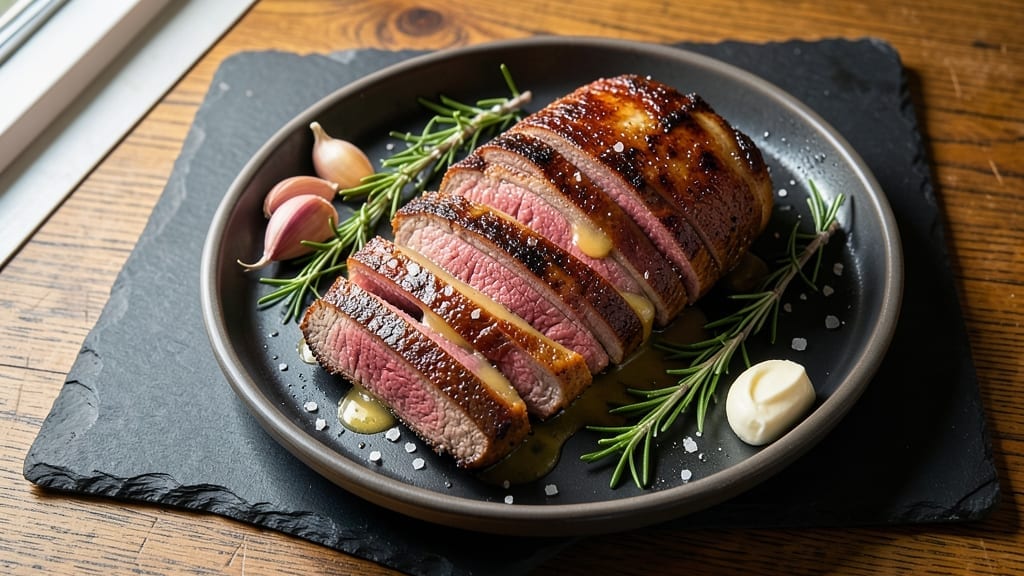
A 2-pound roast beef recipe that delivers juicy pink perfection requires precision—not guesswork. This method combines slow roasting with a high-heat finish to lock in moisture while creating a caramelized crust.
The result? A tender, flavorful center cut that holds its shape beautifully on the plate, perfect for special occasions or Sunday dinners.
The secret lies in reverse searing: first roasting the beef low and slow to even internal temperature, then finishing it in a screaming-hot pan for a crisp exterior. This technique ensures a juicy interior while delivering that coveted restaurant-quality crust.
With just a few simple ingredients and careful timing, you’ll achieve a roast that’s both impressive and foolproof.
By the time you’re done, you’ll have a perfectly cooked roast with a deep, rich flavor and ideal texture—whether you prefer medium-rare, medium, or medium-well. The resting time is crucial here, allowing juices to redistribute for that first slice that’s as satisfying as it is delicious.
Serve with classic sides like roasted potatoes or a rich red wine gravy.
This recipe isn’t just about technique—it’s about confidence. Whether you’re hosting a dinner party or treating yourself to a luxurious meal, this method guarantees a roast beef that’s worth every minute of effort. Let’s get started on creating your perfect centerpiece.
Ingredients for 2 pound roast beef
Precision-crafted ingredients deliver restaurant-quality roast beef with perfect pink centers and caramelized crusts.
| Ingredient | Amount | Notes |
|---|---|---|
| Center-Cut Ribeye Roast 🥩 | 2 lb | 1.5-2 inches thick, bone-in preferred |
| Kosher Salt 🧂 | 1 ½ tbsp | Diamond Crystal preferred, coarse grain |
| Freshly Ground Black Pepper 🌶️ | 1 tsp | Cracked peppercorns for maximum flavor |
| Unsalted Butter 🧈 | 2 tbsp | Cold, cut into 4 equal pats |
| Garlic Cloves 🧄 | 4 cloves | Smash flat with side of knife |
| Fresh Rosemary 🌿 | ½ tsp | Finely chopped, woody stems removed |
| Fresh Thyme Leaves 🍃 | ½ tsp | Or 0.25 tsp dried thyme |
| Extra-Virgin Olive Oil 🫒 | 2 tbsp | For crust development, high smoke point |
| Yellow Onion 🧅 | 1 whole | Large, peeled, halved crosswise |
| Red Wine 🍷 | ½ cup | Bold dry variety like Cabernet Sauvignon |
| Beef Tallow or Duck Fat 🥓 | 1 tbsp | For high-heat searing, optional but recommended |
| Fresh Parsley 🌿 | ¼ cup | Chopped, for garnish (optional) |
The center-cut ribeye roast is non-negotiable for this technique—its marbling ensures juiciness while holding shape during reverse searing. Look for USDA Prime or Choice grade with visible fat cap at your butcher or high-end grocer like Whole Foods or D’Artagnan. Bone-in cuts develop richer flavor, but boneless works if you prefer. Trim excess fat to 0.25-inch thickness for even cooking. The garlic and herbs should be fresh—Penzeys Spices carries excellent dried alternatives if needed, but fresh delivers superior aroma. For the red wine, any bold dry variety works—Cabernet Sauvignon or Merlot from Trader Joe’s wine section are budget-friendly options that won’t overpower the beef.
No kosher salt? Diamond Crystal substitute works at a 1:1 ratio, but avoid table salt—its fine grains won’t adhere properly to the beef’s surface. Fresh herbs can be swapped for dried at one-third the amount, but toast the dried thyme and rosemary first for 30 seconds in a dry pan to enhance flavor. Running short on red wine? Beef stock with 1 tbsp balsamic vinegar mimics the acidity and depth. The tallow or duck fat is crucial for high-heat searing—if unavailable, use extra-virgin olive oil (though it won’t brown as dramatically). For a vegetarian-friendly alternative to the beef, consider portobello mushrooms marinated in soy sauce and balsamic, though texture will differ significantly. The butter must be cold when applied—soft butter will melt prematurely during roasting.
Store the roast uncovered on a wire rack in the fridge for up to 24 hours before cooking to dry-brine the surface. Once cooked, rest for 15-20 minutes before slicing—this is non-negotiable for moisture retention. Leftovers keep 3-4 days in the fridge, but reheat only once for optimal texture. For long-term storage, portion into vacuum-sealed bags and freeze for up to 3 months. The herb butter patties can be prepped ahead and frozen separately, then added during the final sear. Always bring the roast to room temperature before cooking—cold meat steams rather than sears, compromising crust development.
Why You’ll Love This Recipe
- Foolproof Timing: I swear by the 20-minute prep here—just a quick sear in the pan, garlic cloves smashed into the butter, and a sprinkle of salt and pepper. No fancy knife work or last-minute stress.
- Butter-Garlic Magic: That ribeye? It practically begs for the garlic-infused butter to melt into its crust. The first bite—where the crispy edge meets the tender, juicy center—is why I keep making this.
- Weeknight Hero: Between us, this is my go-to for game days or when friends drop by unannounced. Slice it thin, serve it with mashed potatoes, and suddenly you’re hosting like a pro.
- Leftovers That Win: Roast beef keeps perfectly for days, and honestly? The second day is even better. I toss slices into salads, wraps, or just reheat them with a splash of beef broth for a quick dinner. Zero waste, all flavor.
Step-by-step instructions for reverse-seared ribeye roast
Master this technique for a roast that’s perfectly pink inside with a caramelized crust every time.
Season and Sear the Roast
Pat the 2 lb center-cut ribeye roast dry with paper towels—this is critical for that crisp crust. In a small bowl, combine the 1.5 tbsp kosher salt and 1 tsp freshly ground black pepper. Rub this generously over all sides of the roast, pressing the seasoning into the meat so it adheres well. Let it sit at room temperature for 30 minutes while you prepare your equipment.
Heat a heavy-bottomed Dutch oven over medium-high heat. Add the 1 tbsp beef tallow or duck fat and let it melt completely. Place the roast in the pan fat-side down and sear for 4 minutes without moving it. You’ll see deep golden-brown crust forming—this is your foundation. Flip the roast and sear the other side for another 4 minutes. Transfer the roast to a plate and tent loosely with foil.
Slow Roast to Perfect Doneness
Preheat your oven to 275°F. Place the halved yellow onion in the Dutch oven with the seared roast, then pour in the 0.5 cup red wine. Scrape up any browned bits from the bottom of the pan—they’re packed with flavor. Add the 4 smashed garlic cloves, 0.5 tsp fresh rosemary, and 0.5 tsp fresh thyme leaves to the pan.
Return the roast to the Dutch oven, fat-side up, and transfer to the oven. Roast for 2 hours, or until the internal temperature reaches 115°F when measured with an instant-read thermometer. This low-and-slow approach ensures the roast stays juicy and tender throughout. The onions should be soft and caramelizing slightly by the end of this time.
Build the Crust Through High-Heat Searing
Remove the roast from the oven and let it rest for 5 minutes while you prepare for the final sear. Increase your oven temperature to 450°F. Cut the 2 tbsp unsalted butter into 4 equal pats and place them in the Dutch oven with the roast. Add the 2 tbsp extra-virgin olive oil to the pan.
Return the roast to the Dutch oven, fat-side up, and place it on the middle rack in the preheated oven. Roast for 15-20 minutes, rotating the pan halfway through, until the internal temperature reaches 130°F and the crust is deep mahogany brown. The butter should be bubbling and forming a golden crust on top of the roast. This final sear creates that coveted caramelized exterior while keeping the interior perfectly pink.
Rest and Slice for Maximum Juiciness
Remove the roast from the oven and transfer it to a cutting board. Tent loosely with foil and let it rest for 15-20 minutes. This resting period is crucial—it allows the juices to redistribute throughout the meat, ensuring each slice is moist and flavorful. During this time, remove the onions from the Dutch oven and set them aside.
Slice the roast against the grain into ½-inch thick slices. The meat should be perfectly pink in the center with a deep caramelized crust. Garnish each serving with the reserved caramelized onions and a sprinkle of the 0.25 cup fresh parsley. Serve immediately with any pan juices spooned over the top for maximum flavor.
Pro Tips For Making 2 Pound Roast Beef
- SEAR HARD FIRST: Take that ribeye straight from the fridge and hit it with a screaming-hot pan—no warming it up first. I learned this the hard way after serving a roast that was tender but bland; the crust is where the flavor lives, and you need that pan smoking to lock it in.
- SALT THE GARLIC: Crush those garlic cloves with a pinch of kosher salt before adding them to the butter—it mellows their sharpness and keeps them from burning. After burning three batches of garlic butter, I finally realized this was the missing piece.
- DON’T PUNCH THE MEAT: Resist the urge to stab the roast with a knife to check doneness—it’ll release juices and turn your perfectly cooked roast into a sad, dry mess. Use an instant-read thermometer and trust the numbers instead.
- BUTTER THE ROAST: Slather that unsalted butter all over the roast while it’s still hot from searing—it’ll baste itself as it cooks, making the crust richer and the interior juicier. Yes, it’s messy, but it’s the thing that actually changes the outcome.
Wine and beer pairings for 2 pound roast beef
Bold Red Wine Pairings
A bold Cabernet Sauvignon from Napa Valley or a Malbec from Argentina is my go-to for this rich, caramelized roast. The tannins in these wines stand up to the beef’s deep flavors while complementing the red wine reduction in the pan.
I love a 2018 Caymus Vineyards Cabernet—its dark fruit notes and velvety texture make every bite feel luxurious. 🍷
For a more affordable option, try a Washington State Syrah like Chateau Ste. Michelle. The peppery spice notes cut through the beef’s richness beautifully. Avoid lighter whites—they’ll get overwhelmed by the roast’s intensity.
Classic Beer Complements
A dark amber ale with malty sweetness pairs wonderfully with roast beef. Guinness or Samuel Adams Boston Lager add a creamy texture that balances the crust’s caramelization. The roasted malt flavors in these beers mirror the natural sweetness developed during the reverse sear. 🍺
For craft beer lovers, a Belgian-style dubbel like Westmalle Dubbel brings fruity depth and subtle spice. The alcohol content helps cleanse the palate between rich bites. Avoid hoppy IPAs—they’ll compete with the beef’s natural flavors.
Unexpected Wine Surprises
Don’t overlook Portuguese reds like Touriga Nacional—their bright acidity and dark fruit profile create an exciting contrast. I’ve had amazing results with Quinta do Crasto from the Douro Valley. The wine’s earthy notes enhance the roast’s herbaceous seasoning. 🌟
For a white wine option, try a full-bodied Chardonnay with oak influence, like Kendall-Jackson Grand Reserve. The buttery notes complement the roast’s butter crust beautifully. Just avoid unoaked whites—they lack the body to match the dish.
Beer Pairing Pro Tips
Chill your beer to 45-50°F—room temperature beers lose their crispness and can taste flat next to rich beef. I keep mine in the fridge until just before serving. The slight chill helps cut through the fat and enhances the beer’s malt profile. ❄️
For a fun twist, try a smoked porter like Founders Kentucky Breakfast Stout. The smoky notes echo the roast’s caramelized crust beautifully. Just be mindful of portion size—these beers are strong and can overpower delicate palates.
Nutrition facts
Frequently asked questions
Can I use a different cut of beef for this recipe?
A center-cut ribeye roast is ideal because of its marbling and tenderness, but you can substitute with top sirloin or New York strip roast (both 1.5-2 inches thick). Avoid round cuts—they’re leaner and less flavorful. For best results, choose a bone-in cut, as it develops richer flavor during roasting.
What’s the best way to check if the roast is done?
Use a meat thermometer for accuracy. For medium-rare, aim for 130°F internal temperature (it’ll rise to 135°F while resting). For medium, 140°F (finishes at 145°F). Never rely on time alone—thickness and oven variations affect cooking.
Why does the recipe call for resting the meat?
Resting (15-20 minutes) lets juices redistribute throughout the roast. When you slice immediately, they escape, leaving dry meat. This step ensures every bite is moist and flavorful. Think of it as letting the roast “recharge” its juices—like a battery getting a final charge before use.
Can I make this in a regular oven instead of a Dutch oven?
Yes! Use a roasting pan with a rack. First sear the roast in a skillet, then transfer it to the pan with 0.5 cup red wine, onions, and herbs. Cover loosely with foil during the 275°F phase. For the final sear, place the pan on the oven rack for even heat circulation. The results will be just as delicious!
What are the best sides to serve with this roast?
Classic pairings include creamy mashed potatoes, roasted root vegetables (carrots, parsnips), or a rich red wine gravy made from the pan drippings. For a lighter option, try sautéed green beans**> with garlic and almonds. The caramelized onions from the recipe make an excellent topping for potatoes too!
