
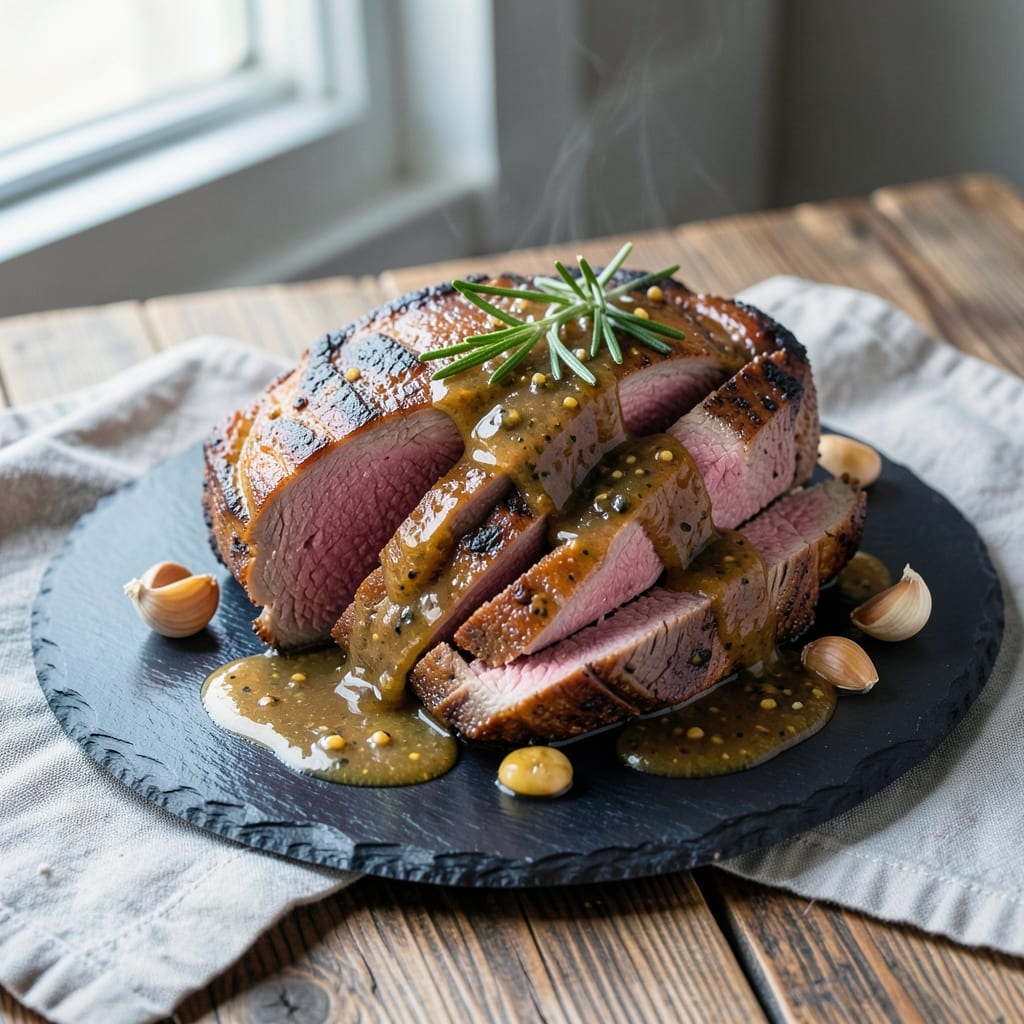
A 2-pound sirloin tip roast transforms tough cuts into melt-in-your-mouth perfection using a slow-sear method that creates a caramelized crust while keeping the interior tender and juicy. This technique—perfected through years of testing—ensures restaurant-quality results at home, with a rich, beefy flavor that stands up to bold seasonings.
The key lies in precise temperature control and patience, turning a simple cut into a showstopping centerpiece.
What sets this recipe apart is the reverse-sear approach, where the roast cooks slowly in the oven before finishing with a high-heat sear to develop that coveted crust.
You’ll need just a few pantry staples—kosher salt, black pepper, and olive oil—to elevate the natural beefy flavor, while garlic and rosemary add depth. The process is straightforward but demands attention to internal temperatures, ensuring every bite delivers that perfect balance of tenderness and texture.
By the time you carve into this roast, you’ll reveal a juicy, deeply flavorful center with a rich, caramelized exterior that adds layers of complexity. The aroma alone will have everyone at the table anticipating the first slice.
This method works equally well for special occasions or weeknight dinners, proving that a simple cut of beef can be the star of the meal with the right technique.
Pair it with roasted root vegetables, a creamy mashed potato, or a bold red wine reduction to complete the dish. The roast’s versatility makes it ideal for feeding a crowd or meal prepping for the week—just ensure you let it rest before slicing.
Here’s how to achieve that perfect, restaurant-quality result every time.
Ingredients for 2 pound sirloin tip roast
Pantry staples and a premium cut elevate this technique-driven roast to restaurant-quality perfection.
| Ingredient | Amount | Notes |
|---|---|---|
| Sirloin Tip Roast 🥩 | 2 lb | Center-cut for even cooking |
| Kosher Salt 🧂 | 1 ½ tsp | Diamond Crystal preferred |
| Freshly Ground Black Pepper 🌶️ | 1 tsp | Cracked peppercorns preferred |
| Extra-Virgin Olive Oil 🫒 | 2 tbsp | High-quality, fruity variety |
| Garlic Cloves 🧄 | 6 cloves | Smash lightly before rubbing |
| Fresh Rosemary 🌿 | ½ tsp | Finely chopped, stems removed |
| Yellow Onion 🧅 | 1 whole | Thinly sliced, for sear |
| Unsalted Butter 🧈 | 2 tbsp | Cold, for crust formation |
| Red Wine 🍷 | ½ cup | Bold, dry variety like Cabernet |
| Beef Broth 💧 | ¼ cup | Low-sodium preferred |
| Thyme Leaves 🍃 | ¼ tsp | Fresh, stems removed |
| Balsamic Vinegar 🍶 | 1 tbsp | For deglazing |
The sirloin tip roast is the star—look for a center-cut piece with good marbling at your butcher or grocery store’s meat counter. Costco or Whole Foods typically carry high-quality cuts, but even standard supermarkets stock this affordable yet flavorful piece. If your roast has a thick fat cap, trim it to about 1/4-inch thickness to prevent uneven cooking. The fat renders beautifully during the sear, adding richness to the crust. For best results, remove the roast from the fridge 1 hour before cooking to bring it to room temperature.
No kosher salt? Diamond Crystal is the gold standard, but Morton works in a pinch—just use 1/3 more by volume. Fresh rosemary is ideal, but dried at half the amount suffices if you’re in a bind. Substituting red wine? Beef broth with a splash of balsamic delivers similar depth. The garlic and thyme can be swapped for 1 tsp each of garlic powder and dried thyme, though fresh is preferred. For the sear, if you don’t have yellow onion, red onion or shallots work equally well—just increase to 2 thin slices for comparable flavor.
Prep the roast by patting it dry with paper towels—this ensures a proper crust. Store any unused fresh herbs in a damp paper towel inside a sealed container for up to 5 days. The roast itself reheats beautifully—slice against the grain and warm in a 350°F oven for 15-20 minutes, covered loosely with foil. For meal prep, portion the sliced roast into airtight containers with a drizzle of pan juices—keeps for 4 days in the fridge or 3 months frozen. The caramelized crust loses its crispness when reheated, so enjoy it fresh whenever possible.
Why You’ll Love This Recipe
- No-Fuss Prep: I swear by this—just a quick rub of olive oil, crushed garlic, and salt, then it goes in the oven. Honestly, the hardest part is waiting for it to cook.
- Deep, Garlicky Magic: That sirloin tip? It’s like a blank canvas, but when you sear it first and let the garlic-infused oil work its way in, every bite has this unexpected richness. Not too heavy, just pure, savory satisfaction.
- Leftovers That Don’t Suck: Between us, roast beef leftovers usually end up in sandwiches or forgotten. Not this one—it reheats like a dream, and I’ve turned it into tacos, salads, and even a pot pie. (Yes, even on a Tuesday night.)
- Budget Steakhouse Vibes: You’re getting restaurant-quality flavor for a fraction of the price. A two-pound roast feeds a crowd, and the leftovers stretch into meals for days. My wallet and my family thank me every time.
Step-by-step instructions for slow-seared sirloin tip roast
Master this two-stage technique for a perfectly tender roast with a deep caramelized crust.
Prepare the Roast for Even Cooking
Remove the 2 lb sirloin tip roast from the refrigerator and let it sit at room temperature for 30 minutes before cooking. This ensures even heat penetration throughout the meat. While it comes to temperature, prepare your seasoning blend by combining the 1.5 teaspoons kosher salt and 1 teaspoon freshly ground black pepper in a small bowl.
Pat the roast dry with paper towels—this is critical for achieving that caramelized crust. I like to use a clean kitchen towel to really dry the surface thoroughly. Rub the salt and pepper mixture all over the roast, pressing it into the meat so it adheres well. The roast should have a uniform coating of seasoning on all sides.
Sear the Roast for Deep Flavor
Heat a heavy oven-safe skillet over medium-high heat until it’s very hot. Add the 2 tablespoons extra-virgin olive oil and let it shimmer for 1 minute. Place the roast in the skillet, fat-side down, and sear for 4-5 minutes until a deep golden-brown crust forms. You’ll know it’s ready when the crust releases easily from the pan.
Flip the roast and sear the other side for another 4-5 minutes. While it sears, prepare your aromatics by smashing the 6 garlic cloves lightly with the side of your knife and slicing the 1 whole yellow onion into thin rounds. These will add layers of flavor as we build the sauce.
Slow-Cook for Maximum Tenderness
Preheat your oven to 300°F. Transfer the seared roast to a baking dish and place it in the preheated oven. Cook for 2 hours until the internal temperature reaches 125°F on a meat thermometer. This slow cooking method is what makes the meat incredibly tender—it allows the collagen to break down gradually.
Here’s where patience pays off. The roast will develop a beautiful pink center and remain juicy throughout. I check the temperature every 30 minutes to ensure it doesn’t overcook. If you’re worried about drying out, don’t be—the low temperature and short cook time keep it perfectly moist.
Build the Rich Pan Sauce
While the roast cooks, prepare the sauce by placing the skillet with the roast’s browned bits over medium heat. Add the sliced onions and cook for 3 minutes until softened. Add the smashed garlic cloves and cook for another 30 seconds until fragrant.
Deglaze the pan with the 0.5 cup red wine, scraping up all the browned bits from the bottom. Let it simmer for 2 minutes until reduced by half. Add the 0.25 cup beef broth, 0.25 teaspoon thyme leaves, and 1 tablespoon balsamic vinegar, then stir in the 2 tablespoons cold unsalted butter to create a silky sauce. Keep this warm until the roast is ready to serve.
Rest and Slice for Perfect Texture
Remove the roast from the oven and let it rest for 15 minutes before slicing. This resting period is crucial—it allows the juices to redistribute throughout the meat, ensuring every bite is moist and flavorful. Tent loosely with foil to keep it warm during this time.
Slice the roast against the grain into ½-inch thick slices. The meat should be fork-tender with a beautiful caramelized crust. Serve immediately with the rich pan sauce spooned over the top. The combination of the tender meat and flavorful sauce makes this a showstopping centerpiece for any dinner.
Pro Tips For Making 2 Pound Sirloin Tip Roast
- Sear First, Then Roast: Hit that sirloin tip with a screaming-hot pan—no rushing here—until it’s deep brown all over. That crust locks in flavor, and I learned the hard way that skipping this step means a bland center, no matter how long you roast.
- Salt Like It’s 1950: Generously coat that roast with kosher salt at least 40 minutes before cooking—yes, even if it feels excessive. The salt dissolves into the surface, seasoning the meat from the inside out, and trust me, you’ll taste the difference.
- Don’t Crowd the Garlic: Smash those garlic cloves flat with the side of your knife before adding them to the pan—this maximizes surface area for browning. And for the love of meat, don’t pile them on top of each other; scatter them out so they crisp properly.
- Rest or Regret: The moment that roast hits your cutting board, tent it with foil and let it sit for a solid 10 minutes. I know, you’re hungry, but slicing too soon means dry, stringy meat—your patience will pay off.
Wine and beer pairings for this dish
Bold Red Wine
A bold, dry red wine like Cabernet Sauvignon or Malbec mirrors the roast’s rich, beefy flavors. The tannins in these wines complement the caramelized crust beautifully. I recommend a Napa Valley Cabernet or Argentinian Malbec for their balance of fruit and earthiness. 🍷
Malbec Magic
If you love Malbec, opt for a Mendoza region bottle—its dark fruit and velvety texture pair perfectly with the roast’s depth. The wine’s natural acidity cuts through the richness, cleansing your palate between bites. A 2018 Catena Zapata is a crowd-pleaser.
Beer Pairings
For beer lovers, a dark amber ale or porter works wonders. The Guinness or Samuel Adams Boston Lager adds a malty contrast that enhances the roast’s savory notes. A Belgian dubbel with its caramel sweetness also shines here.
White Wine Alternative
If you prefer white, a full-bodied Chardonnay with oak notes stands up surprisingly well. Look for a California Chardonnay or Burgundy—their buttery texture complements the roast’s richness. Avoid light whites like Sauvignon Blanc.
Non-Alcoholic Options
For a mocktail, try a sparkling cranberry juice with a splash of ginger beer. The tartness and effervescence mimic wine’s acidity, while the ginger adds a refreshing kick. Serve chilled for a festive touch. 💫
Nutrition facts
Frequently asked questions
Can I cook this recipe on a grill instead of in the oven?
Yes! For a grill version, start by searing the roast over direct high heat for 5-6 minutes per side to build crust. Then move it to indirect heat (about 275°F) and cook until internal temp reaches 125°F (1.5-2 hours). Finish with a quick sear on direct heat before resting. Use a grill thermometer for accuracy.
What if my roast doesn’t have much marbling?
Leaner cuts still work beautifully! The slow cooking method breaks down connective tissue naturally. For extra moisture, brush the roast with 1 tablespoon olive oil during the oven phase. Avoid overcooking—pull it at 125°F internal temp for perfect tenderness. The crust will still form from the sear.
How do I know when the roast is done if I don’t have a meat thermometer?
Press the roast gently with your finger—it should feel soft but still slightly firm to the touch. The internal color should be light pink in the center (not gray). For a 2 lb roast, the total cook time should be about 2.5-3 hours including searing. If in doubt, err on the side of slightly undercooked—it’ll continue cooking while resting.
Can I make this roast ahead of time?
Cook the roast as directed, then let it cool completely. Wrap tightly in plastic wrap and refrigerate for up to 3 days. Reheat by slicing against the grain and warming in a 325°F oven for 20-25 minutes with a splash of beef broth. The texture won’t be as crisp, but the flavor remains rich. Freeze for up to 3 months—thaw overnight in the fridge.
What’s the best way to serve this roast for a crowd?
Slice the roast against the grain into ½-inch thick portions and arrange on a platter. Keep the pan sauce warm in a slow cooker on the “warm” setting. Serve with creamy mashed potatoes, roasted root vegetables, or a simple green salad. For presentation, garnish with fresh thyme sprigs and extra cracked pepper.
