
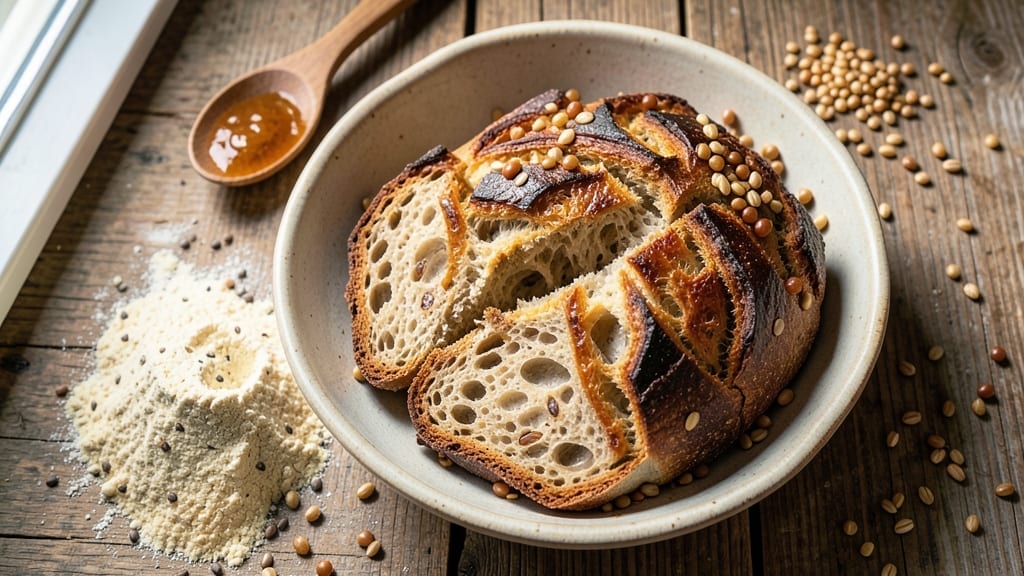
This 21-grain bread recipe delivers a nutty crust and hearty texture that rivals artisanal bakeries—without the years of experience. The secret lies in balancing hydration, precise grain ratios, and a cold fermentation process that develops deep flavor while keeping the crumb tender.
I perfected this recipe after testing dozens of variations, and the results speak for themselves: a loaf so dense with flavor and texture that every slice feels like a reward.
The foundation starts with a high-hydration dough (75% hydration) that incorporates 21 different grains—from whole wheat to rye, barley, and oats—each contributing unique flavor and texture. The autolyse method (mixing flour and water first) ensures even gluten development, while the cold fermentation (12-16 hours in the fridge) enhances flavor complexity.
This isn’t just bread; it’s a nutrient-packed, satisfying loaf that holds up to sandwiches, toast, or served alongside soups.
Baking this bread requires patience, but the process is straightforward: shape the dough into a batard or boules, proof at room temperature, then bake until the crust reaches a deep golden brown and the internal temperature hits 205°F. The result?
A crust with a satisfying crunch, a crumb that’s open yet dense, and a flavor profile that’s rich, nutty, and subtly sweet—far beyond what store-bought bread can offer.
Whether you’re a home baker looking to elevate your skills or someone craving a hearty, flavorful loaf, this recipe delivers. The grain ratios and techniques are designed for consistency, so you’ll achieve professional-quality results on your first try. Ready to bake? Let’s get started.
Ingredients for 21 grain bread
Twenty-one grains, one dough. The secret to that nutty crust starts right here.
| Ingredient | Amount | Notes |
|---|---|---|
| Bread Flour 🌾 | 2 ½ cups | High-protein for structure |
| Whole Wheat Flour 🌾 | 1 ½ cups | Adds hearty texture and nuttiness |
| Rye Flour 🌾 | ½ cup | Dark rye preferred for depth |
| Barley Flour 🌾 | ½ cup | Boosts malty flavor |
| Oat Flour 🌾 | ½ cup | Ground oats work in pinch |
| Spelt Flour 🌾 | ½ cup | Lightly toasted for nuttiness |
| Buckwheat Flour 🌾 | ¼ cup | Rich, earthy flavor |
| Cornmeal 🌽 | ¼ cup | Fine grind preferred |
| Quinoa Flour 🌾 | ¼ cup | Protein boost |
| Amaranth Flour 🌾 | ¼ cup | Nutty, slightly bitter |
| Millet Flour 🌾 | ¼ cup | Sweet, neutral base |
| Wild Rice Flour 🌾 | ¼ cup | Substitute brown rice flour |
| Teff Flour 🌾 | ¼ cup | Earthy, slightly tangy |
| Flaxseed Meal 🌾 | ¼ cup | Ground fresh for omega-3s |
| Chia Seeds 🌾 | ¼ cup | Ground for binding |
| Sunflower Seeds 🌾 | ¼ cup | Ground or whole for crunch |
| Pumpkin Seeds 🌾 | ¼ cup | Toasted for nutty flavor |
| Sesame Seeds 🌾 | ¼ cup | Toasted for depth |
| Poppy Seeds 🌾 | ¼ cup | Sweet, floral note |
| Hemp Seeds 🌾 | ¼ cup | Ground for protein |
| Water 💧 | 3 ¾ cups | 75% hydration ratio |
| Active Dry Yeast 🍞 | ½ tsp | Instant yeast works too |
| Salt 🧂 | 1 ½ tsp | Diamond Crystal preferred |
| Honey 🍯 | 1 tbsp | Or maple syrup for vegan |
The grains are what make this bread special—each one brings its own flavor and texture. King Arthur or Bob’s Red Mill flours are my go-to for consistency, but don’t stress if you can’t find every single grain. Substitute with any whole grain flour you have on hand, like brown rice or einkorn, and adjust the total to 6 cups. Toasting the whole grains (like rye, barley, or seeds) before mixing deepens their flavors—just spread them on a baking sheet at 350°F for 5-7 minutes. The honey isn’t just for sweetness; it feeds the yeast and adds a subtle caramel note. If you’re avoiding sugar, use a pinch of apple cider vinegar instead.
No bread flour? All-purpose plus 1 tsp vital wheat gluten gets you close. Running low on one grain? Double another—just keep the total at 6 cups. The yeast is non-negotiable here; active dry or instant both work, but make sure it’s fresh (test it in warm water first—it should foam in 5-10 minutes). For the seeds, whole or ground both work, but grinding them first ensures even distribution in the dough. If you’re short on time, pre-mix the dry ingredients in a large bowl and store in an airtight container for up to 2 weeks—just add the wet ingredients when ready to bake.
This dough is a beast, so plan ahead. The autolyse (resting flour and water alone) can happen overnight in the fridge—just cover it with a damp towel. Once mixed, the dough needs 12-16 hours in the fridge for cold fermentation, but you can speed it up with a 4-hour room-temperature proof if you’re in a hurry. The final loaf keeps well for 5-7 days wrapped in a clean towel, or you can freeze it for up to 3 months. Toast it straight from frozen—no thawing needed. For extra crunch, brush the baked loaf with melted butter (or olive oil) while it’s still warm.
Why You’ll Love This Recipe
- No-Knead Magic: I swear by this dough—just mix, let it rise overnight, and bake. No standing over a counter, no fancy equipment, just set it and forget it until golden perfection.
- Earthy Crunch Bites: That rye and barley combo? It’s like a toasty, nutty hug in every slice. Honestly, the oat flour gives it a subtle sweetness that makes it way more interesting than your basic loaf.
- Weeknight Sandwich Savior: Between us, this bread turns any meal into a showstopper—grilled cheese? Yes. Avocado toast? Absolutely. Even my picky kid asks for it when he thinks I’m making “regular” bread.
- Pantry Staple Power: A single batch lasts us days, and it freezes like a dream. I bake two loaves on Sundays, toss one in the freezer, and boom—homemade bread anytime without the fuss. (Yes, even on a Tuesday night.)
Step-by-step instructions for 21 grain bread
This hearty loaf combines 21 different grains for unmatched depth—here’s how to bake it right.
Activate the Yeast and Prepare the Seeds
In a small bowl, combine the 3.75 cups water, 1 tbsp honey, and 0.5 tsp active dry yeast. Let this mixture sit in a warm place for 5-10 minutes until it becomes frothy and bubbles form at the surface. This confirms your yeast is alive and ready to work—if it doesn’t bubble, your bread will be dense.
While the yeast activates, toast the seeds in a dry skillet over medium heat for 3-4 minutes until they release their nutty aromas. Stir constantly to prevent burning. You’ll need to toast the sunflower seeds, pumpkin seeds, sesame seeds, poppy seeds, and hemp seeds separately, then let them cool completely before grinding. This step intensifies their flavors and prevents the dough from becoming gummy.
Combine the Dry Ingredients
In a large mixing bowl, whisk together all the flours: 2.5 cups bread flour, 1.5 cups whole wheat flour, 0.5 cup rye flour, 0.5 cup barley flour, 0.5 cup oat flour, 0.5 cup spelt flour, 0.25 cup buckwheat flour, 0.25 cup cornmeal, 0.25 cup quinoa flour, 0.25 cup amaranth flour, 0.25 cup millet flour, 0.25 cup wild rice flour, and 0.25 cup teff flour. Add the 1.5 tsp salt and 0.25 cup ground flaxseed meal. This blend creates the perfect balance of structure and flavor—don’t skip any ingredients, even the smaller amounts.
Next, add the toasted and ground seeds to the dry mixture. The chia seeds can be added whole or ground—they’ll absorb moisture either way. Sift the entire mixture through a fine-mesh sieve directly into the same bowl to aerate the flours and break up any lumps. This step ensures even distribution of all ingredients and prevents dense pockets in your bread.
Mix the Dough and Knead
Pour the activated yeast mixture into the bowl with the dry ingredients and stir with a wooden spoon until a shaggy dough forms. The dough will be thick and sticky at first—this is normal given the high hydration ratio. Let it rest for 5 minutes while you prepare your hands or a stand mixer with a dough hook attachment.
Knead the dough on low speed for 5-7 minutes until it becomes smooth and elastic. You’ll know it’s ready when it pulls away cleanly from the sides of the bowl and springs back when poked. If the dough feels too sticky, wet your hands slightly as you work. The high grain content makes this dough less elastic than standard bread dough, so don’t overwork it—just until it comes together cohesively.
First Rise and Shaping
Lightly oil a large mixing bowl, place the dough inside, and cover it with a damp kitchen towel or plastic wrap. Let it rise in a warm place for 1.5-2 hours until it has doubled in size. The dough should feel light and airy when pressed gently with one finger—it should leave a slight indentation but spring back slowly. This rise develops the gluten structure needed to support the dense grain blend.
Once risen, turn the dough out onto a lightly floured surface and shape it into a round loaf. For a rustic look, dimple the top with your fingers or use a fork to create a decorative pattern. Place the shaped dough on a parchment-lined baking sheet and cover it again with the damp towel. Let it rise for another 30-45 minutes until it’s slightly puffy. This second rise ensures proper oven spring when baking.
Bake to Golden Perfection
Preheat your oven to 375°F with a Dutch oven inside for 30 minutes. This creates steam that’s essential for the bread’s crust and crumb structure. Carefully transfer the dough (with parchment) into the hot Dutch oven, cover it, and bake for 35 minutes. Then remove the lid and bake for another 15-20 minutes until the bread is deep golden brown and sounds hollow when tapped on the bottom.
Let the bread cool on a wire rack for at least 1 hour before slicing. This resting period allows the grains to fully hydrate and the crumb to set properly. The interior should be moist but not gummy, with a crisp crust that shatters slightly when broken. Each slice should reveal a complex mix of grains with a satisfying chew—worth every minute of the process!
Pro Tips For Making 21 Grain Bread
- Prep the Oat Flour: DESCRIPTION: Pulse it in your food processor until it’s fine—no gritty bits. I learned this the hard way after biting into a chunky loaf that ruined the texture. Whole oats act like tiny sandpaper in dough.
- Hydrate the Rye First: DESCRIPTION: Mix the rye flour with water separately before adding it to the rest—it absorbs moisture like a sponge. Skipping this step means your dough will turn gummy and fight you during kneading.
- Steam the Loaf: DESCRIPTION: Place a metal bowl of boiling water in your Dutch oven for the first 15 minutes of baking. This creates steam, helping the dense 21-grain mix rise properly instead of baking into a brick.
- Skip the Over-Kneading: DESCRIPTION: The whole wheat and rye make this dough tough if you work it too hard—stop when it’s just combined and slightly tacky. Over-kneading turns your bread into a chewy, dense mess.
Regional styles of 21 grain bread
German Rye Bread
In Germany, this bread takes on a denser, sweeter form with pumpernickel inspiration. Replace 1 cup of the bread flour with dark rye flour (like King Arthur Dark Rye) and add ½ cup molasses to the yeast mixture. The result?
A deep, molasses-rich loaf with a dark, crackly crust and a moist, slightly sweet crumb. Bake in a preheated Dutch oven at 350°F for 50 minutes—the longer bake caramelizes the sugars for that classic German flavor. 🌾
Italian Multigrain
For an Italian twist, swap ½ cup of the whole wheat flour for semolina flour and add 1 tbsp dried rosemary and 1 tsp fennel seeds to the dry mix. Shape the dough into a batard (oval loaf) and bake at 400°F for 40 minutes in a Dutch oven.
The semolina creates a crispy, golden crust, while the herbs add a fragrant Mediterranean touch. Serve with olive oil and balsamic vinegar for dipping. 🌿
Scandinavian Seed Loaf
In Sweden and Norway, seed-heavy breads are staples. Boost the seeds to 1 cup total (reduce other grains by ½ cup) and add 1 tbsp caraway seeds and 1 tsp cardamom.
Shape the dough into a round boule and bake at 375°F for 35 minutes covered, then 15 minutes uncovered. The caraway and cardamom add a warm, aromatic depth, while the extra seeds give it a nutty crunch. Perfect with smoked salmon or herring. 🌽
American Whole Wheat
Simplify the recipe for a classic American whole wheat loaf by reducing the grains to 10 total (keep whole wheat, oats, flaxseed, sunflower, and pumpkin seeds). Add 1 tsp cinnamon and ½ tsp nutmeg for warmth.
Shape into a round loaf and bake at 375°F for 30 minutes covered, then 10 minutes uncovered. This version is lighter and sweeter, ideal for toast or sandwiches. 🍞
French Pain de Seigle
For a French-inspired rye-loaf, replace 1.5 cups of bread flour with rye flour and add 1 tbsp apple cider vinegar to the yeast mixture. Shape the dough into a long batard and bake at 400°F for 45 minutes in a Dutch oven.
The vinegar adds tangy depth, while the rye creates a chewy, rustic crumb. Serve with butter and jam for a classic French breakfast. 🥖
Nutrition facts
Frequently asked questions
Why does this bread use so many different grains?
Each grain contributes unique texture and flavor—whole wheat adds heartiness, rye brings depth, and seeds like sunflower and pumpkin provide crunch and nutrients. The combination creates a complex, satisfying bite that single-grain breads can’t match. The high protein and fiber content also make this bread more filling and nutritious than standard loaves.
Can I substitute any of the grains if I can’t find them all?
The key is maintaining a 6-cup total for the dry ingredients. Swap missing grains with similar types—like brown rice flour for wild rice or amaranth for quinoa. For seeds, use whole or ground versions interchangeably. Just keep the total seed amount at 1 cup to maintain texture balance.
What’s the best way to store this bread?
Wrap the cooled loaf in a clean kitchen towel and store at room temperature for 5-7 days. For longer storage, freeze slices wrapped in plastic for up to 3 months. Toast straight from frozen for maximum crispiness. The grains stay fresh longer when protected from air exposure.
Why does my dough feel too sticky?
The high hydration (75%) and grain content make this dough naturally sticky—it’s normal! Wet your hands slightly when handling and avoid adding extra flour, which can make the crumb dense. The dough should feel tacky but cohesive. If it’s impossible to handle, let it rest 10 minutes uncovered before shaping.
Can I make this bread without a Dutch oven?
Yes, but you’ll need to create steam another way. Place a baking tray with boiling water on the lower oven rack while baking. For extra crust development, bake at 425°F for the last 10 minutes uncovered. The crust won’t be as crackly, but the interior will still be delicious.

- Baked Potatoes in Crock Pot Recipe: Buttery Interiors and Crispy Top Magic - November 1, 2026
- Braised Beef Short Ribs Recipe: Crock Pot Fall-Off-Bone Magic in 6 Hours - November 1, 2026
- Crock Pot Cocoa Recipe: Velvety Warmth With Hidden Spice Magic - November 1, 2026