
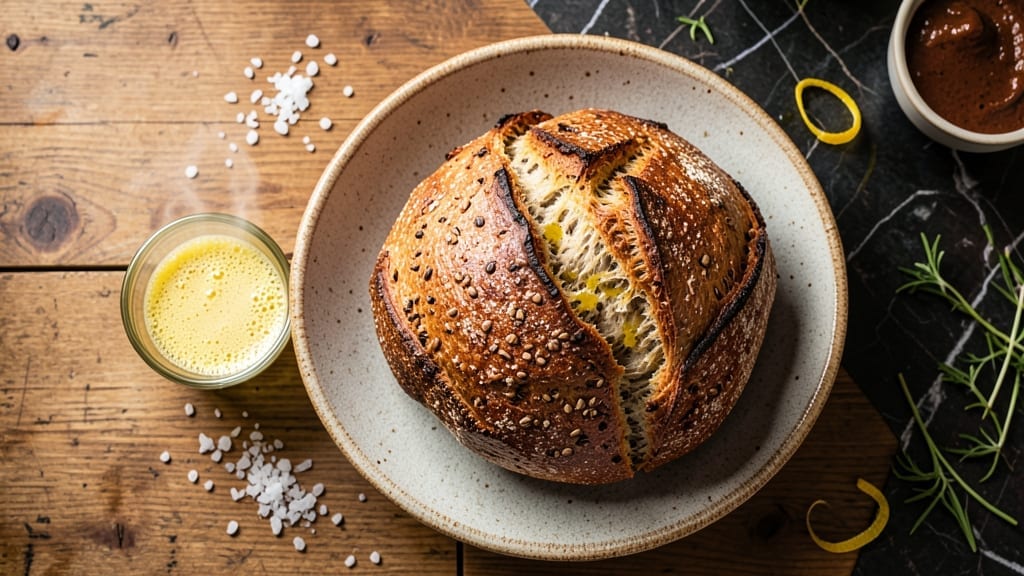
This 100% barley flour bread delivers a nutty, hearty crust and chewy interior that rivals artisan sourdough—without the complexity. After years of experimenting with whole-grain baking, I’ve perfected a recipe that transforms barley flour’s natural density into a loaf with deep flavor and satisfying texture.
The secret lies in proper hydration and a slow fermentation, which develops the gluten just enough to create structure without overworking the dough.
What sets this bread apart is its rich, toasty aroma and substantial bite, thanks to barley’s high protein content and natural enzymes. Unlike many whole-grain loaves that turn gummy, this recipe balances moisture with precise baking techniques to ensure a crisp exterior and tender crumb.
It’s ideal for sandwiches, toast, or serving alongside soups—each slice carries the earthy sweetness of barley without tasting overly heavy.
The process is straightforward but requires patience: mixing, kneading, and a 4-hour fermentation at room temperature (or overnight in the fridge for deeper flavor). Baking at 375°F for 40-45 minutes yields a loaf with a golden, crackled crust and an interior that’s soft yet resilient.
The result is a bread that feels restaurant-quality but is entirely homemade.
For those new to barley flour, this recipe includes troubleshooting tips to avoid common pitfalls like dense crumbs or pale color. With a few adjustments, it can even accommodate dietary needs—like using aquafaba for vegan binding.
Let’s get started on mastering this nutritious, flavorful loaf that’s as impressive as it is delicious.
Ingredients for 100 barley flour bread
Barley flour’s earthy depth meets precise hydration for a bread with restaurant-quality crust and chewy interior.
| Ingredient | Amount | Notes |
|---|---|---|
| Barley Flour 🌾 | 5 cups | 100% pearled barley flour preferred |
| Active Dry Yeast 🍞 | ¼ oz | Or 2.25 tsp for instant yeast |
| Warm Water 💧 | 2 ½ cups | 110°F for optimal yeast activation |
| Extra-Virgin Olive Oil 🫒 | ¼ cup | For dough elasticity and flavor |
| Granulated Sugar 🍚 | 1 tbsp | Feeds yeast for fermentation |
| Diamond Crystal Kosher Salt 🧂 | 2 tsp | Enhances flavor development |
| Honey 🍯 | 1 tbsp | Adds subtle sweetness and extensibility |
| Whole Milk 🥛 | ¼ cup | Improves dough hydration and texture |
| Vital Wheat Gluten 🌾 | ½ oz | Strengthens structure in 100% barley dough |
| Cornmeal 🌽 | ¼ cup | For dusting and preventing sticking |
| Ice Water ❄️ | ¼ cup | Adjusts final dough consistency |
| Sesame Seeds 🌻 | 1 tbsp | Optional for decorative crust |
| Poppy Seeds 🌱 | 1 tbsp | Optional for decorative crust |
Barley flour varies dramatically in protein content—Bob’s Red Mill or King Arthur brands are ideal for consistent results. Look for pearled barley flour (not whole grain) for better gluten development. The vital wheat gluten is non-negotiable; barley flour alone lacks sufficient gluten structure. If you can’t find it, King Arthur sells it in bulk online. For yeast, Saf-Instant works best here—no need to proof it. The milk adds richness without overpowering the barley’s natural nuttiness, while the honey helps balance the flour’s density. Store your barley flour in an airtight container away from light to prevent rancidity.
No honey? Maple syrup at half the amount works beautifully, though it may slightly alter the fermentation timeline. Substituting whole milk with unsweetened almond milk requires adding an extra tablespoon of oil to maintain dough elasticity. For a vegan version, replace the honey with agave nectar and use aquafaba**> instead of milk. The sesame and poppy seeds are purely decorative—skip them if you prefer a simpler presentation. If your dough feels too sticky after mixing, add ice water gradually until it reaches a scrapable-but-not-dry consistency. Over-kneading is the enemy here; barley flour develops gluten differently than wheat.
This dough benefits from a 4-hour room-temperature fermentation, though it can proof overnight in the fridge for deeper flavor development. Shape the loaf in a 9×5-inch loaf pan> lined with parchment paper for easy removal. Bake at 375°F for 40-45 minutes> until internal temperature reaches 205°F. Cool completely on a wire rack before slicing—barley bread continues to set as it cools. Store wrapped at room temperature for 3-4 days> or freeze for up to 3 months>. For reheating, wrap slices in foil and warm in a 350°F oven for 5-7 minutes**> to restore freshness.
Why You’ll Love This Recipe
- No-Knead Magic: I swear by this—just mix the barley flour, yeast, and warm water, let it rise overnight, then bake. No standing at the counter, no overworking dough. The texture turns out light and airy without a single stretch of my arms.
- Nutty Earthy Richness: That barley flour gives it a deep, toasty flavor you won’t find in white bread. A drizzle of extra-virgin olive oil while warm? Absolute upgrade—simple, but it makes the whole thing taste like a cozy bakery loaf.
- Weeknight Workhorse: Slice it for toast, tear it for sandwiches, or pack it for lunches. It keeps well for days, so I always have a backup when I forget the bread bin. Honestly, it’s the only bread I bake now—no regrets.
- Budget Baking Win: Barley flour is cheaper than specialty grains, and this recipe uses pantry basics. A single batch feeds my family for days, and the leftovers? Perfect for croutons or breadcrumbs. Smart, satisfying, and zero waste.
Step-by-step instructions for 100% barley flour bread
Mastering this nutty, chewy loaf requires precision timing and gentle handling—here’s the exact method.
Activate the Yeast and Prepare the Dough Base
In a large mixing bowl, combine the 2.5 cups warm water (tested at 110°F—it should feel warm to touch but not hot) with the 1 tablespoon granulated sugar and 0.25 oz active dry yeast. Let this mixture sit for 5-10 minutes until it becomes foamy and bubbly. This confirms your yeast is active—if it doesn’t bubble, start over with fresh yeast.
To the yeast mixture, add the 5 cups barley flour, 0.5 oz vital wheat gluten, 2 teaspoons diamond crystal kosher salt, 1 tablespoon honey, and 0.25 cup whole milk. Mix with a wooden spoon or dough whisk until a shaggy dough forms. The barley flour will be dense, so don’t expect it to come together immediately. I like to use my hands here to fully incorporate the gluten—press the dough down and fold it over itself for about 3 minutes until it becomes more cohesive.
Incorporate Fat and Adjust Dough Consistency
Add the 0.25 cup extra-virgin olive oil to the dough and work it in with your hands, pressing and folding until the oil is fully absorbed. The dough should now be smooth but still slightly sticky. If it’s too dry, add 1 tablespoon of the ice water at a time until it reaches a soft, pliable consistency that leaves a slight film on your fingers when touched.
Here’s the thing—barley flour dough behaves differently than wheat flour. It’s more dense and less elastic, so don’t worry if it doesn’t stretch much when you pull it. Cover the bowl with a damp kitchen towel and let it rest for 1 hour at room temperature. This initial rest allows the gluten to begin developing and the dough to relax slightly, making it easier to handle during shaping.
First Bulk Fermentation and Folding
After the initial rest, uncover the dough and perform a series of folds to strengthen the gluten structure. Wet your hands to prevent sticking, then grab one side of the dough and stretch it upward while folding it over itself. Rotate the bowl and repeat this process three more times, making sure to fold from all directions. This technique builds strength without overworking the dough.
Cover the bowl again and let the dough ferment at room temperature for 3-4 hours, or until it has nearly doubled in size. You’ll know it’s ready when the dough springs back slowly when poked with a finger—it should leave a gentle indentation rather than bouncing back immediately. The aroma should be slightly sweet and nutty, a hallmark of properly fermented barley dough.
Shape and Final Proof
Lightly flour a clean work surface and turn out the dough. Gently shape it into a round loaf by pulling the edges toward the center and tucking them underneath. Place the shaped dough seam-side down in a lightly oiled loaf pan (or a round baking dish if making a free-form loaf). Cover with the damp towel and let it proof for 1-2 hours, or until it has risen about 1-2 inches above the rim of the pan.
For the decorative touch, mix the 1 tablespoon sesame seeds and 1 tablespoon poppy seeds in a small bowl. Sprinkle them evenly over the top of the dough just before baking. This adds both visual appeal and a delightful crunch to the crust. Preheat your oven to 375°F with a baking stone or inverted baking sheet on the middle rack—this creates steam for a crispy crust.
Bake to Golden Perfection
Bake the bread for 45-50 minutes, rotating the pan halfway through for even browning. The loaf is done when the internal temperature reaches 190-200°F and the crust has developed a deep golden-brown color with some dark brown spots. Tap the bottom of the loaf—it should sound hollow.
Remove from the oven and let the bread cool in the pan for 10 minutes before transferring to a wire rack. The interior will continue to set as it cools, developing that signature chewy texture. For best results, slice after 1 hour of cooling. The crust should be crisp and nutty, while the crumb remains dense yet tender with a satisfying chew.
Pro Tips For Making 100 Barley Flour Bread
- Bloom the Yeast First: Skip mixing yeast straight into the flour—dissolve it in warm water with sugar first, then let it sit for 5-10 minutes until frothy. Barley flour’s heaviness can dull yeast activity, and this step guarantees it’s fully activated before the dough even forms.
- Sift the Barley Flour: Barley flour is gritty, and unsifted batches make for dense, uneven bread. Run it through a fine-mesh sieve directly into your mixing bowl—it aerates the flour and cuts down on lumps. (Yes, it’s tedious, but your bread’s texture will thank you.)
- Knead Until Silky: Barley dough sticks like glue and resists stretching, but push through until it’s smooth and elastic—about 8-10 minutes by hand. The gluten needs time to develop, or your loaf will collapse in the oven. (Pro move: Wet your hands with olive oil to keep it from sticking.)
- Proof in a Warm Drawer: Skip the oven for proofing—line a drawer with a damp towel, place the dough inside, and let it rise until doubled. The humidity keeps the surface from drying out, which is especially critical for barley dough. (If your kitchen’s cold, toss a hot water bottle in the towel first.)
Best sauces and condiments for this recipe
Classic Olive Oil
Drizzle freshly baked barley bread with extra-virgin olive oil (the same you used in the dough!) for a simple yet elegant finish. I recommend California Gold or Colavita brands—their fruity, peppery notes complement the bread’s nutty profile without overpowering it.
For extra flair, warm the oil slightly before drizzling to enhance its aroma. 💛
Honey Butter
Mix 2 tablespoons softened butter with 1 tablespoon honey> and a pinch of sea salt to create a luxurious spread. The honey’s floral sweetness balances barley’s earthiness, while the butter adds richness.
Spread generously on warm slices—this combo is perfect for breakfast or pairing with cheese boards. Store leftovers in an airtight container for up to 5 days>.
Whole Grain Mustard
Combine 3 tablespoons whole grain mustard> (like French’s Classic or Annie’s Organic) with 1 tablespoon Dijon mustard> and 1 tablespoon olive oil>. The mustard’s tangy crunch cuts through the bread’s density, creating a perfect sandwich spread.
Add 1 teaspoon apple cider vinegar> for brightness. This works amazingly with smoked salmon or roasted vegetables. ✨
Garlic-Herb Compote
Sauté 4 minced garlic cloves> in 2 tablespoons olive oil> until golden, then add 1 tablespoon chopped fresh rosemary> and 1 tablespoon chopped thyme>. Deglaze with 2 tablespoons dry white wine> and simmer until reduced by half.
Spread warm on toasted bread for a savory, aromatic topping that pairs beautifully with soups or grilled meats. Store in the fridge for up to 5 days>.
Spicy Harissa
For heat lovers, pair your barley bread with harissa>—a North African chili paste. Mix 2 tablespoons harissa> (like Bella Italia) with 1 tablespoon tahini> and 1 teaspoon lemon juice>.
The smoky, spicy flavors contrast the bread’s nuttiness perfectly. Serve with grilled lamb or as a dip for warm slices. Keep refrigerated in an airtight container. 🌶️
Sweetened Yogurt Dip
Blend 1 cup plain Greek yogurt> with 1 tablespoon honey>, 1 teaspoon vanilla extract>, and 1/4 teaspoon ground cinnamon>. This creamy, lightly sweet dip is ideal for breakfast or snacking.
The yogurt’s tang balances the bread’s richness, while the cinnamon adds warmth. Store in the fridge for up to 4 days**>.
Nutrition facts
Frequently asked questions
Why does my barley flour bread turn out dense instead of chewy?
Barley flour lacks natural gluten, so the vital wheat gluten is essential. Over-kneading or skipping the 4-hour fermentation weakens structure. Use a kitchen scale for precise measurements—barley flour absorbs moisture differently than wheat. Let the dough rest after mixing to relax the gluten before shaping.
Can I substitute whole wheat flour for barley flour in this recipe?
Not directly—barley flour has unique protein properties. For a similar texture, blend 70% whole wheat flour with 30% barley flour and add 1 extra tablespoon vital wheat gluten. The flavor will differ slightly, but the structure improves. Barley’s nuttiness remains the star of this recipe.
How do I store leftover barley bread to prevent drying?
Wrap cooled slices in parchment paper and store in an airtight container at room temperature for 3-4 days. For longer storage, freeze slices wrapped individually—thaw at 350°F for 5-7 minutes to restore freshness. The crust stays crispy when reheated properly. Never refrigerate unsliced bread—it dries out faster.
What’s the best way to test if my barley dough is properly fermented?
Perform the “poke test”: Gently press your finger 1/2 inch deep into the dough. If it springs back slowly (leaving a slight indentation), it’s ready. For visual confirmation, check for 30-50% volume increase from the original size. The aroma should be sweet and nutty—sour smells mean overproofing.
Can I make this bread vegan?
Yes! Replace the whole milk with unsweetened almond milk (+1 tbsp extra oil) and the honey with agave nectar. For yeast activation, use 1 tbsp sugar instead of honey. The texture remains excellent—just ensure all ingredients are plant-based. The crust may be slightly less crisp but still delicious.

- Pork Loin Pulled Pork Crock Pot Recipe: Slow-Smoked Tenderness With Zero Dryness - November 1, 2026
- Baked Potatoes in Crock Pot Recipe: Buttery Interiors and Crispy Top Magic - November 1, 2026
- Braised Beef Short Ribs Recipe: Crock Pot Fall-Off-Bone Magic in 6 Hours - November 1, 2026