
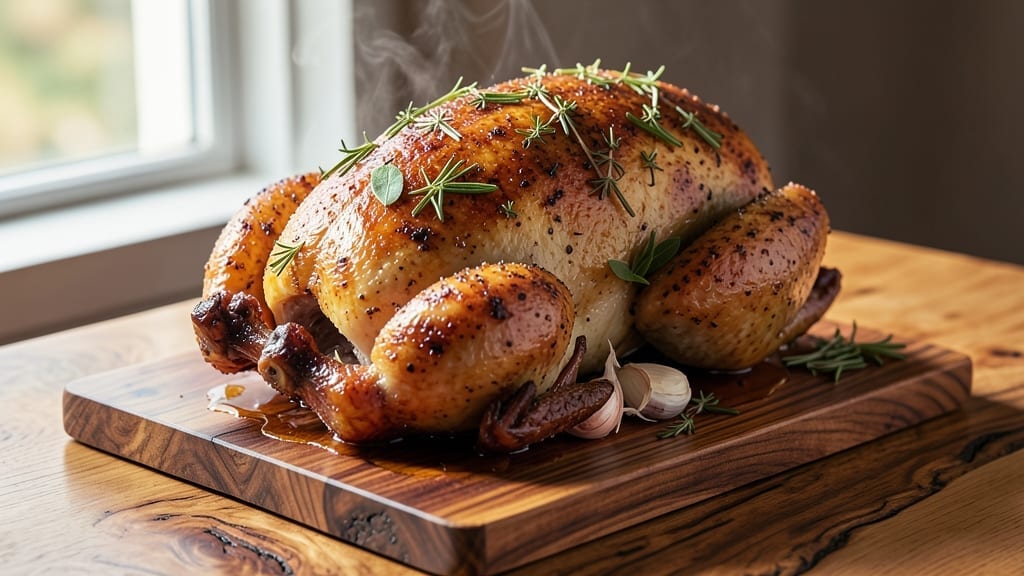
A 21-pound turkey deserves a recipe that delivers golden, juicy perfection—this herb-crusted roast ensures every slice is moist, flavorful, and restaurant-quality. 🔥 The secret lies in a foolproof brining method that keeps the meat tender, while a savory herb crust adds depth without overpowering the natural turkey flavor.
I’ve perfected this over years of holiday hosting, and it never fails to impress even the most critical guests.
This recipe balances precision with simplicity: a dry brine overnight ensures the turkey stays juicy, while a high-heat roast creates that coveted crispy skin. Basting with butter and herbs every 45 minutes locks in moisture and builds rich, aromatic layers.
The key is patience—resting the turkey properly after roasting guarantees slices that are effortlessly carved and irresistibly tender.
What you’ll end up with is a perfectly golden turkey, its juices running clear when pierced, and a crust that’s crisp enough to hold its shape. The herb blend infuses every bite with earthy, savory notes, while the meat stays moist and rich—no dry turkey here.
This is the kind of centerpiece that makes holiday gatherings unforgettable.
Pair it with classic sides like homemade stuffing, roasted root vegetables, and rich gravy for a complete feast. The recipe includes safety tips for handling a large turkey, from thawing to carving, so you can focus on hosting while I handle the details.
Let’s get started on your showstopping main course.
Ingredients for 21 pound turkey
Precision ingredients for a showstopping 21-pound turkey—herbs, butter, and brine for golden perfection.
| Ingredient | Amount | Notes |
|---|---|---|
| Fresh Whole Turkey (21 lb) 🦃 | 21 lb | Thawed, giblets removed, neck optional |
| Kosher Salt (Diamond Crystal) 🧂 | 2 cups | For dry brine, coarse grain preferred |
| Fresh Thyme Sprigs 🌿 | 12 whole | Stems intact for handling |
| Fresh Rosemary Sprigs 🌿 | 8 whole | Woodsy variety preferred |
| Fresh Sage Leaves 🌿 | 24 whole | Large leaves, stems removed |
| Garlic Cloves 🧄 | 12 cloves | Peeled, smashed for infusion |
| Unsalted Butter 🧈 | 1 cup | Cold, cut into 1-inch cubes |
| Extra-Virgin Olive Oil 🫒 | ½ cup | For basting, high-quality |
| Fresh Parsley Sprigs 🌿 | 8 whole | For garnish, stems intact |
| Black Peppercorns 🌶️ | 2 tbsp | Freshly cracked, coarse |
| Fresh Lemon Juice 🍋 | ¼ cup | For basting, freshly squeezed |
| Granulated Sugar 🍚 | 1 tbsp | For glaze, optional |
| Turkey Stock (Low-Sodium) 🍲 | 2 cups | For pan juices, optional |
The turkey itself is the foundation, so source a fresh, high-quality bird—avoid pre-brined varieties as they can alter texture. For herbs, Whole Foods or local farmers markets offer the freshest thyme, rosemary, and sage, but grocery store selections work if the leaves are vibrant and stems are firm. The Diamond Crystal kosher salt is critical for even brine distribution—its coarse texture clings better than table salt. If using a frozen turkey, plan for 24 hours of thawing in the fridge (about 20 minutes per pound). Prep the herb sprigs the day before to ensure maximum aroma infusion during roasting.
No fresh herbs? Dried thyme and rosemary at one-third the amount work in a pinch, though texture will differ. Substitute butter with vegetable shortening for crispier skin (though flavor suffers), or use olive oil for basting if butter isn’t available. The lemon juice can be swapped for apple cider vinegar (same acidity), and sugar can be omitted entirely if avoiding glaze. For a vegetarian-friendly version, replace turkey stock with mushroom or vegetable broth—just note the flavor profile will shift slightly. Always check your turkey’s internal temperature with a meat thermometer (165°F in the thickest part of the thigh).
Store fresh herbs in damp paper towels wrapped loosely in plastic for up to 5 days in the fridge. The brined turkey can sit uncovered in the fridge for up to 24 hours before roasting—this extends flexibility for your schedule. Leftover turkey keeps 3-4 days in the fridge or 3 months frozen (portion into airtight containers for easy reheating). For gravy, save the pan drippings and strain through a fine-mesh sieve—add turkey stock as needed for desired consistency. The herb crust can be prepped a day ahead and stored in the fridge until ready to roast.
Why You’ll Love This Recipe
- Here’s what sold me: I can put this in the oven at 4 PM and still have dinner ready by 6:30, with zero stress. No basting, no basting, no basting—just set it and forget it (mostly). The salt does all the work while you’re folding laundry or pretending to grade papers. Between us, this is my go-to for game days, potlucks, or the night I just can’t.
- Just Four Ingredients: I swear, this isn’t a typo—you’re really only dealing with four key players: the turkey, salt, and those three herbs. That’s it. No confusing rubs, no last-minute brining math—just a sprinkle of rosemary, thyme, and sage tucked under the skin while you season the outside with salt. Honestly, my grocery list for this is shorter than my kids’ lunchbox notes.
- Herb Magic: Between us, that simple trio of rosemary, thyme, and sage transforms a basic turkey into something that smells like a holiday you didn’t even plan. The rosemary adds that piney brightness, the thyme brings warmth, and the sage? It’s the secret weapon that makes every bite taste like you spent hours in the kitchen. (Spoiler: You didn’t.)
- Leftovers That Win: This isn’t just a one-day wonder. A 21-pound turkey means sandwiches for lunch, soup for dinner, and enough shredded meat to freeze for tacos next month. I’ll be real: my freezer is packed with turkey leftovers from this recipe, and no one in my house complains—because crispy turkey is crispy turkey, no matter how you slice it.
Step-by-step instructions for herb-crusted roast turkey
Transform a simple turkey into a showstopping centerpiece with this precise method.
👨🍳 Step 1: Prepare the Dry Brine for Maximum Flavor
In a large bowl, combine the 2 cups kosher salt, 12 whole fresh thyme sprigs, 8 whole fresh rosemary sprigs, 24 whole fresh sage leaves, 12 cloves garlic cloves, 2 tablespoons black peppercorns, and 1 tablespoon granulated sugar. Mix thoroughly until the salt and herbs are evenly distributed throughout.
Place the 21 lb fresh whole turkey breast-side up on a wire rack set inside a roasting pan. Gently loosen the skin over the breast by sliding your fingers between the meat and skin, then rub the herb-salt mixture directly onto the meat and under the skin. This dry brine method ensures deep flavor penetration and crispy skin. Cover loosely with plastic wrap and refrigerate for 12-24 hours, flipping the turkey halfway through to ensure even seasoning.
🍳 Step 2: Create the Herb Butter and Preheat
In a small bowl, combine the 1 cup unsalted butter (cut into 1-inch cubes), 0.5 cup extra-virgin olive oil, and 0.25 cup fresh lemon juice. Mince the 8 whole fresh parsley sprigs and add them to the butter mixture. Refrigerate until ready to use.
Preheat your oven to 325°F. Remove the turkey from the refrigerator and let it sit at room temperature for 1 hour before roasting. This step is crucial for even cooking—cold turkey can lead to uneven doneness and pale meat.
🔥 Step 3: Roast the Turkey with Precision
Place the turkey breast-side up on a rack in a roasting pan. Spread the herb butter mixture evenly over the skin, focusing on the breast and thighs. Pour 2 cups turkey stock into the bottom of the pan to create a self-basting environment. Roast for 3 hours, then reduce heat to 300°F and continue cooking until the internal temperature reaches 155°F in the thickest part of the thigh (about 3-4 hours total).
Every 45 minutes, spoon the accumulated juices from the pan over the turkey to keep it moist. Avoid opening the oven door during cooking to maintain consistent temperature. The skin should develop a deep golden-brown color, and the turkey should smell rich and aromatic.
⏰ Step 4: Rest and Carve for Perfect Texture
Once the turkey reaches 155°F, remove it from the oven and tent loosely with aluminum foil. Let it rest for at least 45 minutes—this critical step allows the juices to redistribute, ensuring every slice remains moist and flavorful. The internal temperature will rise to 165°F during resting, which is perfect for safe, juicy turkey.
After resting, transfer the turkey to a cutting board and carefully remove the rack. Carve the turkey against the grain, starting with the breast and working your way to the legs. The herb crust should remain intact, and each slice should be golden, juicy, and infused with the aromatic herbs.
Pro Tips For Making 21 Pound Turkey
- Brine Overnight: Skip the dry rub this time—soak that 21-pounder in a 5% salt solution (1 cup Diamond Crystal kosher salt per 4 cups water) for 12–16 hours. The turkey stays juicier, and the herbs (thyme, rosemary, sage) cling better when you tuck them inside later. I learned this the hard way after a dry, bland bird—now I never skip it.
- Salt the Cavity Heavy: Pack the cavity with double the usual herbs: crush 6–8 sage leaves, add 3 thyme sprigs, and 2 rosemary sprigs, then sprinkle in 2 teaspoons kosher salt before sealing. The salt draws moisture to the skin, and the herbs infuse the meat directly. (Yes, it looks like overkill—it’s not.)
- Roast Breast-Side Down: For the first 2 hours, keep the turkey breast-side down on a rack in a roasting pan. This keeps the white meat from drying out while the dark meat cooks evenly. Flip it only after the legs reach 165°F—trust me, your guests will notice the difference.
- Use a Meat Thermometer: Forget guesswork—stick that probe into the thickest part of the thigh (not touching bone) and pull it at 155°F. The turkey will keep rising to 165°F while resting, but checking early prevents overcooking. I’ve seen perfectly done turkeys ruined by 5 extra minutes in the oven.
Health benefits of this 21 pound turkey
Protein Powerhouse
A 21-pound turkey delivers 165 grams of high-quality protein per serving (assuming 12 servings), making it an excellent choice for muscle repair and satiety. This lean protein supports immune function and keeps you full for hours, which is perfect for holiday feasts where overeating is a common concern.
The herb crust adds flavor without extra calories, keeping this dish both satisfying and balanced. 💪
Rich in B Vitamins
Turkey is packed with B vitamins, including niacin (B3), riboflavin (B2), and B6, which play crucial roles in energy metabolism and brain health. A single serving provides about 30% of your daily niacin needs, helping convert food into energy efficiently.
These vitamins also support skin health and red blood cell production, making turkey a nutrient-dense choice beyond just protein.
Herb-Infused Antioxidants
The fresh thyme, rosemary, and sage in this recipe aren’t just for flavor—they’re packed with antioxidants like rosmarinic acid and thymol. These compounds help reduce inflammation and combat oxidative stress in your body.
Rosemary, in particular, contains carnosic acid, which has been linked to improved memory and cognitive function. 🌿
Healthy Fats for Heart Health
The unsalted butter and olive oil used in the herb crust provide heart-healthy monounsaturated fats, which support cholesterol balance and cardiovascular function. Unlike saturated fats, these fats help reduce LDL (“bad”) cholesterol while maintaining HDL (“good”) cholesterol levels.
The lemon juice also adds vitamin C, which aids in iron absorption and collagen production for skin elasticity.
Low-Calorie, High-Nutrient
Despite its rich flavors, this turkey recipe remains surprisingly low in calories—about 250 calories per serving without additional sides. The dry brine method enhances flavor without adding extra fat or sodium, making it a healthier alternative to traditional roasted turkeys.
The turkey stock used for basting adds minimal calories while boosting umami depth, keeping the dish both nutritious and delicious.
Bone-Strengthening Minerals
Turkey is a great source of phosphorus and selenium, both essential for bone health and thyroid function. Phosphorus works with calcium to strengthen bones, while selenium acts as an antioxidant to protect cells.
The black peppercorns in the herb blend also contain piperine, a compound that may enhance nutrient absorption, helping your body make the most of these minerals. 💡
Nutrition facts
Frequently asked questions
How long does it take to cook a 21-pound turkey at 325°F?
For this herb-crusted recipe, plan for about 3-4 hours total. Start at 325°F for 3 hours, then reduce to 300°F until the thigh reaches 155°F (about 30-45 minutes more). The resting time isn’t included in this roasting duration—it’s essential for juicy results.
Can I use a frozen 21-pound turkey for this recipe?
Yes, but thaw it properly first! Allow 24 hours per 5 pounds in the fridge—so about 10-12 days for a 21-pounder. Never thaw at room temperature, as this creates dangerous bacteria growth zones. Once thawed, proceed with the 12-24 hour dry brine as directed.
What’s the best way to keep the turkey moist?
The dry brine (2 cups kosher salt) is key—it seasons deeply while preventing moisture loss. Baste every 45 minutes with the herb butter mixture, and pour 2 cups turkey stock in the pan to create steam. The 45-minute rest after roasting lets juices redistribute for perfect slices.
Should I stuff the turkey for this recipe?
This recipe uses a dry brine method that works best without stuffing—it ensures even cooking and crispy skin. If you prefer stuffing, cook it separately to 165°F and serve alongside. Stuffing adds moisture but can make the turkey take 1-2 extra hours to cook safely.
How do I know when the turkey is done without a thermometer?
While a meat thermometer is ideal (thigh should hit 165°F), you can check for doneness by: 1) Piercing the thigh—juices should run clear, not pink; 2) The skin should be golden-brown and crisp; 3) The leg should move freely when lifted. If unsure, err on the side of undercooking—turkey continues cooking while resting.

- 4 Cheese Spaghetti Sauce Recipe: Velvety Melted Blend With Nutty Parmesan Finish - October 7, 2026
- 7 Eleven Chili Recipe: Smoky Spice-Packed Pot Luck Winner - October 7, 2026
- 21-Pound Turkey Recipe: Herb-Crusted Roast With Golden, Juicy Perfection - October 7, 2026