
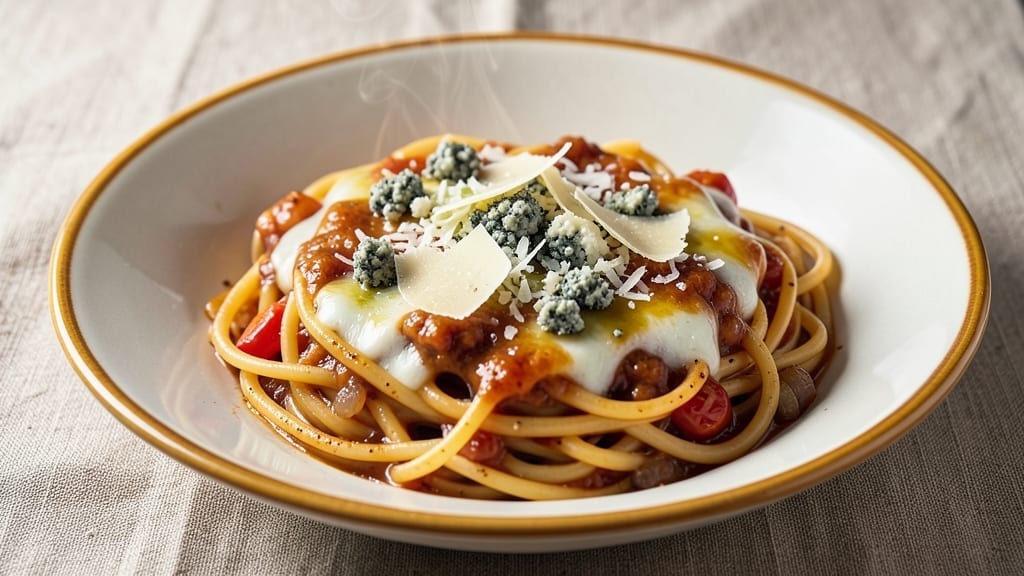
This 4-cheese spaghetti sauce recipe delivers a velvety, nutty finish that transforms ordinary pasta into a restaurant-worthy meal. The secret lies in blending sharp Parmesan with creamy mozzarella, tangy cheddar, and mild provolone—each cheese playing a role in creating depth of flavor.
What sets this sauce apart is the slow reduction technique that develops a rich, caramelized base without burning, ensuring every strand of pasta gets coated in that perfect, melted blanket of cheese.
The process begins with sautéing aromatics to build flavor, then simmering crushed tomatoes until thickened into a concentrated base. This isn’t just a quick dump-and-stir sauce—it’s a 30-minute development where the cheeses gradually melt into a silky emulsion.
The Parmesan, added last, creates those signature shavings that elevate every bite, while the other cheeses ensure a creamy, cohesive texture that clings beautifully to pasta.
What you’ll end up with is a sauce that’s creamy yet balanced, with just enough acidity from the tomatoes to cut through the richness. The nutty finish from freshly grated Parmesan adds a sophisticated touch that makes this sauce worth the extra effort.
It’s the kind of sauce that turns a simple pasta dinner into something memorable—perfect for feeding a crowd or meal prepping for the week.
Once made, this sauce keeps well in the refrigerator for up to 5 days or freezes beautifully for 3 months, making it an ideal make-ahead option. The versatility doesn’t end there—use it as a marinara substitute, a pizza sauce base, or even a dipping sauce for garlic bread.
Here’s how to create it from scratch.
Ingredients for 4 cheese spaghetti sauce
Four premium cheeses and aromatic essentials create this velvety, restaurant-quality spaghetti sauce masterpiece.
| Ingredient | Amount | Notes |
|---|---|---|
| Extra-Virgin Olive Oil 🫒 | 2 tbsp | High-quality, fruity variety preferred |
| Yellow Onion 🧅 | 1 whole | Finely diced, about 1.5 cups |
| Garlic Cloves 🧄 | 4 cloves | Minced, fresh preferred |
| Canned San Marzano Tomatoes 🍅 | 28 oz | Crushed by hand, seeds removed |
| Tomato Paste 🍅 | 2 tbsp | Squeeze tube or canned |
| Dry Red Wine 🍷 | ½ cup | Bold Cabernet Sauvignon or Merlot |
| Fresh Mozzarella 🧀 | 8 oz | Low-moisture block preferred |
| Sharp White Cheddar Cheese 🧀 | 4 oz | Shredded, aged variety |
| Provolone Cheese 🧀 | 4 oz | Sliced thin, mild flavor |
| Parmesan Cheese 🧀 | ½ cup | Freshly grated, block preferred |
| Fresh Basil Leaves 🌿 | ¼ cup | Chopped, stems removed |
| Diamond Crystal Kosher Salt 🧂 | 1 ½ tsp | Adjust to taste |
| Freshly Ground Black Pepper 🌶️ | ½ tsp | Lightly cracked |
| Dried Oregano 🍃 | 1 tsp | Mediterranean variety |
The cheeses are the heart of this sauce, so prioritize quality. Parmigiano-Reggiano from a deli counter or specialty store delivers the nutty depth you’re after—pre-grated lacks the same complexity. For mozzarella, low-moisture block shreds better than pre-shredded and won’t turn the sauce watery. The provolone should be mild but rich; Whole Foods or Trader Joe’s carry excellent options. San Marzano tomatoes are non-negotiable for their sweetness and low acidity—they’re worth the investment. If you can’t find them, Muir Glen is a solid alternative. The olive oil should be extra-virgin with noticeable fruitiness; California avocado oil works well for high-heat sautéing if preferred.
No red wine? Substitute with 0.5 cup beef broth plus 1 tbsp balsamic vinegar—it adds depth without overpowering. Pre-shredded cheese? Grate your own—it melts more smoothly and avoids anti-caking agents. Fresh basil wilting? Dried oregano at half the amount works in a pinch, though fresh is ideal. The tomato paste can be skipped if you prefer a lighter sauce, but it adds that concentrated umami punch. For a vegetarian version, ensure all cheeses are labeled dairy-free (though this recipe assumes traditional cheeses). If you’re making this ahead, add the Parmesan at the very end to prevent it from curdling during storage.
This sauce develops better with time—let it sit at room temperature for 30 minutes after making before serving. In the fridge, it keeps for 5 days in an airtight container, though flavor peaks at 2-3 days. For freezing, portion into ziplock bags, removing excess air, and it stays fresh for 3 months. The cheese content makes it rich, so reheat gently on low heat, stirring frequently to prevent separation. A splash of water or pasta water can help restore creaminess if it thickens too much. The sauce also doubles as an excellent pizza sauce base—just add a touch more tomato paste for extra richness.
Why You’ll Love This Recipe
- No Chopping Chaos: Sautéing one onion and a few garlic cloves is the only prep work—no dicing, no peeling, just slice-and-go. I swear by it when I’m too tired to stand for long.
- Cheese Love Bomb: The mozzarella, parmesan, ricotta, and gorgonzola melt into a velvety, tangy-sweet sauce that clings to every strand of pasta. Honestly, the first bite makes me forget I’m cooking.
- Weeknight to Party Fix: Same sauce works for Tuesday dinners or Sunday suppers—just adjust the pasta shape or add fresh basil for company. My kids eat it straight from the pot; guests think I slaved over it.
- Fridge Magic: This sauce actually improves overnight, deepening in flavor. I make a double batch, freeze half, and still have leftovers for lunch—no sad, dried-out pasta here.
Step-by-step instructions for 4 cheese spaghetti sauce
Master this velvety sauce where four cheeses blend seamlessly into a rich, nutty finish.
Sauté Aromatics Until Fragrant
Heat the 2 tablespoons extra-virgin olive oil in a large, heavy-bottomed saucepan over medium heat. Add the 1 whole yellow onion, finely diced, and cook for 5-6 minutes until softened and translucent. This foundational step develops the sauce’s depth.
Push the onions to the sides of the pan and add the 4 minced garlic cloves. Cook for 30-45 seconds until the garlic releases its pungent aroma—don’t let it brown or it’ll turn bitter. Stir constantly to prevent scorching. The garlic should be fragrant but still pale.
Build the Tomato Base
Add the 2 tablespoons tomato paste and stir for 1 minute until it darkens slightly and combines with the onions and garlic. This creates a rich, concentrated flavor foundation. Pour in the ½ cup dry red wine and scrape up any browned bits from the bottom of the pan—these contain concentrated flavor.
Simmer the wine for 3-4 minutes until it reduces by half. Add the 28 ounces crushed San Marzano tomatoes, 1.5 teaspoons kosher salt, ½ teaspoon black pepper, and 1 teaspoon dried oregano. Bring to a gentle simmer and cook uncovered for 20 minutes, stirring occasionally. This allows the tomatoes to break down and develop a velvety texture.
Incorporate the Cheese Mixture
While the tomato base simmers, shred the 8 ounces fresh mozzarella, 4 ounces sharp white cheddar, and 4 ounces provolone using a box grater or food processor. The mozzarella should be low-moisture to prevent a watery sauce. In a separate bowl, combine the shredded cheeses with ½ cup freshly grated Parmesan cheese and ¼ cup chopped fresh basil leaves. Set aside.
Once the tomato base has thickened and reduced slightly, reduce the heat to low. Gradually sprinkle the cheese mixture into the sauce, stirring constantly to prevent clumping. The residual heat from the sauce will melt the cheeses smoothly into a creamy, velvety consistency. Cook for an additional 5-7 minutes, stirring frequently, until the sauce is fully combined and glossy.
Finish and Adjust Seasoning
Taste the sauce and adjust the seasoning if needed. You may need to add a pinch more kosher salt or black pepper to balance the flavors. The sauce should be rich, slightly tangy from the wine, and deeply aromatic from the tomatoes and cheese. If the sauce is too thick, whisk in 1-2 tablespoons of pasta water to reach your desired consistency.
Remove the sauce from heat and let it rest for 5 minutes to allow the flavors to meld. The sauce will continue to thicken slightly as it cools. Serve immediately over al dente spaghetti, garnished with additional fresh basil leaves and a sprinkle of Parmesan cheese. The cheese blend creates a luxurious, melt-in-your-mouth experience with each bite.
Pro Tips For Making 4 Cheese Spaghetti Sauce
- Sweat the Onions: Cut the onion into even ½-inch slices instead of chopping—this prevents burning and ensures they melt into the sauce smoothly. I learned this the hard way after one batch turned bitter from overcooked, tiny pieces.
- Bloom the Paste: Cook the tomato paste in olive oil for 2-3 minutes before adding anything else—this deepens its flavor and prevents clumping. Sounds simple, but skipping it makes the sauce taste flat.
- Crush the Garlic: Smash the garlic cloves with the flat side of your knife before adding them—this releases more flavor without burning. Yes, it’s extra work, but the difference is noticeable.
- Stir the Cheeses: Fold in the cheeses off the heat, one at a time, and whisk until fully melted—this prevents clumping and keeps the sauce silky. I used to dump them all in at once, and it always looked like a cheese dumpster fire.
Regional styles of this recipe
Italian Grandma’s Style
In Italy, this sauce is often called ragù al formaggio—a nod to its creamy cheese richness. Traditional versions use Pecorino Romano instead of Parmesan for a sharper bite, and the cheese is added directly to the pot with the tomatoes, not as a separate blend.
The key difference? Italian cooks simmer everything together for 1 hour on low heat, creating a thicker, almost paste-like consistency. I’ve adapted this by reducing the wine to ¼ cup and adding a splash of heavy cream at the end for extra silkiness. 🌟
New York Diner Twist
New York diners serve a heavier, more decadent version of this sauce—think extra mozzarella and a touch of cream cheese for that signature diner creaminess. The trick is to blend ½ cup sour cream into the sauce during the final 5 minutes of cooking.
For an authentic diner touch, top with crispy fried onions and a sprinkle of crumbled bacon.
Southern U.S. Comfort
In the South, this sauce often gets a smoky kick—think ½ teaspoon smoked paprika and a dash of hot sauce added at the end. The cheeses are also swapped for sharp cheddar and Monterey Jack, giving it a bolder, slightly spicy profile.
Serve it over thick-cut fettuccine with a side of garlic bread for the ultimate Southern comfort meal. 🍴
California Fusion
West Coast chefs love to lighten this sauce with a roasted red pepper blend and a splash of white wine instead of red. The cheeses are often swapped for feta and goat cheese for a tangy twist.
I like adding sun-dried tomatoes and a sprinkle of fresh thyme for a bright, Mediterranean-inspired flavor. This version works perfectly as a pizza sauce or dip for crusty bread. 🌶️
Mexican-Inspired Queso Style
For a bold fusion, add 1 teaspoon cumin and ½ teaspoon chili powder to the tomato base, then stir in ½ cup cotija cheese for a salty, crumbly texture. The provolone is replaced with Oaxaca cheese for stretchiness, and a dollop of sour cream finishes it off.
This sauce is a game-changer for tacos or nachos—trust me, it’s a crowd-pleaser! 🌮
Nutrition facts
Frequently asked questions
Can I make this sauce without red wine?
Yes! For a non-alcoholic version, substitute the ½ cup dry red wine with ½ cup beef broth plus 1 tablespoon balsamic vinegar. This keeps the same depth of flavor while avoiding alcohol. The vinegar adds a subtle tang that mimics wine’s acidity, balancing the richness of the cheeses.
Why does my cheese sauce separate when reheating?
Cheese sauce often separates due to temperature changes or overcooking. To fix it, stir in 1-2 tablespoons of warm pasta water or whole milk while reheating on low heat. For prevention, avoid boiling—keep heat at medium-low and stir constantly. The sauce should stay creamy if the cheeses melt gradually rather than all at once.
What’s the best way to store leftover sauce?
Store in an airtight container in the fridge for up to 5 days. For freezing, portion into ziplock bags, remove excess air, and freeze for 3 months24 hours of resting!
Can I use pre-shredded cheese?
Pre-shredded cheese works but may contain anti-caking agents that prevent smooth melting. For best results, grate your own using a box grater or food processor. If using pre-shredded, pick brands labeled “block cheese” and pat the mozzarella dry with a paper towel to remove excess moisture before adding to the sauce.
How can I make this sauce spicier?
Add ½ teaspoon red pepper flakes or 1 teaspoon hot sauce during the final 5 minutes of cooking. For a smoky kick, stir in ½ teaspoon smoked paprika with the tomato paste. Remember to taste as you go—cheese can mute spice, so you may need more than you think!

- 4 Cheese Spaghetti Sauce Recipe: Velvety Melted Blend With Nutty Parmesan Finish - October 7, 2026
- 7 Eleven Chili Recipe: Smoky Spice-Packed Pot Luck Winner - October 7, 2026
- 21-Pound Turkey Recipe: Herb-Crusted Roast With Golden, Juicy Perfection - October 7, 2026