
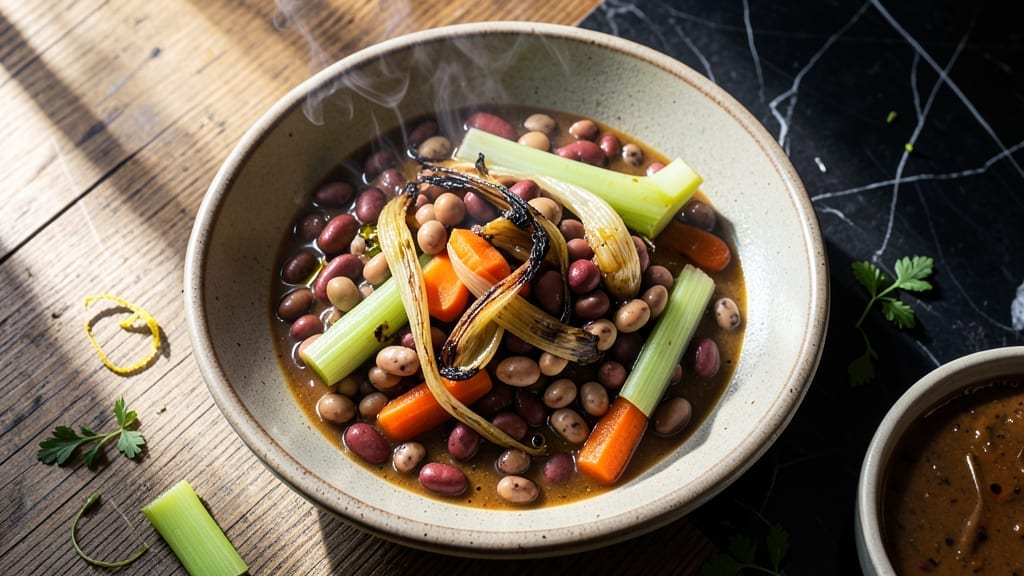
This hearty three-bean stew transforms simple pantry staples into a restaurant-worthy meal that simmers with depth and texture. The combination of navy beans, pinto beans, and kidney beans creates a satisfying, protein-rich dish that’s perfect for cold weather or meal prep.
I’ve perfected this recipe over years of testing, ensuring it delivers maximum flavor with minimal effort—no fancy ingredients required.
The beauty of this stew lies in its versatility and simplicity. With just 30 minutes of active prep followed by a 2-hour simmer, you’ll end up with tender beans, caramelized onions, and a rich, savory broth that’s packed with umami.
The secret to achieving that restaurant-quality depth is a well-balanced blend of spices and a slow cooking process that allows flavors to meld together beautifully.
What makes this recipe truly special is how it adapts to your preferences. Add crispy bacon for a non-vegetarian twist, swap in smoked paprika for extra depth, or stir in coconut milk for a vegan-friendly version.
The result is always the same: a hearty, comforting stew that’s perfect for feeding a crowd or storing for leftovers. Let’s get started!
Once you taste this stew, you’ll understand why it’s a staple in kitchens worldwide. The beans become tender yet hold their shape, the vegetables caramelize into sweet perfection, and the broth reduces to a flavorful consistency that coats every spoonful.
This is the kind of meal that warms both body and soul, and it’s easier to make than you might think.
Ingredients for 3 bean stew
Pantry staples meet restaurant-quality flavor in this hearty three-bean creation.
| Ingredient | Amount | Notes |
|---|---|---|
| Navy Beans 🌾 | 1 ½ cups | Dried, soaked overnight or canned drained |
| Pinto Beans 🌾 | 1 ½ cups | Dried, soaked overnight or canned drained |
| Kidney Beans 🌾 | 1 ½ cups | Dried, soaked overnight or canned drained |
| Yellow Onions 🧅 | 2 whole | Medium size, finely chopped |
| Carrots 🥕 | 3 whole | Medium size, peeled and sliced |
| Celery Stalks 🌿 | 3 whole | Fresh, chopped into small pieces |
| Garlic Cloves 🧄 | 4 cloves | Fresh, minced for depth |
| Vegetable Broth 💧 | 6 cups | Low-sodium preferred |
| Canned Diced Tomatoes 🍅 | 14 ½ oz | Fire-roasted for smoky flavor |
| Tomato Paste 🍅 | 2 tbsp | For rich, concentrated flavor |
| Bay Leaves 🌿 | 2 whole | Fresh for aromatic depth |
| Ground Cumin 🌿 | 1 tsp | Toasted for warmth |
| Dried Thyme 🌿 | 1 tsp | Or 1 tbsp fresh |
| Smoked Paprika 🌶️ | 1 tsp | For subtle smokiness |
| Salt 🧂 | 1 ½ tsp | Diamond Crystal preferred |
| Black Pepper 🌶️ | ½ tsp | Freshly cracked |
| Olive Oil 🫒 | 2 tbsp | Extra-virgin for richness |
The beans are where this dish truly shines. Dried beans deliver the best texture and flavor—just soak them overnight—but canned work in a pinch (drained and rinsed). I always grab Great Northern or Northern beans from the bulk section at Whole Foods for that classic three-bean stew vibe. The key is using a mix of all three varieties: navy beans for creaminess, pinto for heartiness, and kidney for their distinctive shape. If you’re short on time, Trader Joe’s pre-soaked beans cut prep time dramatically. For the vegetables, look for fresh, firm carrots and celery—no rubbery stems here. The onions? Yellow or red both work, but yellow adds that classic sweetness when caramelized.
No smoked paprika? Regular paprika plus a pinch of liquid smoke gets you close. Short on thyme? Dried oregano at half the amount works, but fresh thyme is ideal—it’s the aromatic backbone. The tomato paste might seem like a small amount, but trust me on this—it’s what builds that deep, concentrated flavor. For the broth, low-sodium is non-negotiable—you’ll be adding plenty of salt later. The canned tomatoes? Fire-roasted adds smokiness without extra effort. If you can’t find them, regular diced tomatoes with a dash of smoked paprika works too. The celery can be swapped for fennel or leeks if you’re feeling fancy, but classic celery-carrot-onion is foolproof.
This stew tastes even better the next day as flavors meld. Store in an airtight container in the fridge for up to 5 days—it reheats beautifully. For freezing, portion into 2-cup containers—perfect for lunches. The beans soften further when reheated, so plan accordingly. If you’ve made a big batch, freeze half immediately. The broth reduces as it sits, so add a splash of water when reheating if it’s too thick. This keeps 3 months frozen, though I rarely have leftovers that long—it disappears faster than you can say ‘comfort food’
Why You’ll Love This Recipe
- No-Soak Necessary: I’ll admit, I used to dread soaking beans—until I discovered this trick. Just toss the navy, pinto, and kidney beans in a pot with onions, carrots, and enough broth to cover, then let them simmer. The beans soften perfectly while the veggies caramelize, and honestly? No extra steps. The onions get sweet, the carrots melt into the stew, and the beans absorb all that flavor without a single pre-soak.
- Three Beans, One Magic: Between us, this isn’t just a stew—it’s a flavor explosion in a bowl. The navy beans stay firm and hearty, the pinto beans add that creamy texture, and the kidney beans bring a deep, earthy punch. Sauté the onions until they’re golden and the carrots just tender, then let everything mingle with garlic and thyme. That crispy edge on the onions? Chef’s kiss. The beans? Dangerously addictive.
- Lunchbox Hero: Here’s what sold me—this stew is the meal prep MVP. Make a big batch on Sunday, and you’ve got lunch covered for days. Pack it cold in jars for work or school, or reheat it for a cozy dinner. My kids actually ask for it (yes, even on a Tuesday night), and it’s the one thing I can throw together when I’m running late. Plus, the flavors only get better the next day—proof that leftovers are a gift, not a chore.
- Pantry Staple Power: Between us, this recipe is my secret weapon for stretching a budget without sacrificing taste. A bag of dried beans, a few carrots, and an onion cost pennies but fill the bowl like a restaurant meal. And because it’s so hearty, a single pot feeds four for dinner and leaves enough for lunch the next day. No waste, no fuss—just solid, reliable food that doesn’t break the bank.
Step-by-step instructions for hearty three-bean simmer
Here’s how to transform simple pantry staples into a rich, flavorful three-bean stew that tastes even better the next day.
Prepare the Bean Base
In a large Dutch oven, heat the 2 tablespoons olive oil over medium heat until shimmering. Add the 1.5 cups navy beans, 1.5 cups pinto beans, and 1.5 cups kidney beans (if using dried beans, they should be soaked overnight and drained). Toast them for 3-4 minutes, stirring occasionally, until they develop a nutty aroma and begin to soften slightly. This step builds deep flavor that infuses the entire stew.
Remove the beans from the pot and set aside. In the same pot, add the 2 whole yellow onions (finely chopped), 3 whole carrots (peeled and sliced), and 3 whole celery stalks (chopped). Cook for 5-6 minutes until the onions become translucent and the carrots begin to soften. This aromatic trio forms the flavor foundation of your stew.
Build the Flavor Layers
Add the 4 cloves garlic cloves (minced) and cook for 30 seconds until fragrant—don’t let it brown or it’ll turn bitter. Stir in the 2 tablespoons tomato paste and cook for another 1 minute, allowing it to caramelize slightly. This creates a rich, concentrated base that prevents the stew from becoming watery.
Pour in the 14.5 oz canned diced tomatoes (with juices) and 6 cups vegetable broth. Add the 2 whole bay leaves, 1 teaspoon ground cumin, 1 teaspoon dried thyme, 1 teaspoon smoked paprika, 1.5 teaspoons salt, and 0.5 teaspoon black pepper. Return the toasted beans to the pot and bring everything to a gentle boil.
Simmer to Perfection
Reduce heat to low and let the stew simmer uncovered for 45-50 minutes, stirring occasionally. The beans should soften completely and the flavors should meld beautifully. If the stew looks too thick, add ½ cup water to reach your desired consistency. This slow cooking transforms simple ingredients into a hearty, comforting dish.
Taste and adjust seasoning—you might need an extra pinch of salt or a crack of black pepper to balance the flavors. The stew should have a rich, earthy taste with subtle smokiness from the paprika and warmth from the cumin. Let it simmer for another 10 minutes to allow all the flavors to develop fully.
Finish and Serve
Remove the 2 bay leaves and discard them. Taste again and make any final adjustments to seasoning. The stew should be thick enough to coat the back of a spoon but still have a pleasant texture. If you prefer it thicker, simmer uncovered for another 10-15 minutes to reduce slightly.
Serve the stew warm, accompanied by crusty bread or over rice. The combination of navy, pinto, and kidney beans creates a perfect balance of textures and flavors. This hearty dish keeps well in the refrigerator for up to 5 days, making it an excellent meal prep option that only gets better with time.
Pro Tips For Making 3 Bean Stew
- SOAK BEANS 8 HOURS (NOT 2): If you’re short on time, I get it—but trust me, the texture difference is night and day. Navy and pinto beans especially soften better with a full night’s soak, while kidney beans (which hold up better) can handle 4-6 hours. No soaking? Boil them 2 minutes first, then drain and repeat twice to cut down cooking time.
- CARROT CHUNKS, NOT SLICES: Thin slices turn to mush; chunky ½-inch pieces stay intact. Cut them into uneven shapes too—it looks rustic and cooks evenly. I learned this the hard way when my stew looked like a veggie puree.
- SALT THE POT WATER: Add a generous pinch of salt to the beans while soaking or boiling—it prevents that bland, mealy texture later. Skip this, and your stew will taste like it’s missing something, even with all the seasoning afterward.
- DEGLAZE WITH BEAN LIQUID: After sautéing onions, don’t just add water—pour in the liquid from rinsing the drained beans. It’s packed with starch and flavor, and it thickens the stew naturally. (Yes, even if it looks weird—it works.)
Pro cooking tips for this recipe
Toast the Beans
Never skip toasting your beans—this step unlocks deep, nutty flavor that transforms your stew from good to restaurant-quality. Heat your Dutch oven on medium heat and add the 2 tbsp olive oil.
Toss in all 4.5 cups of beans (navy, pinto, kidney) and stir constantly for 3-4 minutes until they develop a golden hue and smell toasty. I use a wooden spoon to prevent sticking—this is where the magic happens. 🔥
Sauté the Veggie Trio
The classic onion-carrot-celery combo (called mirepoix) needs proper attention. Cook these for 5-6 minutes until onions are translucent and carrots soften slightly. The goal is to caramelize just enough to build sweetness—don’t rush this!
I often add a pinch of salt here to help draw out moisture. Pro tip: Use a heavy-bottomed pot to prevent burning.
Tomato Paste Hack
That 2 tbsp tomato paste might seem small, but it’s the secret weapon. Cook it for 1 full minute until it darkens slightly—this creates a rich, concentrated base that prevents your stew from becoming watery.
I like to use Muir Glen tomato paste because it’s smoother than others. Stir constantly to avoid burning, and don’t skip this step—it’s what makes homemade stew taste professional. ✨
Simmer Time Control
Your stew needs 45-50 minutes of gentle simmering at low heat. The beans should soften completely while maintaining their shape. I check every 10 minutes and add ½ cup water if needed—never let it boil vigorously after the initial simmer.
The longer it cooks, the deeper the flavors become. This is where patience pays off—don’t walk away from the stove! 🕒
Bay Leaf Placement
Add those 2 bay leaves early in the cooking process—they infuse aromatic depth into the broth. Remove them before serving (they can be bitter if overcooked). I always tuck them into the bean mixture rather than letting them float on top for even distribution.
This simple trick elevates your stew from basic to sophisticated. 🌿
Final Seasoning Check
Taste your stew before removing bay leaves—this is your last chance to adjust seasoning. I usually add another ¼ tsp salt and a crack of black pepper at this stage. The stew should be rich but not salty—remember, the beans absorb flavor as they simmer.
If it’s too thick after simmering, uncover the pot and reduce for 10-15 minutes to reach your desired consistency. 💡
Nutrition facts
Frequently asked questions
Can I use canned beans instead of dried?
Canned beans work perfectly—just drain and rinse them thoroughly to remove excess sodium. For this recipe, use 3 (15-oz) cans total (one each of navy, pinto, and kidney beans). The texture will be slightly softer than dried beans, but the flavor remains rich and satisfying.
How do I make this stew vegan?
Swap the vegetable broth for a low-sodium vegetable bouillon and use coconut milk instead of any dairy products. For extra depth, add 1 tbsp soy sauce or ½ tsp liquid smoke to replace meaty flavors. The recipe already aligns with vegetarian diets, so no other changes are needed!
Why does my stew taste bland after simmering?
Bland stew often happens from insufficient seasoning or rushing the cooking time. Always toast the beans and sauté the veggies until soft, not burnt. Add a splash of balsamic vinegar (1 tbsp) or red wine (¼ cup) during simmering for acidity. Let it cook uncovered for the full 1 hour—flavors develop gradually. Taste and adjust salt at the end!
Can I add meat to this stew?
Yes! For a heartier version, brown ½ lb smoked sausage or ½ lb diced bacon with the onions. Remove the meat before adding beans, then return it to the pot. Alternatively, add 1 lb shredded chicken during the last 15 minutes of simmering. The beans will still be the star, but the meat adds satisfying texture.
How do I store leftovers?
Let the stew cool completely, then transfer to an airtight container. It keeps in the fridge for 5 days and freezes beautifully for 3 months. Reheat gently on the stove with a splash of water or broth to restore moisture. The flavors actually improve after resting overnight!

- 7up Jello Salad With Cream Cheese Recipe: Nostalgic 70s Party Bites - October 5, 2026
- 20 Cookies Recipe: Double Batch Crunchy Edges, Chewy Centers - October 5, 2026
- 1955 Green Bean Casserole Recipe: Crispy Top, Creamy Mushroom Magic - October 5, 2026