
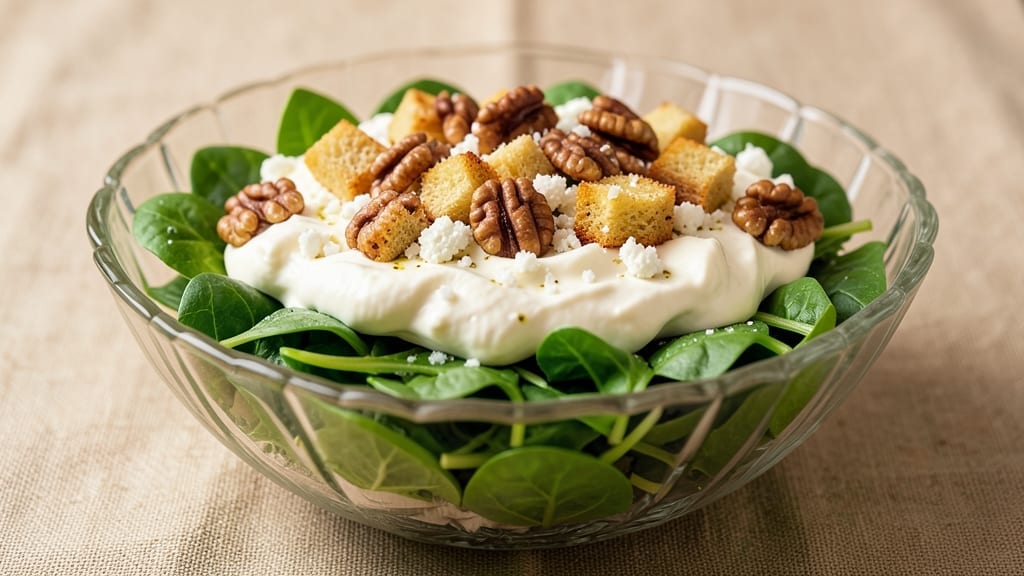
A three-layer salad transforms a simple meal into a visually stunning dish that delivers crunch, creaminess, and freshness in every bite.
The secret lies in strategic layering—starting with a sturdy base of mixed greens, adding a protein or cheese layer for substance, and finishing with bright, textured toppings that elevate both flavor and presentation. This isn’t just a salad; it’s a balanced, restaurant-worthy plate that requires minimal effort but maximum impact.
The foundation begins with crisp romaine or butter lettuce, which holds up perfectly under the weight of toppings. Next comes the creamy layer—whether it’s ricotta, goat cheese, or avocado slices—that adds richness without overwhelming the dish.
Finally, the top layer brings crunchy croutons, toasted nuts, or fresh herbs, ensuring each bite offers contrast in both texture and flavor. The result? A salad that’s as satisfying as it is beautiful.
What makes this recipe truly special is its versatility. Swap in grilled chicken for protein, swap ricotta for vegan cream cheese, or add roasted vegetables for extra depth. The assembly is straightforward, but the presentation—clear, defined layers—makes it feel like a gourmet creation.
Perfect for lunch, dinner, or even a showstopping side dish, this salad proves that simple ingredients can deliver extraordinary results.
Once you master the layering technique, you’ll never settle for a flat, one-dimensional salad again. The key is balance: let each layer shine while complementing the others.
Whether you’re hosting a dinner party or meal prepping for the week, this recipe delivers a dish that’s as impressive as it is delicious. Let’s build it layer by layer.
Ingredients for 3 layer salad
Strategically layered ingredients create restaurant-quality texture and flavor in every bite.
| Ingredient | Amount | Notes |
|---|---|---|
| Romaine Lettuce 🥬 | 6 cups | Chopped into bite-sized pieces |
| Baby Spinach 🌿 | 3 cups | Fresh, loosely packed |
| Whole-Grain Croutons 🍞 | 1 cup | Toasted for extra crunch |
| Ricotta Cheese 🧀 | 1 cup | Whole-milk for creaminess |
| Crumbled Feta Cheese 🧀 | ½ cup | Salty, tangy variety |
| Toasted Walnuts 🥜 | ½ cup | Chopped for texture contrast |
| Cherry Tomatoes 🍅 | 1 pint | Halved for freshness |
| Avocado Slices 🥑 | 1 medium | Ripe, sliced into wedges |
| Extra-Virgin Olive Oil 🫒 | 2 tbsp | For dressing drizzle |
| Balsamic Vinegar 🍷 | 1 tbsp | For dressing acidity |
| Diamond Crystal Kosher Salt 🧂 | ½ tsp | For seasoning balance |
| Freshly Ground Black Pepper 🌶️ | ¼ tsp | For finishing touch |
| Fresh Basil Leaves 🌿 | ¼ cup | Chopped for garnish |
| Grilled Chicken Breast 🍗 | 1 cup | Diced, optional protein |
The lettuce base demands quality—romaine or butter lettuce holds up best under toppings. Whole Foods or local farmers markets often carry the crispest varieties. Baby spinach adds vibrant color and mild sweetness, but avoid wilted leaves. For the creamy layer, whole-milk ricotta delivers superior texture compared to part-skim. Store-bought feta often contains anti-caking agents, so Whole Foods or Trader Joe’s brands provide the best flavor. Walnuts should be toasted until golden for maximum crunch—Costco sells them pre-toasted for convenience.
No ricotta? Cream cheese or goat cheese work equally well, though texture varies. Substitute cherry tomatoes with cucumber slices or roasted red peppers for different flavor profiles. For a vegan option, replace feta with vegan feta or marinated tofu cubes. Avocado should be ripe but firm—Hass variety stores best at room temperature for 1-2 days. The dressing components are flexible: lemon juice can replace balsamic for a brighter profile, while Dijon mustard adds depth if you prefer a tangier dressing. Grilled chicken can be swapped for seared tofu or chickpeas for plant-based options.
Lettuce and spinach keep best when stored in airtight containers with paper towels for up to 3 days. Prep toppings separately to maintain texture—croutons lose crunch overnight, while avocado oxidizes quickly. Assemble the salad just before serving to preserve freshness. The dressing can be made 2 days ahead and stored in the fridge. For meal prep, portion ingredients separately and assemble when ready to eat—this maintains the perfect crunch-to-creamy ratio.
Why You’ll Love This Recipe
- I’ll be real: I hate chopping. This salad lets me just tear romaine and spinach—no knife skills required. The layers stack effortlessly, and honestly? That ricotta-feta combo melts together like a dream.
- No Chopping Stress: I’ll be real: I hate chopping. This salad lets me just tear romaine and spinach—no knife skills required. The layers stack effortlessly, and honestly? That ricotta-feta combo melts together like a dream.
- Creamy Crunch Magic: That ricotta swirled into the spinach? It’s like a little cheesy hug. Add the feta crumbles and toasted croutons, and suddenly you’ve got texture heaven—creamy, crisp, and salty all at once. (Yes, even on a Tuesday night.)
- Lunch for Days: Between us, this salad keeps perfectly for 3 days in the fridge. I pack it in jars for work lunches—just shake and eat. The croutons stay crunchy, the greens stay fresh, and zero sad wilted lettuce here.
Step-by-step instructions for building the perfect 3-Layer salad
This layered salad combines textures and flavors with precision—each component assembled strategically for maximum impact.
Prepare the Base Layer with Romaine and Spinach
In a large mixing bowl, combine the 6 cups chopped romaine lettuce and 3 cups baby spinach. Gently toss with your hands to distribute the leaves evenly. The romaine provides sturdy structure while the spinach adds delicate sweetness and vibrant color. Avoid over-mixing—just enough to create an even base layer without bruising the leaves.
Spread this mixture evenly across the bottom of a large serving platter or individual salad bowls. Press down lightly with the back of a spoon to create a compact base that won’t shift when you add subsequent layers. This foundational layer should cover the entire surface area completely—any gaps will show through the final presentation.
Create the Creamy Ricotta and Feta Layer
In a medium bowl, combine the 1 cup whole-milk ricotta cheese with 0.5 cup crumbled feta cheese. Fold in the 0.5 cup chopped toasted walnuts and 0.25 cup chopped fresh basil leaves using a rubber spatula. This creates a creamy yet textured middle layer that contrasts beautifully with the crisp base.
Spread this mixture evenly over the lettuce-spinach base, pressing down gently to create a smooth, cohesive layer. The ricotta provides creaminess while the feta adds salty tang and the walnuts contribute satisfying crunch. Work quickly if your kitchen is warm—ricotta can soften too much if left exposed for extended periods.
Assemble the Top Layer with Fresh Vegetables and Protein
Arrange the 1 pint halved cherry tomatoes and 1 medium avocado sliced into wedges in an even pattern over the ricotta layer. For the protein component, distribute the 1 cup diced grilled chicken breast evenly throughout. The tomatoes add juicy freshness while the avocado provides rich, buttery contrast. The chicken adds hearty protein that balances the salad’s lighter elements.
If using for presentation, create a decorative pattern with the tomatoes and avocado—alternating colors creates visual appeal. For individual servings, divide these components evenly among 4 bowls if not using the platter method. The final layer should be just thick enough to peek through the gaps in the base layer when viewed from above.
Prepare and Drizzle the Dressing
In a small bowl, whisk together the 2 tablespoons extra-virgin olive oil and 1 tablespoon balsamic vinegar. Add the 0.5 teaspoon kosher salt and 0.25 teaspoon freshly ground black pepper, then whisk vigorously until emulsified. This dressing should coat the back of a spoon with a silky consistency—neither too thick nor too thin.
Drizzle the dressing evenly over the entire salad, starting from the center and working outward in concentric circles. This ensures even coverage without pooling. For extra visual appeal, create a decorative pattern with the dressing by drizzling in alternating directions. The balsamic adds bright acidity that cuts through the richness of the ricotta and avocado.
Final Presentation and Serving
Let the salad rest for 5-10 minutes before serving to allow the flavors to meld slightly. This brief resting period enhances the texture contrast between the crisp base, creamy middle, and fresh top layer. Use a large serving spoon to portion the salad if serving family-style, or arrange on individual plates for elegant presentation.
The final salad should showcase distinct layers visible through the gaps—crisp greens at the bottom, creamy white ricotta in the middle, and vibrant red/yellow/green toppings on surface. Serve immediately to maintain optimal texture contrast and freshness. The creamy ricotta layer should remain cool and spreadable, while the greens stay crisp and the avocado maintains its buttery texture.
Pro Tips For Making 3 Layer Salad
- TOSS DRY LETTUCE: Romaine and spinach wilt fast—toss them with a pinch of salt and a drizzle of olive oil before layering. This keeps them crisp longer, especially if you’re prepping ahead. (I used to skip this and end up with sad, limp greens by dinnertime.)
- STORE RICOTTA SMART: Drain ricotta in a fine-mesh strainer for 10 minutes to cut the moisture. No one likes soggy layers—this keeps it creamy without turning the salad into a cheese swamp. (Yes, even if the package says “ready to eat.”)
- CRUMBLE FETA FINE: Use a cheese grater or your fingers to break feta into small pieces—no golf-ball-sized chunks. It melts into the salad better and distributes flavor evenly. (I learned this after one bite of a feta “pebble” in my salad.)
- LAYER CROUTONS LAST: Add croutons right before serving—they soften fast and turn the salad into a mushy mess. If you’re prepping ahead, keep them separate and sprinkle just before eating. (I’ve ruined more salads than I’ll admit by forgetting this.)
Essential equipment for great 3 layer salad
Layering Tray Essentials
For perfect presentation, use a 12-inch ceramic or glass serving platter—I love the Le Creuset Stoneware line for its durability and heat retention. These platters create an elegant base where each layer remains distinct.
If serving individually, opt for 6-inch round salad bowls like Pyrex glassware—they showcase the layers beautifully while keeping portions controlled. 🥗
Dressing Tools
A small glass bowl (like Corelleware) is ideal for whisking the dressing, while a fine-mist spray bottle (such as OXO Good Grips) lets you distribute the dressing evenly without over-saturating the salad.
For precise drizzling, a 2-ounce squeeze bottle with a narrow spout works perfectly for decorative patterns. 🍷
Texture Prep Tools
Toast your walnuts and croutons in a 10-inch cast-iron skillet—I use a Lodge Pre-Seasoned for even heat distribution. A microplane zester (like Bar-Keeps) quickly chops fresh basil and avocado without bruising. For uniform avocado slices, a mandoline slicer (such as Benedict) ensures consistent thickness. 🥜
Portioning Aids
Use a large serving spoon (like the OXO Good Grips Salad Server) to distribute the base layer evenly. For the creamy ricotta-feta mix, a flexible silicone spatula helps spread it smoothly without tearing the greens.
A small offset spatula (such as Mercer Culinary) works perfectly for arranging the top layer of tomatoes and avocado in decorative patterns. ✨
Storage Containers
For meal prep, store components separately in glass airtight containers (like Rubbermaid Brilliance) with paper towels** to absorb moisture. The lettuce and spinach base should go in one container, while the ricotta-feta mix and toppings get their own.
A bento box-style divider (such as Takeya) keeps everything organized for easy assembly later. ❄️
Nutrition facts
Frequently asked questions
Can I make this salad ahead of time?
For best results, assemble the salad just before serving to maintain crispness. However, you can prep components separately: store the lettuce-spinach base in an airtight container with paper towels for up to 2 days, and keep the ricotta-feta mix and toppings in separate containers. Assemble when ready to eat—this keeps the greens crisp and prevents the avocado from browning.
What if I don’t like ricotta? What are good substitutes?
Ricotta can easily be swapped for other creamy options! Try goat cheese, cream cheese, or mascarpone for a similar texture. For a vegan version, use tofu ricotta, coconut yogurt, or vegan cream cheese. Each option will slightly alter the flavor profile but maintain the creamy layer’s essential role in the salad.
How do I keep the layers from mixing together?
Press each layer gently as you add it to create a compact base. Use a large serving spoon to distribute the creamy middle layer evenly, and arrange the top layer in a decorative pattern rather than scattering it randomly. Chill the salad for 10 minutes before serving—this helps the layers settle and prevents shifting.
Can I make this salad gluten-free?
Skip the whole-grain croutons and use toasted gluten-free breadcrumbs or gluten-free crackers instead. For extra crunch, add toasted nuts or gluten-free granola. Always check labels to ensure all ingredients are certified gluten-free, especially cheeses and dressings.
Why does my salad look flat instead of layered?
Flat layers usually happen when the base isn’t pressed down firmly or the toppings aren’t distributed evenly. Start with a thick, compact base of greens, then spread the creamy layer smoothly. For the top layer, arrange ingredients in a decorative pattern rather than scattering—this creates visual separation and makes the layers more obvious. Use a spoon to gently mound components rather than spreading them flat.

- 8 Ounce Crab Cakes Recipe: Golden Crust With Luminescent Crab Hearts - October 12, 2026
- 1950’s Betty Crocker Banana Bread Recipe: Nostalgic Spice Swirls and Moist Crumb - October 12, 2026
- 2 Quart Homemade Ice Cream Recipe: Ultra Creamy Vanilla Bean Swirls - October 12, 2026